Published
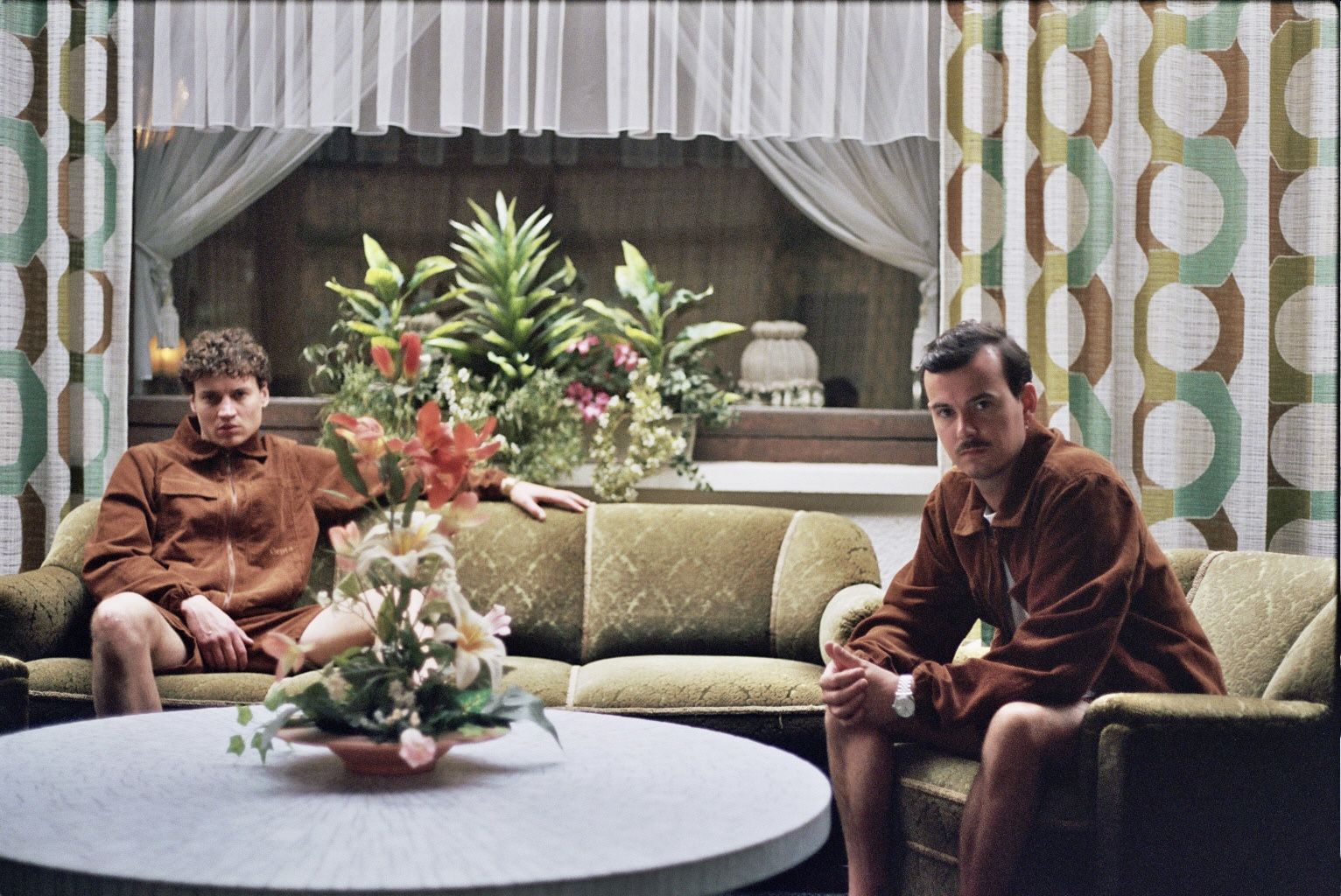
Name: GOME
Members: Julian Marks, Robin Townshend
Occupation: Producers, DJs, songwriters, label founders at Snackwax
Current release: GOME's Chop Shop EP is out via Heist.
Recommendations for Hamburg, Germany: We’re from Hamburg, so if you want to go clubbing, visit Golden Pudel Club (our next ‘GOME + the Gang’ event there is on December 13, with special guest Dan Shake)
Topic we are passionate about but rarely get to talk about: Julian is currently obsessed with cooking the perfect Spaghetti Arrabbiata, Robin is perfecting his chicken pie.
If you enjoyed this GOME interview and would like to stay up to date with the duo and their music, visit them on Instagram, Soundcloud, bandcamp, and tiktok.
The path to becoming a producer is a process - but from many interviews, I am under the impression that there are nonetheless one or a few defining moments. If this was the case for you – what were they and why were they so incisive?
I think an important part is, that for both of us, whenever we like something, we want to do it, actively be a part of it. So ultimately, the passion for producing or creating music stems from the joy we feel when we listen to it, and physically feel it in the club.
Like, when we hear something that touches or moves us, that always raises the question, how did that happen? How can I recreate this feeling?
So that curiosity, along with a healthy amount of overestimating our capabilities, has led us to playing our first live sets before we had any songs, to collecting synths, releasing a lot of music, and even founding our own label.
Tell me about one or two of your early pieces that you're still proud of (or satisfied with) in terms of production – and why you're content with them.
This is a hard one, as normally, when we listen to our own music, we usually only hear the parts we’re unhappy with – we are definitely our own biggest critics.
But the Tell Me EP, that we released in 2023, launching our label Snackwax, with the songs “Tell Me” and “Get My Love” still feels good!
In how far, would you say, was your evolution as an artist connected to the evolution of your music set-up and studio? Were there shared stepping stones?
Very much shared indeed. It was a natural process, starting off with a very limited set-up of just an MPC-2000 and three little KORG Volca Synths in the tiny hallway of our shared apartment back then.
But that limitation works magic, because all the endless possibilities that are available now with plug-ins etc. can be overwhelming. So at least for us, focusing on these little hardware machines with a single purpose each really allowed us to dive deep and find a sound, find workarounds for limitations, and build up anticipation for the next piece of equipment!
So, step by step we filled up our collection, and I think you can hear in our discography whenever we bought something new. Take the single “You’re My Baby” off our new Chop Shop EP:
We produced this song a few years ago already, when we had just moved into a proper studio with more space and bought a Korg M1 and the 303 acid bass.
Have a listen, and you’ll know what we mean. :-)
There are artists who can realise their ideas best with a traditional – or modified – piano interface, others with a keyboard and a mouse, yet others by turning knobs or touching screens. What's your preferred and most intuitive/natural way of making music and why?
That really depends, actually probably all of the above. Since we’re a duo, each song typically goes through all of these different production environments. Usually, one of us will start a project at home or on the road, then we’ll meet in the studio to jam on it, and to arrange and mix it.
The process in the studio is still very much hardware oriented, which has naturally evolved with how we started and the way our workflow together works. Whereas at home and while travelling the setup varies from nothing but a laptop to a classic midi controller layout.
Tell me about the space of your current studio/workplace and how you've set it up to optimise creativity.
We have, in countless hours of contemplating and wiring, managed to connect all our synths, drum machines, effects and keyboards, and DJ setup, to our external soundcard, either direct or via patch bay. And additionally, everything is MIDI-connected, which allows us to play any synth from a master keyboard, or straight from Ableton.
That was super important to us, as in the past we’ve wasted a lot of time reconnecting, switching cables, confusing ourselves in the process and losing the idea we actually wanted to record. Still when we are not only DJs but also play live, we bring a lot of our studio gear, and miles of cables, but by now we’ve done it so many times that we don’t even have to think about it anymore.
And one more important thing about our studio is that we’ve made it into a cozy space, rather than a clean, sound-treated production room. So the sound in there might not be the best, but it’s the best space to get our creativity flowing.
From the earliest sketches to the finished piece, tell me about the production process for your Chop Shop EP, please.
There was a variety! For our single “You’re My Baby”, we received the vocal stems from the amazing Michael Cignarale - and then approached the song a bit like you would a remix.
First we found a nice chord progression on the M1 that went with the vocals, then added the drums from a mix of programmed samples and our drum machines, and finished it up with some 303 bass.
For “Cut The Midrange” and “Keep Funkin”, Juli had started both projects on the road while we were touring, and then we met in the studio.
“Keep Funkin” was basically already finished, and only needed a little drive and analog magic, and “Cut The Midrange” received a full Juno-106 treatment.
The 4th track, “House Music”, we created together in the studio from start to finish in probably less than an hour, starting off as a spontaneous jam, topped with our own vocals.
Late producer SOPHIE said: “You have the possibility with electronic music to generate any texture, and any sound. So why would any musician want to limit themselves?” What's your take on that?
Totally agree.
There is a difference between the music we make and the music we release, the latter only being a small percentage of the former. So while our releases are clearly dancefloor-oriented House, we have a lot of music and unfinished projects that go in every possible direction.
And that is probably connected to what we said earlier, the passion for making music stems from the passion of listening to music, and of course we don’t just listen to House.
The current production process allows for fast and infinite variations. Can you tell me about how you deal with this potential for the infinite and what ultimately decides on how many iterations to create and which version to release?
Our production process in the studio is a bit different. Since we record a lot of external hardware, we tend to arrive quicker at a point where we say, let’s record it and keep it exactly like this, than if we were to use only plugins. So in a way, that limitation is quite liberating, because you have to learn to trust your taste.
But it is quite hard to arrive at a point with a song, where everybody is 100% happy. Some questions are also not right or wrong, but a matter of taste, which might be different between the two of us.
So usually, when we release a song, it is: it might not be perfect, but now it’s good enough. That’s not always satisfying, but anyone who’s ever spent hours picking the right snare sound for a song only to go back to the original one probably knows what we mean.
Production, as opposed to live performance, can be a lonely process and feedback from listeners isn't always tangible. What is it about it that gives you satisfaction?
Fortunately we always have ourselves!
Many times, one of us will start a project, and sooner or later arrive at a point, where we individually don’t know how to proceed. So that project would normally be locked away on a hard drive indefinitely – but instead, we give it to each other, get fresh ears, fresh input and ideas on it, and that reignites the project, and turns into a very different, but finished song. And that is very satisfying. Also, as we are DJs, we can try out a lot of our productions in the club to get more tangible feedback.
But the most satisfying thing about producing music, is that flow state you reach, when you jam with each other, finding one good idea after the other, and really just enjoying the moment.
We can watch videos on production, take producer courses, and exchange deep insights on gear forums. Amidst these options to improve one's chops/skills, how do you keep things playful?
Being able to learn all these things for free from the couch is probably – for us – one of the great achievements of our time. So maybe we’d even argue that the possibility to learn all this so casually is what keeps things playful.
Ultimately for us, improving skills as a producer is just a means to an end, because eventually, our goal isn’t to be the best producers in the world by watching all YouTube tutorials available, we just want to make music.
So for example we’ll watch a 15 year old 480p YouTube video on how to repair an MPC, so we can use that MPC to make music. And being able to learn that on the spot – what’s better than that!
AI is already capable of making something most people would recognise as music. I am curious, though, and will keep this question somewhat broad on purpose: What do you think that means?
We think it means, that human-made music will become more important again. And not just music – social media is flooded with AI content. And for most people, as soon as they realise it’s AI, it sort of loses its value or comedy.
AI can be a great tool, also in music production, to speed processes up. But to every movement there’s a countermovement: Take Rosalías latest album LUX, recorded with a proper orchestra for example, made “extra-human”.
Also live music will eventually regain more importance, because seeing a live human performing live music is something that AI cannot replicate.
Creativity can reach many different corners of our lives. Do you personally feel as though producing a piece of music is inherently different from something like making a great cup of coffee? What do you express through music that you couldn't or wouldn't in more 'mundane' tasks?
If you’ve ever watched our ‘GOME cook songs’ series, you know that we ‘translate’ music into culinary creativity. So, there is definitely a similarity – at least for us.
We think that to everything you do, there are two ways. One, doing it without thinking about it, incidentally, without passion. And two, mindfully doing something, actively enjoying the process, and putting in love to create the best possible output. And the latter is how we make music, how we prepare food, how we make a cup of tea or coffee, how we curate a DJ set.
Investing ourselves more into everything we do also means being more disappointed when it doesn’t work, when the music doesn’t feel right, or when the soufflé doesn’t rise. But it is ever more rewarding when it does.
We think that music offers the possibility to also express and progress negative emotions – take all the heartbreak songs, or “The Breakup” by Dam Swindle for example – while cooking works great to take your mind off of it.
[Read our Dam Swindle interview]