Published
Name: Gordan
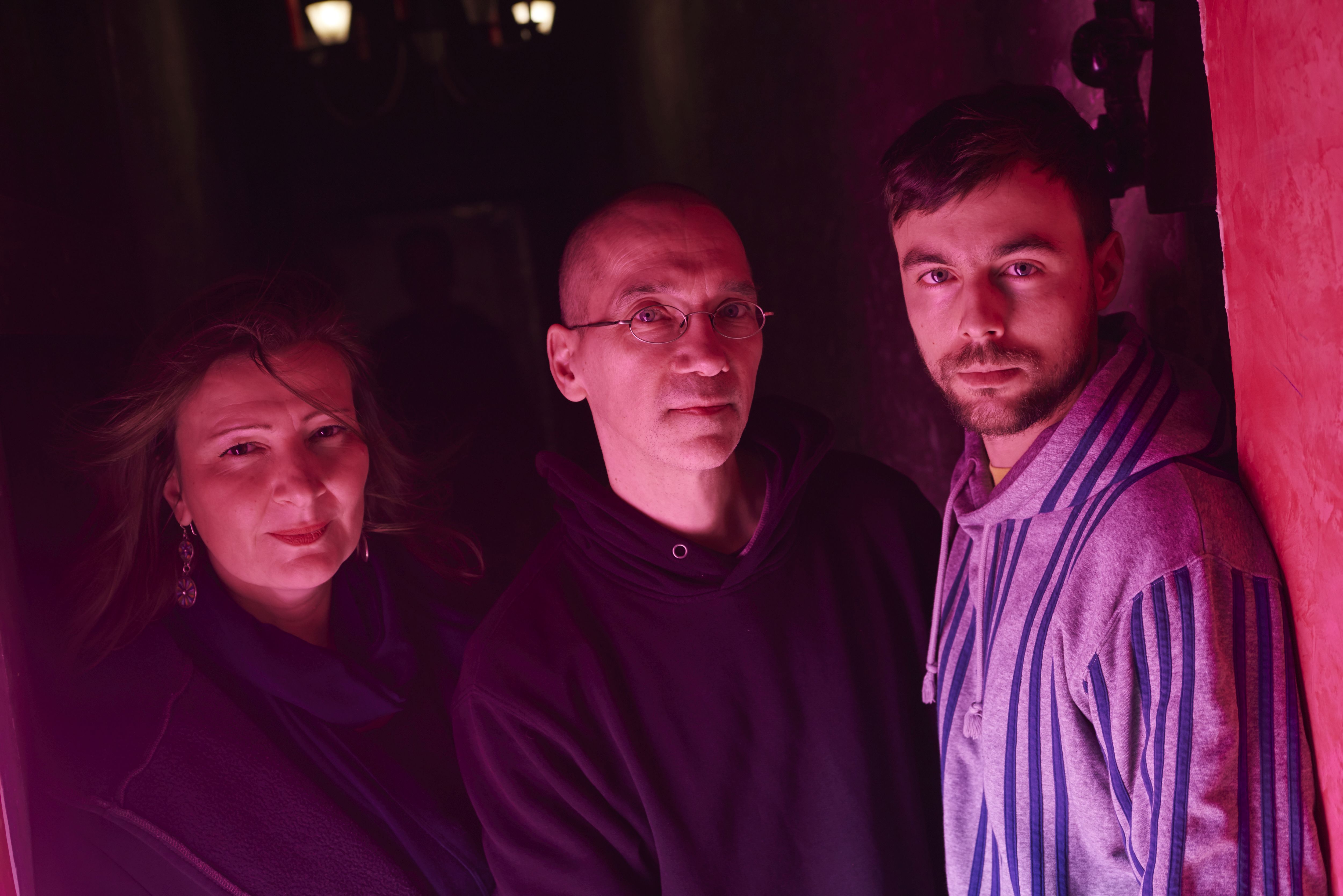
Members: Guido Möbius, Svetlana Spajić, Andi Stecher
Nationality: Austrian (Andi) German (Guido), Serbian (Svetlana)
Current release: Gordan's self-titled sophomore album is out via Glitterbeat.
Recommendations: Svetlana: I would recommend the works and essays of a painter, writer, and architect Leonid Šejka, a member and founder of the Belgrade art group Mediala born in the 50ies.
Second, a good anthology of classic Serbian epic songs with a good translation, such as a tandem translation of Mine Holton and Vasa D. Mihailovich, or John Mathias and Vladeta Vuckovic.
If you enjoyed this Gordan interview and would like to know more about the band, visit the official websites of the individual members: Svetlana Spajić, Guido Möbius, Andi Stecher;
Before you started making music together, did you in any form exchange concrete ideas, goals, or strategies? Generally speaking, what are your preferences when it comes to planning vs spontaneity in a collaboration?
Guido Möbius: I prefer a mix of both. In collaborations I think it helps to prepare musical scetches and simple ideas as starting points. It doesn’t matter if the musicians who at first followed those scetches end up playing something completely different.
That's the nature of an open process. It helps to bring some ideas, it also helps to let go of these ideas easily.
There are many potential models for creativity, from live performances and jamming/producing in the same room together up to file sharing. Which of these do you prefer – and why?
Guido Möbius: All of these models work for me, I don’t have any preferences.
When we develop new repertoire with Gordan, we use all kinds of different creative techniques, including file sharing and exchanging ideas remotly or jamming together in the same room at the same time.
For a while, it seemed as though the model of the bed room producer would replace bands altogether. Why do you like playing in a band rather than making music on your own?
Guido Möbius: I can’t say that I prefer playing in a band to playing solo, I like it both. Playing with others in real time has a certain energy, especially when a drummer is involved.
To me it never felt like bedroom producers could replace bands. There was a time when digital recording tools were still new and bedroom productions of high quality were possible all of a sudden. At that time it looked like bedroom productions could replace recording studios, it wasn’t about solo artists vs. bands.
What are your thoughts on the need for compromise vs standing by one's convictions? How did you resolve potential disagreements?
Guido Möbius: No compromise in art is a principle that we follow as a band.
When we disagree about music we rather stop playing that certain music instead of looking for compromises.
Do any of the band's members also have solo projects? If so, how do these feeds into the band's creative process?
Guido Möbius: All of us have solo projects that naturally influence our band sound as they are parts of the individual artistic developments of the band members.
I’d say they feed into Gordans music permanently in a subtle way. They are constant influences. Even if one of us decides to play totally different to his or her solo sound, it is an indirect influence on our music.
What, to you, are some of the greatest bands, and what makes them great?
Andi Stecher: Some of the top of my head:
OK Jazz / TPOK Jazz: Congolese Rumba legends, decades of amazing tunes and on the forefront of shaping contemporary Congolese music. Many legendary Congolese musicians including Franco Luambo, Henri Bowane, Papa Noël, Madilu System where part of the group at one point.
BCUC / Bantu Continua Uhuru Consciousness: Just saw them live recently when we played a festival in Brussels. Amazing energy on stage, wonderful and powerful music, very friendly people!
Miles Davis Quintet: Both of the Quintets 1955–59 and 1964–68 pushed the boundaries of Jazz and sound in general.
Ton Steine Scherben: From 68' Student uprising Anti-capitalist hymns to deep and sweet pop songs, they got it all, a classic!
And many more obviously ...
First of all I would say what makes bands great is a very personal perception, I don't think there is a general empiric rule what makes a band great or not.
Sure there are bands who are very famous and are known for having an impact historically in music - but for me mostly this has to do with personal experiences with listening to bands, growing up with listening to a specific group etc.
Is there a group consciousness, do you feel? How does it express itself?
Andi Stecher: I do think there is some kind of group counsciousness, mostly related to performing live concerts and the ways of nonverbal communication and exchange between eachother during shows.
Another type of group consciousness could be while envisioning a new album or song, during the compositional phase & trying out phase - entering a common space of / group consciousness of a specific track etc.
Tell me about a piece or album which shows the different aspects you each contribute to the process particularly clearly, please.
Andi Stecher: Honestly, I do believe in every track of us you cleary hear the different aspects we each contribute.
Check out our 2nd Album - Gordan - out via Glitterbeat 10th of May 2024 to hear us on each track giving our respective inputs, Andi Stecher on drums and percussion, Guido Möbius on Feedback, electronics and bass and Svetlana Spajić on vocals.
What is your sense of ownership like as part of the collective songwriting process? What is the balance between the lyrics, melodies and harmonies, and the groove in terms of your sound?
Andi Stecher: Each of us has their space and specific expertise / instrument and tools in the group. We all have a lot of freedom in bringing our specific ideas on our Instruments.
I would say we fully trust eachother and the making of each song is a equal shared collaborative process.
What tend to be the best songs in your opinion – those where you had a lot in common as a band or those where you had more differences? What happens when another musician take you outside of your comfort zone?
Andi Stecher: I personally love to be taken out of my comfort zone musically speaking. I do think it sparks very creative processes to be taken out of one's comfort zone in playing, and for me as a drummer it motivates me to learn new things, rhythms / grooves etc. Something I cherrish a lot!
I personally do enjoy a lot songs which try to melt together styles from diverse origins. That does not mean we in the group had differences making the song, it more means we want to challenge conceptual ideas of what sounds / grooves / songs / lyrics can be put together, creating new approaches to the intersection of traditional music materials and contemporary compositions.
Have you worked with outside contributors - from sessions musicians via producers to other songwriters? How did this change, improve or challenge the established dynamic and how do you look back on that?
Andi Stecher: As a group, not really. We did work with people who besides being recording engineers suggested some ideas during the process of recording, but mainly for now nothing besides that.
All of us individually collaborate with a wide variety of artists, groups etc. I do think it could be wonderful to invite a guest musician or feature a person on one track, or have a remix done for one Gordan track. A possibility we for sure will consider in the future.
How do your different characters add up to the band's sound and in which way is the end result – including live performances – different from the sum of its pieces?
Svetlana Spajić: Partly, it is always a mystery, you don’t always know or you don’t need to rationalize it, it simply works.
It is exciting how we end up with pieces that we all like - from three different personal universes we build a new one that we all rejoice in.
In a live situation, decisions between band members often work without words. From your experience and the performances of your current tour, what does this process feel like and how does it work?
Svetlana Spajić: I simply keep my focus on my colleagues and try to synchronize with them each moment, without anticipating. Only then can we surprise ourselves and the audience and allow the real-life on stage to happen.
Of course, rehearsals and gigs help us ride that vehicle of action more skillfully.
How has the interaction within the group changed over the years? How do you keep things surprising, playful, and inspiring?
Svetlana Spajić: It hasn’t changed much. The most important thing in it is the freshness and playfulness of a childhood that you feel in your friends and colleagues.
And keep it untouched, that spirit of a child who plays with another child and will go through some unpleasant or tiring job protocols just to be able to feel that again in our mutual playground – the stage or rehearsal/recording studio.
Most bands eventually break up. What makes you stay together? What are the essentials for a successful band?
Svetlana Spajić: The good delegation of duties and tasks, the readiness to put your ego aside, to sacrifice a bit from time to time and go through some very tiring things.
We all three know how it works, since we put our bread and butter on the table by being musicians, we have experience in it. Most importantly, to love your colleagues/friends.