Published
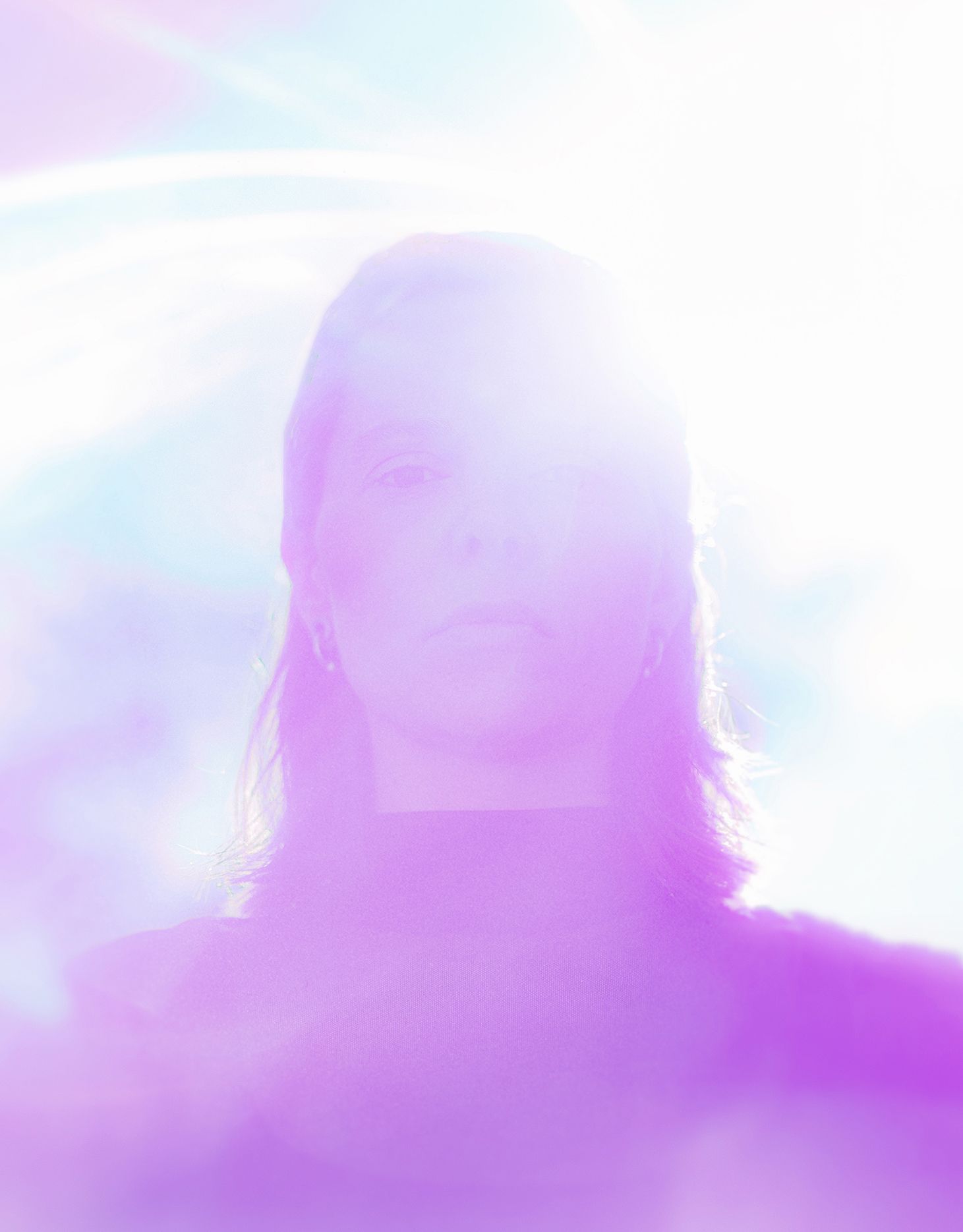
Name: Aimée Portioli aka Grand River
Nationality: Dutch-Italian
Occupation: Composer, sound designer
Recent release: Grand River's new album Tuning the Wind is out via Umor Rex.
If you enjoyed this interview with Grand River and would like to stay up to date with her music, visit her official website. She is also on Instagram, Facebook, twitter, and Soundcloud.
For a deeper dive, read our earlier Grand River interview.
When I listen to music, I see shapes, objects, and colours. What happens in your body when you're listening? Do you listen with your eyes open or closed?
I would say both, as it depends on what I am doing. I enjoy listening to music while walking around the city or in nature.
What I know for sure is that when I listen while sitting or lying down with my eyes closed, my focus is more intense. So it also depends on how deeply I want to engage with a particular listening experience.
What happens to me, I would say, is an intensification of focus and emotions that run through my mind and body while listening.
How do listening with headphones and listening through a stereo system change your experience of sound and music?
When listening with headphones, sound is delivered directly into each ear, creating a more intimate and isolated experience, which I really enjoy. The stereo separation feels more pronounced since the left and right channels don’t blend naturally, resulting in a more "inside-your-head" perception of sound.
Headphones often reveal intricate details in a recording due to their close proximity to the ears and the absence of room interference. This allows me to notice subtle reverb, background instruments, and tiny details more clearly.
On the other hand, listening through a stereo system is a more physical experience. The sound interacts with the space, and room acoustics can affect clarity, making some details harder to perceive but also creating a more immersive, enveloping experience.
In the end, I prefer listening with headphones when I want a detailed, analytical experience. If I don’t need that level of detail, I would opt for a stereo system.
Do you experience strong emotional responses to certain sounds? If so, what kind of sounds are these, and do you have an explanation for these responses?
More than the sound itself, it’s the melody or harmony that triggers my strongest emotional responses.
If I think specifically about the timbre of certain sounds, I often find myself deeply moved by the acoustic piano, cello, and choir sounds.
There are sounds that feel highly irritating to us, and others we could gladly listen to for hours. Do you have examples of either or both?
There are many sounds that I find irritating and unsettling. Sometimes, this is due to their frequency, but I am also very sensitive to certain sounds when I am in enclosed spaces like my home or a hotel room for example.
If I am in a space near a busy road, the sound of traffic can be extremely irritating and impact my sleep. The same goes for loud air ventilation systems, mechanical hums, or any kind of persistent noise pollution.
Listening is often not a choice but something imposed on us due to environmental sound pollution, which I find particularly frustrating.
Have you ever been in spaces with extreme sonic characteristics, such as anechoic chambers or caves? What was the experience like?
I will never forget the incredible reverberations I experienced in caves I visited in Mexico, Lanzarote, and Greece, just to name a few.
What are your favourite spaces to record and play your music?
For recording: nature, my own studio, or a friend’s studio that I sometimes visit for recordings.
For listening: with my headphones on, in front of a vast natural landscape.
Do music and sound feel “material” to you? Does working with sound feel like you're sculpting or shaping something?
While sound itself is intangible, it often feels material because of the way it interacts with space, time, and emotion.
When I work on projects involving spatial sound, I sometimes think of it as a sculptural process, shaping frequencies, textures, and dynamics, much like a sculptor molds clay or a painter layers colors.
How important is sound for our overall well-being, and to what extent do you feel the "acoustic health" of a society or environment reflects its overall health?
Sound is essential to our well-being, shaping our stress levels, cognitive function, emotions, and social interactions.
The “acoustic health” of a society, whether its soundscape is balanced, harmonious, or chaotic, often reflects its overall state of mental well-being, social cohesion, and environmental stability.
Sound, song, and rhythm are all around us, from animal noises to the waves of the ocean. What are some of the most moving experiences you've had with non-human-made sounds?
One of the most personal and profound experiences I’ve had with non-human-made sounds is the way the wind interacts with landscapes, structures, and objects, and how it creates its own tonalities, rhythms, and harmonics.
This idea became central to my piece Tuning the Wind, where I recorded various types of wind and reworked them through layering and pitch adjustment to create a musical piece in which the wind itself becomes a prepared instrument.
At times, the sound of the wind is tuned to the 440 Hz reference, while at other times, the instruments are tuned to the natural sound of the wind.
Many animals communicate through sound. Based on experience or intuition, do you feel interspecies communication is possible and important? Would you say there is a creative element to it?
Yes, I believe interspecies communication is both possible and deeply important.
Many animals already communicate with us through sound, gesture, and presence, we just have to learn how to listen. Whether it’s birds responding to human melodies, whales adapting their calls to shifting environments, or even the subtle vocal and tonal shifts in how we speak to our dogs or cats, there’s a constant exchange happening.
I will be exploring this idea further in my next installation work, which, interestingly, is centred around it, so I am very interested in this topic.
Tinnitus and developing hyperacusis are very real risks for anyone working with sound. Do you take precautions, and if you suffer from these or similar issues, how do you cope?
I suffered from tinnitus for almost a year about ten years ago due to fluid in the middle ear. Fortunately, with specific treatment, I was able to resolve it.
I consider myself very lucky, as I know several people who cope with tinnitus daily, and I understand how difficult that can be.
I am always very cautious with my ears, and I use earplugs whenever I am in a loud music environment.
We can surround ourselves with sound every second of the day. The great pianist Glenn Gould even considered this the ultimate delight. How do you see this, and what importance does silence hold for you?
Silence is extremely important to me. The older I get, the more I appreciate it and seek it out.
When I was younger, I listened to music all the time, but now I engage in more focused listening rather than having constant background noise.
That said, I still enjoy having music on at home while doing other tasks, or while walking and engaging in other activities, but far less frequently than I used to. I can work and write for hours in complete silence, and I value that deeply.
Seth S. Horowitz called hearing the “universal sense” and emphasised that it was more precise and faster than any of our other senses, including vision. How would our world be different if we paid less attention to looks and listened more instead?
If we shifted our focus from sight to sound and if listening became as dominant as seeing, our world would likely feel more immersive, intuitive, and connected in ways we rarely consider.
We often process the world visually, but sound operates in 360 degrees, penetrating walls, reaching us in the dark, and conveying emotion instantaneously. Music and soundscapes would become even more central to our cultural expression, influencing how we relate to nature, technology, and each other.
We might even develop heightened auditory memory and perception, much like blind individuals who navigate the world through sound.