Published
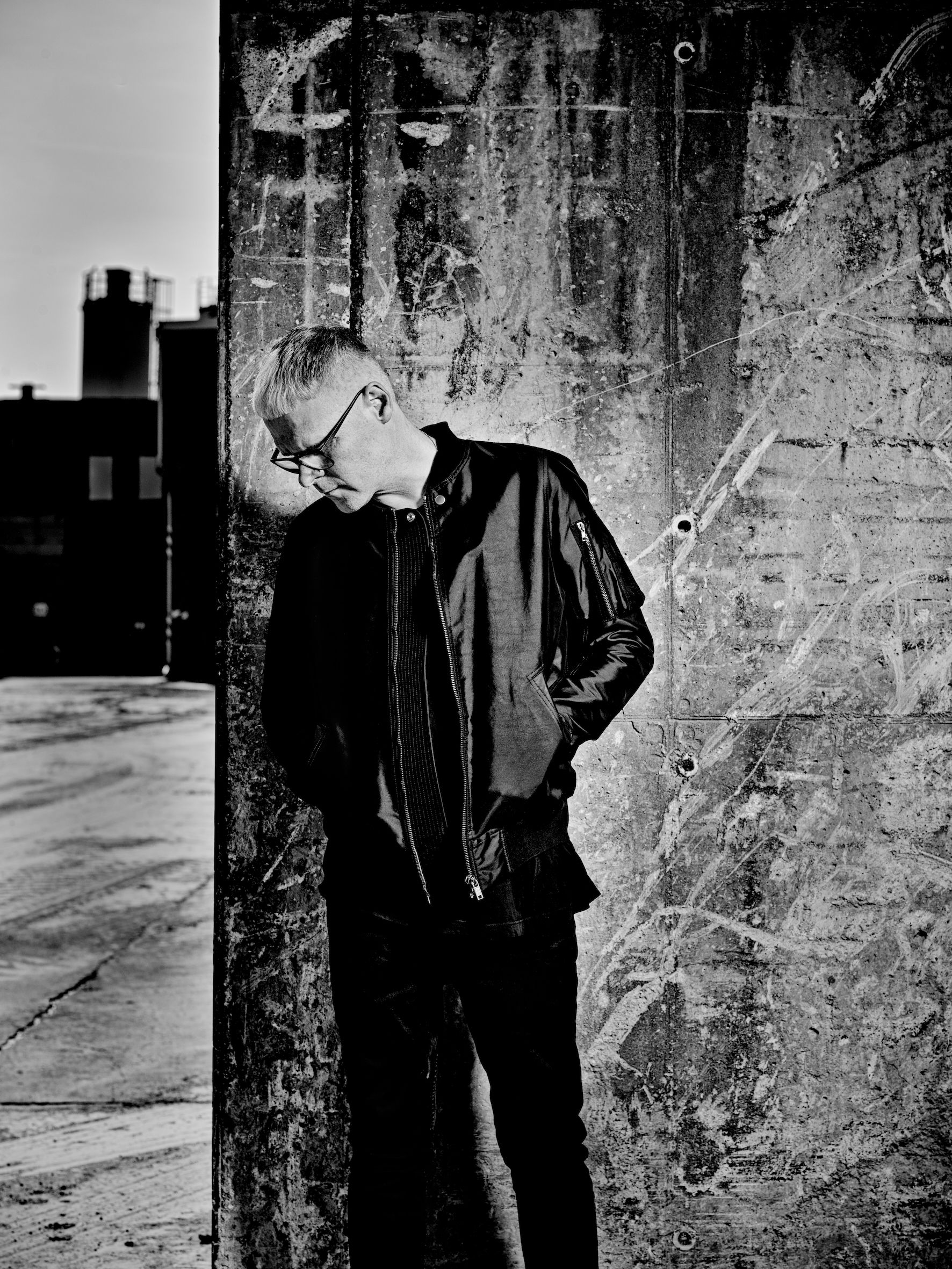
Name: Gregor Tresher
Nationality: German
Occupation: Producer, DJ
Current release: Gregor Tresher's new album False Gods is out via [PIAS] Électronique.
Recommendations: The Cure – Disintegration // My favourite album of all time. I probably listened to it more than any other album ever, and it still leaves me speechless. It’s just perfect.
The Cure - Songs Of A Lost World // I was so blown away when The Cure recently released their new album (and their first in almost two decades). To be in a band that has been around for 4 decades and to return with a piece of work as this album is mindblowing.
If you enjoyed this Gregor Tresher interview and would like to know more about his music, upcoming releases and DJ dates, visit his official homepage. He is also on Instagram, Soundcloud, and Facebook.
For a deeper dive, we recommend our earlier Gregor Tresher interview.
Do you think that some of your earliest musical experiences planted a seed for your interest in production and technology?
I’m not sure. Even though the first music I consciously liked was synth pop, I don’t think I really understood the importance of the technology behind it back then.
What were your very first active steps with music technology, and how would you rate the gains made through experience?
My very first attempts at production were at a friend’s place, who had an Atari ST with an early version of Cubase, an Akai Sampler, a cheap digital Yamaha synth and a Behringer desk.
It was a good and simple set-up to learn the basic principles of music production at the time, for example, understanding MIDI and basic signal flow.
Were/are you interested in the history of production and recording? If so, which events, albums, artists, or insights stand out for you?
Even though I try to understand as much as I can about the craft behind making actual music nowadays, I have always been more interested in creating the music itself rather than the technological knowledge you need to be able to make it sound right.
Making music, in the beginning, is often playful and about discovery. How do you retain a sense of playfulness and how do you still draw surprises from tools, approaches, and musical forms you may be very familiar with?
It is definitely very important not to lose the fun in the creative process.
For me, analogue sequencers, arpeggiators, or even their software-based equivalents are perfect tools to help fuel my creativity.
For your own creativity, what is the balance and relative importance between what you learned from teachers, tutorials and other producers on the one hand – and what you discovered, understood, and achieved yourself? What are examples for both of these?
The most important influence on my creative process is discovering music that really blows my mind. I am mainly inspired by the song itself rather than the process of how someone made it “sound good “.
When I started to produce music, I tried to get inspiration from songs I really liked at the time. At first, you try to recreate the tracks until, eventually, you find your own way.
How and for what reasons has your music set-up evolved over the years and what are currently some of the most important pieces of gear and software for you?
In the beginning, collecting equipment and building a visually impressive environment in the studio was a thing for me and many others at the time.
Over the years, I got rid of a lot of gear I didn’t really use, and I also tried to get rid of that “collector “mindset. There are a few pieces of equipment I will probably never give away, not because I couldn’t make music without them, but more because of nostalgic reasons.
My main tool is and always has been my DAW: Cubase. I have a few synthesizers I love and also use from time to time, for example, my Roland System 100 or my Minimoog Model D from 1976, but to be honest, most of my music is created in the box these days.
Have there been technologies which have profoundly influenced, changed or questioned the way you make music?
Well, the evolution of computer chips and the endless possibilities coming with it were the most significant changes. If you’re using a modern computer, you hardly get to a point where the processing power will be too weak.
And if so, there are external solutions to outsource certain things, let’s say with a UAD card or interface, that will then take over the calculations needed for the software you’re running on that system, and you re-gain native CPU Power back.
Already as a little kid, I was drawn to all aspects of electronic/electric music but I’ve never quite been able to put a finger on why this is. What’s your own relationship to electronic sounds, rhythms, productions like – what, if any, are fundamental differences with “acoustic “music and tools?
I think we were lucky to witness the electronic music revolution just because we were born at the right time.
When I was a kid, my parents kind of forced me to take lessons to learn how to play classical instruments—for example, the violoncello or the cornet. I absolutely hated it, but in hindsight, I guess it was helpful to get a basic understanding of harmonies.
Late producer SOPHIE said: “You have the possibility with electronic music to generate any texture, and any sound. So why would any musician want to limit themselves?” What’s your take on that and the relevance of limitations in your set-up and process?
Well, sometimes, I find limitations soothing. Also, I truly believe that a great song will be a great song with very light instrumentation or even only played on the piano.
Of course, some music depends on certain sounds or a vast body of sound that cannot be created on a single instrument. However, if a melody is beautiful, it will sound good by itself.
From the earliest sketches to the finished piece, what does your current production workflow/process look like?
I find myself in a position these days, in which I’m working really, really quickly. Sometimes, I finish two sketches or let’s say demos a day.
But usually, I start with drums to find an interesting groove and take it from there.
Rhythm, sound design, melody/harmony, something else – when do the different elements of a piece come into play for you?
Well, rhythm and melodies are the foundation of any song generally speaking. I usually start working on the beat and then try to come up with a central element like a bassline or a theme.
It’s not like I’m always following the exact same battle plan; sometimes, tracks emerge from a sample or a sound I came up with.
In relation to sound, one often reads words like “material”, “sculpting”, and “design”. How does your own way of working with sound look like? Do you find using presets lazy?
I don’t find using presets lazy at all. Of course, if a song is based on a preset, I always feel a little guilty, but I try to get rid of those thoughts.
To me, only the final result counts; how you got there doesn’t matter, really.
What, to you, are the respective benefits of solo work and collaborations and do you often feel lonely in the studio? Can machines act as collaborators to you?
I honestly have never felt lonely in the studio for a second. My newly found interest in working with other people on music originated during the studio sessions with Sven Väth working on his most recent album, Catharsis, a time that we both remember as quite a creative rush.
It felt like there was this special magic in the room that you rarely find when writing music and that we are all looking for.
That fueled my interest in exploring the concept of working with other people in the studio more and led to the various collaborations on the current album with Laurent Garnier, Josh Wink, Black Asteroid, Anja Schneider, Ruxpin, Petar Dundov, Mathias Kaden, rromance and Sven again.
[Read our Josh Wink interview]
To some, the advent of AI and ‘intelligent’ composing tools offers potential for machines to contribute to the creative process. What are your hopes, fears, expectations and possible concrete plans in this regard?
So far, I have only been experimenting with AI-generated vocals, and the results are impressive. Since electronic music is and always was music “of the future “, I guess these new technological developments can only be a positive thing for our niche.
I think the way we interact with technology is a little bit behind, and I can only dream about what will be next - controlling technology just with your mind sounds like the future, and I guess we’re not so far away from that.
If you could make a wish for the future directly to a product developer at a Hard- or Software company – what are developments in tools/instruments you would like to see and hear?
I’m pretty overwhelmed with the sheer endless possibilities already.
I think the next big step will be new interfaces and new and more natural ways to interact and communicate with technology.