Published
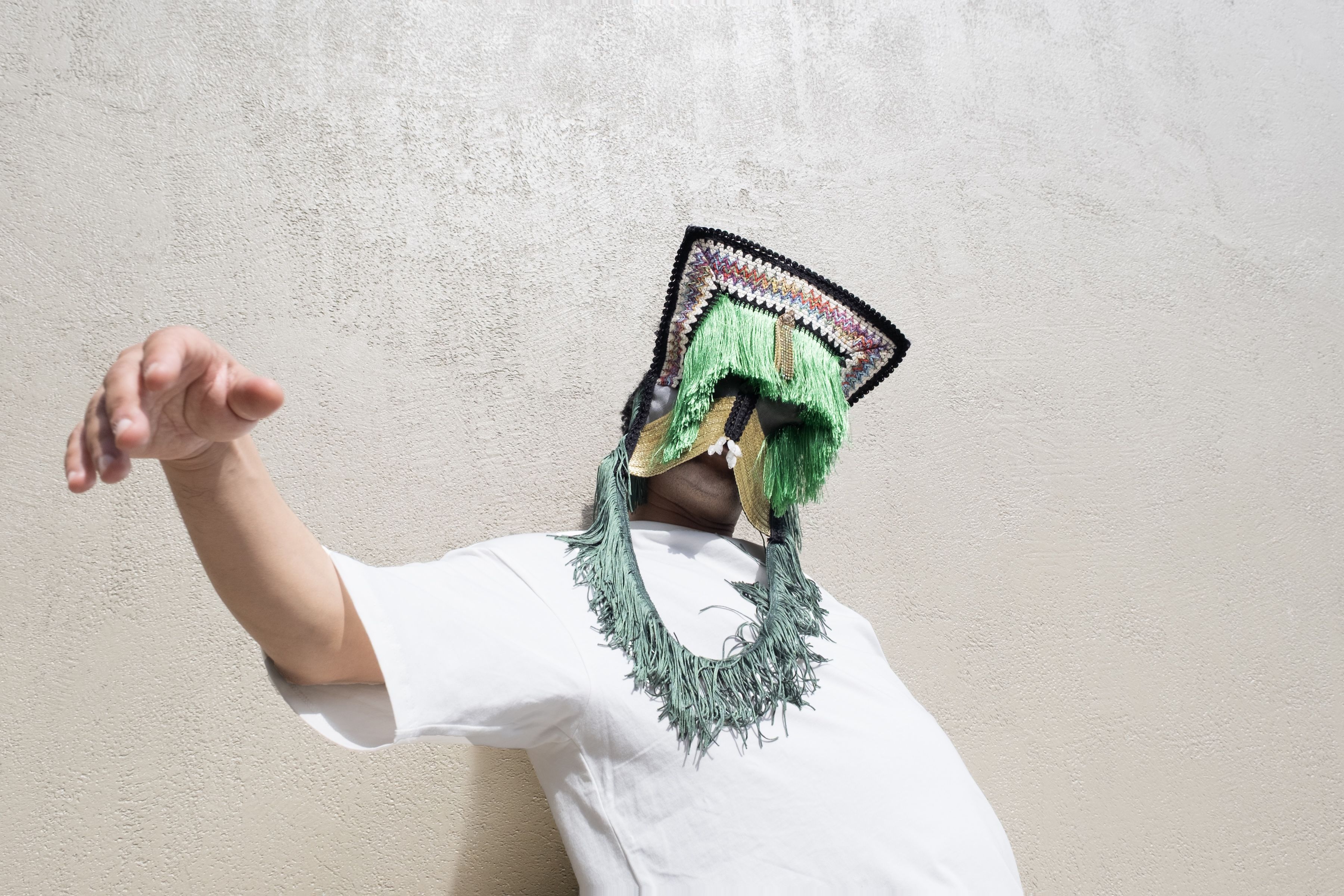
Name: Guedra Guedra
Nationality: Moroccan
Occupation: DJ, producer
Current release: Guedra Guedra's new album MUTANT is out via Smugglers Way.
If you enjoyed this Guedra Guedra interview and would like to stay up to date with his music, visit him on Instagram, Facebook, and Soundcloud.
For a deeper dive, read our earlier Guedra Guedra interview.
Tell me about some of the albums or artists that you love specifically for their sound, please.
There are certain albums that have shaped my approach to sound in a profound way, not just musically, but sensorially and conceptually. They taught me that sound is more than rhythm or melody; it is architecture, emotion, politics, and memory.
One of the most important albums for me is My Life in the Bush of Ghosts by Brian Eno and David Byrne. It was a revelation.
This record introduced me to the idea that you could treat radio recordings, voices, chants, and atmospheric noise as compositional tools. These are not just background textures but primary elements in a sonic narrative.
The way they sampled Arabic and African voices, manipulated speech, and transformed real-world sound into music was groundbreaking. It gave me a vocabulary for thinking of sampling as a form of sonic archiving and storytelling.
Another project that resonates with me both sonically and philosophically is The 7 by Secret Chiefs 3, especially through Trey Spruance’s satellite band Ishraqiyun.
It is a beautiful collision of Middle Eastern rhythms, maqams, and experimental rock textures.
There is a deep respect for tradition, but also an eagerness to break form and enter uncharted rhythmic territories. The layering, the unpredictable time signatures, and the hybrid instrumentation, where oud and saz meet electric guitars and synths, mirror my own search for ways to reimagine traditional African and Moroccan rhythms through electronic production.
Steve Reich’s Piano Phase is also essential. It was a key reference when I was taught in art school and remains foundational in how I understand repetition and minimalism.
The shifting phase patterns and micro-variations create a sense of time expanding and contracting.
This approach to rhythm, where pattern becomes trance, continues to influence how I build loops, polyrhythms, and transitions, especially in my dancefloor-oriented tracks. It is a piece that taught me how to sculpt time.
Amon Tobin’s Foley Room is another landmark. The track “At the End of the Day” is a masterclass in how to turn sound into texture.
Tobin’s use of field recordings as raw material, processed and abstracted, resonates with my own process. He creates tactile sonic environments where every sound feels like it has a physical dimension.
His work reminds me to treat sound like clay, not just for what it is, but for what it could become.
Spirit of Eden by Talk Talk is a more ethereal influence. The way they use space, silence, and ambient tension is extraordinary.
The record feels like breathing. It taught me that sometimes, less is more, and that space in music is just as expressive as sound.
[Read our Tim Friese-Greene of Talk Talk interview]
I also have a deep emotional connection to Soldier of Midian by Badawi, Raz Mesinai. I discovered this album very early in my life and it opened my ears to how Moroccan rhythms like Dakka Marrakchia could be reinterpreted through dark, immersive electronic production.
It is raw, powerful, and deeply meditative. The album is a powerful example of cultural translation through sound, not as appropriation but as continuation and dialogue.
All of these records share something vital. They show that sound is not only an aesthetic language. It is a method for storytelling, for rethinking history, for building new imaginaries. They continue to inspire me to create music that is rooted in memory, yet open to transformation.
For interested readers, what are books, websites, articles or other sources of information you recommend for them to educate themselves on the topic?
One foundational text for me is Lines: A Brief History by Tim Ingold. While it’s not about music in a conventional sense, it examines how humans trace, move, remember, and transmit knowledge through lines, whether they are drawn, walked, or sung. It’s a profound reflection on rhythm, temporality, and movement, and it completely shifted the way I perceive sonic trajectories and the spatiality of sound.
Another important reference is TAZ (Temporary Autonomous Zone) by Hakim Bey. This book speaks about the creation of ephemeral, free zones, moments outside of structured systems. That idea resonates deeply with my sonic work, especially when I create temporary sound rituals, immersive performances, or participatory listening spaces in public environments. It’s not just a political vision, but a poetic framework for sonic experimentation.
I’d also recommend Ears to the Ground: Adventures in Field Recording and Electronic Music. It’s a beautifully curated collection of interviews and essays, offering diverse perspectives on how artists work with field recordings, acoustic environments, and the creative manipulation of real-world sounds. It connects theory to embodied experience in an inspiring way.
Another book I read about a year ago, recommended by my friend and collaborator Jihan El-Tahri, is More Brilliant Than the Sun: Adventures in Sonic Fiction by Kodwo Eshun. This book exploded my understanding of how sound can be theorized through imagination, Afrofuturism, and speculative thought. It’s an intense, almost hallucinatory reading experience, but it gave me new tools to think about sound as fiction, as prophecy, as memory encoded in rhythm.
Jihan and I even produced a track together called "Tribes with Flags" on my new album MUTANT, and this book was definitely part of that process.
To be honest, I haven’t read a large number of books specifically on sound, but the few I’ve encountered have stayed with me and continue to resonate. They serve as anchors, not only intellectually, but emotionally and artistically.
That said, I truly believe the most powerful source of sonic knowledge is dialogue, human connection. Listening to others, exchanging stories, and experiencing how people listen differently across cultures is, for me, the richest archive we have. Sometimes, a conversation or a shared moment of silence can teach you more than a whole library.