Published
Name: Gumby’s Junk
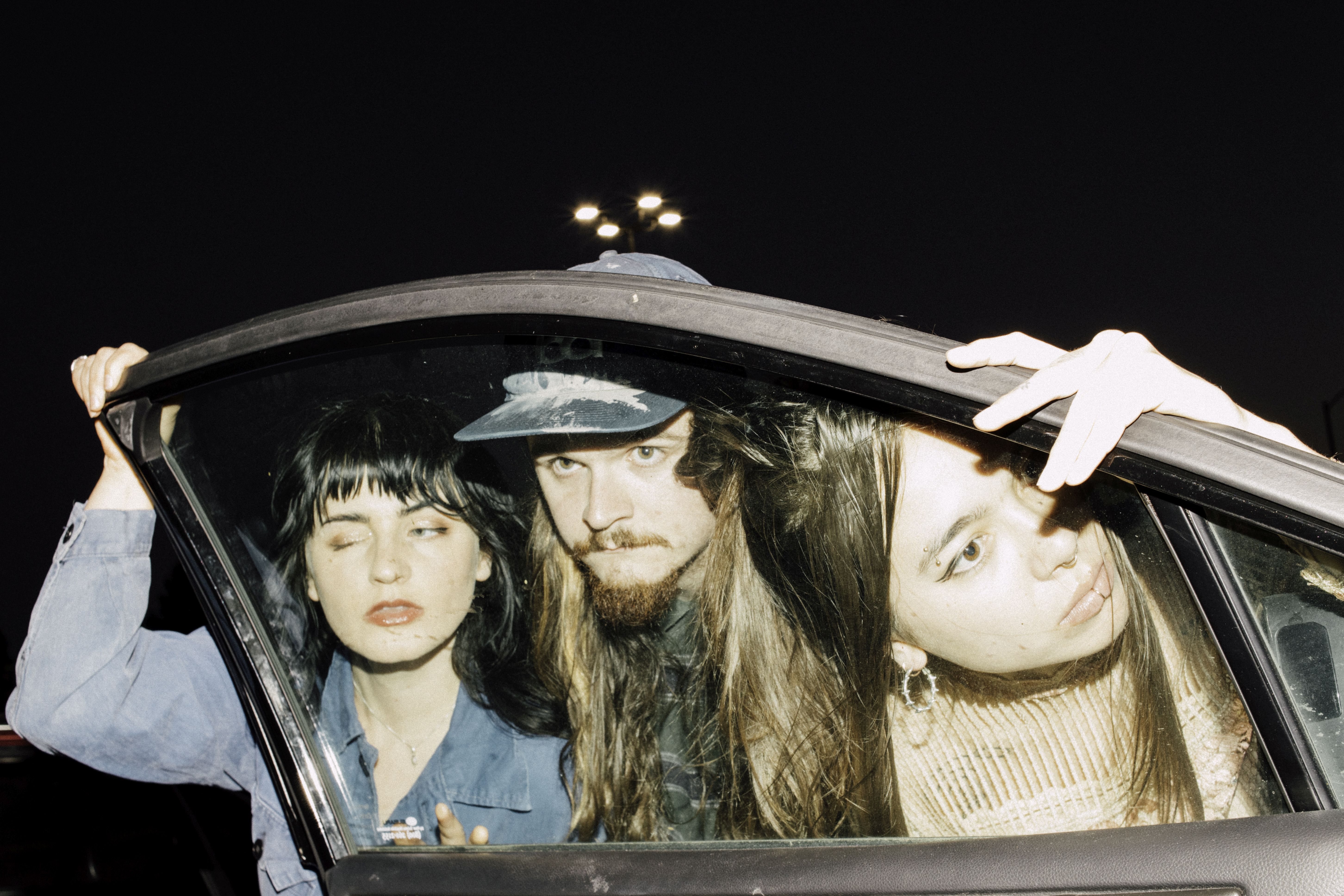
Members: Eli Streich, Emmalee Johnson-Kao, Jas Stade
Nationality: American
Current Release: Gumby’s Junk's new album Business & Pleasure is out August 29th 2025 via Joyful Services. So far, two singles have been released: “Best Deal Wheel and Tire,” as well as “Camus.”
Global Recommendations:
Emmalee: Mountain View Cemetery + Chapel of the Chimes Eli - Toll Plaza Beach. It’s a secret beach right next to the Bay Bridge and you can only get there by car. It’s very isolated and a nice place to explore or just hang out by the beach by your lonesome.
Jas: Pretty much any hiking trail in the East Bay hills. A lot of them are only a 15 minute drive from the more city parts of the East Bay and I’m always so surprised when I'm in a beautiful redwooded area and I realize it's only a short drive away.
Topics we are passionate about but rarely get to talk about:
Eli: I’m a really big fan of stuff left out on the street for free - free piles or garbage. I love looking through dumpsters of specific businesses to see what type of stuff they’re throwing out. I have a philosophy that if there's any material thing I want I just wait until I find it for ridiculously cheap or free and it’s worked thus far.
Jas: I’m talking about nails - different things that are good for nail health if you want to play an instrument with your nails. You could use the disposable nail files, but those wear down. A glass file is recommended. If you want to get a really fine finish, what I learned (because of my degree in classical guitar performance) is you go to Home Depot and you get the 3m500 grit sandpaper and you carry little bits with you and you can shape your nails really nicely with it and you do hear the difference in tone and attack! There’s a certain emu oil you can get.
I took biotin pills for a number of years but just eating healthy food is better. There’s something you can get called nailtiques, it’s a nail protein polish, but you wanna get the one that says number 2 on it because it’s stronger. Actually I think the factory was destroyed in a hurricane, so maybe nailtiques doesn’t exist anymore.
If you enjoyed this Gumby’s Junk interview and would like to know more about the band and their music, visit them on Instagram, Facebook, Soundcloud, and bandcamp.
When it comes to experiencing strong emotions as a listener, which albums, performances, and artists come to mind?
Jas: The most recent time we saw Deerhoof at Rickshaw Stop last month. The very first chord they struck filled me with so much joy that I started sobbing side stage just because it encapsulated so many years of listening to their songwriting.
Emmalee: I had a similar experience at Deerhoof. Seeing bands you’ve listened to for long spans of time, especially together with your most treasured people, live always has severe emotional impacts, just because the music has so much nostalgia inside of it.
Eli: I would say "The Devil Isn’t Red" by Hella.
When I listen to it the only emotions I feel are excitement and being overstimulated. Hella was the first band that I discovered that made me realize that music can sound like that, that it can sound any way you want.
There can be many different kinds of emotions in art – soft, harsh, healing, aggressive, uplifting, and many more. Which do you tend to feel drawn to most?
All: Anxiety, overstimulation, excitement, jubilance, surprise, contrast (that’s not an emotion but we like it).
In as far as it plays a role for the music you like listening to or making, what role do words and the voice of a vocalist play for the transmission of emotions?
Emmalee: I think for our music at least, the voice is on the same plane as the other instruments. All instruments, including the voice, are of equal importance.
Eli: The vocals are just another instrument, they often get categorized as a separate thing, but they are still a melodic, harmonic, and rhythmic tool to use. I don’t pay much attention to lyrics, but I do know what words sound good together.
Jas: We tend to use vocals and lyrics as a way to amplify what’s already there emotionally.
How much of the emotions of your own music, would you say, are already part of the composition, how much is the result of the recording process?
Emmalee: I think the bulk of the emotional impact in our music comes across live, rather than in the recording. We write our music in a fairly improvisational way, live looping parts until each of us comes up with something in the moment (usually).
So in a way, the original emotional intent of the compositions are acquired in a live setting, the nitty gritty parts of writing form happen, then we attempt to recreate that original synergy when we play to an audience, at which time, new feelings are created and discovered and the song takes a new form.
In studio recordings, we try to get as much as we can of that feeling of energetic symbiosis that we get live translated into the recording, but we can never get it all, because it’s an energy exchange between us three and the audience and the bugs in the room.
Jas: And the wifi network, that’s a huge part of it.
For Business & Pleasure, what kind of emotions were you looking to get across?
Emmalee: Guilt and shame.
Eli: And relaxation.
Jas: Relief.
Emmalee: Codependency.
Jas: Divine interference.
Eli: Self doubt.
Emmalee: Tickling.
Jas: Discomfort.
Emmalee: Pain.
Jas: Pleasure.
Eli: Business.
How does the presence of the audience and your interaction with it change the emotional impact of the music and how would you describe the creative interaction with listeners during a gig?
Eli: I think what we try to do is treat everything as an inside joke that the audience is in on. We love interacting with the crowd and saying dumb shit and playing our songs.
Emmalee: And leaning into whatever reaction we’re getting from the crowd because our banter and humor is not always met with understanding or sometimes with anything at all. Sometimes the crowd is just really stone faced and then we lean into that weird gap more.
Eli: Like at The Lab when you were like, “Are you guys enjoying yourselves, I can’t tell?”
Jas: When that happens, we either lean more into it, or we just focus on interacting with each other, which sometimes is the most fun.
What kind of feedback have you received from listeners or concert audiences in terms of the experience that your music and/or performances have had on them?
Jas: I feel like a lot of people are just trying to process what’s going on. And then, when they come up, they say, “I’ve never heard something like this before.” And that’s really cool.
It’s like what we were talking about earlier, experiencing music we didn’t know was possible or allowed, and seeing a listener have that reaction to our music, realizing that people could make these sounds and do this weird thing. It’s exciting seeing it in real time, when you can’t really tell if the audience is intaking / understanding what you’re playing - picking up what you’re putting down. Then they come up later and are like “Woah, I didn’t know that that could happen.”
Sort of mirroring how we’ve felt about music we’ve really loved.
Emmalee: The other most common thing is people being like, “You guys obviously love each other and have so much fun together,” which is so sweet.
Eli: I think there’s also a group of people that will come up and try to figure out what we’re all about, they try to compare us to other weirdo musicians. They try to find something similar and see if we know about it.
Jas: Which can be fun because I’ve found a lot of interesting artists that way.
Would you say that you prefer to stay in control to be able to shape the emotions or do you surrender to them and allow the music to take over? Who, ultimately has control during a live performance?
Emmalee: Ideally if we can get into an immersed state, like when we’re performing, we don’t have control. When you can get into this state when your body is just doing muscle memory with the playing and your mind is half zoned out, that’s ideal.
It can’t always happen, it just happens sometimes in perfect environmental conditions, which is not in our control.
Eli: I feel like most shows we play, I completely black out and then the show’s over. I am not in my body when I play.
Jas: Time passes differently when we’re playing. If we’re not focused on the intricacies of what we’re playing but we can kind of let that roll and focus on the musical conversation that’s happening, then we’re in a pretty good place.
Emmalee: Singing for me is one of the most emotional release / getting out of my head things just in life. Accepting a lack of control and letting your body do its thing is a wonderful thing. Jas: I black out too.
Eli: And then afterwards I look at you guys and I’m like “Oh that was fun.”
The emotions that music is able to generate can be extremely powerful. How, do you think, can artists make use of this power to bring about change in the world?
Emmalee: Just having the emotional release that listening to music or being at a show can give you is an extremely useful thing to be a happier person. Also being in a crowd at a show or dancing or being in a mosh pit, it gives you a different kind of connection with other people that you don’t usually get.
Eli: I feel like music has a way of building communities without even trying. Most if not all of my friends I’ve made through music, whether it's making music together or having musical interests in common.
Jas: As far as the change part of the question, if the community is already strong and established, regardless of if the community chooses to spend their time mostly on music or other things that matter to them, just the precedent that’s set when you have spaces that you gather in / ways of communicating with each other is just an important part of life.
It’s multifaceted, the ways that kind of thing can produce a better world.
Emmalee: Anything that forces you to turn outward from yourself and that goes against the individualistic instinct we’ve been taught is a great thing and it’ll make people be better and not be assholes to each other.