Published
Name: Gabriel Podliszewski Gutiérrez aka Guti
Occupation: Producer, DJ, label founder at
Nationality: Argentinian
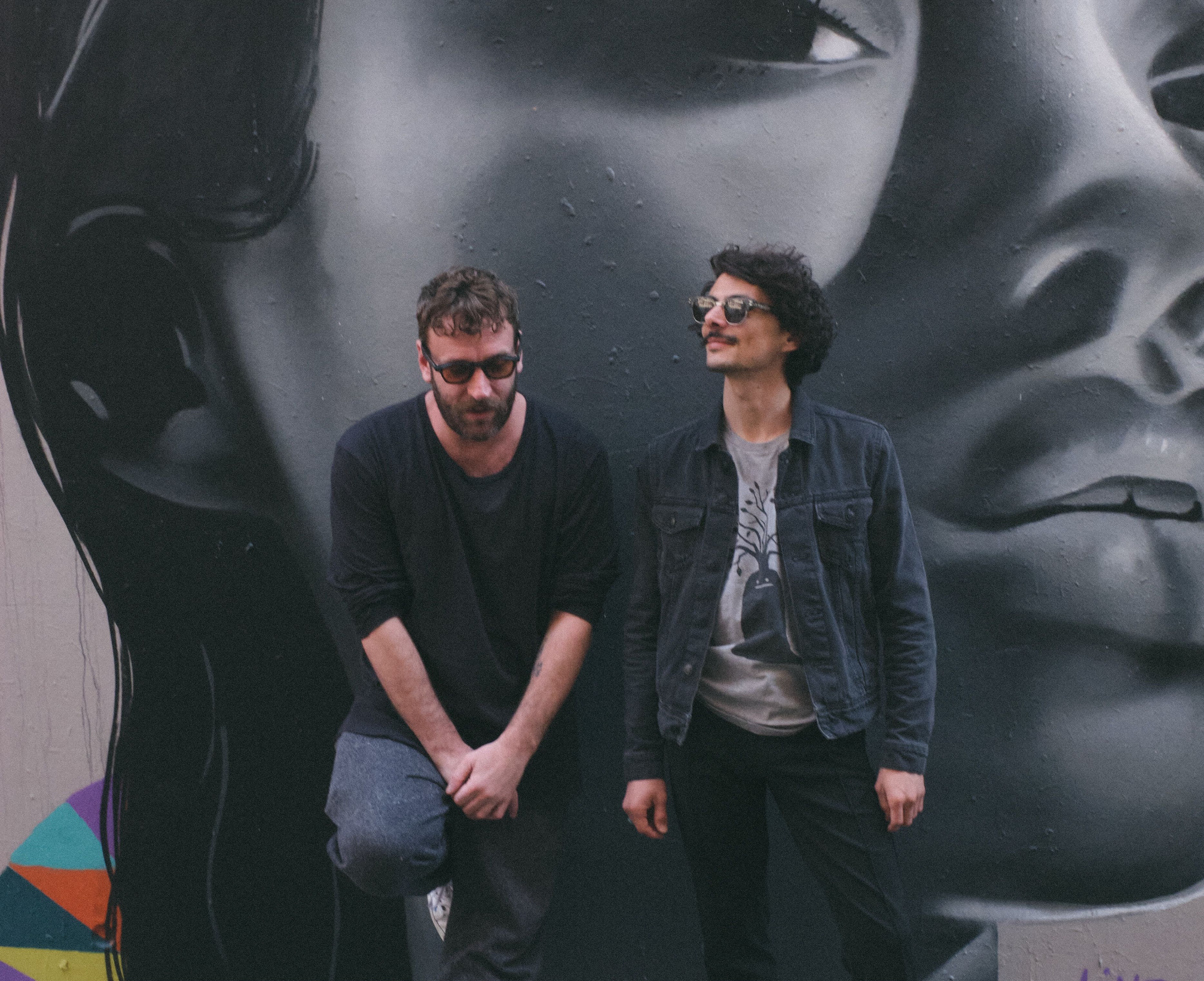
Recent release: Guti teams up with Armenian musician Sarkis Ricci for the experimental collaborative project Modal Tune. Guti pres. Modal Tune is out now via El Nuevo Sonido Latino.
If you enjoyed this Guti interview and would like to stay up to date with his music, visit his official homepage. He is also on Instagram, and Facebook.
For a deeper dive, check our earlier Guti interview.
What were some of your earliest collaborations? How do you look back on them with hindsight?
I remember one of my first collaborations dearly. It was Damian Schwarz in his studio in Madrid. I went there more as a musician than a producer, and he introduced me to a completely different world. He was so generous and made me part of the whole process, and the result was a great record that went on to be my first big one - ‘Salson’ on Raum Musik.
I also have great memories of working with Ryan Crosson in those early years. I learned so much from those sessions and those two.
[Read our Ryan Crosson interview]
There are many potential models for collaboration, from live performances and jamming/producing in the same room together up to file sharing. Which of these do you prefer – and why?
I’ve collaborated in many formats and ways.
But I will always love to get together in a studio for a couple of days, phase out the world, really get to know each other, and then wait for the time when these joint ideas come to us.
How did this particular collaboration come about?
We’ve been making music for years. During the pandemic, Sarkis would come to my studio, play piano, and talk about jazz. Then we would jam, and I would write songs the day after so he would come back and hear what I had done with the sessions.
It was a great feedback loop. Playing music without a purpose and then making songs with clarity.
What did you know about each other before working together? Describe your creative partner in a few words, please.
He is one of the most talented musicians I have ever played with. He is an incredible jazz pianist with his own voice. Truly outstanding.
What do you generally look for in a collaborator and what made you want to collaborate with each other specifically?
Most of the time, it comes from people I love and can learn from. Collaborations are very special in the sense that you want to find that dream balance when both visions are there. It is so flexible and delicate that you have to have that trust and love to embrace the process.
After so many years in music, you start getting an idea of how you can get the best out of the musicians and that comes from trust and connection. In a way, it reminds me of that first collaboration I did with Damian Schwarz. However, I was the producer this time because he got into the studio as a musician.
It took me a bit to find the balance. He gives me complete control of it, and I have no idea where we are going. This is where the good songs are crafted.
Tell me a bit about your current instruments and tools, please. In which way do they support creative exchange and collaborations with others?
As we both play keys, it was easy to understand each other. We were playing a vertical piano a lot and doing some experiments on how to mic it.
I also built two live rigs that we will always play. I have a Nord Stage 2 and Electro 2, and he has a Yamaha montage and the Moog Sub 37, and we will switch setups. I have many other synths, but I wanted to build a sonic coherence for this project so that it sounds like a band. And I’m glad we did cause it makes playing live so much easier now.
Then, I would sample live recordings of drums from sessions I recorded with great musicians over the years and play with them until we got interesting drums. We played any other sounds in all of the records.
Before you started making music together, did you in any form exchange concrete ideas, goals, or strategies? Generally speaking, what are your preferences when it comes to planning vs spontaneity in a collaboration?
We met randomly at a BBQ in Berlin four years ago and spent hours talking about Chick Corea and modal music. We would listen to great music and talk about those artist and their lives. I had no ideas and no goals; it was just great to make music together. It was the perfect match at the perfect time.
I just invited him to my house the day after he came for dinner, and we have never stopped making music since.
Describe the process of working together, please. What was different from your expectations and what did the other add to the music?
It is pretty much on the fly. He is so good. Every take is one take. You just need to adjust to writing, producing and mixing almost in real-time.
I prefer not to put a lot of thought into those early stages of the composition. I will get some drums, play a bassline in one synth while he is jamming and then add more things. I was trying to be jamming at the same time as much as we could to get those moments.
Some songs sound like they have a lot of work, but in reality, it was just the connection. The core of each song was made in minutes. Modal Tune is a pretty crazy process, but now it feels so natural and easy.
Is there a piece which shows the different aspects you each contributed to the process particularly clearly?
All of them highlight different parts of the process we built. ‘The Poet And The Beast’ is the only song that is as it was when we recorded it: 20 minutes of jamming in one take, then tweaking the sounds and was done.
‘El Enemigo’ is my reinterpretation of one of those early sessions. ‘Casi Funk’ is us going through hours of our live recordings and transforming those recordings into a new context.
Then, months after, I was on tour and played that bassline in my buddy’s studio in Buenos Aires. If you listen to the song, you will think we started with the bassline, but it was the last thing to be added.
Sarkis gives you these incredible takes, and then I can write music even if we are not together, and it always sounds like us.
What tend to be the best collaborations in your opinion – those with artists you have a lot in common with or those where you have more differences? What happens when another musician take you outside of your comfort zone?
To be honest, I haven’t had many differences with anyone. You try to build a safe zone where everybody can add and have a voice. And everyone has a veto.
Also, my approach is never with a goal or thinking, “I want to do that” or “I want to go that way” in the sessions. Things are moving so fast you have to be connected. Every collaboration takes you out of your comfort zone. Also, let them know it is entirely okay if nothing happens (this happens most of the time).
Trying to convince people to like something they don’t like doesn’t make sense, and you need to get unattached to ideas or sounds. Nothing is definitive; the songs morph in front of you, and you need to follow them.
Decisions between creatives often work without words. How did this process work in this case?
We barely speak in the studio. We have a rule that each one has a full veto at any time. Whatever you are not feeling is out. That’s it.
We barely use it, either.
What are your thoughts on the need for compromise vs standing by one’s convictions? How did you resolve potential disagreements in this collaboration?
In this project, compromise was never an issue because he is such a good musician; a couple of hours with him will give you material for months.
The challenging part was that I wanted him to be more part of the process and not overpower his voice, as I’ve been making music longer and have a crazy process myself. It was hard to get the balance as I had a clear vision of how I wanted the project to sound and be.
But I didn’t force it, and we got to a point where we were both happy. Now it sounds like Modal Tune.
Was/Is this collaboration fun – does it need to be?
It was so much fun. All those raw jams are incredible. Every time we get together, we record hundreds of hours of incredible recordings - a pleasure.
We have made albums and albums over the years, and now is the first time we have put something out.
Do you find that thanks to this collaboration, you changed certain parts of your process or your outlook on certain creative aspects?
Because of the project’s dynamics, I had to call the shots almost in real-time. This project taught me to trust my gut and instincts, react and change course, and let the flow take over the ideas.
Collaborating with one’s heroes can be a thrill or a cause for panic. Do you have any practical experience with this and what was it like?
Collaborating with Martin Buttrich was incredible. He is so far ahead as a producer that being in his studio was really intimidating in the beginning.
He is never in a rush. He is a master of creating the vibe. Also, something I picked up from him was that he made me show him my process and how I see things, really taking care of capturing all these first ideas and feelings to then come to the next steps.
I’ve learnt a lot from him over the years. He is a true master.