Published
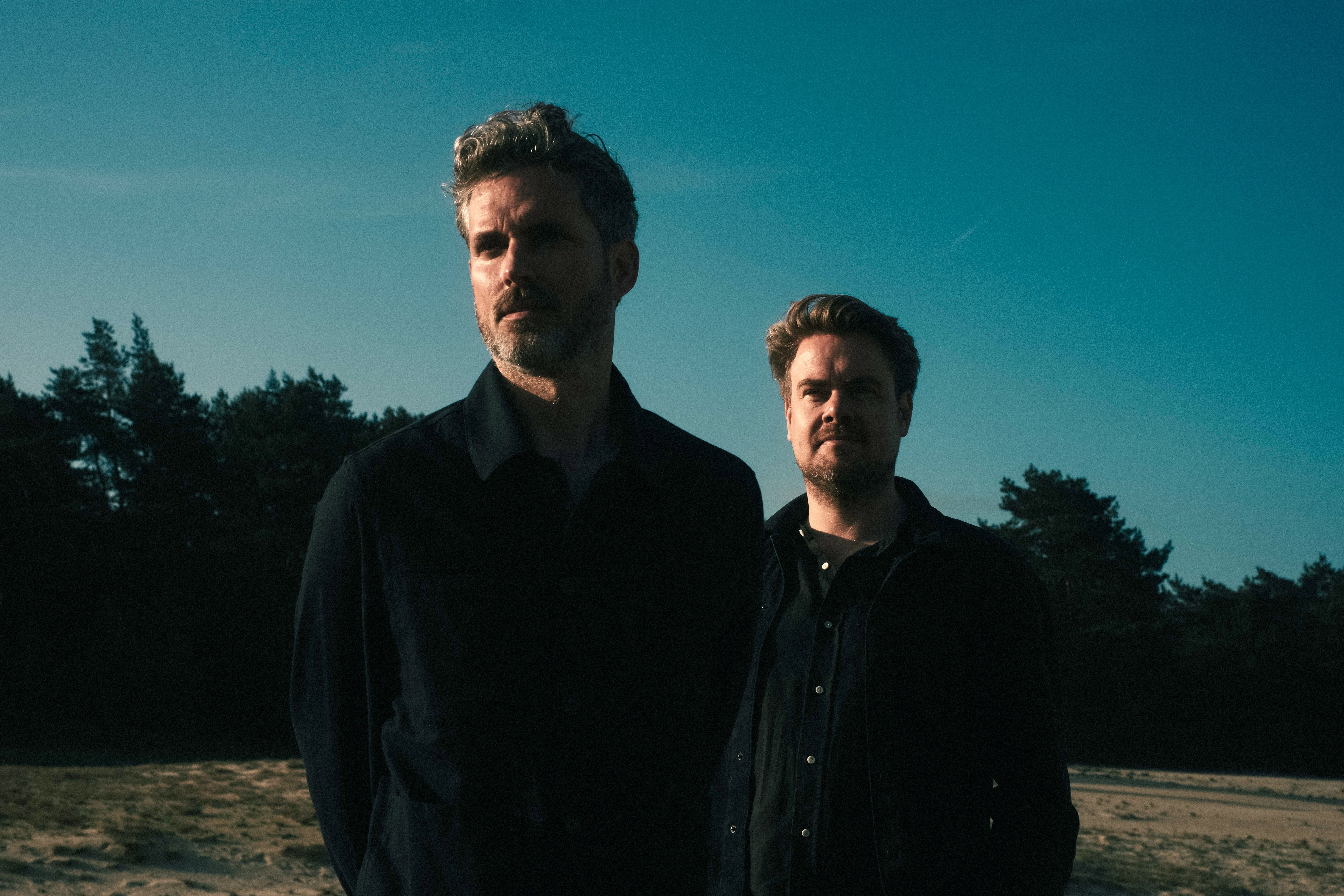
Name: HAEVN
Main members: Marijn van der Meer (vocalist, songwriter), Jorrit Kleijnen (composer)
Additional current band members: Bram Doreleijers (guitar), Mart Jeninga (bass), David Broeders (drums)
Interviewees: Marijn van der Meer, Jorrit Kleijnen
Nationality: Dutch
Current release: HAEVN’s new album Wide Awake is out via Nettwerk. Get the extended version here.
Recommendations: Maybe a bit macabre but we recommend ‘The Top Five Regrets of the Dying’. On number one it says: I wish I’d had the courage to live a life true to myself, not the life others expected of me.
Another recommendation is the album Teitur - Poetry And Aeroplanes. If you’d like to listen to very good songwriting from a young Paul Simonish singer from the Faröer Islands.
If you enjoyed this HAEVN interview and would like to know more about the band and their music, visit their official homepage. They are also on Instagram, and Facebook.
Where does the impulse to create something come from for you? What role do often-quoted sources of inspiration like dreams, other forms of art, personal relationships, politics, etc. play?
The impulse to create is almost instinctual for us, we try to make sense of emotions that aren’t easily expressed in words alone. Sometimes dreams or movies are an inspiration but personal relationships play a big role, each becoming a part of the landscape of our songs.
For example our song “Till The Morning” reflects wants to inspire the listener to give loved ones a second chance. If it weren’t for these chances we’d all be alone. We’re always looking to translate these emotional landscapes into music.
For you to get started, do there need to be concrete ideas—or what some have called a 'visualization' of the finished work? What does the balance between planning and chance look like for you?
We rarely have a concrete vision of the finished song from the start. Instead, it’s like catching glimpses of something that it could be. Sometimes, we’ll have a loose idea, like a melody or a phrase, and we let it take us wherever it feels it should go.
There’s a balance between planning and chance: we might begin with a structured melody or chord progression, but we try to stay open to the unexpected because we feel that’s where the magic lies.
Is there a preparation phase for your process? Do you require your tools to be laid out in a particular way, for example, do you need to do 'research' or create 'early versions'?
Yes, preparation is a big part of the process.
We like to create rough, early versions to capture ideas before they get too polished. Sometimes that’s as simple as recording a voice memo or experimenting with just a piano and vocals. This phase is about capturing the emotional core of the song and then slowly shaping it.
It’s also important to us to have an inspiring, calm space where we can focus without distractions, almost like preparing a canvas before starting a painting.
Do you have certain rituals to get you into the right mindset for creating? What role do certain foods or stimulants like coffee, lighting, scents, exercise, or reading poetry play?
Although creating the right environment is key, ideas and melodies can also occur at every moment of the day.
For us it’s not about forcing creativity but about making a space where it feels natural for ideas to emerge.
What do you start with? And, to quote a question by the great Bruce Duffie: When you come up with a musical idea, have you created the idea or have you discovered the idea?
It feels like discovery more than creation. A melody, a chord, or a fragment of lyrics will appear, as if they’ve been there all along, waiting for us.
It’s a bit like finding pieces to a puzzle you didn’t know existed.
When do the lyrics enter the picture? Where do they come from? Do lyrics need to grow together with the music or can they emerge from a place of their own?
Lyrics tend to emerge once the music has already painted the emotional landscape.
Sometimes a phrase will arise naturally with the melody, and other times we’ll sit with the instrumental to see what story it wants to tell.
What makes lyrics good in your opinion? What are your own ambitions and challenges in this regard?
Good lyrics resonate beyond the words, they create space for listeners to feel and interpret in their own way. We aim for simplicity that captures complex emotions, so that people can find their own story in the music.
Our challenge is to balance that honesty with universality, crafting something personal yet widely relatable.
Many writers have claimed that as soon as they enter into the process, certain aspects of the narrative are out of their hands. Do you like to keep strict control or is there a sense of following things where they lead you?
We’re big believers in following where the music wants to go. Once a song is underway, it’s almost as if it has its own life, and our role is just to nurture and guide it.
There’s a freedom in letting go of strict control, as it allows for unexpected shifts and emotions to surface that make the song more genuine.
Often, while writing, new ideas and alternative roads will open themselves up, pulling and pushing the creator in a different direction. Does this happen to you, too, and how do you deal with it? What do you do with these ideas?
Yes, this happens a lot. Sometimes an entirely new section or chord progression will appear, and it pulls us in a different direction.
We try to stay open to these changes, capturing them without judgement. If an idea doesn’t work for the current song, we’ll save it for later.
There are many descriptions of the creative state. How would you describe it for you personally? Is there an element of spirituality to what you do?
Creating music can feel spiritual. For us, it’s like entering a space outside of time where we’re deeply connected to something greater. It’s not just about making sounds but about translating feelings and ideas that go beyond words.
This connection feels spiritual in its own way, like tapping into a shared human experience.
When you're in the studio to record a piece, how important is the actual performance and the moment of performing the song still in an age where so much can be “done and fixed in post?“
The performance is incredibly important. Even with the tools we have to polish and edit, there’s something irreplaceable about a raw performance that captures the emotion of the song.
We aim to keep as much of the live feel as possible, even if that means leaving in imperfections. It’s those real moments that give a song its soul.
Once a piece is finished, how important is it for you to let it lie and evaluate it later on? How much improvement and refinement do you personally allow until you're satisfied with a piece? What does this process look like in practice?
Letting a song lie is essential. We’ll step away and come back with fresh ears, often hearing things we missed. We refine until the song feels complete, but we avoid overworking it. Too much polishing can strip away its essence.
The goal is to capture the spirit of the song without burying it in detail.
What's your take on the role and importance of production, including mixing and mastering for you personally? In terms of what they contribute to a song, what is the balance between the composition and the arrangement (performance)?
Production, mixing, and mastering are crucial, they bring out the layers and subtleties of the music, giving each element its place.
Even though our sound is a very important aspect of our music, for us they will always serve the composition and arrangements.
After finishing a piece or album and releasing something into the world, there can be a sense of emptiness. Can you relate to this—and how do you return to the state of creativity after experiencing it?
Yes, there’s a feeling of quiet after releasing an album, almost like letting go of something close.
We take time to recharge by exploring new inspirations, meeting people, and experiencing new places. Gradually, ideas start to flow again, and we’re ready to dive back in.
And then there’s a new dimension of playing the songs live for an audience that has listened to the songs on the album which is great.
Music is a language, but like any language, it can lead to misunderstandings. In which way has your own work—or perhaps the work of artists you like or admire—been misunderstood? How do you deal with this?
Music is open to interpretation, and sometimes listeners find meanings we didn’t intend. But we see this as part of the music’s life, it’s no longer just ours but belongs to anyone who connects with it.
Different interpretations make a song feel alive and meaningful in ways we couldn’t predict. We like to not give that much away of what the songs mean to us but leave it up to the ones that listen to it.
Creativity can reach many different corners of our lives. Do you personally feel as though writing a piece of music is inherently different from something like making a great cup of coffee? What do you express through music that you couldn't or wouldn't in more 'mundane' tasks?
Both can be creative, but music allows us to delve into emotions and ideas that reach beyond the everyday. It’s a way to capture a timeless feeling and create something that resonates deeply with people.
Through music, we express the parts of ourselves that words or daily tasks can’t reach.