Published
Name: HAEZZ
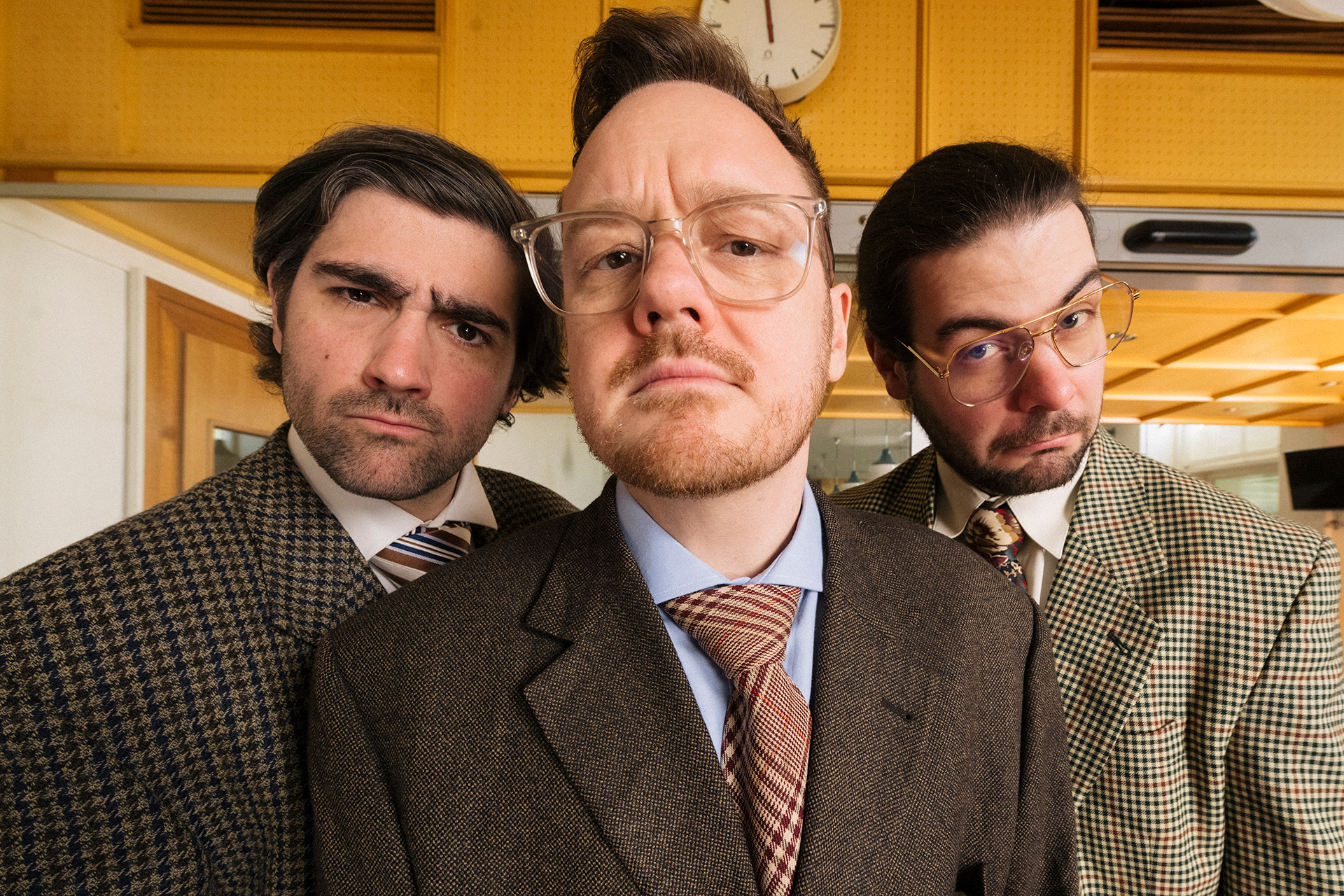
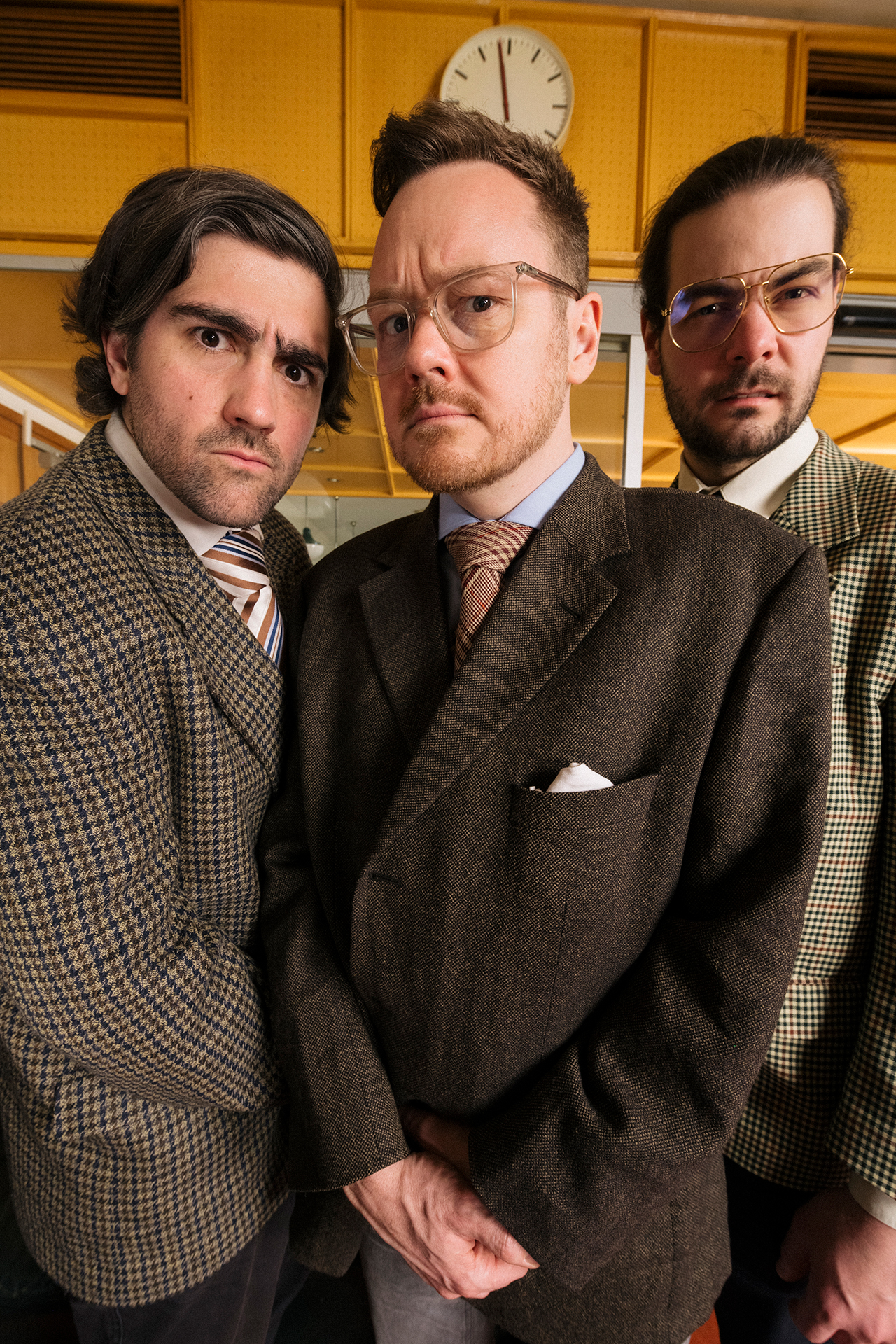
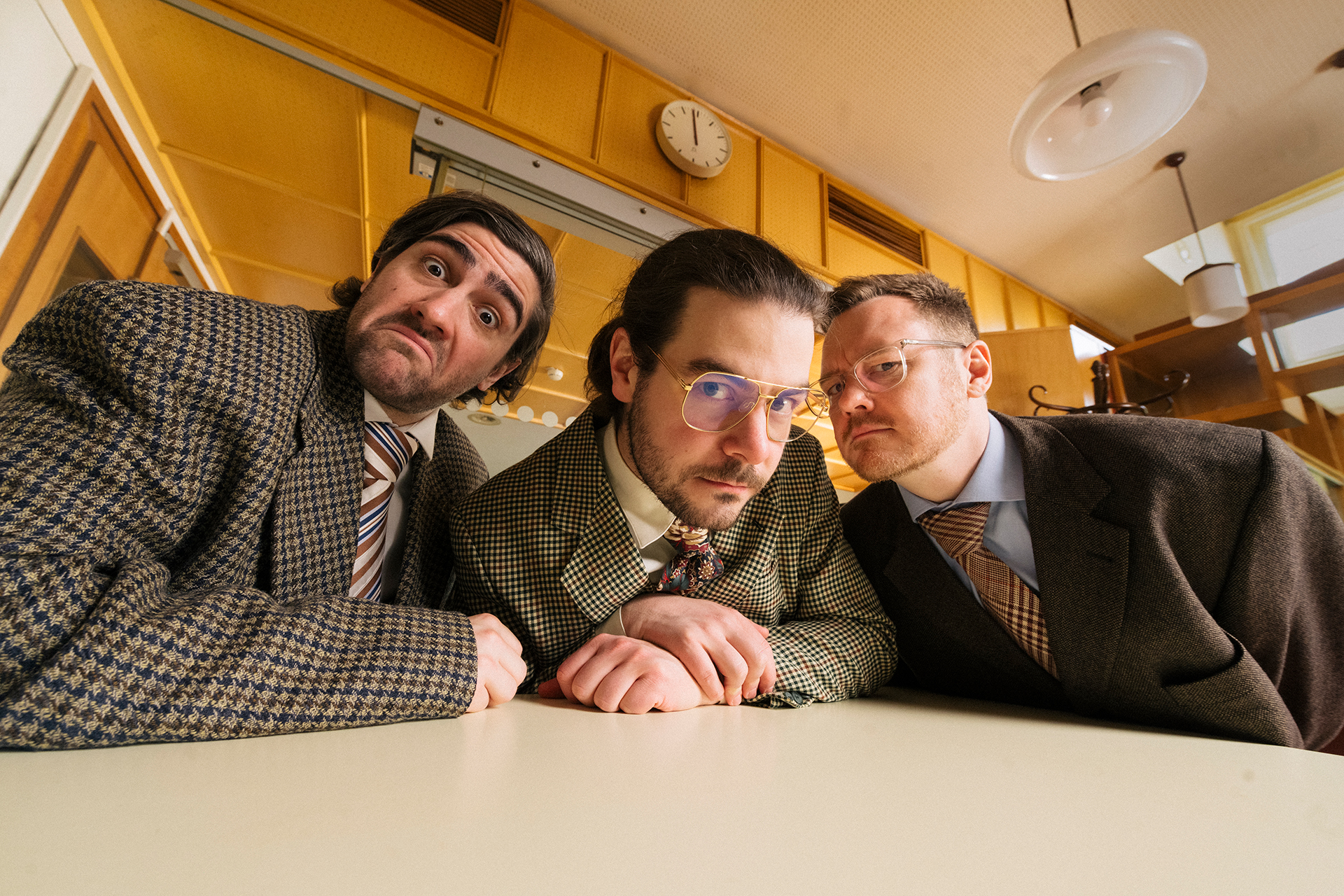
Members: Martin Eberle (trumpet), Štepán Flagar (saxophone), Tobias Vedovelli (bass)
Nationality: Austrian (Tobias Vedovelli, Martin Eberle), Czech (Štepán Flagar)
Current event: HAEZZ's self-titled debut album is out via Ö1.
Recommendations: Tobias: Since I really like to read, I’d go with a book about music. It’s quite well known but it’s just so super interesting, fascinating and full of knowledge about the music in the 20th century: The Rest is Noise by Alex Ross.
One of the recordings I love so freaking much, that I just get goosebumps the second I hear the first notes of it is Brad Mehldau’s live interpretation of ‘Blackbird’ on his 10 Years Solo Live album.
If you enjoyed this HAEZZ interview and would like to know more about the band and their music, visit the tio's official homepage. They are also on Instagram.
Do you think that some of your earliest musical experiences planted a seed for your interest in improvisation?
Martin: In the beginning it was definitely more about playing together and having fun. It was fun reading music and playing in wind bands, youth orchestras and ensembles with my friends.
Later, when I studied classical music I played a lot in professional ensembles and orchestras etc but only from scores. I started missing the freedom of creating my own ideas, music and sounds.
Then I found the freedom in jazz and improvised music.
When did you first consciously start getting interested in musical improvisation? Which artists, teachers, albums or performances involving prominent use of improvisation captured your imagination in the beginning?
Stepan: I started playing classical clarinet first at age of 8 and I remember practising along to the Mozart Clarinet Concerto.
I loved the piece so much and I had a recording of it, but I didn’t have the written music for it. So I tried to catch some of the notes and I was surprised that some of the other notes I played sometimes didn’t sound that bad with it and I wondered why.
At my music school there was also one piano teacher, who played the boogie woogie style well and I liked it and started asking him questions about improvisation, harmony etc … Then I discovered Benny Goodman, Count Basie, played in a school big band and the interest in improvising never left me.
I think also big thing for me was to hear “My Favourite Things” by John Coltrane. I didn’t like it, when I first heard it but somehow I couldn’t stop listening to it. Very moving experience.
Keith Jarrett's solo piano concerts were also a huge turning point in terms of how I think about improvisation.
Tell me about your instrument and/or tools, please. What made you seek it out, what makes it “your” instrument, and what are some of the nost important aspects of playing it?
Martin: I've been playing the trumpet since I’m 8 years old. I loved the sound and the role of the trumpet in wind bands and orchestras etc. Later, when I created my own music I loved finding new sounds on the horn which also allowed me to be part of the rhythm section, for example as a percussion instrument or electronic noise sounds.
When it comes to “normal“ trumpet playing, I see myself as a melody creator and I’m always searching for a warm and nice trumpet sound. I don’t like this high note trumpet stuff. But when it comes to extended techniques I sometimes also like it very noisy and aggressive. 
HAEZZ Interview Image by Karo Pernegger
How would you describe your own relationship with your instrument – is it an extension of your self/body, a partner and companion, a creative catalyst, a challenge to be overcome, something else entirely?
Martin: It is love and hate at the same time. I love the warm sound of the trumpet and the possibilities this instrument gives you to express yourself. But the trumpet is a very physical instrument. A daily challenge. You always need to be very fit to have the freedom to create, otherwise you are only struggling with the embouchure and endurance etc and music comes second.
But sometimes even this gives you new ways of expressing and thinking. When I’m feeling good with my “chops“ the trumpet is an extension of myself.
Derek Bailey defined improvising as the search for material which is endlessly transformable. What kind of materials have turned to be particularly transformable and stimulating for you?
Stepan: I don’t agree with that statement. I would say, that improvisation is not a search for material in itself - because here is simply no time while improvising ‘to search for something.’ Actually if you do so, you can hear it in the musical result and this stands in the way of what one would describe as a ‘flow’.
I would say, that improvising is the ability to ‘play creatively’ with what is available to you at that particular moment - which, depending on one's improvisational flexibility and also other factors, can become endlessly transformable.
There are tons improvisational or compositional examples, that any material can be strongly (if not endlessly) transformable, which means that this would be only a search for a material, which one feels comfortable enough with, to work with it and transform it into a different layers.
So it is not an issue of material, but of a improvisational flexibility. To get to that state of having at least a bit of this flexibility is the most stimulating improvisational experience for me.
Do you feel as though there are at least elements of composition and improvisation which are entirely unique to each? Based on your own work or maybe performances or recordings by other artists, do you feel that there are results which could only have happened through one of them?
Stepan: I believe that in general it depends on the style a type of composition and improvisation.
In terms of having a musical idea, I look at them as one thing. But arranging a piece for a large ensemble has a lot to do with the knowledge of instruments and colours of sound, which is specific. But even there you can think of them as one thing.
I would be interested how it would sound like if one could improvise and “play” an orchestra in real time, the same way one plays a single instrument. I look at them as one thing. I also found that my best ideas come from spontaneous composition = improvisation.
When I compose I think of improvisation and when I improvise I think of a composition I would say.
When you're improvising, does it actually feel like you're inventing something on the spot – or are you inventively re-arranging patterns from preparations, practise or previous performances? What balance is there between forgetting and remembering in your work?
Martin: I always try to invent something on the spot. I think it’s not possible to constantly create new stuff, but with the vocabulary I have, I try to be as open as possible.
Sometimes it’s the room, or the sound of a room which inspires me, or the colleagues on stage, the audience, or last but not least how I feel in the moment or during the day. But I think it makes a big difference, if you play a complete free and improvised set, or mix the free and written parts. It’s much more difficult to switch and be totally free, than play an entirely free set. 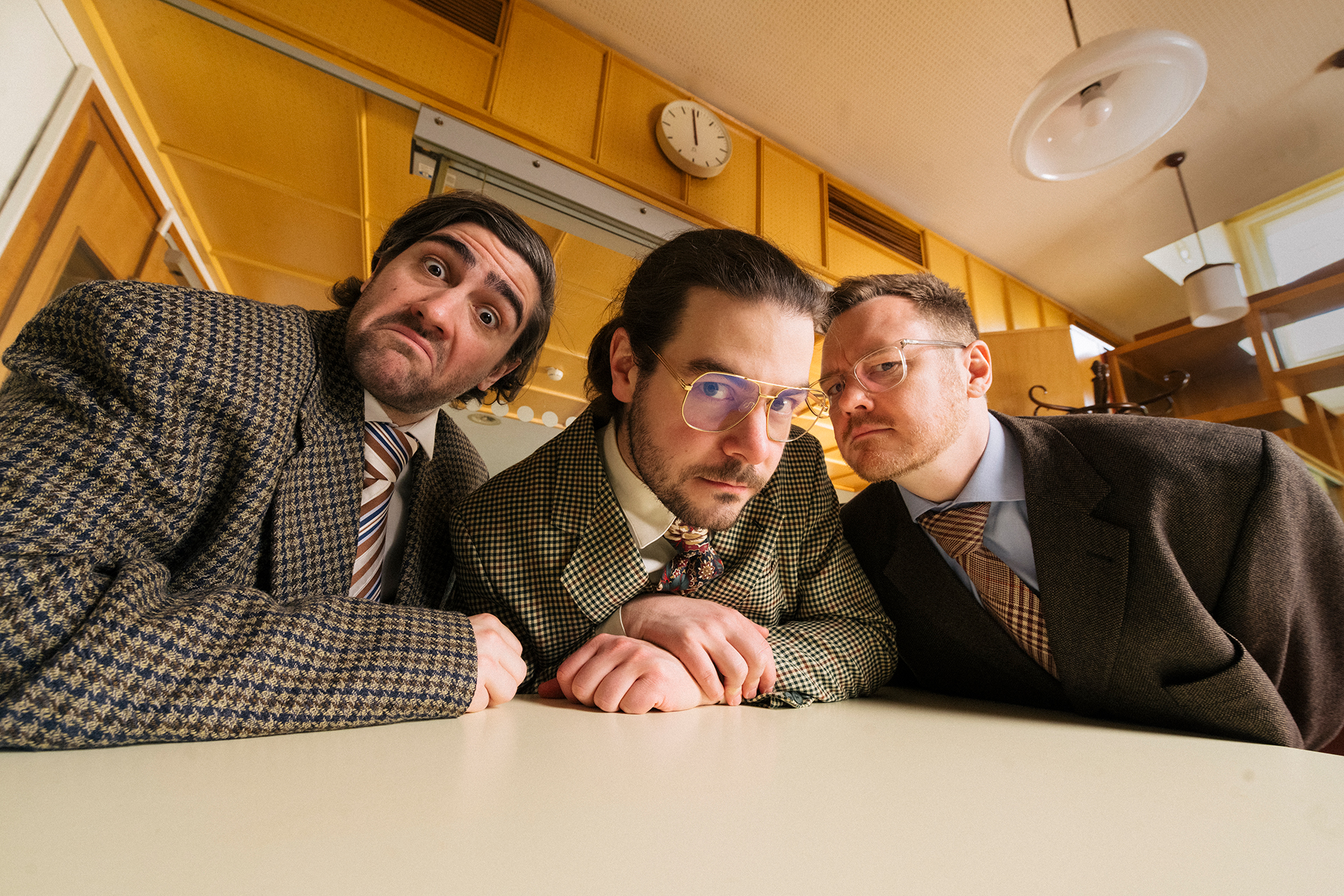
HAEZZ Interview Image by Karo Pernegger
Are you acting out parts of your personality in your improvisations which you couldn't or wouldn't through other musical approaches? If so, which are these? What, would you say, are the key ideas behind your approach to improvisation?
Tobias: Absolutely! To me improvisation is the most direct, unfiltered way of expression in a musical and also personal way. Due to its immediacy it has something so pure and so honest in it, that just couldn’t exist in any other form of musical approaches.
For instance, when I compose, arrange or orchestrate I constantly question, criticize and judge my ideas, maybe change stuff right away or block my own impulses – which can also be good and important of course. But all of that is not happening while improvising – at least if you’re in the right improvisation flow.
In terms of your personal expression and the experience of performance, how does playing solo compare to group improvisations?
Martin: For me it’s more or less always a group improvisation because the musicians who are comping are also improvising. Let’s say it’s a trumpet solo, then I'd lead the solo but all the others who are joining me are supporting and also inspiring me.
I guess the difference is that in group improvisations it’s not fixed who will lead and who will comp and it could also change very quickly. But it’s always about listening to- and acting with each other.
In your best improvisations, do you feel a strong sense of personal presence or do you (or your ego) “disappear”?
Stepan: I think it is kind of both. It is still you who makes the decisions but in a way you also can not stand in he way of letting things happen. I believe if one gets to the point of fluently speaking the musical language or any other language, then he/she is just expressing themselves.
Sometimes there are situations, where it is important to have an ego, let the ego come out and it might be the only way, which works in that moment. Nevertheless, to get to the point of having the language internalised enough, that your subconsciousness can take over, requires an immense amount of practise.
If I am lucky enough for that to happen within my improvisations, it just reminds me of the reason, why I do what I do.
In a live situation, decisions between creatives often work without words. From your experience and current projects, what does this process feel like and how does it work?
Tobias: Maybe it’s a bit corny to say, but anyway I guess it’s just a fact that music is just a different kind of language. If you work as a musician you just spent so much time on it, got so familiar with its ‘vocabulary’, ‘grammar’, ‘slangs’ and ‘sayings’ so that no more spoken words are necessary sometimes.
Of course it takes a lot of openness and willingness to dive into each other’s way of expression, leave space for the others, be empathic – just as with any other way of communication.
Stewart Copeland said: “Listening is where the cool stuff comes from. And that listening thing, magically, turns all of your chops into gold.” What do you listen for?
Tobias: Wow, that’s a tough one. I am not even sure if there is ‘this’ one special thing, a special ingredient or component I am listening for. Maybe it’s this kind of ‘magic’ that Copeland describes, which makes it kind of impossible to put it into words.
When it comes to composing or analyzing music I can be a rational, analytic guy, but I guess when it comes to listening, perceiving and experiencing music I am a pretty intuitive person, which often makes it hard for me to find the right words for describing and expressing what sounds and seems especially important, valuable or even brilliant to me.
There can be surprising moments during improvisations – from one of the performers not playing a single note to another shaking up a quiet section with an outburst of noise. Have you been part of similar situations and how did they impact the performance from your point of view?
Tobias: Of course. There are these two projects, mixed ensembles, always alternating musicians where we do a lot of completely free improvised sets. Those ‘extreme’ situations you are depicting are the ones that create so much tension and put the whole performance to this thrilling, cooking peak you want to achieve. It makes you as musician listen even more precise, full of expectation, how are the others reacting, what is going on.
I love these situations. These special bonding moments, that lead to a even better and more intense connection of the musicians.
I have always been fascinated by the many facets of improvisation but sometimes found it hard to follow them as a listener. Do you have some recommendations for “how to listen” in this regard?
Stepan: That is a very difficult question. There are improvisations which are harder or easier to follow. There are also instruments, which might be harder or easier to follow when it comes to sound possibilities.
One thing could be not to try to find something, but just to listen to the sonic experience and let the sound effect you. There are also compositions and improvisations, which are not really meant to be followed by the listener but the listener is supposed to let just the sound of it have an effect on themselves.
It is hard to logically follow some dadaist poem but the poem still has a certain effect on you, when you read it. I think it is interesting to also look at music improvisation in a similar way.
In a way, improvisations remind us of the transitory nature of life. When an improvisation ends, is it really gone, just like a cup of coffee? Or does it live on in some form?
Tobias: Well, that question has many layers to it.
In one way, yes, when an improvisation is over, that was it. You can’t somehow restore it. Even if you’d record it or instantly transcribe it and play it again from the sheets you couldn’t play or experience it the extact same way. Not just because you can’t play and record something exactly the same way twice anyway, but also because the tension, the ‘energy’, the feeling that arises in that exact moment that leads to the improvisation is just unique.
At the same time, as I tried to depict in one of the questions before, improvisations lead to such intense connections between musicians, let them bond and develop their relation in such an immense way, that in the end there is something bigger than the notes and sounds that were played.