Published
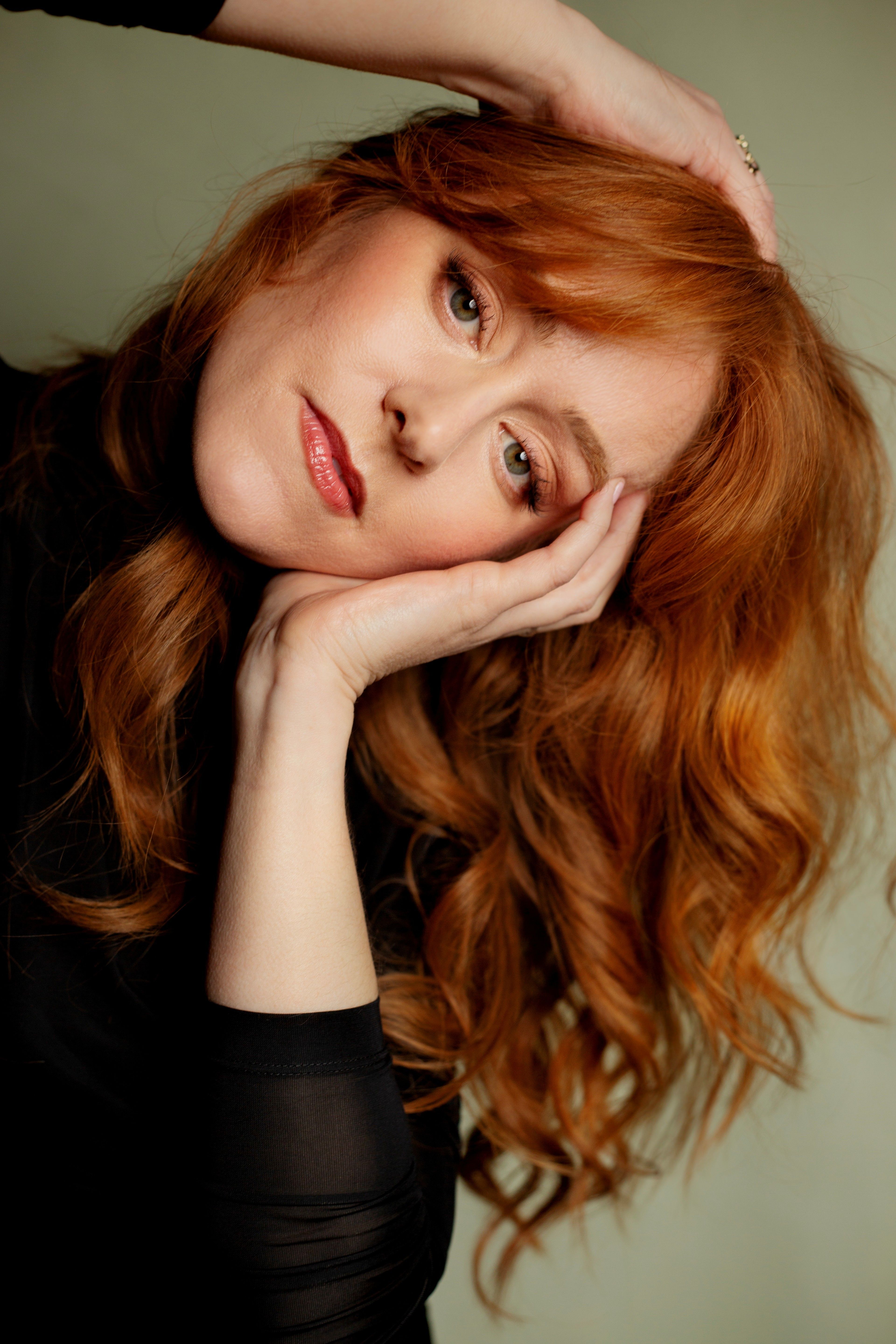
Name: Hannah Peel
Nationality: British
Occupation: Composer, producer, broadcaster
Current Release: Hannah Peel's new album The Endless Dance, a collaboration with Chinese percussionist Beibei Wang, is out May 22nd 2026 via Real World.
Current event: Hannah Peel appears at the Film Composers Panel with the Alliance for Women Film Composers (12 April, 11am at Royal College of Music, London) as part of the 2026 edition of the London Soundtrack Festival – London’s first-ever festival dedicated to celebrating the music of film, TV and games. You can check out the full line-up at https://londonsoundtrack.com/whats-on/.
Recommendations for Bangor, Northern Ireland: My favourite place to eat and take time out, is a café restaurant on the coast called ‘The Starfish’. It overlooks the sea and the house the café is in, is like a Victorian traveller’s treasure trove. The food is the best around too. On a warm day, you can drink your coffee in the garden whilst dreaming of where the sea might carry you.
Shoutouts: Follow positivenewsuk on insta for nice world things … and for an alt news outlet I’m loving The Nerve (fearless independent journalism) and those that are leading it. Good on them, we need it.
If you enjoyed this Hannah Peel interview and would like to know more about her music, visit her official homepage. She is also on Instagram, Facebook, and bandcamp.
Do you think that some of your earliest musical experiences planted a seed for your interest in film music as well?
My grandparents had a piano and always on it was a colourful song book that had pictures of a girl collecting apples or feeding chickens etc. I used to sit as a 3 or 4 yr old and just make music to the pictures. So, my parents thought it would be good to try me out with piano lessons.
Later I played in theatre shows and eventually went to study acting in London. But then missed music so much I left!
I didn’t really think that writing for media was even a job until my second year of university, when the new composition lecturer Gary Carpenter, who had worked on The Wicker Man, brought in film examples to score to … and then my whole world changed.
Which composers, or soundtracks captured your imagination in the beginning? What scenes or movies drew you in through their use of music?
In the very beginning …The score to Michael Nyman's The Piano. Wow that got played everywhere, everyone I knew had bought, borrowed or stole the book. If you had a piano you played it. Pretty addictive as a youngster to play music that was in an actual film!
But when I heard the score to Hable Con Ella by Alberto Iglesias, it was the first to actually tune my ears into something different. Sombre and obsessively romantic.
I loved the use of flamenco guitar and classical voice mixed with the most stunning strings.
What were your very first active steps writing film music and how would you rate the gains made through experience – can one train/learn being an artist?
When I graduated, I did try to get onto a film scoring course. They said my background wasn’t classical enough! But the younger man on the panel did call after, and said I just needed to ‘find my sound’. Nice of him, so that’s what I did, and got into the world of making records, being in bands and touring.
A few adverts and title songs for some shows came along, but despite consistently trying, nothing really happened until the director Jeanie Finlay asked me to score her documentary about Game Of Thrones in 2018.
For your own creativity and approach to writing for film, what were some of the most important things you learned from teachers/tutorials, other composers, or personal experience?
Really it was mostly all through personal experience. Learning on the job.
For my first TV show, I was struggling to understand how composers managed so much constant writing work, so I rang Nainita Desai out of the blue and asked her what I was doing wrong. She didn’t know me at all but did give some lovely advice!
She gave me a good clue into managing time, looking at how much music a day has to be written against the period you have, and from there I understood how the whole thing worked. I started to think of the composer as a head of department rather than being so overwhelmed.
How would you rate the importance of soundtracks and film music for the movie as a whole? How do you see the relationship between image and sound in a movie?
That’s such a fascinating question.
You know films like The Taste Of Things (2023), the choice to not have music is such an integral part of the film. It’s just not needed at all. The sounds evoke the smells and a score might have taken away from the deep realistic connection of the chef and her food.
And yet, some need music so much they would be lost without it. I can’t imagine Star Wars with no music! It paints the whole world instantly and is completely integral.
I’m not sure that answers your questions directly, but I do know I prefer scores that don’t tell us how to feel, that support the narrative and characters and allows us viewers to escape without thinking about it. The composer is there and magically they are not, without anyone noticing!
Can you take me through your process of composing a soundtrack on the basis of a movie that's particularly dear to you, please?
Always, it’s so different but as the documentary film Underland has just been released after 5 years of making the score (a few years longer for the filmmakers).
It’s one of my favourites because I had read the book, way before I’d known about the film and just somehow fell into the job after contacting the author, Robert MacFarlane.
The project can change so much over that length of time, and to be honest, my scoring abilities had definitely improved by the time we recorded it all! There was a lot of music by the end …
Read the script (or in this case the book)
A list of instruments that could suit that sound world
Exploring that palate with no footage to begin with
Building up enough demos that feel comfortable with the films narrative and fit with the director’s conversations with you
Start to play with the ideas with early footage.
Record some instruments to help the process. In this case it was an explorative session with ancient horn player John Kenny. The sounds he created suited us needing this ‘voice’ of the underworld
More footage, more music and edits.
Many thoughts of “whose music stem is this? Okay, it’s mine, I don’t remember writing this.”
Once the final film edit is coming together; like a giant puzzle, start piecing all the stems together and pieces over 5 years
Picture lock arrives – work alongside the sound designer, start finalising the music and get cues signed off!
Orchestrate – choir, string ensemble, percussion.
Prep for mixing and then send all to be mixed.
Visit the dub and make some notes
Music edit a little more, suggest any extra ideas whilst in the room with everyone
Celebrate with a drink in the present moment, before running for a train or starting on the next score.
What, from your experience and perspective, does the ideal collaboration between you and a director look like?
Talking of Underland - The collaboration with the director Rob Petit was over such a long time, that I feel like he’s an old friend now. In tune with music and so humble … yet I’m still in awe as he can squeeze down shafts of cave systems only wide enough for your chest or swim in tight water chambers under cities, all to make that movie!
That project has been with me for so long, growing and changing, delving deep into the earth and then onwards with an ascent into the sky again. I’ve been constantly asking the question with Rob of how do you make the sound of ancient cave systems, the underworld, science, human history and mysteries … what does all that sound like?
Sending those pieces of music and stems over 5 years, meant there was an enormous amount of music and therefore trust involved between us – me trusting he would do the right thing with the music, and him, trusting that I didn’t mind him chopping it up and that I could still pull it all together at the end!
So, I think for me ultimately the ideal collaboration has to have a huge slab of hope. The journey may be hazy along the way but the conversations never stop. The unique exchange to keep exploring to reach that end goal needs to be open and full of hopefulness.
How do the other aspects of a movie's sound stage – such as foley and effects – influence your creative decisions?
Personally for me, that can change a lot of things!
My work pivots into the realms of sound and with the right designer it can be a dream come true to have so much to bounce off and share/collaborate.
I do love that fine line of score and sound peculiarity, and always hope it can be found.
The balance between visuals, fx and film music is delicate. What, from your point of view, determines whether or not it is a successful one?
The story. The music is so important to allow the viewer to feel and be immersed in the narrative.
We aren’t there to force emotions, although it is often treated like that! No matter the style of composition, if it’s helping the story and creating a world for it to live in, then it is successful in my opinion.
Different composers could potentially approach the same scene with strikingly different music. Would you say there can be 'wrong' and 'right' musical decisions for some scenes? In which way can some film music be considered 'definitive'?
The music can change everything! So yes on that basis there can definitely be choices to what is best suited.
For example, in Debrah’s childhood scene in ‘Once Upon A Time In America’ … I just can’t imagine anything other than the utterly perfect Morricone orchestral music as she dances.
Or the theme to ‘Jaws’. Simple and iconic, defining the whole of the film’s world.