Published
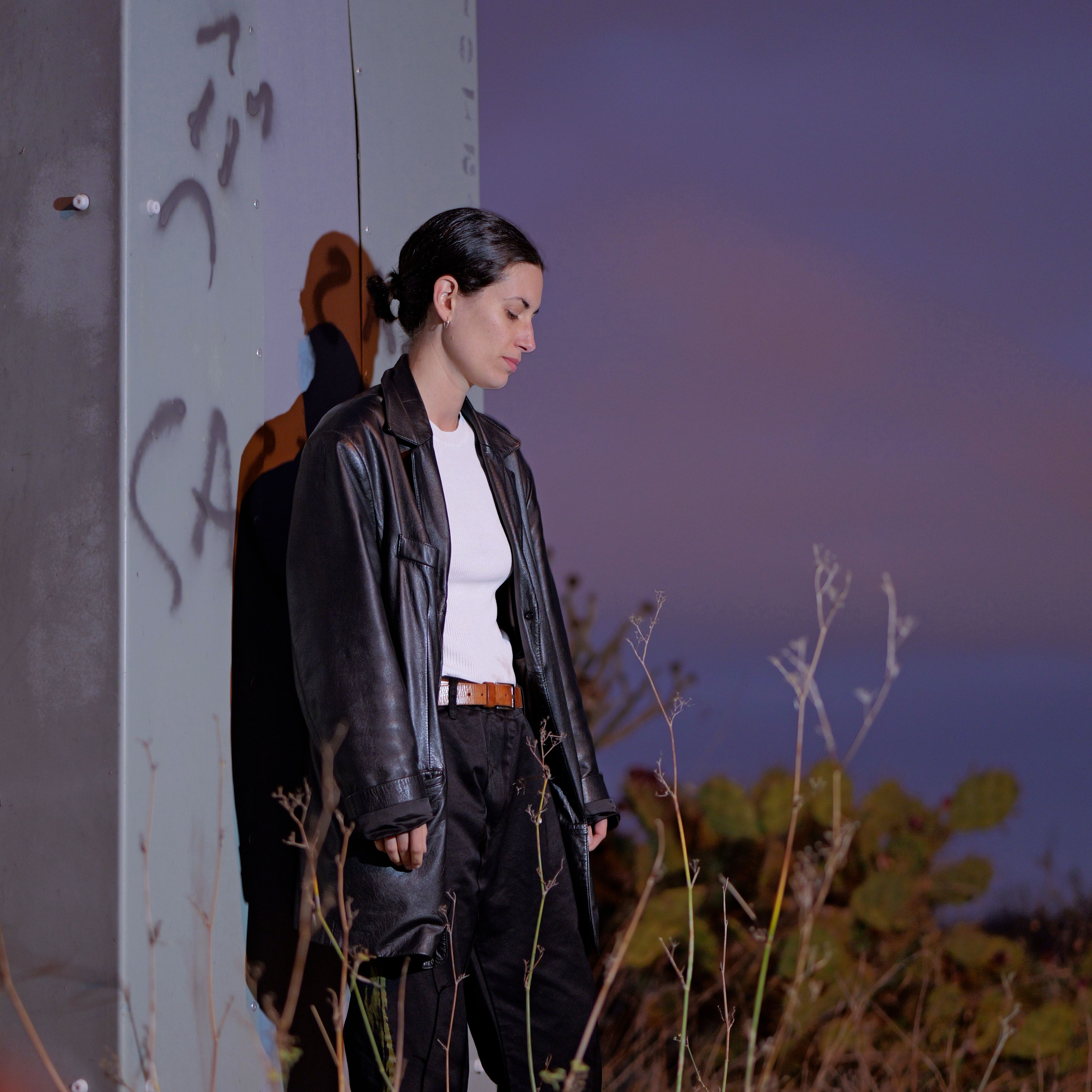
Name: Hara Alonso
Nationality: Swedish-Spanish
Occupation: Pianist, composer, sound artist
Recent release: Hara Alonso's new album touch•me•not is out via FUU.
Recommendations on the topic of sound: There is a book by Nina Sun Eidsheim called ‘Sensing Sound- Singing and Listening as Vibrational Practice’ that goes deep into the sensorial aspect of sound.
‘Bodies of Sound,’ edited by Irene Revell and Sarah Shin is a compilation of interesting texts around other ways of looking at sound from a feminist perspective.
And a book that I revisit a lot is ‘Vibrant matter’ by Jane Bennett on new materialism.
And a collective that inspires me and my work a lot is Gesturing Towards Decolonial Futures. They have a wonderful webpage with lots of resources that work very well for pedagogy and artistic practice in general.
If you enjoyed this Hara Alonso interview and would like to stay up to date with her music, visit her official website. She is also on bandcamp.
When I listen to music, I see shapes, objects and colours. What happens in your body when you're listening? Do you listen with your eyes open or closed?
It depends a bit on the music. Some music really invites the eyes to be closed and other more to look through the window, go for a walk or do the dishes.
In general I’m very interested in listening as an embodied, transcorporeal and sensory experience. So when I listen to music I try to open all my orifices as wide as possible.
Some sounds are especially tactile, some go more directly to the stomach, others just move in weird trajectories through the toes … Sound also forms very special colors and temperatures but that’s kind of hard to explain with words.
How do listening with headphones and listening through a stereo system change your experience of sound and music?
It again depends on the kind of album, it feels like some music is more conceived to be played on headphones, especially nowadays, and the spatialization techniques are super developed and really add a lot.
But in general I enjoy more to listen to music on good speakers because then one can really appreciate the nuances, the density of the different layers, the texture, the shape/body of sound. There is something about listening on a stereo system that includes the room, the air.
Sound needs air to exist, it breathes in air.
Tell me about some of the albums or artists that you love specifically for their sound, please.
For example, the Norwegian musician Jenny Berger Myhre has been a big inspiration because she combines different instruments such as organs and synths with whatsapp voice messages and field recordings, and I find this combination of hi-fi and low-fi qualities interesting.
Olivia Block has been also a big inspiration, how she mixes acoustic instruments with electronics, creating a consonant-dissonant interplay, very epic, melancholic, deconstructed.
What I find very exciting are in-between, very abstract and very relatable sounds.
I’m also thinking of the Spanish musician Marina Herlop. When I heard her music for the first time it was just like, wow, this is very unique!
She samples the piano and the voice and applies pitch shift as in EDM, plays a lot with the spatialization of sound, and then the outcome is just an elegant-in-an-impossible-to-describe-way music that creates very futuristic yet known landscapes.
Another musician I love is Jlin, especially the album Akoma, very eclectic and fictional. Other artists I love are Lucrecia Dalt and Mabe Fratti, that are very much in-between, coming from the experimental music scene into something very personal and intuitive, it feels.
I love artists whose sound sounds intuitive.
[Read our Olivia Block interview]
[Read our Olivia Block interview about sound]
[Read our Marina Herlop interview]
[Read our Mabe Fratti interview]
Do you experience strong emotional responses towards certain sounds? If so, what kind of sounds are these and do you have an explanation about the reasons for these responses?
It’s interesting because I used to work a lot with software like supercollider and max/msp for sound synthesis. One day I got a Juno 6, an analogue synth from the 70s, and that did something in my ear, like, mm, this sound resonates with my cells.
[Read our feature on the Roland Juno 60]
[Read our feature on the Roland Juno 106]
Daphne Oram, in her book ‘An Individual Note’, talks about the personal frequencies that resonate more with our bodies and does an analogy between the body and the capacitor. She said that each person has a different wavepattern, as a tuned circuit that vibrates more to certain sound and less to other.
For sure, in my music I’m interested in the affective power of sound and I tend to have a close relation to the materials I use. For example, if I use a field recording it’s gonna come from a physical space that is meaninful to me. Sound carries memory, so the sound source, and the processes applied to it matter a lot.
Personally I feel a lot of response towards acoustic instruments, strings, horns and specially the human voice. I appreciate the fleshy feeling in sound, not sure how to explain it.
There can be sounds which feel highly irritating to us and then there are others we could gladly listen to for hours. Do you have examples for either one or both of these?
There is something about context that is very important to sound.
For example, it’s not the same to be in a venue (more like classical music) where you are sitting and cannot go in and out, that creates certain conditions while listening. There is a festival in Stockholm called ‘Lumen project’ in a big church and it lasts for 6 hours. The audience can lay down, sit, eat, even talk and go in and out and it feels very good to listen with that freedom.
In general I try to not judge sound. Instead, I create good conditions for it to happen.
Also, it’s better to have food in your stomach before going to an experimental music concert, so I try to bear that in mind.
Are there everyday places, spaces, or devices which intrigue you by the way they sound? Which are these?
Many. For example, I live in Stockholm and it’s a city with lots of water and forest. So when I bike, I try to notice the change in the soundscapes, human, non-human, urban, semi urban, natural. Bridges and tunnels are my favourites, like opening and closing the listening, focal, peripheral.
Then I also very much enjoy taking a cab, cause normally there is some radio sounding, or a dry silence or a chit chat, and it feels like a sound moving capsule, like living a different life for some kilometers.
A sound I love is a dog drying out the water or a cat drinking water. One of the best sounds I heard was two hedgehogs eating, it’s very crackly. There are some words in the Swedish language that still intrigue me a lot, like 7 (sju), 20 (tjugo) and 27 (tjugosju).
Have you ever been in spaces with extreme sonic characteristics, such as anechoic chambers or caves? What was the experience like?
In 2022 I was part of a project called ‘Hope and Queering’ on the island of Höggarn, in Stockholm's archipelago. This island was used as an oil deposit and now one can see the abandoned industrial ruins, pipes, tanks and rusty infrastructures.
In one of those cisterns we made a performance dinner taking into consideration the acoustics of the space: 17 seconds of reverb. It was super interesting to play sound from different points of the space. But at the same time, one goes bananas after a while. On Tenerife there is a festival, Keroxen, also built in a huge tank transformed into a venue. It still has hard acoustics but they made it really work and there is a huge 180 degree screen.
Because my family lives on the Canary Islands and the geography there is very rich, it also creates very complex acoustic landscapes. In the centre of Gran Canaria there is an immense volcano crater where I love to spend time. One enters a different temporality there, an ancient, sustained, almost sacred space.
It makes me feel more vulnerable, more attentive, more humble, more like dust.
What are among your favourite spaces to record and play your music?
When recording it depends a bit on what is what I’m recording. For example the small, still nature sounds-kind of microscopic- that are very present in my music are recorded in the studio with close mics. But then I like to combine those with others recorded outdoors, so that there is a juxtaposition of spaces and dimensionality. When recording more instruments I love to have the actual sound of the room, so spaces like churches work very well.
Normally I record using 3 pairs of mics on the piano, sometimes geophones, condensers and omni.
I love to play in special venues in terms of acoustics but also spaces that have a community component, artist-run or also cultural spaces in the countryside. In general, to play for an intergenerational audience is exciting to me, I want my music to reach out to different people.
Do music and sound feel "material" to you? Does working with sound feel like you're sculpting or shaping something?
Definitely it takes you to a more poetic composition space to think of sound as matter that one can sculpt, knead or weave. Thinking of sound as a metaphor invites one to unfold unknown sound morphologies and narratives around it. This way of relating to sound becomes very much about embodiment and how sound is affected and affects the body with its texture, touch or even smell.
Having knobs, faders and filters to shape the sound helps to have a close relationship to it, especially when working with electronic music, where one can just program everything through the keyboard.
For me, also coming from a classical piano background, it’s important to feel the sound coming from my body, the gesture, the weight. Where is the sound initiated and how is it held are fundamental aspects because it also relates to breathing and phrasing.
Sound, song, and rhythm are all around us, from animal noises to the waves of the ocean. What, if any, are some of the most moving experiences you've had with these non-human-made sounds?
Nowadays I’m very attentive to birds cause they're animals that I feel most present in urban areas. There is a bird I hear almost every day that produces a very distinct sound, similar to a woodpecker, only that it’s not a woodpecker. It fascinates me. I love sounds that I don’t understand.
Once I had a very strong experience making field recordings in Estonia. We had a hydrophone and we were listening to the lake, it was pretty dormant and then suddenly the sun came out for 2 minutes. So many sounds appeared, as if the underwater world woke up to the sunlight. It was amazing. Like, wow, the sun creates life.
On the Canary Islands I have a sonic sanctuary in a beach called ‘El Confital’ that is very windy and the waves break very wildly. It sounds like the guts of the ocean. Makes me disappear.
Tinnitus and developing hyperacusis are very real risks for anyone working with sound. Do you take precautions in this regard and if you're suffering from these or similar issues – how do you cope with them?
Oh yes, I always carry earplugs with me. I was not careful until I was in a very loud festival and I had a sort of tinnitus for 3 days in my left ear which freaked me out. Now, I take a lot of care.
I love loud sounds, but there is a threshold where it becomes painful and it doesn’t add anything. So, definitely, always take earplugs with you!
We can surround us with sound every second of the day. The great pianist Glenn Gould even considered this the ultimate delight. How do you see that yourself and what importance does silence hold?
I’ve been thinking a lot about cycles and oscillations lately, how absolutely everything fluctuates, expands and shrinks, emerges and fades. The tides, the moon … even the body contains so many biorhythms that we don’t perceive but that are there. So there is something about action and quietude that I’m starting to become more aware of.
Personally, more than silence as such, I need stillness, to become more of an observer.
When composing music it’s also important for me to keep in mind that silence holds a lot of energy and that it is like a mesh that surrounds everything. So one can fill it with sound or empty it, but the silence is there, like a veil.
Seth S. Horowitz called hearing the "universal sense" and emphasised that it was more precise and faster than any of our other senses, including vision. How would our world be different if we paid less attention to looks and listened more instead?
At this moment I’m part of a research project called ‘Etudes on expanded listening’ together with the artist Hiroko Tsuchimoto, the choreographer Ellen Söderhult and the musicians Ryan Packard and Ville Bromander. We investigate practices of listening to sound, body, space, memory and imagination and their potential for developing new methods of composition and performance.
This research focuses specifically on the interplay between auditory-tactile modalities, so the skin becomes the main organ for listening. The Finnish architect Juhani Pallasmaa talks about how all senses, including vision, are extensions of the tactile sense. Nowadays the touch we have is through the phone, a total flat and heartless surface.