Published
Name: Harald Walkate
Nationality: Dutch
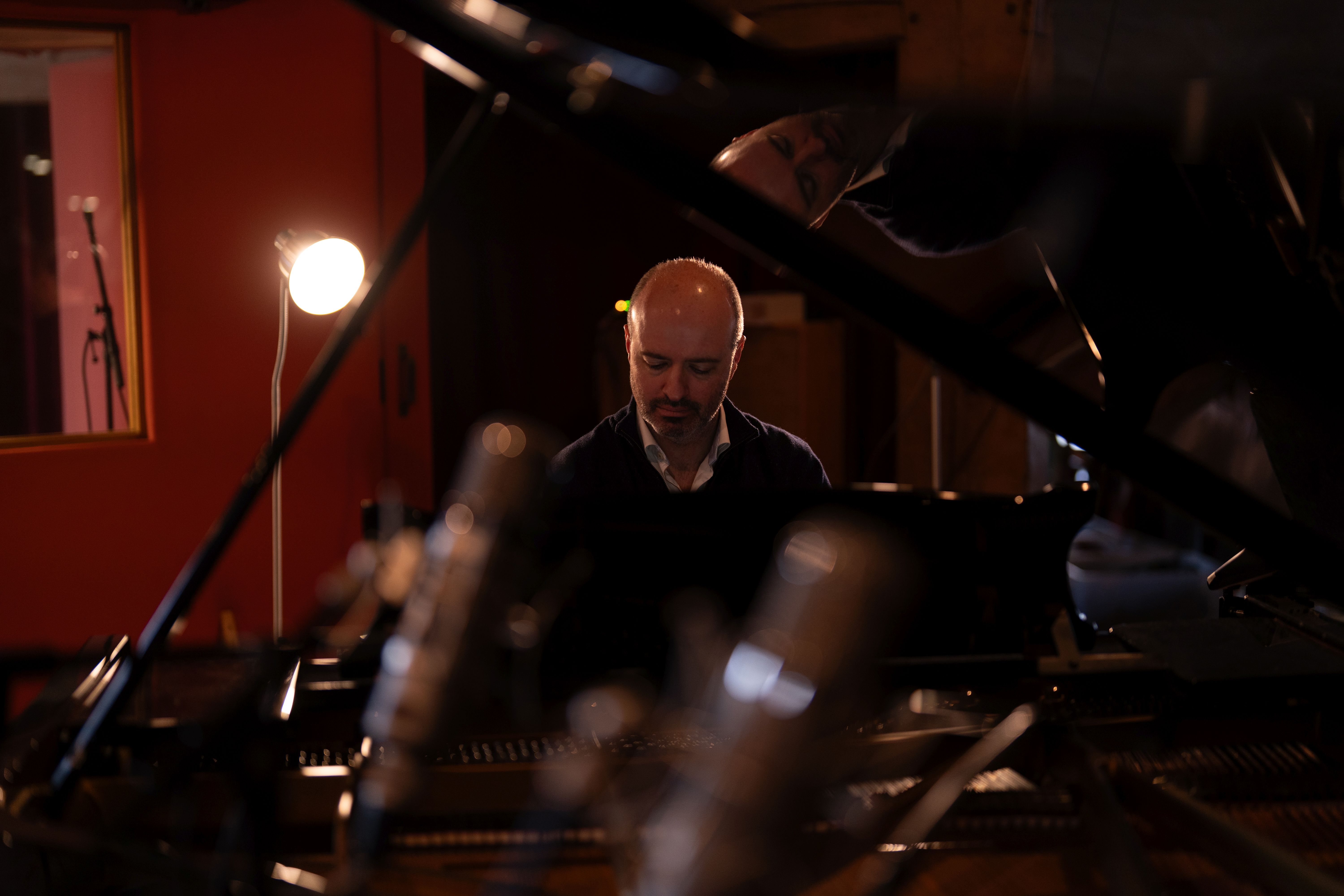
Occupation: Composer, pianist, improviser
Recent release: Harald Walkate's new album Room for Other People, written with Tom Beek and recorded with The New York Second, is out now. Its compositions were directly inspired by the photography of Vivian Maier, the ‘nanny photographer’.
If you enjoyed this Harald Walkate interview and would like to stay up to date with his music, visit his official website. He is also on Facebook.
Room For Other People started out of your own and Tom Beek's mutual admiration for Vivian Maier. When did you discover Maier's work and why did the idea of her taking pictures “mainly for herself” draw you into her world?
I first saw an exhibition of Vivian Maier’s work at the Foam photography museum in Amsterdam, in 2014.
I had already read a newspaper article about her story – how she worked as a nanny her entire life and never shared, published or exhibited her photographs; and the sensational find of her photographs at an auction – and so then seeing the photos in real life had a big impact on me.
It raised questions about why she engaged in photography – for leisure, to make sense of the world, as a form of ‘collecting’ or even ‘hoarding’?
The press release mentions that the album started with the idea of creating “musical responses” to the images. The word “response” is an interesting one, I find. What were some of the questions the images were asking, and where do you see the difference between, say, a “soundtrack” to a photograph and a response?
Joel Meyerowitz, a well-known street photographer, said,
“Photography is about the frame you put around the image; what comes in or what is cut off, and yet the story doesn’t end, it’s told beyond the frame through a kind of intuition.”
That’s maybe a better way to express it – it’s about trying to tell that story beyond the frame. What I like about Vivian Maier’s photos is that they leave so much open to the imagination – who are these people? What are they doing or where are they going? What happened after this one moment where their paths crossed Vivian Maier’s?
So perhaps “question” and “response” aren’t the precise terms here, but the photograph starts to tell a story and this project is about writing – with music – the story that I imagine unfolding after the picture was taken.
Were you finding that you and Tom Beek shared similar perspectives on the photographs? If there were any, what were differences?
When we started the project we had not definitively settled on the ten photos that ended up on the record; we had about ten others on a longlist, and then of course when we read the Vivian Maier biographies, watched the movie Finding Vivian Maier, and visited the Howard Greenberg gallery in New York we saw dozens, if not hundreds, of others where we said “wow, should we include this one?”
I can’t say the decision making process was very democratic – basically I decided, also because I was writing the music for them – but Tom would give subtle nudges, for example say, “are you sure about that one?” Or, “I’d have another look at this one.”
I think in the end we were both very happy with the selection of ten.
I have often been under the impression that musicians with an arts background tend to approach sound and composition differently. Are you finding that you can hear that Tom is also a photographer?
Yes, absolutely. I think the narrative power of these art forms – they are effectively telling stories – is what draws people in, but this is intangible so it is underestimated.
For an earlier album I found inspiration in the essays written by Aldous Huxley in the book Music at Night where he writes about this narrative power – the artist’s capacity ‘to put things across’. Which is basically the idea that good compositions and improvisations are like stories, with an introduction, different characters being introduced, rising action, a climax, and then a resolution – that’s how they capture the attention of the listener, and keep them listening to see how the story ends.
Tom is an expert story-teller, both as photographer and as improviser.
In terms of his soundtrack work, John Williams once said that he couldn't be visual with the music – that was the job of the director. For this particular project, would you say you agree or rather disagree with that statement?
It’s an interesting question. I can really see where John Williams is coming from, but his kind of work is really very different – it’s composing music to accompany and enhance visuals that have already been created. In my case I’m really trying to write the next chapter of a story, or create new visuals – the music is the visual.
Critics often say about my work that it is “cinematographic”. With this I don’t think they mean that it would be good soundtrack music – though perhaps that too – but rather that it conjures up images, or creates movies in their head.
So I guess in a sense I am trying to be visual, especially for this project. I take Vivian Maier’s photo as starting point and then try to create a musical movie to tell the story as I see it unfolding.
Do music and sound feel “material” to you? Does working with sound feel like you're sculpting or shaping something?
Another good question and, yes, it certainly does.
When I’m composing I often think of sculptors who look at the block of wood or stone and who can already see sculpture that is inside; similarly, I sometimes look at the 88 keys of the piano and wonder what melody or ideas are there for me to discover – I literally see this as something tangible, with a certain shape or form.
Also I often spend a lot of time when an arrangement is already basically finished in finetuning – which to me feels like chipping at or shaving a physical thing.
How did you pick the photos which served as the point of departure for this suite of compositions?
It was a combination of aesthetics – they’re the photos that I thought were the prettiest – and then what we talked about earlier: how much of a story is there here? Is this giving me any musical ideas?
The photo of Penn Station is a good example – what became “Downstairs for Incoming Trains” – I think it’s just a beautifully composed photograph but then also immediately that sign with that text brings visions of long train journeys, arrivals and departures.
"The White Dress" is another example; the photo of the woman walking down the street – aesthetically it is very pleasing but it also raises endless questions: who was this elegant woman? Where is she going? Is there any link to the car driving by? What happened to her after this evening?
As I write in the liner notes you can imagine this being a character in a film-noir or in a Steely Dan lyric where you would learn some – if perhaps not all – of the answers to these questions.
How did the compositions for Room For Other People take shape?
The origin of many of the compositions came about mostly from me being in this general “Vivian Maier-mood” – in other words they weren’t directly linked to a particular photo, yet. But then at some point I started matching the musical ideas with photos before writing the arrangements for the octet and then, for me, a very strong connection between the compositions and photos was created.
A lot of the compositions also took further shape in the arranging process, where often I already had harmonies and the general form of the track, but I deliberately waited to create melodies until I had linked them to a photo, in particular for the tracks “Room for Other People,” “The Collectors Corner” and “Florida, 1957.”
I had never composed like this before and I’m really happy with the result and, to be honest, a bit surprised at the type of musical idea that came out of this process, they’re quite new for me.
After finishing the compositions, how do you see the relationship between the image and the response? What happens once an observer takes in both, what if they only experience one?
For me, they have become inseparable, and so when I see the photo I hear the music, and vice versa. But this was obviously also because I was in this intensive process for months – you’ll start to see a link even if there isn’t one. So I was curious to see how others would experience the final product.
And it’s been fantastic to receive all these positive reviews, many of them commenting on the connection between the music and the photos, saying for example that the music brings the photos to life in a genuine way, or that photos and compositions have entered into a symbiosis. Vivian Maier’s biographer Ann Marks told me the music really captures Vivian’s world. So I guess this strange alchemic process I created really worked!
That said, an observer can still very much enjoy the photos without listening to the music, and vice versa, I’m sure.
The photographs of Maier could be hung on a wall at a gallery for an exhibition. Is that how you see the album as well – as a space for placing these audio artefacts? Or would that be reaching too far?
It’s a nice thought; yes I think that’s really what a well-conceived music album does.
I suppose that’s also why many music fans find it lamentable many people don’t listen to entire albums anymore. The best albums I know are still best listened to in their entirety.
There are music bars in Japan where you can select an album and they play all of it for you while you quietly drink your whiskey – I think that’s sort of what you are getting at – a gallery for music.
What was the process of working with the octet like? Apart from the score, did you provide them with visual cues as well?
I did – during the rehearsals we had the photos that accompany the tracks on a screen and when we recorded the music in Osnabrück one evening we watched the documentary Finding Vivian Maier together.
I think it helped create this shared sense of the mystery of Vivian Maier’s life and work, and of the general vibe and mood that we were trying to create.
Were there discussions about the images as part of the recording?
We didn’t really discuss the images in detail but I think the musicians found it helpful to have a general idea of the backstory and found some inspiration in it.
Did the fact that the images were mostly black and white play role in terms of orchestrating/arranging the pieces?
I don’t think so. I had a few color photos on the long list but ended up choosing all black and white photographs for consistency’s sake.
But I don’t think if I had chosen color photos the overall sound or arrangements would have been very different. Perhaps we’ll have to try it for a subsequent project: Room for Other People – the Color Work?