Published
Name: Håvard Volden
Nationality: Norwegian
Occupation: Guitarist, composer, improviser, songwriter
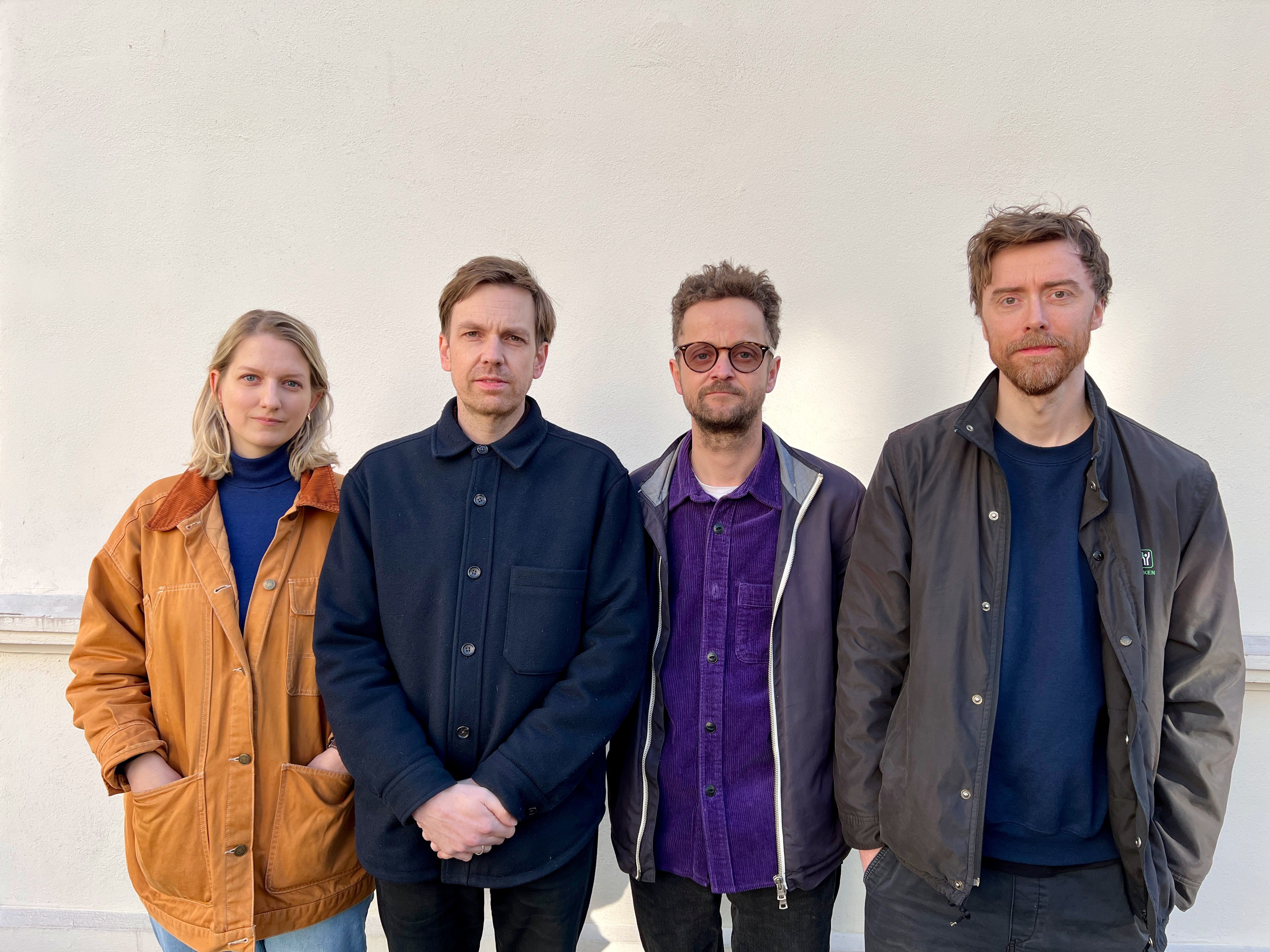
Current Release: Håvard Volden's new album Small Lives, featuring Guoste Tamulynaite, Adrian Myhr, and Jan Martin Gismervik is out via Sauajazz.
If you enjoyed this Håvard Volden interview and would like to know more about his music, current live dates and releases, visit him on Instagram, Facebook, and bandcamp.
When did you first consciously start getting interested in musical improvisation? What was your first improvisation on stage or in the studio and what was the experience like?
I consciously got interested in jazz and improvisation when I was like 14/15, when taking guitar lessons from a guy that studied jazz at the conservatory in Trondheim, where I am from. He made me listen to all kinds of jazz music. Especially contemporary guitarists like Schofield and Metheny. I was totally into it right away.
Also one of the first jazz CDs I got, was Pat Metheny’s Song x, featuring Ornette Coleman. I didn’t really understand what they were doing, but I liked it a lot.
Tell me about your instrument and/or tools, please. What made you seek it out, what makes it “your” instrument, and what are some of the most important aspects of playing it?
I’ve been fooling around with all kinds of electronic instruments and tools in my life, but for me the guitar is closest to my heart. It is such a rich and versatile instrument, and it can sound so good.
During the pandemic I had a lot of time on my hands, so I started to explore the guitar again. Like a child trying it for the first time I started to detune it, and then trying to write songs on it. I ended up with an open D tuning. A D major chord. And that led me to songwriting I haven’t done since 20 years almost. It was a great feeling to not know the guitar. The patterns I knew too well were kind of lost. In muscle memory anyway. For me that was kind of a new beginning, and the result of that is my new album, Small Lives, coming out this summer.
I’m also a fan of old school effects, and I have been really into analogue tape for years now. I got this old Tandberg reel to reel tape machine from my dad that I started to play around with. Both live and in the studio. The sound is just great. If you plug your instrument to it, and then straight to an amp, the sound of the instrument will be slightly delayed. And that is fun to play around with. You can turn and twist the tape however you like, and the sound is so good. It is a very tactile and direct way of working with sound, that I like.
Later I bought a Revox b77 and did similar things with that. The only problem with them is that they are very heavy. I did bring it around for gigs for a while, but it’s just too heavy and fragile.
Now I’m using a tape echo machine and it works better than the reel to reel for what I do now. I’m more into actual guitar playing these days, so I’m using it as a echo machine and reverb.
How would you describe your own relationship with your instrument – is it an extension of your self/body, a partner and companion, a creative catalyst, a challenge to be overcome, something else entirely?
It is definitely a partner and a creative catalyst. It’s always been a challenge for me to play an instrument, and it didn’t really come naturally.
But as I get older, and hopefully wiser, my relationship with the guitar gets stronger as well.
Do you feel as though there are at least elements of composition and improvisation which are entirely unique to each? Based on your own work or maybe performances or recordings by other artists, do you feel that there are results which could only have happened through one of them?
I don’t really separate composition and improvisation in that way. I mean, I do, but if I am to improvise it is always based on what I already know and have been practising. Like playing a composition.
I don’t really do much “free improv” right now, and for me it is much more liberating to play songs than improvising freely. I think most free improvisers kind of play songs as well. It’s their way of playing songs. I mean, what comes out of the horn is not something that comes from nowhere. You have been practising and thinking for years, and you have a musical language.
The most important thing for me is to create my own personal framework. And for me now that is to have songs/compositions as a frame. And then my band and I can use the songs as a guide to improvise.
Improvising is also a tool to write songs to me. When I compose songs I usually improvise and noodle around on the instrument, and suddenly there is something there. Something that I can develop into a composition.
Artists from all corner of the musical spectrum, not just “free jazz” have emphasised the importance of freedom in their creativity. What defines freedom for your improvisations?
Freedom for me can be many things. Sometimes it’s just a feeling that particular night, together with those people. The people you are playing with might not feel the same.
For me freedom is to know the material I am about to play around with. Sometimes it feels great to discover a new sound, that is new to you, but it isn’t necessarily interesting for the listener …
In your best improvisations, do you feel a strong sense of personal presence or do you (or your ego) “disappear”?
For me improvisation is not a show-off thing. For me it’s about trying to create something beautiful together with other people.
And yes, the best moments is when you disappear together with the band.
What are some of your favourite collaborators and how do they enrich your improvisations?
Right now I have to say my band. It is an absolute delight to play with Guoste Tamulynaite (synths), Adrian Myhr (bass) and Jan Martin Gismervik (drums). They are all amazing improvisers, and we do have a really good chemistry together.
To have their unique sounds and way of playing in my music, changes all for the better.
In a live situation, decisions between creatives often work without words. From your experience and current projects, what does this process feel like and how does it work?
In many of my earlier bands and projects, there wasn't much talking. I used to play with Toshimaru Nakamura, and we never talked about what to do before a show. In that project, it was better to keep it fresh.
The same is when I play with my band Muddersten. We never talk about what to play before a show, but we have played quite a lot together and have developed our own band language. We have our own sound and dynamics, and I kind of know what to expect.
The times I get surprised can be really fun though. A catalyst for something new and exciting to happen.
[Read our Toshimaru Nakamura interview]
[Read our Henrik Olsson of Muddersten interview]
There can be surprising moments during improvisations – from one of the performers not playing a single note to another shaking up a quiet section with an outburst of noise. Can you tell me about such situations from your own performances and how they impacted the performance?
In my early years when I got into free Improvisation I did a tour with Toshimaru Nakamura, We played a show at Instant Chavires, and remember Kjell Bjørgeengen was there in the audience.
Toshimaru, who was know for playing quiet, long hi pitched sounds, and being very patient played quite noisy and more active on that tour. And that made me play much less. As a result of his active playing, I had to find my place in the music. Kjell Bjørgeengen found that very interesting I remember, that we reversed the expectations like that.
I remember thinking that show went really bad, I felt lost and did not know what to play. But listening back to it, I thought it was really good music. That can happen some times.