Published
Name: Sonetos del Amor Oscuro
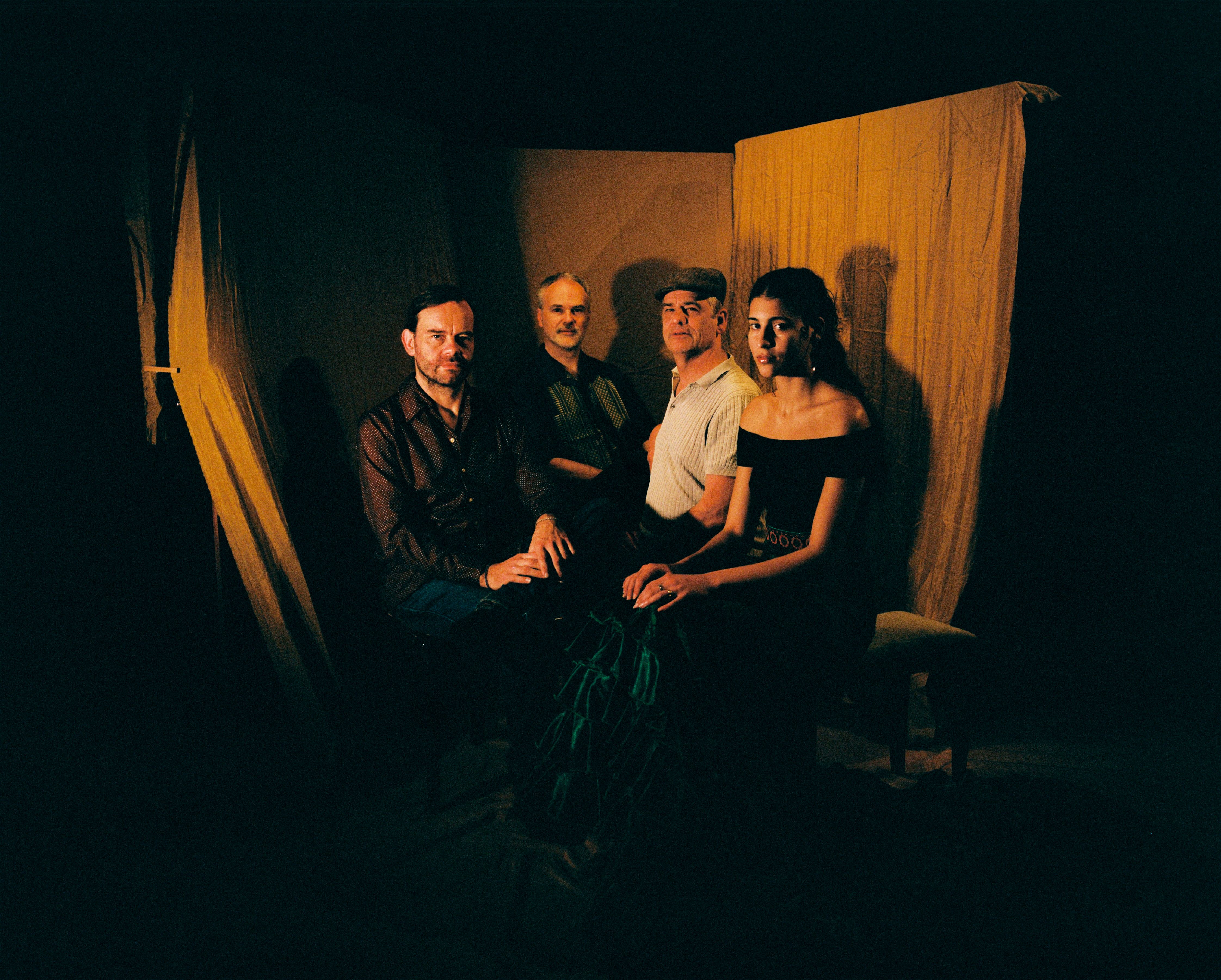
Members: Helena Casella (vocals), Stefan Bracaval (flute, bass flute), Myrddin De Cauter (classical guitar), Stijn Kuppens (cello)
Interviewee: Helena Casella
Nationality: Belgian-Brazilian (Helena), Belgian (rest of the group)
Current release: Sonetos del Amor Oscuro's new album Vol. 1: El Sueño Se Deshizo Para Siempre is out November 21st 2025 via Zephyrus.
If you enjoyed this Sonetos del Amor Oscuro interview and would like to stay up to date with the band and their music, visit their page on the Zephyrus Records website.
When did you first consciously start getting interested in singing? What was your first performance as a singer on stage or in the studio and what was the experience like?
I don’ have a specific memory of when I started getting into singing. I've been singing since I was a baby and it was everyday, all day through. We had a rule at the dinner table that I wasn’t allowed to sing while eating. It could get pretty annoying I guess.
My first performance was a spoken word performance with my aunt for a festival in Ghent called Jazz sur l’Herbe and I was 9 years old. I was very excited but quite nervous because I had to vomit right before going on stage (not so flattering).
If you're also playing other instruments, how does the expressive potential of these compare to your own voice?
My voice is far more developed than my piano skills. I wish it was more balanced, or that I could have more of a memorised repertoire on piano.
So I feel way more freedom or expressive when singing, mostly because I have a health condition where my bad blood circulation makes it very hard to play piano without hurting my fingers.
I’m learning the flute now, which is quite a challenge for my hands as well but still enjoyable to play. I’m excited to begin using it in my musical projects.
Singing is an integral part of all cultures, and traditions. Which of these do you draw from – and why?
From Brazil, because I’m half Brazilian.
What were some of the main challenges in your development as a singer/vocalist? Which practices, exercises, or teachers were most helpful in reaching your goals – were there also “harmful” ones?
I struggled more with speech than with singing, even though they’re connected.
I had to follow a sort of therapy to talk louder because I wasn’t using my vocal cords in the right way, because they couldn’t close entirely so a lot of air comes through and it’s quite tiring. I had a lot of throat infections as well and would loose my voice quite often.
It got much better now, with the right techniques. some coaches that helped me a lot were in the Conservatory of Amsterdam, like Diana van der Bent, my technique teacher. I love exploring my voice and analysing the way other people sing and she was very good at helping me develop those skills even further.
What are the things you hear in a voice when listening to a vocalist? What moves you in the voices of other singers?
Everything: timbre, vibrato, articulation, pronunciation, resonance, breath support, cultural influence in interpretation …
What moves me the most are vocal dynamics (volume, sharpness, roundness) and the specific cultural influences in vocal interpretation.
How would you describe the physical sensation of singing? [Where do you feel the voice, do you have a visual sensation/representation, is there a sense of release or tension etc …]
I would describe it as a river stream: it’s soothing, flowing effortlessly and moving.
We have a speaking voice and a singing voice. Do these feel like they are natural extensions of each other, ends on a spectrum or different in kind?
They are quite connected as I wrote in question 4. They’re both generally soft and warm.
What are the potentials and limits of your voice? How much of your vocal performance can and do you want to control?
I think my potentials are playing with resonance and modifying my sound in that sense, as well as having quite a big range and using most of my tessitura in vocal performance and composition.
I’d like to focus more on interpretation and putting emotion into my performance rather than being aware of the technique.
As a singer, it is possible to whisper at the audience, scream at the audience, reveal deep secrets or confront them with uncomfortable truths. Tell me about the sense of freedom that singing allows you to express yourself and how you perceive and build the relation with the audience.
It’s about making lyrics sound bigger than what they are as just text and notes.
It feels like a way to imagine everything you’re expressing in a much more vivid way. Connecting with a crowd and feeling understood, no matter how abstract the music or lyrics are. It gives me comfort to know that it shall be received, provided people are listening of course.
I'd love to know more about the vocal performances for El Sueño Se Deshizo Para Siempre, please, and the qualities of your voice that you wanted to bring to the fore.
On El Sueño Se Deshizo Para Siempre I used a lot of different vocal techniques. in some moments I wanted to approach a more classical way of singing, in other moments there is more of the Brazilian warmth and roundness in my vocal timbre.
So playing with timbre was a big thing. Also a sharpness in comparison to soft and whispered sections was something I was exploring. Mostly I wanted to blend in with the rest of the ensemble (mostly flute), to make my voice sound like an instrument.
I use belting at some points as well, to build more intensity in dynamics. I also used a grower or kind of rusty grain on my voice to make it sound more raw, taking inspiration from traditional flamenco singers.