Published
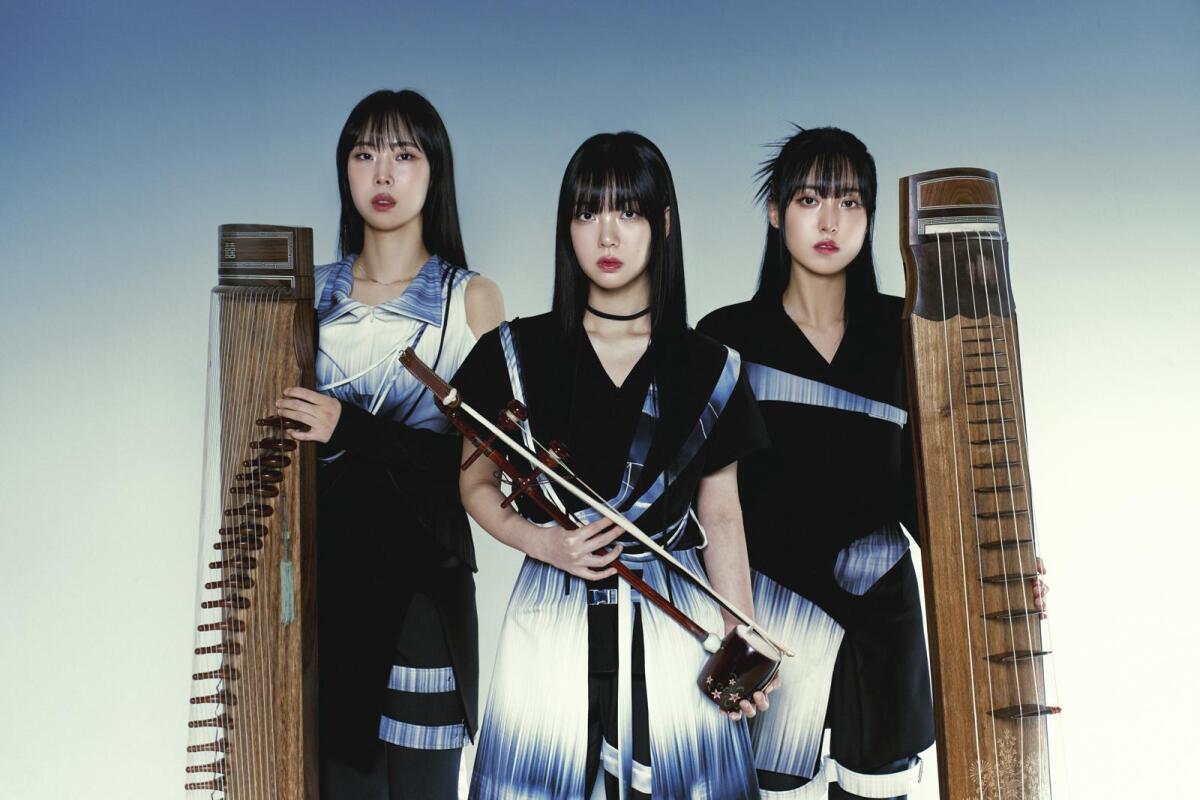
Name: Hilgeum
Members: Cho Yoin, Park Somin, Kim Yerim
Nationality: South Korean
Current event: Hilgeum is one of the acts appearing at the K-Music Festival 2025, a "genre-defying celebration of Korean music set to return to major London venues in the autumn." The line-up includes Okkyung Lee, JAMBINAI, Hilgeum, Park Jiha, Dong-hoon Shin, Seong-Jin Cho, and HanBin Lee's Gray by Silver. For more information and tickets, go here.
If you enjoyed this Hilgeum interview and would like to stay up to date with the band and their music and live dates, visit them on Instagram, and Facebook.
Where does the impulse to create something come from for you? What role do often-quoted sources of inspiration like dreams, other forms of art, personal relationships, politics etc play?
For me, the desire to create mostly begins with “the emotions within that cannot fully be put into words.” Emotions are far less simple than we think, and there are always parts that cannot be conveyed completely through text or speech.
When I express those things through music, I feel a sense of liberation. Until they become music, they keep surging inside me, and sometimes I even feel as if I’m being rushed to release them.
I also often draw inspiration from visual works. For example, the mise-en-scène of films (I especially like the works of Wes Anderson) or exhibitions sometimes become the starting point for a musical motif. Our piece “환각 (Illusion)” was inspired by the Quay Brothers’ exhibition (animators Stephen and Timothy Quay) held in Seoul.
For you to get started, do there need to be concrete ideas – or what some have called a 'visualisation' of the finished work? What does the balance between planning and chance look like for you?
I rarely begin with a completed picture of the work in mind. Especially with Hilgeum, since every piece is co-created, it’s even harder to do that.
Usually, when one of us brings a motif or an idea we want to express, we discuss it together and then deliberately—or sometimes spontaneously—layer melodies on top of one another. Because of this, our work can’t be easily judged until it’s finished.
The process is slow and difficult, but at the same time, each performer’s personality and character come through very clearly. I think that’s one of our strengths.
We often sit together, listening and reacting to each other’s sounds, improvising melodies. Sometimes, a sound accidentally created takes the lead, shifting the entire direction in an instant.
Is there a preparation phase for your process? Do you require your tools to be laid out in a particular way, for example, do you need to do 'research' or create 'early versions'?
If you look at Hilgeum as a group, before starting any creative work, we usually spend a lot of time just chatting. (laughs) We share stories about how we’ve been, funny things that happened recently, or memorable quotes from books we read. That helps us build a comfortable atmosphere.
Then we listen back to recordings from our previous rehearsals, point out the good and weak spots, and discuss possible solutions.
Do you have certain rituals to get you into the right mindset for creating? What role do certain foods or stimulants like coffee, lighting, scents, exercise or reading poetry play?
We don’t really have a specific ritual for immersing ourselves in creation, but when we’re really fired up and working late into the night, we often order sweet snacks like ice cream, waffles, and tteokbokki.
They give us good energy. :)
For your latest release, what did you start with? If there were conceptual considerations, what were they?
Hilgeum’s most recent work is our second album, Waste Land, which includes five tracks.
The central theme of this album is “Hilgeum’s Dark Fantasy.” While our first album focused more on inner thoughts and emotions, the second aimed to create something more visual and narrative, like a cool yet elegant film unfolding right before your eyes.
Among the tracks, I especially want to talk about “Clock” and “Butterflies.” In “Clock,” we depict a surreal and strange scene where space and time are distorted, and someone trapped there is trying to escape. To me, it feels like “a fear of finite time.”
On the other hand, “Butterflies” is about the ambivalent feelings of beauty and unease that come from watching the flutter of butterfly wings.
Whenever I perform this piece, I’m reminded of the film A Tale of Two Sisters. It has beautiful mise-en-scène and music, but throughout, there’s a heavy sense of anxiety and repression.
Tell me a bit about the way the new material developed and gradually took its final form, please.
As I mentioned earlier, Hilgeum composes everything collaboratively.
The process usually starts when one of us brings in a motif or a theme we want to explore. For example, the piece “Nihil” began with a haegeum solo expressing emptiness, and then we built the rest of the narrative around it.
From there, we improvise together, refine, record, listen back, discuss, and revise—an endless cycle.
Since this isn’t an individual project, if one of our sounds doesn’t fit the flow, we compromise and look for a different direction. It’s truly the work of three people, and all of us need to be satisfied.
So, while each track reveals the unique tone and qualities of our instruments and playing styles, they also achieve harmony. It’s never an easy process.
Many writers have claimed that as soon as they enter into the process, certain aspects of the narrative are out of their hands. Do you like to keep strict control or is there a sense of following things where they lead you?
Yes, it’s true—very rarely does creation unfold exactly as I intended. I’m the type who likes to be in control, but in creative work, I try my best to follow the flow as it leads. This is especially important since we co-create.
For instance, a team member might come up with a melody totally different from what I had in mind, or interpret a new piece in a way that never occurred to me. These moments are often fascinating.
Sometimes, a piece veers away from its original structure or atmosphere, and by embracing that, it gains depth and vitality. There’s no reason to resist such moments.
There are many descriptions of the creative state. How would you describe it for you personally? Is there an element of spirituality to what you do?
Entering a creative state is both joyous and painful.
The joy comes from when the images and emotions floating in my mind take form as music, but it’s painful when I can’t reach the level of completion I want. Still, I try to focus more on enjoying the process than obsessing over the outcome.
I believe there’s definitely a spiritual element in what I do. You know that saying, “Pour your soul into it,” and I really feel that when making music. I put everything I have into it.
And when something so personal to me reaches the audience and gives them comfort or inspiration, I feel a sense of profound connection.
Once a piece is finished, how important is it for you to let it lie and evaluate it later on? How much improvement and refinement do you personally allow until you're satisfied with a piece? What does this process look like in practise?
When deeply immersed in creating, I reach a point where I can no longer judge the work objectively. It’s a very painful stage. At such times, stepping away for a while and revisiting later helps immensely.
It’s like reading a book; when you can’t focus on one, you put it down and pick up another, then return to the first with fresh eyes. When you come back, you notice things you couldn’t see before.
For example, our track “Utopia” was especially difficult during its latter half. We spent nearly three months struggling with it. Eventually, we set it aside for a few months, then revisited it and finished revising it within a week, arriving at the version that exists now.
We keep refining our pieces until we’re satisfied. We’re not afraid of revisions or changes. That’s why we always record rehearsals; sometimes the earlier versions turn out to have been better.
How do you think the meaning, or effect of an individual piece is enhanced, clarified or possibly contrasted by the EPs, or albums it is part of? Does each piece, for example, need to be consistent with the larger whole?
Both our first and second albums were designed with consistency and flow across the tracks. Of course, each track has its own meaning, but within an EP or album, they enrich one another. Not only thematically, but also through contrasts. For example, placing a quiet track next to a sharp one can amplify the charm of both.
On our first album, Utopia, for instance, we placed “Day Dream”, a very quiet piece with singing bowls, between the intense tracks “환각 (Illusion)” and “Nihil” to heighten the sense of contrast.
That said, unless it’s a deliberate choice, I don’t think every collection of tracks must maintain overall consistency. The creator’s intention matters most.
What's your take on the role and importance of production, including mixing and mastering for you personally? In terms of what they contribute to a song, what is the balance between the composition and the arrangement?
Mixing and mastering are extremely important to us. Since Hilgeum makes acoustic, instrumental music, the sound must be captured with great delicacy. The entire character of a piece can change depending on it.
So we were very careful in selecting our mixing and mastering director, and we collaborated closely, revising repeatedly. Each track not only has its own instrumental qualities but also its own desired tone, energy, and mood.
In that sense, mixing felt almost like the second act of creation for us.