Published
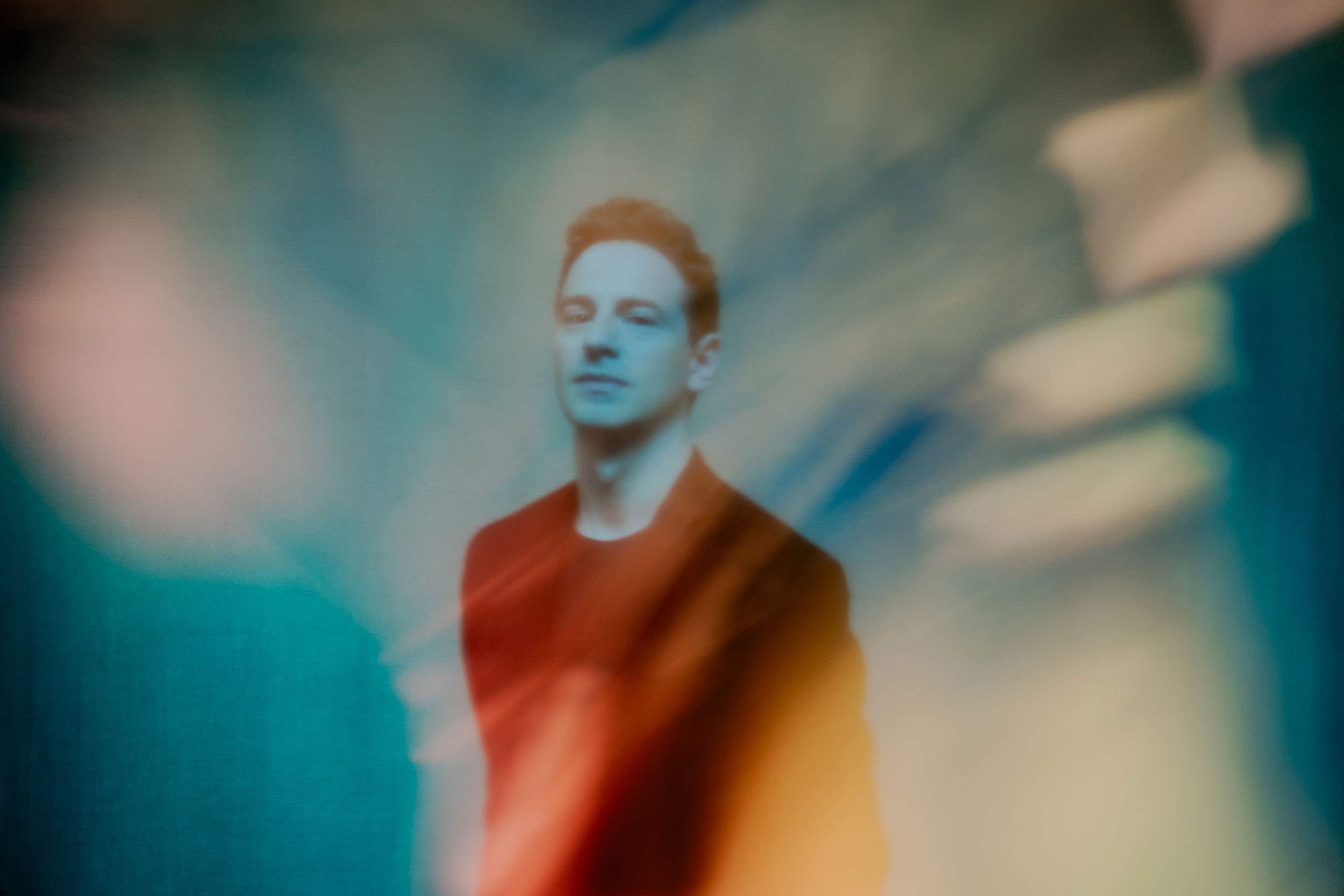
Name: Hugh Tieppo-Brunt
Nationality: British
Occupation: co-Artistic Director / co-Principal Conductor at the London Contemporary Orchestra
Current Release: Jonny Greenwood's soundtrack to Paul Thomas Anderson's One Battle After Another is out via Nonesuch. The LCO have also recently partnered up with Native Instruments for their LCO Producer Strings, a notably different approach to putting the orchestra's power into the hands of musicians.
If you enjoyed this interview and would like to stay up to date with the LCO, visit their official homepage. They are also on Instagram.
The LCO is fast approaching its 20th birthday. How do you look back on its development and some of your landmark recordings?
Goodness, that’s a thought. We’ve been fortunate to collaborate with a phenomenal range of composers and artists over the years, and looking back on that body of work only spurs us on to create more.
On a personal note, the collective talent and energy of LCO’s players – many of whom have been with us since our first season in 2008 – remain a constant source of inspiration.
The scores to movies and (streaming) series are increasingly becoming all-electronic even if they continue to use orchestral elements. How do you see the ongoing relevance of film orchestras in a time where even big movie budgets are becoming tighter and DAWs seem to be able to take on most compositional challenges?
For some projects, virtual instruments and VSTs are a means to an end (an integral part of being able to convey a musical idea to the director/producers, for example, and get a cue signed off); for others, they are an end in themselves, be it due to budgetary constraints or creative reasons.
I think this is a particularly exciting time in film music given the growing understanding of how versatile an orchestra can be – for example, in its ability to emulate electronic timbres (à la Penderecki or Saariaho) in a way that remains faithful to the original sound, while adding a heightened level of human expression.
And if the project calls for it / if the budget allows, nothing can beat the feeling of 80 players moving the air around a space like Abbey Road or AIR.
Just from watching contemporary movies and series, my impression is that texture, timbre and sound are dominating most scores. How much space is there still for the traditional, compositional approach in the film industry, would you say?
There’s probably never been a time in film music when we’ve had such a broad and varied spectrum of styles and idioms, and I think that’s something to be celebrated. There is a plethora of spartan, electronic scores being commissioned – many of them highly effective – but also a good number of purely orchestral ones, often heavily thematic, and everything in between.
In terms of that purely orchestral category, I’d cite Jerskin Fendrix’s extraordinary score for ‘Bugonia’ as one example, which we had the pleasure of recording earlier this year.
When you're working with artists like Matthew Herbert or Actress whose background is within the electronic medium, what, would you say, is it that they are they looking for?
What we aim to provide, at least, is an open-minded approach, a collaborative spirit, and advanced technical facility – both in terms of the arranging or orchestration, and the quality of the playing itself.
We want to give the artist or composer free rein to imagine and incorporate any range of extended instrumental techniques, confident that the musicians will deliver them.
You've established longterm relationships with quite a few artists, but Jonny Greenwood may be the most consistent one. How did you first get in touch and what do you still remember about process for The Master which was the first collaboration between the LCO and Jonny?
The relationship with Jonny Greenwood began with us performing his concert works - for example, ‘Popcorn Superhet Receiver’ as part of our inaugural season in 2008.
Then came the opportunity to record ‘The Master’ in 2012, which we were incredibly grateful for, not only because it was an inspiring, rewarding project in itself, but also because it marked our first film score recording.
In the ensuing 13 years, session work has become the lifeblood of the LCO.
Greenwood has a classical education, but his main background is in experimental rock and he has a deep interest in non-Western music traditions. How does that influence the creative partnership with the orchestra and the communication - compared to working with someone like Hildur Guðnadóttir, for example?
Every composer we’re fortunate to work with has their own distinct aesthetic and approach to collaboration, and I feel it’s our role to adapt case by case in whatever way best serves that composer and project.
For example, it’s immaterial to us whether an artist works in traditional notation, or by ear, or with the piano roll in Ableton, etc. What drives those partnerships is the flow of ideas – an open sharing of knowledge and trust – that strengthens the collaboration and inspires everyone to give their best.
Directors and film composers like to treat each movie as a stand-alone project. But orchestras like to cultivate a personal sound. How does this work for the LCO and its work with PTA and Jonny Greenwood?
It’s an interesting question …
Versatility is key. For us, it’s about having almost any conceivable sound in our repository (or failing that, our imagination), so we can draw on it as needed and help build a soundworld with the composer to realise their vision for the score.
During the recordings, who would usually be the LCO's contact person for creative questions – the composer, the director, both? While the orchestra is working on its interpretation, are there still sometimes changes being made to the score?
Yes, it’s not uncommon for changes to be made on the fly.
It’s almost always the composer and conductor fielding those, but we’ve been fortunate to work on a number of projects this year where the director has attended the sessions – for example, Kathryn Bigelow, Paul Thomas Anderson, Emerald Fennell and Yorgos Lanthimos – and that always makes for an inspiring environment.
I can imagine that it must be incredibly satisfying to experience the movie with the final score in a theatre. What was that like for you this time?
Yes, I was completely poleaxed when I saw the final version of ‘One Battle After Another’ – and that was with some idea of what I was in for.
How did the collaboration between the LCO and Native Instruments come about?
We wanted to create a library that would appeal not only to TV, film and video game composers, but also to artists and producers working across a wide range of styles and genres.
Given Native Instruments’ reach and output, they felt like the perfect partner.
Tell me a bit about what sets the LCO Producer Strings apart from potentially similar products.
We wanted to capture a range of sounds that inspire right out of the box, but that are also endlessly malleable for composers/artists to make their own – made possible by the four-layer string/synth engine and extensive FX controls. Even on the seemingly standard articulations, we aimed for a sound that feels charged, vivid, polished and alive.
And for the alternative techniques, we focused on creating an evolving, expressive character packed with colour and rich spatial interest.
Even the greatest sample library can currently not emulate an orchestra 100%. What are users getting with the software – what would they be getting by working with the LCO directly?
We hope that, in many ways, the library democratises access to the types of sounds we work on with artists and composers in the studio, and yes, of course, where possible, paves the way for a more direct collaboration.
The opportunity to bring a composer and musicians together in the same room and mine deeper for new sounds is always intensely rewarding. But in the meantime, I feel that this library offers a window into that process – with artists, producers, players, conductors, orchestrators, and engineers all shaping the vision.