Published
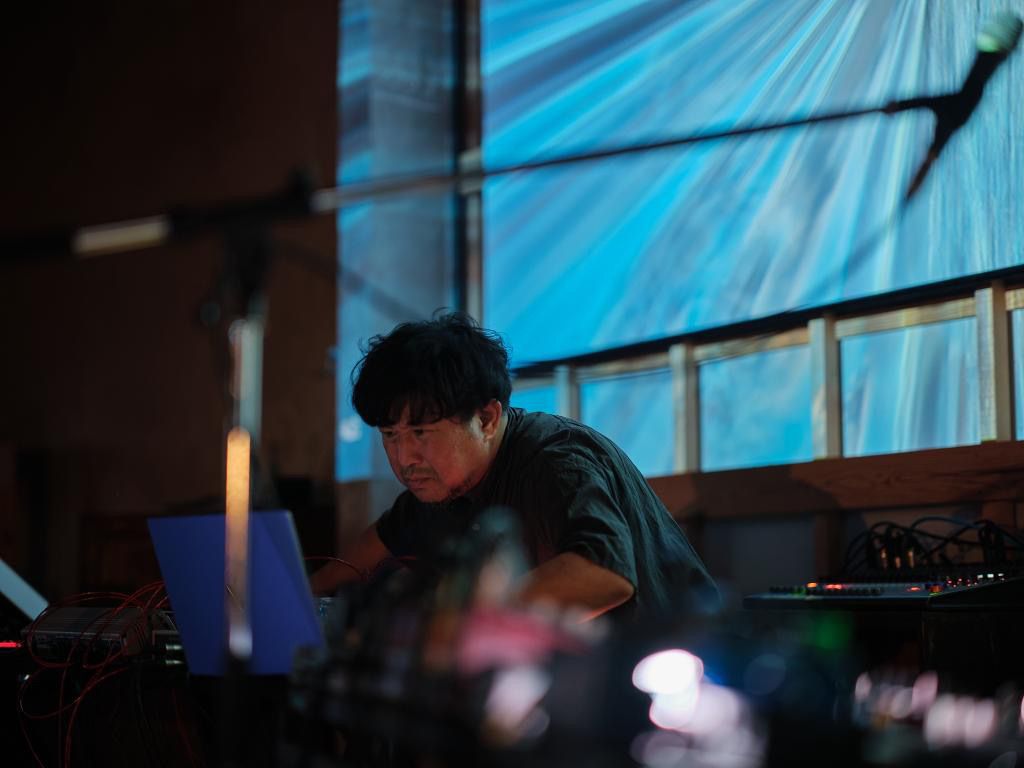
Name: Hidetoshi Koizumi aka Hybrid Leisureland
Nationality: Japanese
Occupation: Composer, producer, arranger
Current release: Hybrid Leisureland's new album Flower Bullet is out via Sonar Library.
Recommendations on the topic of sound: One book I always recommend is The Little Prince. As for films, I deeply admire the works of Abbas Kiarostami. There are many other books and movies I love, but what’s most important to me is cherishing my own world — collecting what resonates with me — without forcing my tastes onto others.
I simply hope that people will value what they truly love. The worlds I’ve encountered through these works have shaped my own imagination, and transforming them into my own perspective has become the foundation of both this album and the ones to come.
If you enjoyed this Hybrid Leisureland interview and would like to stay up to date with his music, visit Hidetoshi Koizumi's official homepage. He is also on Instagram, and bandcamp.
When I listen to music, I see shapes, objects and colours. What happens in your body when you're listening? Do you listen with your eyes open or closed?
I usually listen with my eyes open, but my awareness feels detached from what I actually see. In my mind, I can perceive another world that exists separately from the one before my eyes. I find the dissonance between visual reality and the sense of unreality created by hearing deeply fascinating.
As I keep listening, what I see seems to gradually change—as if my imagination is expanding and transforming my perception of the visible world. The experience sharpens the sensations inside my mind rather than in my body.
That shifting overlap between reality and unreality becomes a kind of fusion through sound, and the images and sensations born from that imaginative space form the foundation of my creative work.
How do listening with headphones and listening through a stereo system change your experience of sound and music?
The experience changes a lot depending on the environment and the setting.
With headphones, I can listen anywhere, and the atmosphere of that place amplifies what I feel — sometimes inspiring me, sometimes turning into a vivid memory or landscape in my mind. I become very aware of the sense of distance and air in the sound, and that directly influences my work.
When creating music, I use effects to build layers — shaping both the near and distant sounds, and adjusting the tone according to the image I want to express. For example, deciding whether the kick should feel hard or soft depends on the mood of the piece.
In my latest album Flower Bullet, especially in “Crying Tomorrow”, I paid close attention to how listeners would perceive the sound. I adjusted the positioning of the vocals and drones with effects so that they feel different through headphones and through a stereo system — highlighting the unique qualities of each listening experience.
Tell me about some of the albums or artists that you love specifically for their sound, please.
There are many artists I love, but the ones that have influenced me most deeply are Ryuichi Sakamoto and Steve Reich. I love all of Sakamoto’s albums, and from Reich, Music for 18 Musicians has been especially important to me.
When I listen to many different artists, it’s not about wanting to imitate them or copy their songs — it’s about understanding their music in my own way, absorbing it, and transforming it into something personal. That process has been essential in shaping the kind of music I want to make.
I also reinterpret and internalize various environmental sounds around me, turning them into part of my own expression and expanding my musical vocabulary.
Do you experience strong emotional responses towards certain sounds? If so, what kind of sounds are these and do you have an explanation about the reasons for these responses?
As a Japanese person, I have a strong emotional response to the sound of temple bells ringing in the evening.
There’s a deep sense of nostalgia in that sound — it feels warm and familiar. It feels like an ordinary sound in daily life, yet a precious one. I think it’s similar to how people overseas might feel when they hear church bells.
Sounds that are connected to personal memories, like this one, make me feel calm and centered. Moments like these are very important to me; they remind me of who I am and where I come from.
There can be sounds which feel highly irritating to us and then there are others we could gladly listen to for hours. Do you have examples for either one or both of these?
I think this really depends on the person, but for me, I actually like beep sounds — and I also enjoy the atmosphere of a completely silent, clean room, which feels almost like my senses are being drawn into the quiet. Both give me a sense of deep relaxation.
I find beauty in many different kinds of sounds, and that curiosity keeps me exploring and creating. I once made an experimental track using only beeps — I never released it, and while the sound stuck in my head, it wasn’t particularly interesting as a finished piece.
I think that, for listeners, it’s the songs that are not just experiments but truly convey what I feel and want to express from the heart — songs they can enjoy all the way through — that are appreciated more. Still, I personally love experimental sound art and the process of discovering new sonic textures.
Are there everyday places, spaces, or devices which intrigue you by the way they sound? Which are these?
The foundation of my music always begins with something simple — the kind of sound or atmosphere I’d want to listen to while driving. From there, I build layers of emotion and memory.
I’m often inspired by the feeling of a space rather than the sound itself — the air of a place. Whether I’m in my car, surrounded by nature, or observing people in the city, I sometimes catch myself thinking, I’d love to hear music here, or I want to create a song for this moment.
One example is the track “Midnight Barber” from my new album. Near where I live, there’s a barbershop that stays open late into the night. Watching the people getting their hair cut and the owner working quietly under the soft glow of the lights moved me somehow, and I wanted to capture that feeling in music.
It’s a simple scene, but I believe that the most meaningful inspiration often comes from the ordinary moments of everyday life.
Have you ever been in spaces with extreme sonic characteristics, such as anechoic chambers or caves? What was the experience like?
Yes, I have. It felt as if I were being absorbed into the space itself — a strangely immersive and fascinating experience.
That experience influenced how I think about distance and space in sound, shaping the sense of depth in my compositions.
What are among your favourite spaces to record and play your music?
My favorite place to record is definitely my own studio — it’s where I feel most comfortable and connected to the sound. When it comes to performing, I love playing in places like Japanese temples rather than typical live houses.
I actually prefer outdoor performances to live houses; they feel very mystical.
Compared to indoor spaces, playing outside seems to bring my music closer to the listeners — the air, the atmosphere, and the sense of distance all become part of the experience.
The track “Solo” from my album UUUU was created with that feeling in mind.
Do music and sound feel “material” to you? Does working with sound feel like you're sculpting or shaping something?
Rather than thinking of sound as something material, I think of it as an invisible substance that nevertheless exists.
During production, everything changes depending on the choice of tone, instrument, or percussion — it’s fascinating how these decisions can alter both the expression and the listener’s perception.
In that sense, composing feels similar to sculpting. Human senses, both visual and auditory, are extremely delicate, so I approach each sound as if I were shaping it by hand — layering and building it into a form.
One piece that embodies this idea is “Neutral” from my new album. Time is equal for everyone — it passes without mercy, cannot be reversed, and yet remains neutral and formless. I wanted to capture that quality, that fleeting neutrality, and give it shape through sound.
How important is sound for our overall well-being and in how far do you feel the "acoustic health" of a society or environment is reflective of its overall health?
Someone once said that music and sports are not essential for humanity — but I feel that precisely because they’re “not essential,” they are deeply necessary. Music closely mirrors human emotion — joy, anger, sorrow, and happiness — and it exists everywhere around us, whether we’re aware of it or not.
To me, sound is something that stays close to people, perhaps even more intimately than health itself. It connects us to our emotions, to others, and to the world — and in that sense, the acoustic condition of a society reflects its inner balance and humanity.
Sound, song, and rhythm are all around us, from animal noises to the waves of the ocean. What, if any, are some of the most moving experiences you've had with these non-human-made sounds?
Absolutely. I often sample sounds from nature, and I believe that the sounds of the natural world — animals, wind, water — are deeply embedded in our subconscious.
One of the most moving experiences I’ve had was while camping in the mountains. In the stillness of the night, I heard the sharp, echoing cry of a deer cutting through the silence. It was profoundly moving — it made me feel calm, and reminded me that I am simply one living being among many in nature. That feeling, I think, reflects something essential about being human.
In my new album, the track 'Hope of Days' uses sampled vocals, which are transformed and used as percussive elements such as kicks, toms, clicks, and sound effects. This creates a rhythm that connects human expression with the natural world.
Many animals communicate through sound. Based either on experience or intuition, do you feel as though interspecies communication is possible and important? Is there a creative element to it, would you say?
I believe it’s absolutely possible — and without it, the world would be far less joyful.
Communication through sound isn’t limited to animals; even among people who don’t share a language, we can laugh together and share moments through music. I think that’s something truly beautiful.
When I perform abroad, at first no one talks to me — sometimes there’s even a sense of distance or bias toward me as a Japanese person. But after the show, people call me by my name, not by my nationality, and express their appreciation.
That moment — when we connect and communicate through music — is when I feel deeply grateful to be doing what I do.
Tinnitus and developing hyperacusis are very real risks for anyone working with sound. Do you take precautions in this regard and if you're suffering from these or similar issues – how do you cope with them?
I don’t take any particular precautions, and I haven’t experienced tinnitus or similar symptoms, so it’s not something I’ve had to think about much. However, when I create music, I always aim to make it sound good even at a low volume.
During production, I pay close attention to rests and dynamics, making sure the listener doesn’t get tired but instead feels a sense of excitement — that desire to keep listening.
Loud volumes can make almost any track sound impressive, but I want my music to remain engaging and enjoyable even when played quietly.
We can surround us with sound every second of the day. The great pianist Glenn Gould even considered this the ultimate delight. How do you see that yourself and what importance does silence hold?
I believe we are constantly surrounded by sound — from the noises around us to the heartbeat within our own bodies. While I haven’t reached the “ultimate delight” Glenn Gould described, I do feel that sound is something we can never truly separate ourselves from. And I also believe that silence itself is a kind of sound.
Many musicians intentionally stop the sound for a moment within a composition. That pause allows the listener’s imagination to fill in the silence — to hear something within themselves and to anticipate what comes next.
In my piece “8mm,” from my new album, I deliberately created a sense of absence, leaving space that feels as if something is missing. I wanted listeners to use their own imagination to complete the music in their minds.
I believe everyone carries their own unique sounds within — a personal, imagined version of the music that only they can hear.
Seth S. Horowitz called hearing the “universal sense” and emphasised that it was more precise and faster than any of our other senses, including vision. How would our world be different if we paid less attention to looks and listened more instead?
I think it depends on what we’re focusing on — whether it’s understanding other people through communication or becoming more attuned to the sounds around us.
But if we could truly learn to listen more — to sounds, to others, to the world itself — I believe people would smile more often. That’s the kind of world I’d like to see.