

The is article is part of our coverage of the Montreux Jazz Festival 2024. This year's edition is more expansive and stylistically open than any previous one. Spread across the city, it will present 500 events on 15 stages, including concerts, discussions, and DJ sets.
For more information, visit the Montreux Jazz Festival website.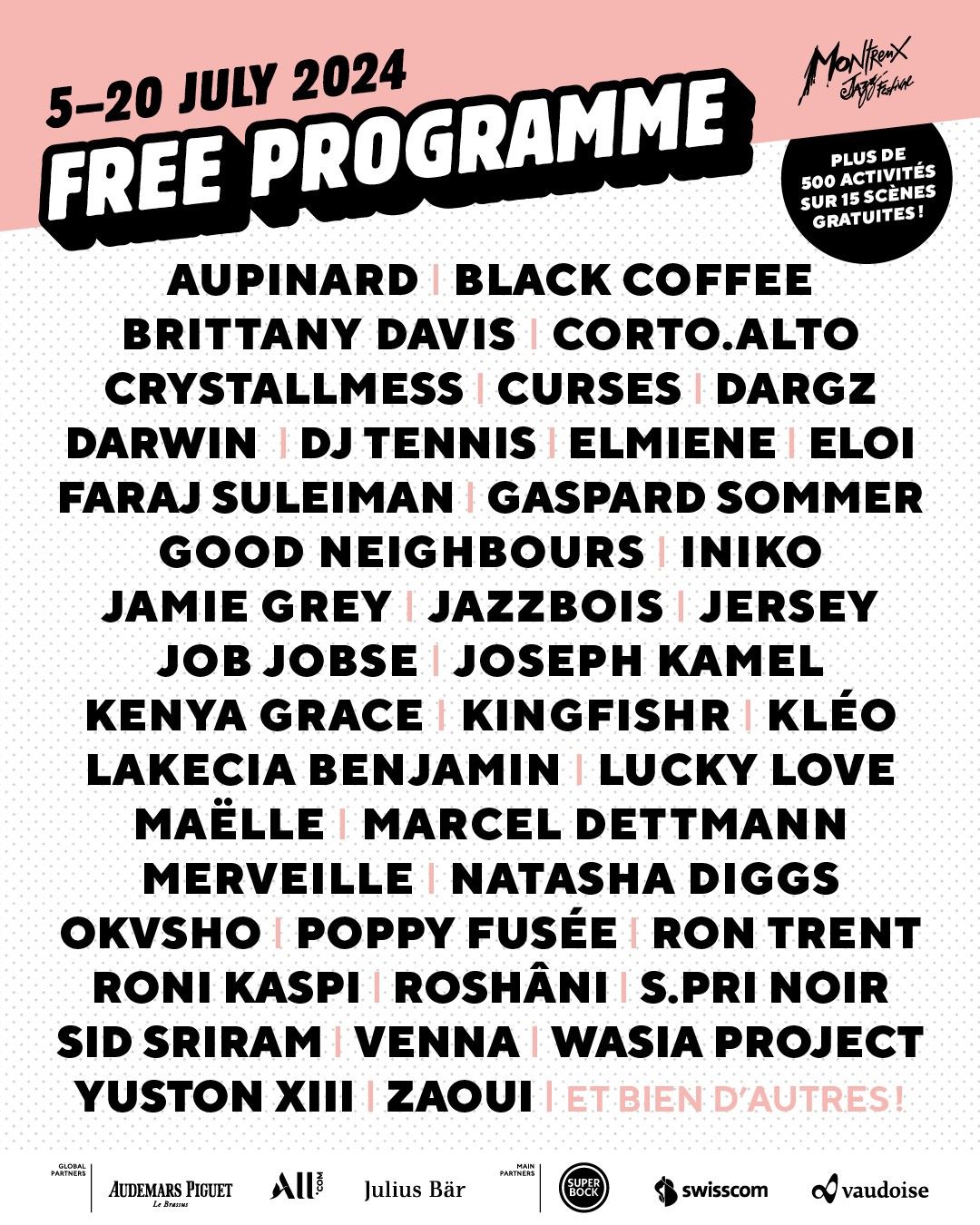
For many jazz musicians in the 60s and 70s, the Montreux Jazz Festival was the answer: To their prayers for more recognition and respect. To their desire for diverse, appreciative audiences. To performance opportunities which actually paid the bill. And yet, it also asked many questions.
As They All Came Out To Montreux, a new, expansive documentary on the festival shows, one of these questions may turn out lead one of the most long-lasting annual music events into a fascinating future.
This is how one could summarise this question: Can you record improvised and live music? The point, of course, is not whether or not it is technically possible to come up with something sonically satisfying. As I'm writing this, I'm listening to The Montreux Jam Sessions, a collection of six improvisations from the festival's 1977 edition, featuring the star-studded Pablo All-Stars. It sounds pristine and crystal-clear – edit out the audience and this would be considered an audiophile-grade studio cut.
The actual point is to uncover how much of the concert survives on the recording. Or to be more precise, how to define the relationship between the two. Studio albums are by definition artifice. They were never meant to represent reality. To the contrary, they wilfully distort it, occasionally going as far as to destroy all evidence of human involvement.
But a live performance takes place at a specific place and at a specific time and, usually to a large degree, with human agency. In a recording, these aspects become malleable.
If time and space are no longer contained in a recording in their "absolute form" – what is?
This is not an academic question or a philosophical exercise. At the Montreux Jazz Festival, it is at the very heart of the event's ongoing popularity and relevance. Thanks to an uncompromising vision of founder Claude Nobs, every single performance here has been preserved for posterity. Thus, the festival has created a wealth of documents and dreams, of music and the memories attached to it. It is an archive which feels infinite, performances appearing like tiny islands on the horizon of an endless ocean.
Clearly, the existence of the archive and the slow but very insistent trickle of material from it have added an additional dimension to the festival. Already, there have always been two festivals: The one taking place in luxurious concert spaces on the one hand and the other being celebrated on the streets of Montreux at no cost to the public.
Now, a third one is manifesting itself: A festival of the mind, performed anytime a music lover puts on one of the countless live releases recorded in Montreux. Deciding which of these three festivals is the actual one is becoming increasingly hard to tell.
The relative importance of the live portion of the festival and the recordings of the gigs has shifted over the years. As the MJF is fast approaching its 60th anniversary, there seems to be a convergence of these two poles into something new – with potentially fascinating consequences far beyond the borders of the rather small Swiss city it is based in.
This vision wasn't born from a single stroke of genius.
Rather, it was made up of four distinct parts.
For one, Claude Nobs was an obsessive music fan who referred to himself as a musician in anything but training. Nobs started out as a chef and to him, cooking a meal and organising a festival were similar in nature: Both were about sensual pleasure, both were about the right ingredients and colours, both were about bringing people together.
In the end, his position as the creative director of the Montreux Jazz Festival allowed him to follow these passions at the same time: Nobs would often personally cook for the artists at his festival, while simultaneously enjoying the performances he had organised.
The second part of Nobs's motivation for the festival was both more universal and personal: He was a gay man living in a conservative town in the Switzerland of the late 60s. Which, as They All Came Out to Montreux points out, was not the best situation to be in: Nobs shockingly recounts an episode of being held in a cell over his homosexuality – a criminal offence at the time - where the police officers politely handed him a razor blade, just in case he wanted to put an end to the public shaming.
And yet, perhaps against his will and certainly against most people's natural instinct, he felt irresistibly attached to the marvelous surroundings and the charm of Montreux. He did not want to move places to a more welcoming environment, so he would have to make his immediate environment more welcoming himself.
The jazz festival was his attempt to bring this change about and it was perceived by many in the city as an invasion, an attack even. When Volker Kriegel, himself an accomplished fusion jazz guitarist, visited Montreux for his own documentary in 1978, he actually walked into town to speak to some of the shop owners and allowed them to vent about the “low class” of the “hippies” who, unable to afford the hotel costs, would zip up their sleeping bags and simply crash on the lawn by the casino.
Nobs must have known about their resentments, but he had powerful backers – and this strange alliance of money and the highest possible artistic ideals would come to shape and define his brainchild.
Which leads up to the main theme of this article.
Nobs realised early on that the festival could never survive if remained tied to Switzerland.
His thought of taking a purely local concept global were truly revolutionary at the time. They displayed a remarkable grasp of international and cross-industry networking - especially coming from a man who, according to his closest friends didn't even know how to open up a Word document.
The support of the Montreux tourist office, which had supported the first edition with the modest sum of 10,000 Swiss Frances, was entirely reliant on the event's ability to improve tourism to the city in the off season months - the office could only withstand opposition from dissatisfied conservatives as long as the city as a whole turned a profit.
Their interest in jazz music was virtually non-existent. But they understood that it had a global reach, which was exactly what Montreux needed. Up until then, it had mainly been known as a pastoral place for business meetings or rich vacationers. The investment was an attempt of widening that circle of potential customers and to even out the income of local entrepreneurs. Nobs had to juggle his own artistic ideals with these purely monetary interests.
This is how the archive came to be.
As a record collector from a young age on, Nobs had come to regard record labels as the natural partners for his plans. Over the next decades, he would repeatedly rely on them for funding and programming, working with executives and producers from all corners of the industry. This aspect of his biography is highlighted in depth in the Volker Kriegel documentary which tries to untangle the web of connections:
Famously, Ahmed Ertegün had given Nobs the decisive breakthrough for the opening edition of the festival. In the 70s, Warner Electra and the Pablo imprint – one of the biggest jazz labels in the world, led by the charismatic Norman Granz - had been active forces in the curation process. Later, Quincy Jones would take the MJF to the next level by establishing connections with major stars outside of the festival's core circle of influence.
Initially, recording every single gig became a way of building the Montreux brand. In 1971, after an incident at a Frank Zappa gig, the casino, which doubled up as a concert hall during the festival, had burnt down. Within a year, it was rebuilt and its reincarnated version was already used for the 1972 edition. Nobs made sure that this new casino included a top-notch studio facility to realise his ambitious plans.
Dubbed the “Mountain Recording Studios,” it would remain operational for many years before Queen, impressed by its acoustic properties and inspired by the Montreux scenery, bought it for themselves and the occasional guest session. David Bowie recorded five LPs here, including the classics Lodger, and 1. Outside, Yes picked Montreux for Going for the One, as did Emerson, Lake and Palmer for parts of Works Volume 1.
Queen would later break the Mountain Studio down and move it to a different location in Switzerland. Today, the festival's recording facilities are housed in the larger, 4,000-seat-capacity Auditorium Stravinski. For a peek inside, watch Isabel Buchbinder's recent backstage documentary.
Nobs' involvement blurred the line between live- and studio recording. Performing at Montreux was never supposed to be another entry on a longer tour trail. Instead, he encouraged artists to treat their Montreux performances as something special, a “one off.”
This was occasionally a question of repertoire, as when he famously got Miles Davis to play a set with Quincy Jones of Gil Evans arrangements, forcing Davis to play from sheet music.
Mostly, however, it was about philosophy and approach. He was effectively telling the musicians that their performance would become part of a lineage and stand side by side with the greats. And so, many of the concerts here had (and continue to have) a unique quality to them. Suddenly, some of the greatest jazz releases would come from a place most had never heard of and didn't even know how to pronounce.
As Nobs expanded the stylistic palette to other genres, these releases established a lucrative business in their own right. Montreux became synonymous with high quality live music. Record bins brought the Montreux logo and the Montreux spirit to listeners worldwide. Artists quickly noticed and it became a badge of honour to perform at the festival.
During these years, Montreux did not actively push its name, choosing to nurture and encourage the release of live albums by the artists themselves or their labels instead. This way, each and every Montreux LP was a major event and many have gone on to attain the status of classics. 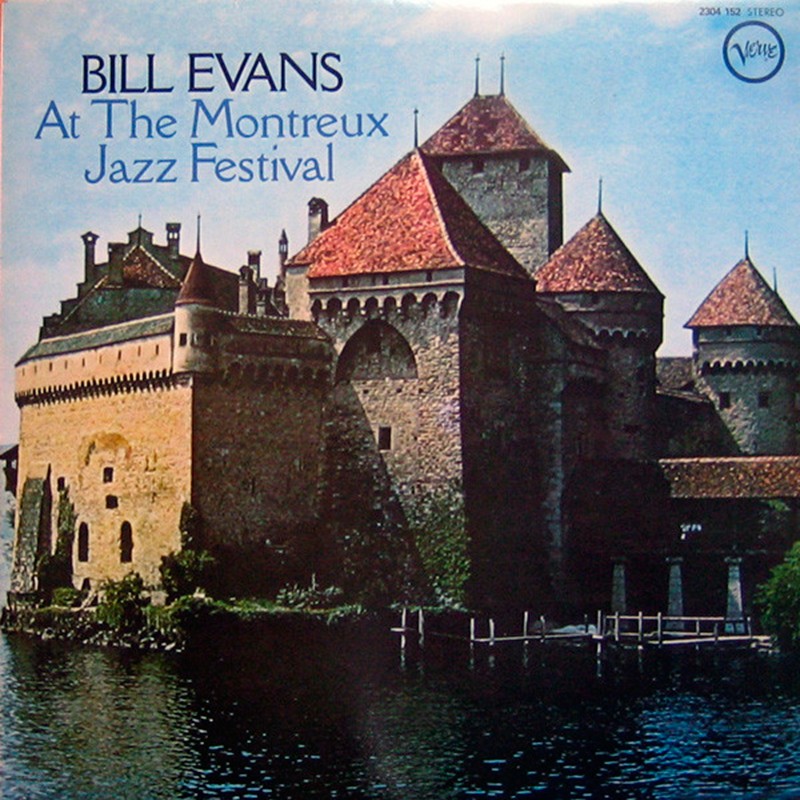
Add to that big hit singles like “Smoke on the Water” (which deals with the burning of the original casino and even mentions Claude Nobs by name) and “Under Pressure” (which was taped after Nobs all but forced David Bowie and Freddy Mercury to write a song together after a big meal he had prepared for them), and it became clear that the brand had become, in the words of Quincy Jones, “a Rolls Royce.”
Towards the Digital Age
Over the past few years, the Montreux Jazz Festival has gradually changed its strategy.
After finishing the momumental task of transferring its archive of analog video- and audio recordings to the digital domain, it has started to publish recordings on its own initiative. The pace of has been slow and deliberate, focused on artistic merit rather than superstar appeal.
Thanks to these steps, the long overdue and entirely legendary Nina Simone concerts at Montreux, which Nobs himself considers as the absolute pinnacle of his tenure, have now become available in beautifully presented editions with excellent audio quality.
A lot of this is quintessential material representing the full scope of the festival's stylistic reach, including blues, soul, funk, jazz, and chansons. Side by side with the MFJ in-house label, more and more recordings from the festival are either being repressed or finally made available by third parties. In many respects, the recorded legacy of Montreux has never been bigger and more public than it is right now.
This is, of course, somewhat ironic, as recordings in general seem to have become less interesting for most artists and the industry, with the live album format in particular suffering from a decades-long decline. And so, while the number of Montreux recordings keeps increasing, the festivities on location are gaining the upper hand in terms of their importance.
This seems to be a good thing, surely.
If something as fickle and fragile as a music festival, forever dependent on the twitches in trends and the constant risk of a single failed edition putting an end to a proud tradition, can afford not to rely on its past, this feels like a solid foundation.
The balance, however, remains fragile and comes with the reservation that, to this day, the archives are underexplored territory. Huge portions of the performances remain unreleased, especially on video.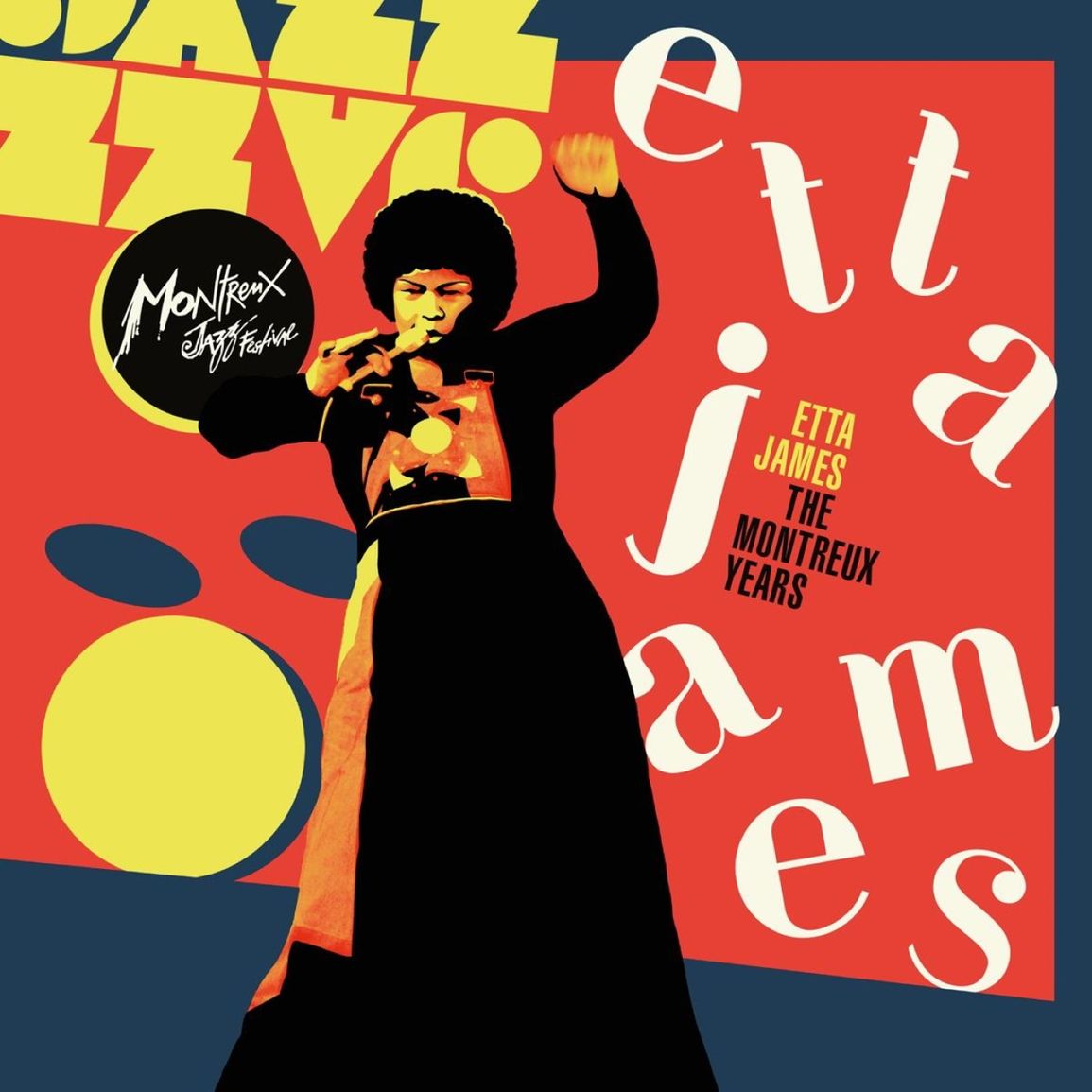
Although only short extracts are visible in They All Came Out to Montreux, we do have some indications about their power.
Nobs used to have a private screening room in his old chalet, right next to the vault with the original master tapes, and insatiable music lovers like Keith Richards would drop by on a whim to spend countless hours amidst this sheer wealth of material. It has been reported that Marvin Gaye agreed to have his performances filmed after seeing some of the videos by his favourite artists. Even Ray Charles, who never ever wanted a camera directed at him, eventually relented.
At the pace the festival's management are releasing new music, and their surprising ignorance of video, it begs the question: What would happen if they finally opened up the safe and made everything available?
Moments in Amber
Already years before his untimely passing as the result of a tragic accident, Nobs had thought about the legacy of Montreux. He wanted the archive to preserve these monumental concerts for posterity. Just like picking up a Shakespearean play, a novel by Goethe or looking at a Picasso or Vermeer, someone could potentially discover Less McCann and Eddie Hariss's Swiss Movement LP with its breathtaking rendition of “Compared to What” and relive that moment.
The archive would serve as an acoustic bridge extending from an unknown future into the past, preserving magical moments in amber.
As mentioned, Nobs was not a technophile and most of the actual practical work of keeping the archive fit for the future was left to his partner Thierry Amsallem. This didn't stop him from dreaming up streaming before it became reality.
The Montreux archive is a piece of living science fiction, but in a way, when streaming actually became possible, it turned his prophetic insights into a mundane fact of life.
What relevance do the Montreux recordings hold if we have access to millions of hours of music online, more than anyone could ever listen to anyway? Do we really need everything from the festival's history when, just like anything else, next to its unquestionable highs, it surely had just as many troughs or at least several unremarkable nights with very little of the magic which defined its peak performances? Doesn't opening the gates risk flooding an already oversaturated market and damaging a nimbus of perfection which the festival has worked so hard to create over decades of treading carefully?
The thing is: Even if streaming hadn't happened, Nobs' original idea was always doomed to fail.
The Recording Paradox
Recording a live performance instantly turns that place- and time-specific moment into the exact same artifice as a studio record. The magic of albums like Kind of Blue lies in creating the illusion of a live performance through ingenious recording, creative craftsmanship, meticulous preparation and inspired playing.
The fact that the music on Swiss Movement was played live awards it an urgency, flow, and freedom that could unlikely be achieved the same way with multiple overdubs or by performing the music from sheet music. The microphone is a camera. It fixes and frames the moment – once it's passed, you're listening to a painting.
It may not matter, though. In a time hungry for filters, the Montreux archive offers a unique set of lenses through which to look at music. It taps into one the strongest forces of the arts, one which has been devalued and occasionally ridiculed: Our subjective tastes as human beings.
The curation process at Montreux was deliberate and selective and it clearly had strong underlying convictions about quality. But it was very much directed first and foremost by a simple question: Do I like it – and will it thrill others?
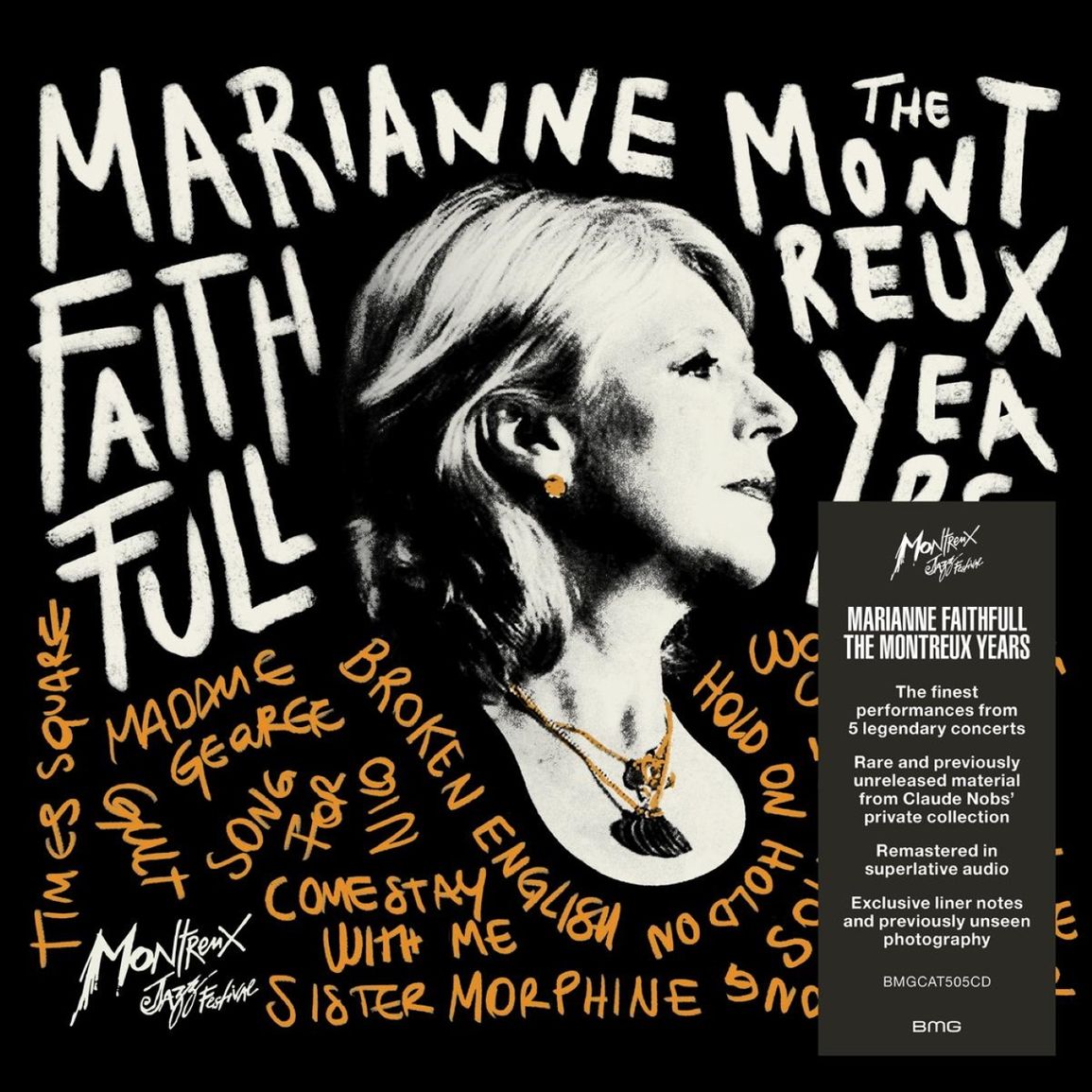
Taste is not random, it is personal, and, in fact, quite often extremely focused. Even as AI becomes increasingly powerful, we still haven't been able to capture or replace taste through algorithms yet. This is because it is something shared between humans, it literally defines who we are and allows us to truly see someone else for who they are. And by listening to the same music, we can experience both at the same time without there necessarily having to be a conflict.
The Montreux archives, thanks to its both narrow and super wide lense, offer the chance to experience taste in its purest and most artistically stimulating form in a way that a larger, uncurated, and ultimately chaotic environment like Deezer, Apple Music or Spotify never could.
The Imagination Engine
With a live recording, we may not actually relive the moment of the performance. So why do we strongly feel as though we do? Perhaps it's because we are actively creating that moment in our imagination. At the moment of highest immersion, the sensation is as vivid as if we had actually experienced the concert “for real.”
I have listened to recordings of concerts I attended and at times, the “document” felt like an alien object, as if it had been taken from another time and place. At other times, I have listened to a live recording from a time I wasn't even born yet and later felt like I had been there in person. This is the flipside of the recording paradox: Everything is artifice, everything is real.
This is not an illusion. We create our reality, and the moments that have passed become part of the domain of creativity. By granting us access to one of the largest and most exquisite archives of recorded live music, the Montreux Jazz Festival could turn into an engine for human imagination – connecting us to wisdoms lost and extending the fleetingness of so many beautiful moment into eternity.

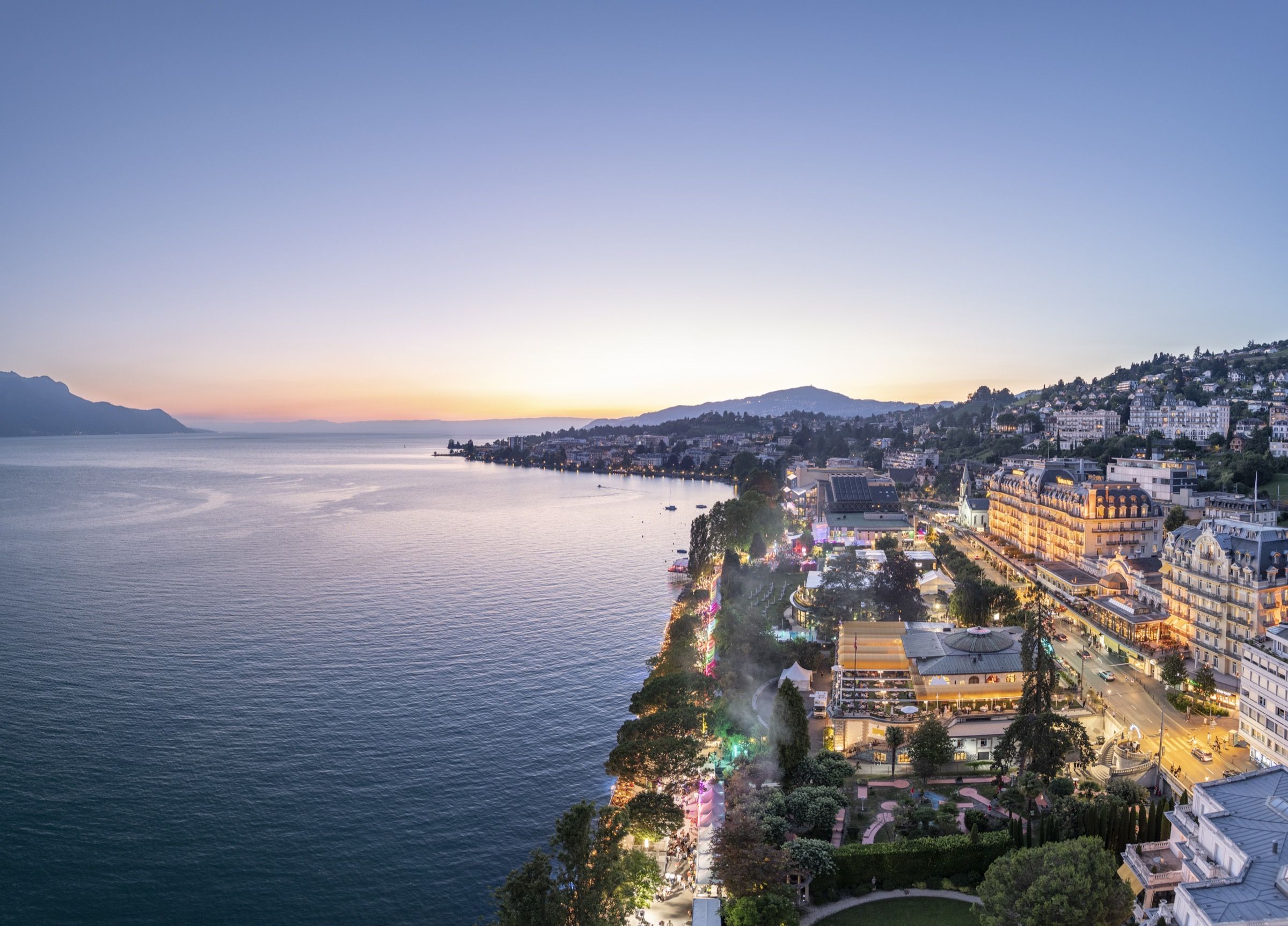 Montreux Jazz Festival 2024 Image by Emilien Itim
"The microphone is a camera. It fixes and frames the moment – once it's passed, you're listening to a painting."
Video
