Published
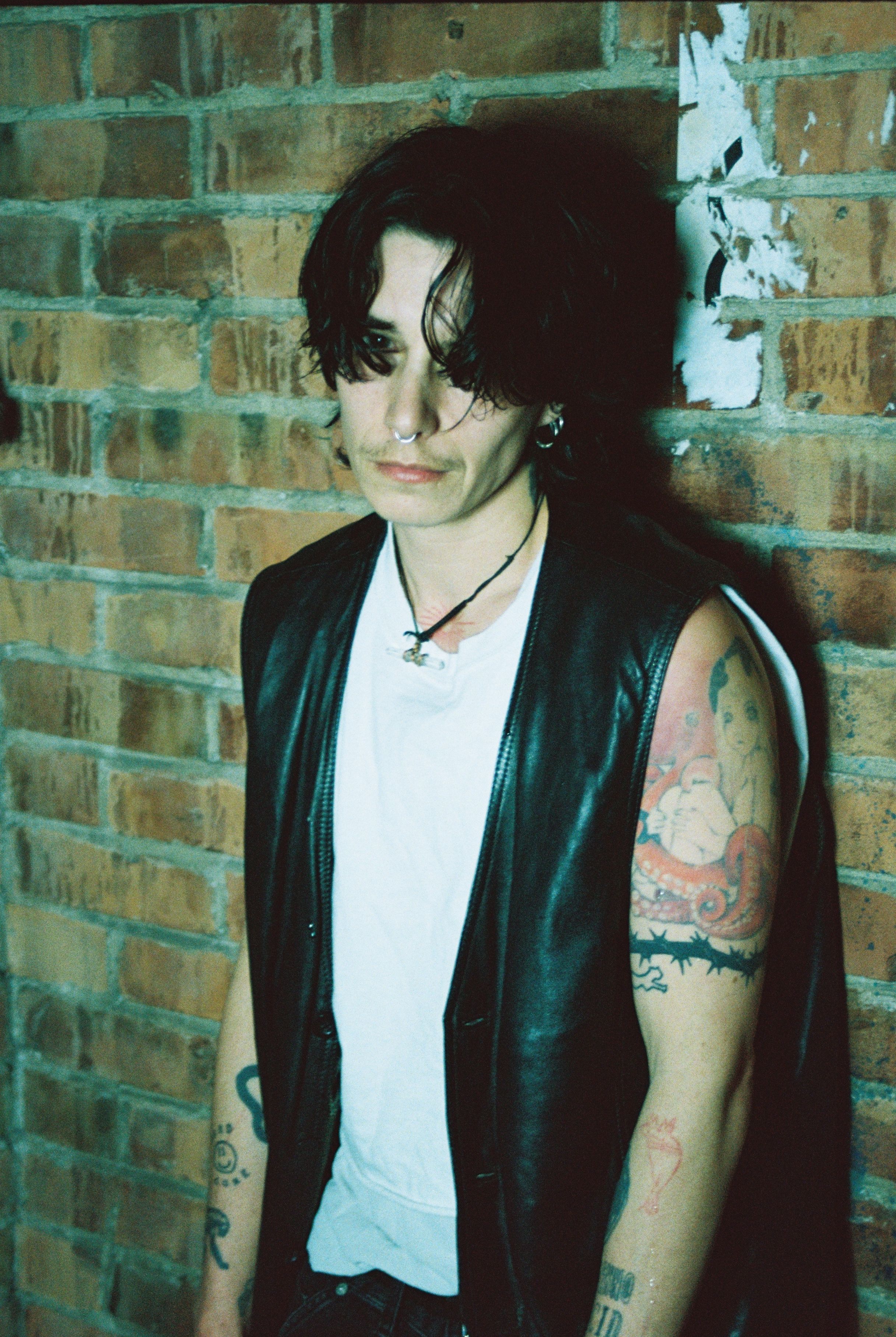
Name: Ash Luk aka Infinity Division
Nationality: American
Occupation: Producer, DJ
Current release: Infinity Division's new studio album Satisfaction is out via SOFTCORE UNLTD.
Global Recommendation: My hometown is Winnipeg, Manitoba. I left in my early 20s and always felt like it had nothing going on. But on recent visits, I’ve started to see how charming it really is.
I don’t know if I’d recommend one specific thing—but it’s a beautiful place to get lost. Drive out, explore the lakes and the little towns that haven’t changed in 50 years. And if you’re brave, go in winter—the snow is beautiful, and you can walk right down the frozen rivers.
If you enjoyed this Infinity Division interview and would like to know more about his music and upcoming live dates, visit him on Instagram, and tiktok.
What were some of the musical experiences which planted a seed for your interest in electronic music?
I think from very early on, I was interested in electronic music. Growing up, my stepdad played in an industrial band, and I remember being very curious about the synths they used. Around that same time, I started going to raves and got really into Jungle, D&B, and Happy Hardcore. (That still remains!)
At the time, though, it all seemed very incomprehensible—like, how would I ever make music like this? It wasn’t until many years later, when I was living in Vancouver, that I actually started making my own music. For the first few years, I was mostly in the punk scene, but I started taking an interest in synths in a way that felt adjacent to punk.
When I got my first synth (a Juno-60) and drum machine (TR-606), I started jamming with friends and playing live. It was still much more synthpunk than dance music. I wasn’t really interested in making dance music at that time.
The moment that changed was when I first heard Frankie Knuckles – "Baby Wants to Ride" —this perfect fusion between darkwave-esque vocals and hypnotic beats. That’s when I started creating dance music.
[Read our feature on the Roland Juno-60]
What does the term “electronic music” mean today, would you say?
Electronic music spans a wide range, and yeah, when you think about it, most modern pop is technically electronic music.
But when I hear the term, I associate it with music where the production is the core of the art—rather than a pop or trap song where the production serves as a canvas for the vocalist’s performance.
Not to say there isn’t amazing production in pop, or vocals in electronic music, but the focus is different. In electronic music, you might use a strong vocal to elevate a production. In pop, it’s the other way around—the production elevates the vocal.
I grew up mainly listening to electronic music but have lately, like many others, felt a bit disappointed by new releases. What's your view on the creative health of the scene?
I feel the same, honestly. I’ve been more inspired lately by music that incorporates live musical elements—full bands, vocals, or even just some live instrumentation. It brings something more visceral, more nuanced, and allows room for imperfections.
A lot of modern electronic productions feel very clean, very functional, and kind of void of emotion. So many tracks feel like they’re built specifically to sound good in a club—but even though I might play some of them in a set, they don’t really stick with me. I need an earworm, or something haunting, something memorable. My favorite electronic tracks all have a kind of melancholy to them.
To be honest, I’ve been more inspired by pop music lately than club music.
What recent releases or performances left a deep impact on you?
Aïsha Devi—both her last release and seeing her perform live. Her work has that haunting melodic quality that stays with you and makes you want to listen on repeat.
Also Operant, the first time i saw them live they were playing in a venue with less than ideal sound so instead of their planned set they just did an improv noise set and it was insane.
Their latest release on Total Black is also sick, fusing elements of witchhouse, with breakcore and noise.
What kind of sonic materials or ideas are stimulating your work right now?
I always go through phases.
Lately I've been obsessed with Archive.org for both graphic design and sound inspiration. Digging through old underground movies and sound clips.
Are there current events you feel compelled to respond to as an artist?
Frustration, discontent are both prevalent inspirations currently.
Especially with everything going on in Germany and the silencing of pro-Palestinian voices both from the government and within the music scene itself.
Do city scenes still carry unique sounds, despite global music blending?
Definitely. Even with globalization, I think you can feel the difference between someone making a sound from its origin point and someone recreating that sound elsewhere. That’s not to say influence can’t be transformative—sometimes borrowing elements from another style leads to something entirely new.
Vancouver had a distinct sound, especially in the punk scene. This 2000s-era of noisy, synth-driven post-punk was hugely influential to me. It had a coldness and tension that really reflected how artists were being pushed out of the city.
Interestingly, I haven’t found a sound unique to Berlin yet—it feels more like a place where everyone brings their own sound.
How do you balance honoring roots vs. exploring the unknown in your music?
It’s definitely a conscious balance I think about often.
A lot of the music I’m inspired by was made long before many of the tools we use today even existed. For a long time, I only used hardware from the eras that inspired me, but I’m more open now to newer tools—especially for sound design that wouldn’t have been possible before.
That said, I still set limitations for myself to stay grounded in those influences, and to avoid getting caught in the infinite rabbit hole of possibilities.
Is there still potential for something “new” in electronic music? What might that look like?
Absolutely. I think there will always be “new”—but I imagine it’s something I can’t describe yet.
I just hope it still has a soul.
Any recent tools that changed your approach?
The 1010 Blackbox completely changed my live workflow. I’d been using the MPC1000 as the hub of my setup, but its sample limitations made things tough.
Now, I use the Blackbox as a second brain—it allows for granular synthesis, creative chopping, and syncing LFOs to bring samples to life. It makes them feel way less static.
Are there limits to what can be done in sound design?
Nope, lol. That’s the trap. You have to impose your own limits, otherwise you’ll never finish anything.
How does DJ culture and club life interact with your music?
I’ve been told a lot that my music is hard to DJ. Honestly, even for me, I often can only fit my tracks at the beginning or end of sets.
I think it’s because I write songs—not tracks for DJs. I’m thinking about the person listening at home, not the dancefloor.
How are your live sets and recordings connected right now?
Most of my productions start with live performances. I’ll take elements from what I’ve played live and build on those to make full productions. Because of that, I rarely perform my recorded tracks live.
But lately, I’ve started adapting some of the album tracks—especially the ones with my vocals—for live performance.
What does composing/producing mean in the era of AI?
We’ve got to find ways to work with it—as a tool to expand our own ideas in ways we couldn’t before.
That said, it’s scary. I do think AI will replace human composition in areas where the value of human creativity isn’t prioritized—like commercials or certain film work, where AI is already being used.
Any artists, labels, or collectives pushing electronic music forward right now?
Some of the most exciting club music to me right now is coming out of Latin America—fusing Perreo rhythms with gabber speed. Labels like N.A.A.F.I are releasing incredible stuff.
Also, the resurgence of Noise and Punk in club music is really exciting. Parties like Psychic Liberation in Berlin and labels like Never Sleep are doing great work, incorporating punk artists into electronic lineups and releases.