Published
Name: Inoyama Land
Members: Makoto Inoue, Yasushi Yamashita
Nationality: Japanese
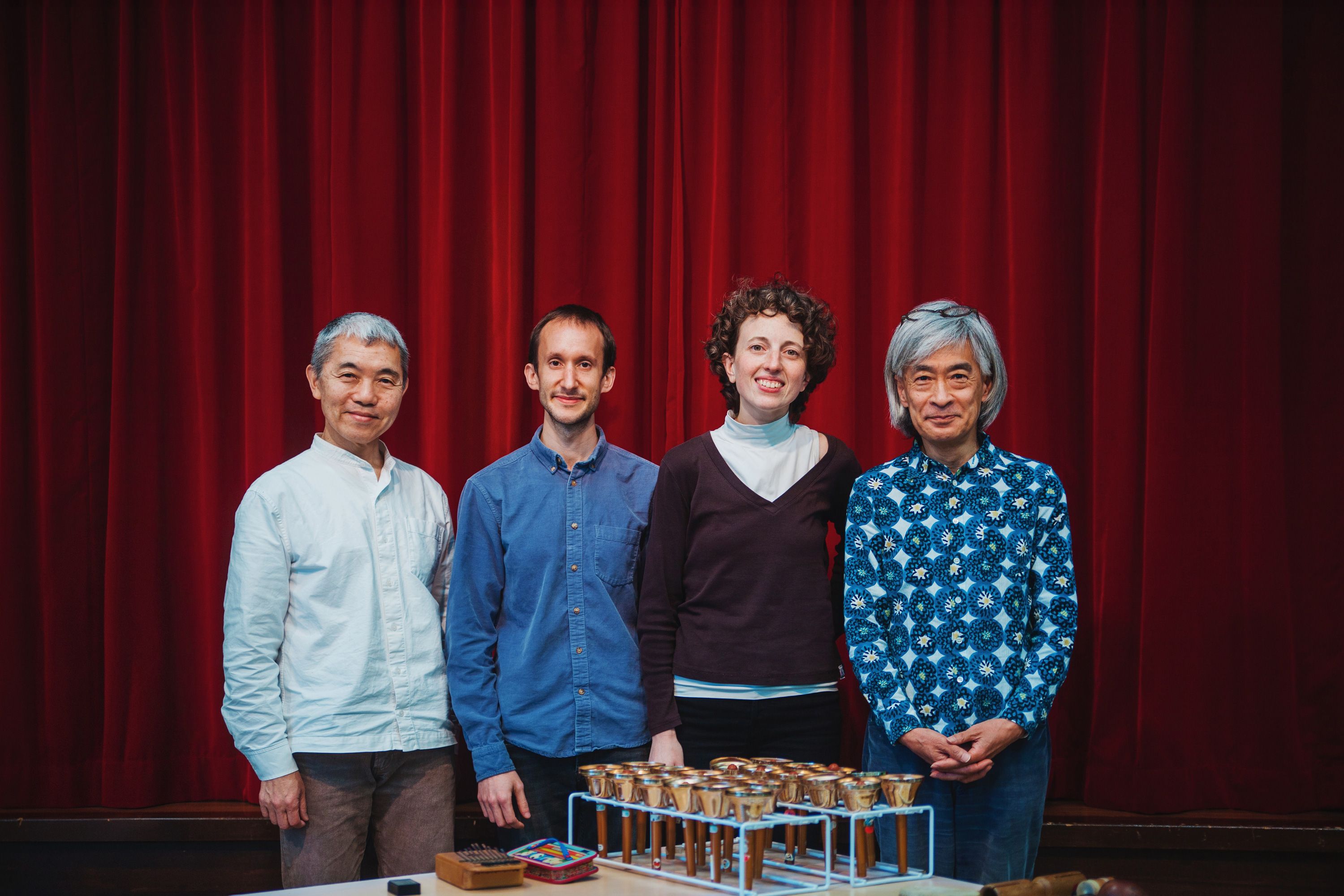
Current release: Inoyama Land team up with Passepartout Duo for their collaborative new album Radio Yugawara, out via Tonal Union.
Recommendations:
YY: Instrumental music that lasts less than three minutes. And instrumental music that lasts longer than three minutes.
MI: Let me introduce you to our first album, DANZINDAN POJIDON (1983), and the latest, Revisited (2023). Forty years have passed between these two albums. The equipment, especially the synthesisers, has evolved greatly, but it is astonishing that the tones and sequences we create remained the same. Lack of evolution may be the essence of Inoyama Land.
[Read our Passepartout Duo interview]
If you enjoyed this Inoyama Land interview and would like to stay up to date with their music, visit their official homepage.
What were some of your earliest collaborations? How do you look back on them with hindsight?
Makoto Inoue: Yasushi and I met at a production site of an avant-garde theatre in the summer of 1977. The stage directors were Kouichi Makigami (future Hikashu vocalist) and Eiji Kusuhara.
Back in 1974, I watched a play by Lumiere & Son in London, and Eiji Kusuhara was in the play. I was very interested in the improvisational addition of music to the actors' performances. Soon after that, Yasushi and I formed an improvisation unit. That was the beginning of Inoyama Land.
There are many potential models for collaboration, from live performances and jamming/producing in the same room together up to file sharing. Which of these do you prefer – and why?
Yasushi YamashitaI can enjoy it in any way.
MI: I think so too. As long as we have instruments or devices that output the tone we want and communicate with the collaborator, it will be ok.
How did this particular collaboration come about?
MI: When Passepartout Duo visited Japan in 2023 for touring, they contacted us.
We had a brief chat one afternoon, and I went to see their show afterwards and witnessed a very interesting performance. I went to say hello to them and suggested a session during their stay.
What did you know about each other before working together? Describe your creative partner in a few words, please.
MI: I did not know much about them, to be honest.
When I saw their performance for the first time, I noticed the beauty of the simplicity of their devices they manipulated and the tones they created.
What do you generally look for in a collaborator and what made you want to collaborate with each other specifically?
YY: I have no particular expectation of a collaborator.
MI: When improvising with them, I expected to be able to share common colours and spaces in the repetition of sound transmissions.
Tell me a bit about your current instruments and tools, please. In which way do they support creative exchange and collaborations with others?
YY: CASIOTONE, simple one, melodica, and harmonica. I sometimes play piano. I am always conscious of intuition, as if I am touching the instruments for the first time.
MI: The collaboration with Passepartout Duo took place in a location adjacent to my private studio. So I used a KURZWEIL K2000. The instrument can freely edit the vast amount of phonemes in it, and design strange output forms. The instrument is my treasure, I don't use it on tour as it is old and would break if carried it around.
However, for the collaboration with Passepartout Duo, I deemed the KURZWEIL K2000 suitable, it was just in the next room.
Before you started making music together, did you in any form exchange concrete ideas, goals, or strategies? Generally speaking, what are your preferences when it comes to planning vs spontaneity in a collaboration?
YY: We did not exchange ideas, actually. Spontaneity was a priority.
MI: Before starting the improvisation, we decided some game rules, such as restrictions on the instruments used and the combination of performers.
To unleash the spontaneity of performers, it is important to provide a planned environment, I believe. I acquired this philosophy when I belonged to stage production team of a theatre company. I was in my late teens then. Without a robust stage, dancers can't jump around freely.
Describe the process of working together, please. What was different from your expectations and what did the other add to the music?
YY: Rhythm and melody were added.
MI: They have projected new vistas that we would never have seen.
Is there a piece which shows the different aspects you each contributed to the process particularly clearly?
MI: From some prominent tone, it is possible to guess who is the driving force behind in some pieces. However, we see all music here as actions that occurred in the context of our relationship with each other.
What tend to be the best collaborations in your opinion – those with artists you have a lot in common with or those where you have more differences? What happens when another musician takes you outside of your comfort zone?
YY: Both can be the best collaborations.
MI: Rather than measuring similarities and differences in instruments or musical styles, I focus on how well we can communicate with each other through a musical performance. It would be ideal if performers from different cultures and environments can respect each other's expression and reach a global expression.
However, going outside of my comfort zone could be physically draining for me. I am not very confident in my physical fitness; it is my curiosity that drives me to new experiences.
Decisions between creatives often work without words. How did this process work in this case?
MI: I am not fluent in any language except Japanese. But our exchange of musical images went very smoothly. This is because Passepartout Duo have honed their skills in communicating their intentions through their musical expressions rather than words. They have honed it in the course of performing all over the world.
What are your thoughts on the need for compromise vs standing by one's convictions? How did you resolve potential disagreements in this collaboration?
YY: I believe the balance is important. We solved this problem by letting the other person do the work.
MI: When I create music mainly through improvisation, I don't have a concrete image of finished product. Each one of us is an individual expressionist with a will, but at the same time we are like sunlight, change with the wind blowing through or the weather. So, no matter what form it takes, I just take it in stride and enjoy the way my fingertips move on my keyboard under those influences.
I have never had any feelings like “this is how I want it to be” towards other players when collaborating. However, they may want to say, ‘Hey, Makoto, turn it down! It's too loud!’
Was/Is this collaboration fun – does it need to be?
YY: I enjoyed it very much. I definitely would love to enjoy a collaboration.
MI: Performing with them was a lot of fun. Performers don't need to have fun all the time, but I want the audience to do so.
Do you find that thanks to this collaboration, you changed certain parts of your process or your outlook on certain creative aspects?
YY: My interest in the collaboration has grown even more.
MI: I don't think I've changed in any particular way, but I've learned a lot of beautiful sounds that I hadn't noticed before. I would love to recreate these on my musical palette.
Collaborating with one's heroes can be a thrill or a cause for panic. Do you have any practical experience with this and what was it like?
MI: I cannot call it a collaboration, but I once assisted in the production of a film music by Akira Ifukube who had been a huge influence on me from a very early age.
When he tried out new musical expressions and a new piece of music was born in front of me, I held hands with my inner childhood self and rejoiced deeply.