Published
Artist Name: Sibel Jacqueline Koçer aka jakojako
Nationality: Turkish/German
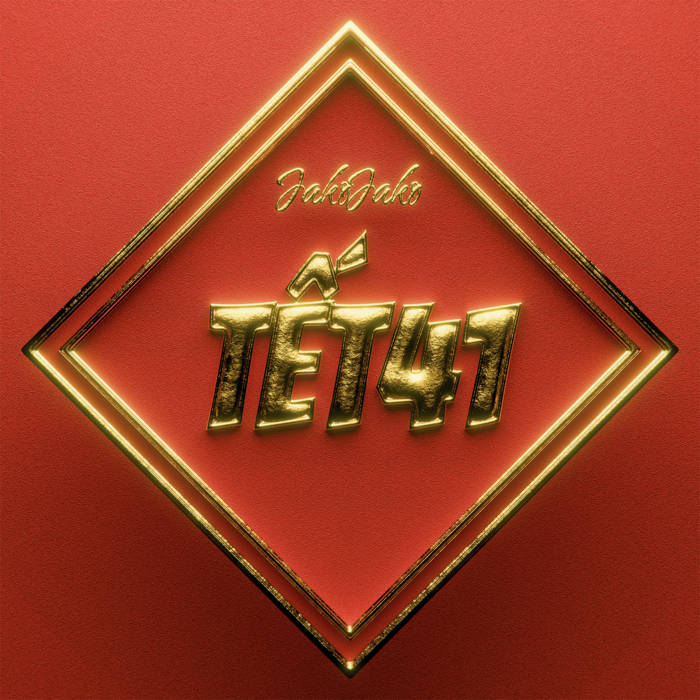
Release: jakojako's new album Tết 41 is out April 25th 2025 via Mute. It was mastered by Stefan Betke.
Review by: Tobias Fischer interviewing himself
This interview review is part of 15 Questions's project of finding new, more engaging formats for the review format.
[Read our jakojako interview]
[Read our Stefan Betke interview about mastering]
Tết 41 opens and closes with field recordings. In itself this isn't particularly unusual. What intrigues me is that they are not just preludes or outros – “Cảm ơn” is actually one of the longest pieces on the album. How do you see the relevance of these tracks?
Sibel recently visited Vietnam with her mother. While on location, she wanted to capture some of the moods and situations she experienced and which left a deep impression on her. Both field recording pieces were recorded during the traditional Lunar Celebration which, this year, took place on January 29th.
That festival, coincidentally, is called Tết Nguyên Đán – Tết for short – and in the press release, Koçer speaks about her desire to translate some of the moods she experienced to her own medium, electronic music.
Most of the pieces on the release are deep, inward-looking and reflective in nature. I doesn't really feel like celebratory music.
That's because Tết has a dual significance.
On the one hand, it is bright and joyful, with thousands of flowers lighting up the streets and died foods bringing colour to the table. Out in the streets, the noises of drums, gongs, and firecrackers create an ear-deafening racket. And with families coming together over sumptuous meals and celebrations, it is undeniably a highlight in the Vietnamese calendar.
However, it also carries spiritual significance. During the festivities, participants pay tribute to their ancestors and the deceased. And many displays unfold their true magic only in the darkness of night.
This, to me, is the meaning behind the way that jakojako leads us into this exploration of her own ties with the country and its traditions: The opening "Xin chào" is allowed to run for three and a half minutes which gives you enough time to really sink into the ambiance of the street and the sweet music being played. However, it doesn't just fade away, but seems to fall down a dark hole, dissolving in the process. The resonances become deeper and deeper, as the focus shifts from the objective to the emotional.
And then, over the course of the next half hour, we are inside Sibel's head, as she explores her own feelings towards what is happening around her.
The pieces really do have a meditative quality to them.
Yes, but it's an agitated stillness.
If you're going to refer to this as ambient, make sure to mention that it's the kind of ambient that Aphex Twin pioneered: One, where melody and mood, puse and harmony play a pivotal role.
To me, it feels like an almost pure sequencer album.
It's a direct continuation of the approach she pioneered on Metamorphose.
Tangerine Dream could have written something like Tết in the mid-80s - maybe around the time of Le Parc – and it would have been one of their better works.
That said, you're not getting any dated drum machines and big leads here. Instead, pulsation is everything, the gentle dynamic exchanges between the elements.
There is no fore- and background in this music. It all takes place in this dream-like state of pure imagination and memory, with subtle shifts in timbre, the occasional variation in a pattern and the appearance and disappearance of small particles.
It's a state where time looses meaning and you start drifting. The pieces basically all end where they started out – or do they?
If you compare this type of sequencing to a band like Tangerine Dream, which you mentioned – what is different?
In the 80s, the sequences were just a sort of rhythmical backdrop for the band. Here, the sequences are the core of the music.
More importantly, however, what really makes Sibel's approach to sequencing stand out – and I would argue that it's something no one else does quite so overtly – is that the individual notes in her lines are like little islands. They are not woven into fluent rhythmical chains or themes, but sewn together far looser and lighter.
Each single tone can be taken away or highlighted. Each tone, too, can get processed or overlayered with streaks of spacey effects. Sometimes, a note can get added to the pattern without, however, changing its main feeling.
The reason why this is possible at all is that the weightless harmonic clouds which float through the tracks are part of the mechanics. Really, every single element is part of its heartbeat, of the ambiance, of the movement. And that places the music much more in a galaxy of intimacy than the cosmic explorations so beloved to the 70s space-electronica strand.
Do you think that this music is essentially improvised?
It is hard to say. But if it isn't, then a lot of care has gone into making it sound this way. It is music which follows very simple principles, but constantly escapes the phantom of composition.
It is like someone dancing on a grid but always outside of the lines. Like dreaming in the pocket. Which makes it feel both reassuring and otherwordly at the same time.
Even without considering the spiritual dimension, many of these pieces are really extremely meditative. Why do you think would a festival of colours create these sensations?
Sibel has mentioned that her personal ties to Vietnam are not particularly strong. My guess is that coming to a place that nonetheless has a place in your history puts you in touch with something that is both familiar and entirely foreign.
It's bittersweet, it's confusing. Sometimes it's painful, but always beautiful.