Published
Name: Kaidi Tatham
Nationality: British
Occupation: Multi-instrumentalist, producer, remixer, DJ
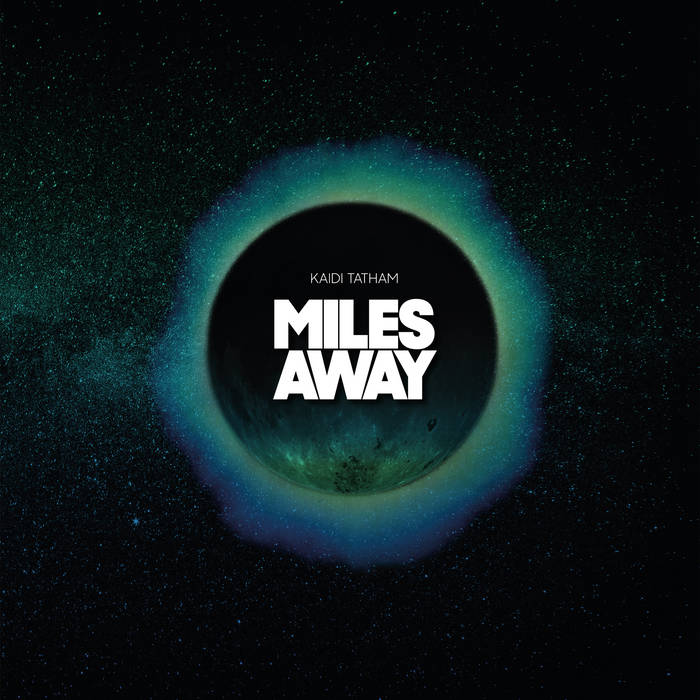
Release: Kaidi Tatham's new album Miles Away is out via First Word.
Review by: Tobias Fischer interviewing himself
This interview review is part of 15 Questions's project of finding new, more engaging formats for the review format.
For years, the UK has enjoyed one of the most dynamic new jazz scenes. As Alex Garnett recently explained, that may be down to its insularity: “A lot of the originators and masters connected to that favourite European continent rather than the UK as a place to settle so in certain respects we’ve generated our own scene and our own sound [...]. British jazz has always had a different flavour - which is a good thing it seems.” And yet, even within that already unique flavour profile, Miles Away appears to stand out. What, exactly, makes this album different?
I think one way of describing the approach of the UK scene is that these acts are either looking for ways to create something that sounds like jazz without actually playing jazz. Or they're using traditional techniques of jazz without wanting the results to be anything like traditional jazz.
I am sure there is a precise psychological term for this, but really, it's their way of expressing love for the roots while also distancing themselves from some of the less inspired directions the genre has veered off into over the past decades.
Kaidi Tatham, however – at least that's the way that I would put it – is not just very obviously playing jazz on Miles Away. He is even playing a sort of hyper-jazz: something that is painstakingly arranged to be the most perfect representation of what this style can be.
It is certainly smooth music, very polished, highly refined – most of the changes, transitions, variations and breaks seamlessly blend into the textures. But I'm also noticing that, despite all the instrumental flourishes, the production is extremely electronic and filled to the brim with studio wizardry. How does that make it hyper-jazz?
When I used that term, I was referring to the interaction between the different elements on the album.
You know when you're watching a jazz band play, there will be occasional moments when the band are so tight that you assume that they must have rehearsed this particular passage? Or moments when everyone seems to be doing their own thing for a while and then something truly magical happens and everything interlocks and falls into place?
On Miles Away, every solo fits that description. Every time the piano or Rhodes or flute or the brass section comes in, the “bane” responds to it with a telepathic dream logic. It's not like they know what's coming – they actually know what's coming. And so, the bass will respond with a slight jump, the chords with a gentle up- or downward movement, the drums might add a quick responsive pattern.
This is what creates this sensation of smoothness you spoke about but which I would attribute to a state of perfect information rather than a desire for refinement. When I imagine a band playing here, I always envisage everyone with their eyes closed and a smile on their face.
Maybe we should clarify at this point that this state of perfect information is simply the result of Kaidi playing every single instrument and him also doubling up as producer. These pieces are ultimately arrangements in a DAW, carefully honed through a laborious process until they sound like a band were playing them. It's similar, I would guess, to St. Germain's Tourist, where you had all these great French instrumentalists come into the studio for him to record hours of tape over his beats and he would then cut everything up and stitch it back together again.
But there is an important difference between a producer who simply keeps adding lines and licks until the piece is done and one who keeps going back and forth between spontaneity and composition.
Ludovic Navarre (St. Germain), I would say, falls into the former category I mentioned before, he created something that sounded, smelled, and looked like jazz, but clearly wasn't. I love that album, but nothing on it or about it genuinely feels “live” or “in the moment.”
Miles Away, on the other hand, comes across as live and in the moment all the time. And I think that's because underneath this super compressed, extremely dense surface, Tatham is approaching production itself from a jazz angle:
I would wager that these pieces have gone through many iterations, where he would play and record a solo, then adjust the backing and accompanying contributions of the other parts, then either re-play the solo or edit it to match those patterns.
And of course, he is constantly working on the sound layer as well, so the improvisation goes from 2D to 3D and, eventually, 4D.
How do you see the role of improvisation on the album?
There is a paradox of sorts at the heart of Miles Away.
All of these tracks are loop-based. The loop defines their vibe, their musical content, it lays down the foundation of the instrumental parts layered on top of them. And in many respects, loops – at least the electronic, sample-and-hold-variety - go against the basic premise of jazz of playing music in the moment.
It's one thing if James Brown asks his musicians to keep playing the same groove for ten minutes straight or if “Shhh / Peaceful” or “Pharao's Dance” contain sections which re-appear verbatim at different parts of the piece.
But it's something completely different to take a short bar of music – which, on Miles Away (the title almost certainly being no coincidental reference), can be as short as one or two seconds – and to then repeat them ad libitum.
For Kaidi, improvisation is the essential ingredient required to bring his approach to life. At the most basic level, the improvisations break through the stasis of the loops, while riding on their crests. But they also allow the loops to go on for much longer than they could otherwise be sustained. They are all mutually dependent on each other – just like the players in a jazz band.
What does this mean for the relationship between improvisation and composition?
It opens up quite thrilling potentials: In the classic dichotomy, composition means you can still act spontaneously but go back in time and then “correct” or change the decisions you made. The music gets shaped and chiseled.
But on Miles Away, the elements of each piece are there, and only get gently tweaked – it's the composition process which is constantly responsive to the requirements of changing situations.
So these two concepts become one texture.
Multi-instrumentalist Gebhard Ullmann told me that he never really understood why composers didn't allow improvisation into their compositions and why so many improvisers insisted on creating everything from the moment. He began transcribing his improvisations and then inserting them into his compositions, which, in turn, could open themselves up to spontaneous approaches on stage.
I think it's almost like creating a time loop: If you could go back in time to make your improvisation better each single time to create something even more unique, even more expressive, even more powerful – wouldn't you want to make use of that opportunity?