Published
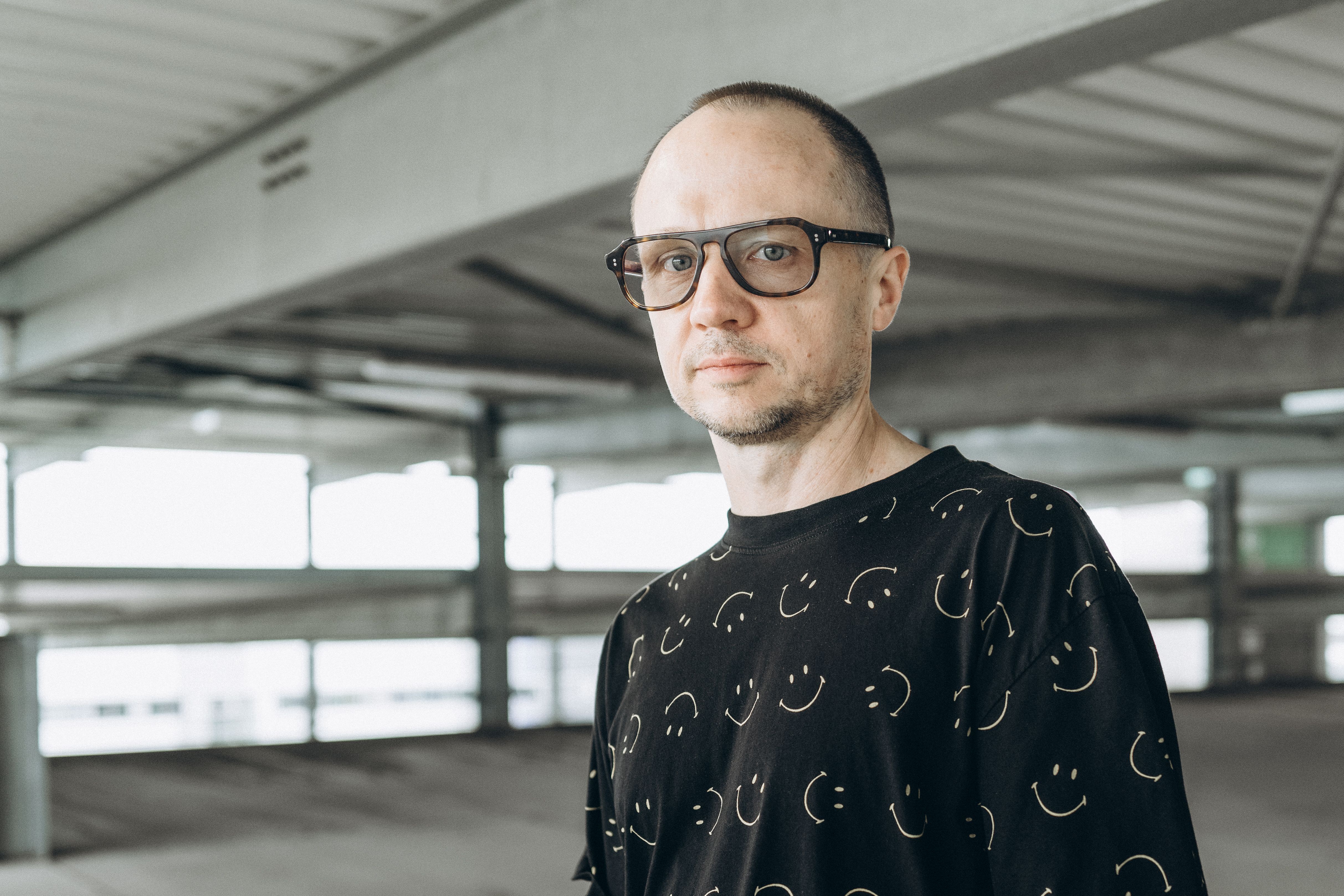
Name: Georg Köhler aka Invexis
Nationality: German
Occupation: Producer, performer
Current Release: Invexis's new Morphium EP is out via Scrap & Delete.
Topic I am passionate about but rarely get to talk about: I have enjoyed playing badminton since my childhood and admire the sport in many ways, particularly the speed and elegance of the movements. The fast-paced nature of the game requires quick reflexes and strategic thinking, which I find both challenging and exhilarating.
If you enjoyed this Invexis interview and would like to know more about his music and upcoming live dates, visit him on Instagram, and Soundcloud.
The path to becoming a producer is a process - but from many interviews, I am under the impression that there are nonetheless one or a few defining moments. If this was the case for you – what were they and why were they so incisive?
When I got my first synthesizer at the age of 15, I initially started by trying to recreate the music I loved at the time – simple patterns, basic beats. Pretty quickly, though, that turned into a deeper interest in experimenting with my own melodies and sounds.
The first defining moment for me was the shift from merely copying tracks to creating my own. That transition opened the door to a kind of creative freedom I hadn’t experienced before.
A second milestone was definitely the validation from the outside world, whether through live performances or my first release. Those experiences signaled that my music wasn’t just meaningful to me, but could also reach and resonate with others.
Tell me about one or two of your early pieces that you're still proud of (or satisfied with) in terms of production – and why you're content with them.
One of the early tracks that I am quite pleased with is “Summer night,“ which was released 2023 on Mutual Rytm. This track, originally produced in the early 2000s, remains an important part of my musical development.
In “Summer night,“ I managed to blend several complex melodic layers and rich sound textures without making the track feel cluttered or overwhelming. Finding this balance is not always easy, and I am satisfied with the result I achieved.
The creative process behind this piece was especially inspiring. I aimed to create an atmosphere that is both nostalgic and refreshing – perfect for the summer months.
In how far, would you say, was your evolution as an artist connected to the evolution of your music set-up and studio? Were there shared stepping stones?
My development as an artist was heavily influenced by my music setup. In the 2000s, I produced completely without a computer and initially had no sampler. As a student, I was equipped with only a few devices, which significantly limited my selection of sounds.
A major milestone in my development was acquiring an A3000 sampler. This device opened the door to a broader palette of sounds, allowing me to express my creative ideas more freely. Furthermore, drum machines like the Novation Drumstation, known for their classic 909 sounds, filled a significant gap in my setup. They made the production process much smoother and enabled me to refine my sound, even though I had previously been able to create some of these sounds with the sampler.
While the introduction of Ableton has undoubtedly transformed my workflow, I don't see it as a defining moment in my artistic evolution. Rather, I regard it as a tool that simplifies my work as a producer and positively impacts my musical development.
There are artists who can realise their ideas best with a traditional – or modified – piano interface, others with a keyboard and a mouse, yet others by turning knobs or touching screens. What's your preferred and most intuitive/natural way of making music and why?
I wouldn't say I have a specific preferred method for making music. Instead, I use the tools and devices that are best suited for different elements of a track.
For melodies and pads, I enjoy playing them on the piano, while I prefer to work on drums and percussion loops on the computer.
Tell me about the space of your current studio/workplace and how you've set it up to optimise creativity.
Due to limited space for my studio, I’ve set up a simple home studio that maximizes flexibility.
I use a mobile setup with a tall rack on wheels, equipped with my essential music gear. This allows me to easily move it to different rooms in my apartment, adapting to various environments to enhance my creativity.
From the earliest sketches to the finished piece, tell me about the production process the Morphium EP, please.
The track "Morphium" from my current EP on Scrap & Delete took me about 2-3 years to complete, from the initial idea to the finished piece.
In the final version, only a few elements from the original concept remained. I started by experimenting with bleepy sounds, and I only truly connected with the track once I discovered a melodic direction that allowed me to bring it to completion.
Tell me about your aesthetic preferences for picking effects like reverb, delay, compression, chorus etc … - what was the role of these effects in the production of the Morphium EP?
Almost all of the mentioned effects are integral components of my production process.
For reverb and delay, I often work with presets that I adjust only slightly. In contrast, I approach compression in a more creative way.
For my latest release, Morphium EP, I frequently used multiple compressors in a chain to shape the overall sound or applied them specifically to the kick to enhance the punch.
The current production process allows for fast and infinite variations. Can you tell me about how you deal with this potential for the infinite and what ultimately decides on how many iterations to create and which version to release?
This is indeed a challenge I frequently face, and it is probably one of the biggest obstacles in completing my tracks.
One strategy that helps, though not always, is to let the track rest for 1-2 months. This allows me to return to it with fresh ears and rely on my instincts to determine which version has the most potential.
Tell me about the role collaboration played in your recent productions – and how you see the potential for machines as collaborators compared to humans.
Collaborations give me a great chance to see how other artists work and help me expand my own perspective. Working with artists like Maccari, Dorbachov and The Sixth Sense pushed me to really engage with their music and opened up new ways for me to be creative.
At the moment, and I believe also in the near future, I do not wish to use AI for collaborations, especially not in the parts of track creation that I consider creative. However, in the future, I can imagine using AI as a support tool for arrangements.
Production, as opposed to live performance, can be a lonely process and feedback from listeners isn't always tangible. What is it about it that gives you satisfaction?
Every idea, whether it's a new melody, an innovative sound, or a driving, groovy rhythm, evokes positive emotions that I want to share with others.
This drives me to develop these ideas further and turn them into something more substantial.
We can watch videos on production, take producer courses, and exchange deep insights on gear forums. Amidst these options to improve one's chops/skills, how do you keep things playful?
Actually, I find that I don't struggle with keeping things playful. In fact, I sometimes wish I could approach my work with a more serious focus on the technical aspects.
While I enjoy creative experimentation, I recognize that I could benefit from concentrating more on enhancing my technical skills and gaining a deeper understanding of my gear. Balancing creativity with technical proficiency is something I aspire to work on in the future.