Published
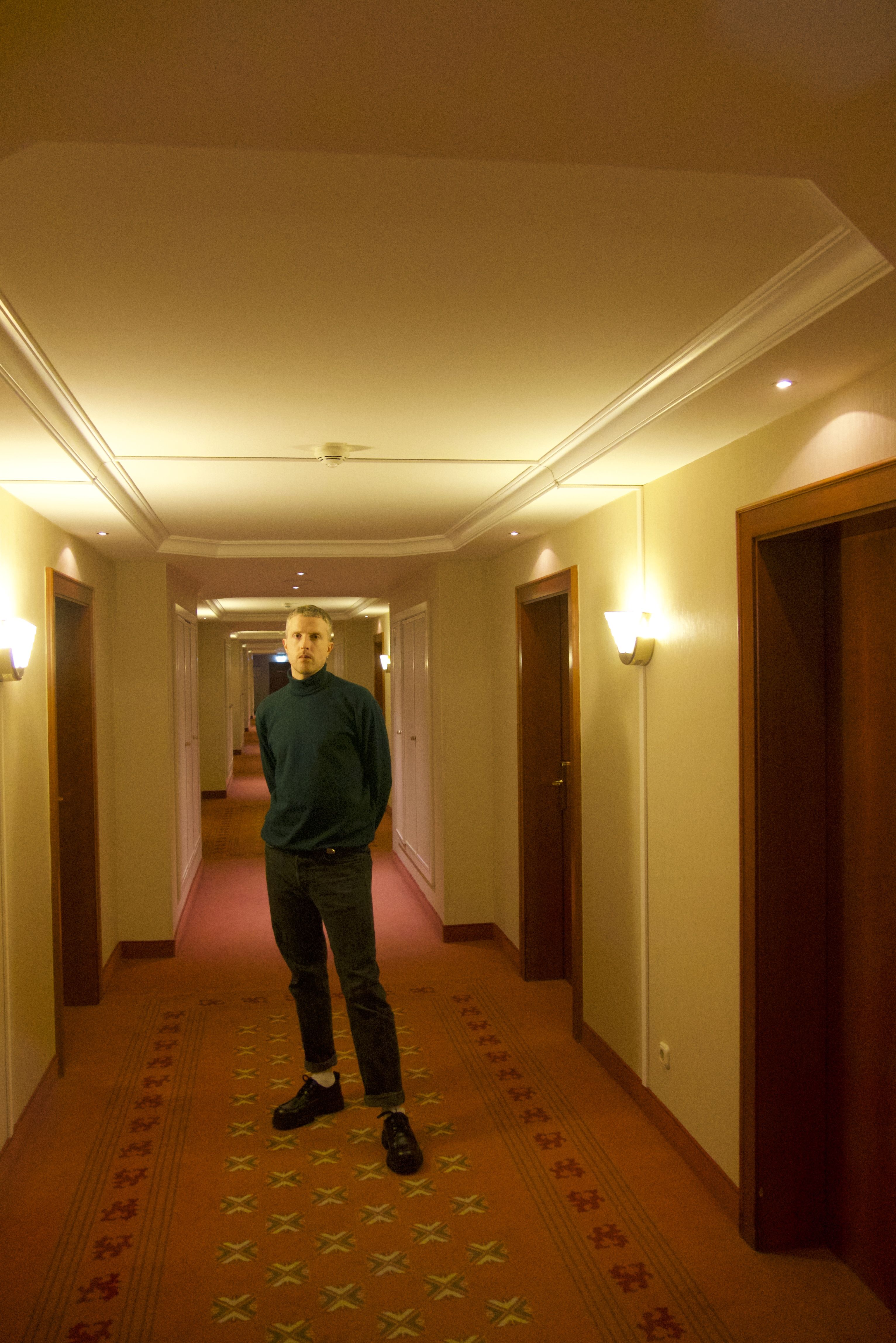
Name: Johannes Maria Paluka aka Iron Curtis
Nationality: German
Occupation: Producer, composer, DJ
Current release: Iron Curtis's new album Dial Me In is out via Hudd Traxx.
Recommendations for Berlin, Germany: In Neukölln, Prinzessinnengärten on the Jacobi Friedhof — an oasis close to Hermannstraße.
Topic that I am passionate about but rarely get to talk about: Public transport maps! When they’re well designed, I can get lost in them. Some are simply beautiful. I could talk about them for hours …
If you enjoyed this Iron Curtis interview and would like to know more about his music, visit him on Instagram, Facebook, Soundcloud, and bandcamp.
Where does the impulse to create something come from for you? What role do often-quoted sources of inspiration like dreams, other forms of art, personal relationships, politics etc play?
More or less everything around me finds its way into my music: books I read, movies, short clips on Instagram or YouTube, single words, photos, or art — all of these can trigger something.
I dream a lot and am surprisingly good at remembering my dreams. Rarely do I dream about music, though. Sadly, I’ve never been able to extract anything concrete from them. However, the feeling of euphoria after waking from a dream has helped me start new pieces a few times.
“Cream” probably sounds like one of those dreams I might have had before writing the music.
For you to get started, do there need to be concrete ideas – or what some have called a 'visualisation' of the finished work? What does the balance between planning and chance look like for you?
It’s all so unpredictable! Sometimes I have a concrete idea; sometimes it all starts with a word I’ve read or just a feeling I can’t quite grasp.
“Speak to Me, Baby,” for instance, was a phrase in my notebook that later became a track.
I’m not a synaesthete, but my brain strongly resonates with ideas for track titles; sometimes, the music is already sounding in my head when I read the words.
Now that I think about it, I use another simple “trigger”: my desktop background. I change it regularly, and right now it’s a portrait of Lauryn Hill. Before that, it was a picture of Sylvester (the disco icon), and before that, a photo by Lloyd Meudell.
These images create a kind of subconscious “companionship,” as if I’m asking, “What would they think of the music I just made?”
Is there a preparation phase for your process? Do you require your tools to be laid out in a particular way, for example, do you need to do 'research' or create 'early versions'?
I need my studio and computer - including all samples and plug-ins - to be tidy. I misplace my keys and phone about ten times a day and get distracted easily, so not finding things while making music drives me insane. Clarity and calm help me get to work.
At the same time, many of my sketches appear between two emails or just before I leave for an appointment. Time pressure reliably switches on my creativity, so no big preparation is necessary.
Do you have certain rituals to get you into the right mindset for creating? What role do certain foods or stimulants like coffee, lighting, scents, exercise or reading poetry play?
My main ritual is simple: closing the door. Knowing I won’t be disturbed instantly centres me. Shoes off, done.
I don’t handle caffeine well, but I still enjoy a coffee now and then because it gives me that fleeting sense that everything is possible, that I can start and do anything I like.
A short-lived delusion of grandeur, maybe … but when I can channel that feeling into music or a new idea, that’s already a lot.
For Dial Me In, what did you start with? If there were conceptual considerations, what were they?
There wasn’t really a concept since the album evolved organically from sketches I already had, and from knowing it would be released on Hudd Traxx.
That naturally shaped the approach: house music, no experiments, no overthinking, a focus on the dance floor. Quite different from my second solo album, which leaned more toward ambient and electronica.
It was both a relief and a burden: keep the kick drum going, don’t drift off. Go back to your roots and rediscover that “house is a feeling, an uncontrollable desire to jack your body …” energy in my music.
Once a piece is finished, how important is it for you to let it lie and evaluate it later on? How much improvement and refinement do you personally allow until you’re satisfied with a piece? What does this process look like in practice?
The initial idea for a track usually hits me right away.
I rarely throw things away, I’m almost an “organised hoarder” with a huge archive of sketches and unfinished pieces. When I feel stuck, I dive into the archive and always find something that excites me - maybe music I started 20 years ago, or something from a few months back that didn’t resonate then but suddenly does because I woke up in a different mood.
Unfortunately, I often get lost doing endless versions of a track before realising the first take was the one I liked best. Making decisions in music means committing to an idea - to the effects I used, the synth settings, the sequencer pattern. Bouncing to audio stems early in the process helps: once it’s audio, I can’t tweak it anymore, so I’m forced to move forward.
I’m very detail-oriented and can easily get lost in sound fragments or samples, which makes it hard to see the bigger picture or finish something. But I’m getting better at that, and I accept that it’s both challenging and inspiring.
Many writers have claimed that as soon as they enter into the process, certain aspects of the narrative are out of their hands. Do you like to keep strict control or is there a sense of following things where they lead you?
Both. Changing one element in a track can completely shift its direction, and I often follow that lead - even if it waters down my original idea.
Total control is an illusion, even for someone as neurotic as me.
There are many descriptions of the creative state. How would you describe it for you personally? Is there an element of spirituality to what you do?
Maybe “Flow” describes it best. In German, maybe “Rausch” or “Schweben” — a state beyond control that requires letting go, allowing worries, doubts, and all the hardships and self-pity of being a musician to fade away.
Just being present in the moment. It definitely sounds corny, but it’s true.
How do you think the meaning or effect of an individual piece is enhanced, clarified or possibly contrasted by the EPs or albums it is part of? Does each piece, for example, need to be consistent with the larger whole?
Streaming has significantly changed how I (and many of us) listen to albums. Full-lengths today sound more like compilations without an overarching concept. Which is totally fine!
Personally, I need a theme, a sense of direction or common ground. For Dial Me In, it was simple: “House music from Iron Curtis for Hudd Traxx - but with a twist.”
What’s your take on the role and importance of production, including mixing and mastering for you personally? In terms of what they contribute to a song, what is the balance between the composition and the arrangement (performance)?
Many of my early releases sound rough since I made them with nothing but a pair of HD-25 headphones, laptop speakers, and a cracked version of Reason.
I added way too many effects and overcompressed everything. I knew little about mixing or mastering, even when I started releasing music. A nightmare for mastering engineers! But that naivety was also liberating: I simply didn’t care too much.
Of course, I want my tracks to sound great in a club, and mixing and mastering go hand in hand with production. On Dial Me In, it worked beautifully, thanks to Rob Small, who did a fantastic job and gave me great feedback, allowing me to focus purely on the music.
Music and the accompanying artwork are often closely related. Can you talk about this a little bit for your current project and the relationship that images and sounds have for you in general?
The combination of graphics, photography, typography, and music really stimulates me: I remember being fascinated by album artwork early on, like Stevie Wonder’s Innervisions or Bob Marley’s Babylon by Bus LPs from my dad’s collection. The music just fit the covers perfectly.
Since I don’t run my own label, I’ve had to compromise with designers and labels over the years. But I’m pretty stubborn as I always have a clear idea of how the product should look to stay coherent with my music.
For this album, I wanted a colourful collage made up of many different bits and pieces, and Garet brought that vision to life brilliantly.
For Upstream Colour, a piece by Benedikt Leonhardt inspired the cover, and my friend Julian Bender is another trusted collaborator who knows me well, which makes working together so much easier. Don’t ask him, though …
After finishing a piece or album and releasing something into the world, there can be a sense of emptiness. Can you relate to this – and how do you return to the state of creativity after experiencing it?
After a release, I’m ready for the next one. I have to keep moving and start working on what’s next. I don’t feel emptiness, more a sense of completion.
Holding the record in my hands or seeing it online feels great. I’m just happy one chapter is done, and I can move on. Maybe that’s why release and relief sound so similar.
I would love to know a little about the feedback you’ve received from listeners or critics … have there been “misunderstandings” or did you perhaps even gain new “insights”?
My friend Yanneck (Quarion) is great at that, always supportive and enthusiastic, but also honest when something doesn’t work for him, and he’ll explain why. That’s inspiring!
[Read our Quarion interview]
Of course, all artists live off applause, my fragile artist ego craves affirmation and positive feedback keeps me going.
I remember the thrill of getting my first review, being featured on Resident Advisor or in Groove magazine in the early 2010s. It was huge. Some reviews were less glowing than I’d hoped, which disappointed me, but that’s okay.
It’s totally fine if someone doesn’t like my music and even better if they care enough to write about it. It seems there are fewer critical reviews these days, maybe because writers fear backlash on social media. But you don’t have to be a musician to have an opinion about my work.
Once it’s out there, it’s for people to experience and I can’t influence how they perceive it.
Creativity can reach many different corners of our lives. Do you personally feel as though writing a piece of music is inherently different from something like making a great cup of coffee? What do you express through music that you couldn't or wouldn't in more 'mundane' tasks?
The process of creating art is often glorified, even though much of it is craft and skills you can learn.
What separates art from the cup of coffee, for me is the pain, tension, and mood swings between bliss and despair, the doubts that come with creating something meaningful.
Revisiting a piece, listening back, and feeling that joy again because you made that yourself - that’s something special. But maybe that’s what a barista would say, too.