Published
Name: Isik Kural
Occupation: Composer, performer, songwriter, sound designer
Nationality: Turkish
Current release: Isik Kural's Moon in Gemini is out September 6th 2024 via RVNG.
Recommendations: Secret Face, a film by Omer Kavur - also the script written by Orhan Pamuk is available as a book; "Autumn Sun 1" - a painting Egon Schiele
If you enjoyed this Isik Kural interview and would like to stay up to date with his music, visit him on Instagram.
Do you think that some of your earliest musical experiences planted a seed for your interest in writing lyrics or poetry? How and when did you start writing?
Probably when I was 13/14 years old. I was playing nylon string guitar a bit for few years at that point.
I think it was mostly quotes and rephrases from here and there. Stuff I heard from people, books and films.
Entering new worlds and escapism through music and literature have always exerted a very strong pull on me. What do you think you are drawn to most when it comes to writing?
I think music is usually more of an escapism for the listener.
Although it starts as an escapism in the writing process, it loses parts of its escapism as you work on the music, which is both fortunate and unfortunate.
What were some of the artists and albums which inspired you early on purely on the strength of their lyrics? What moves you in the lyrics of other artists?
For Moon in Gemini, the album Warm Chris by Aldous Harding was an influence lyrically.
I have always considered many forms of music to be a form of poetry as well. Where do you personally see similarities? What can music express which may be out of reach for poetry?
Though I’ve never written poetry, I think maybe you can have more freedom with the words. But music can perhaps express and portrait certain moments and feelings that are hard to put into words. And in certain situations, the sounds of words could be more important for music.
Both music and poetry can have a different liveliness, music with its auditory nature and poetry with its literal nature. (I could never focus completely on a poetry reading, I need to see the words. Although historically I guess poetry started as an auditory art.)
Maybe poetry and music are the same, all the poems and fragments of Sappho were at the time music. We remember them in a different time.
What kind of musical settings and situations do you think are ideal for your lyrics?
For Moon in Gemini a music that disappears.
When working on music, when do the lyrics enter the picture? Where do they come from? Do lyrics need to grow together with the music or can they emerge from a place of their own?
For me lyrics emerge from a place of their own but grow with the music. And the music grow with the lyrics. They come to a crossroads at some point.
Sometimes different lyrical ideas fit in together, lyrics from other songs find a home in another one.
Do you feel like the music triggers specific words inside you? Or is more of a feeling or a memory? Would you say there is instantly an entire idea in front of you or does the story grow as you keep listening to the music?
It is mostly a feeling or a memory and not so much of an idea, and then a story sometimes grows from that feeling/memory.
And in the case of “Almost a Ghost” and “Behind the Flowerpots” I had a specific topic: to see a ghost of your future/past self.
More generally, in how far can music take you to places with your writing you would possibly not have visited without it?
During the writing process dreams and wishes.
When you're writing song lyrics, do you sense or see a connection between your voice and the text? Does it need to feel and sound “good” or “right” to sing certain words? What's your perspective in this regard of singing someone else's songs versus your own?
Yes, I change the lyrics based on how they sound inside the song. This change depends on not just how the word sounds but also how I pronounce the word and how it sounds when recorded.
I was never able to finish recording someone else’s song so I’m not sure how I would feel in the vocal recording stage.
In how far are you consciously aware of the meaning of the lyrics you're writing during the creative process? Do you need to have a concrete concept or can the words take the lead?
Usually words take the lead.
Even if I think I am aware of the meaning of the lyrics, most of the time I “understand” their meanings later on. Maybe it is actually me creating new meanings from the lyrics as an audience at that point in time.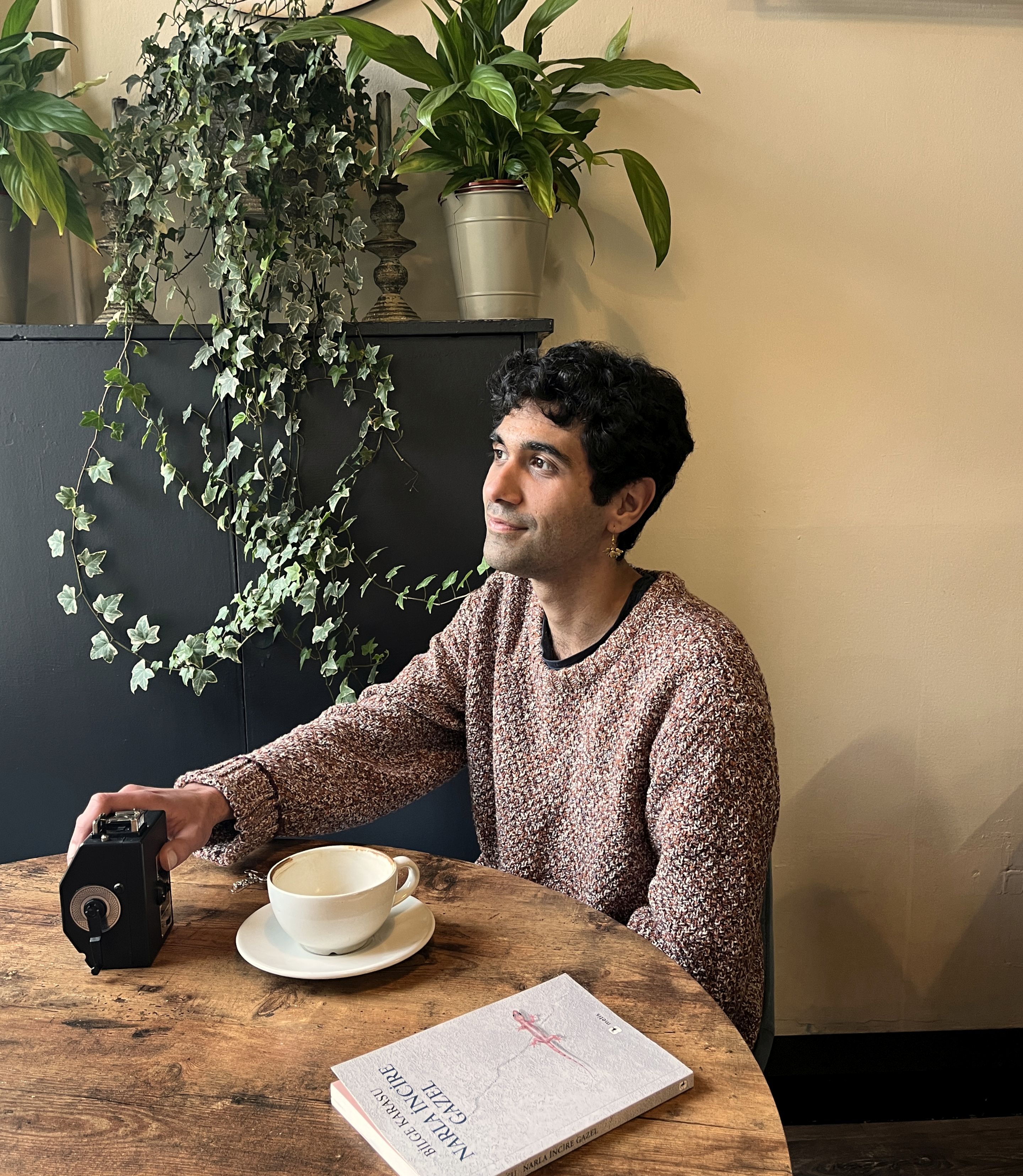
Isik Kural Interview Image by Kirstin McCarlie
How do you see the relationship between harmony, rhythm and melody? Do you feel that honing your sense of rhythm and groove has an effect on your lyrics-writing skills?
Yes, the pace and movement of the words are essential for the lyrics. As much as sometimes maybe even more than the meaning.
And hopefully I get better with the sense of rhythm which helps a lot in lyrics-writing.
Creativity can reach many different corners of our lives. Do you feel as though writing or performing a piece of poetry is inherently different from something like making a great cup of coffee? What do you express through music that you couldn't or wouldn't in more 'mundane' tasks?
In Turkey, it is said memory of a cup of coffee lasts for 40 years. Not sure how long a memory of writing/performing a piece of poetry/lyrics can be.