Published
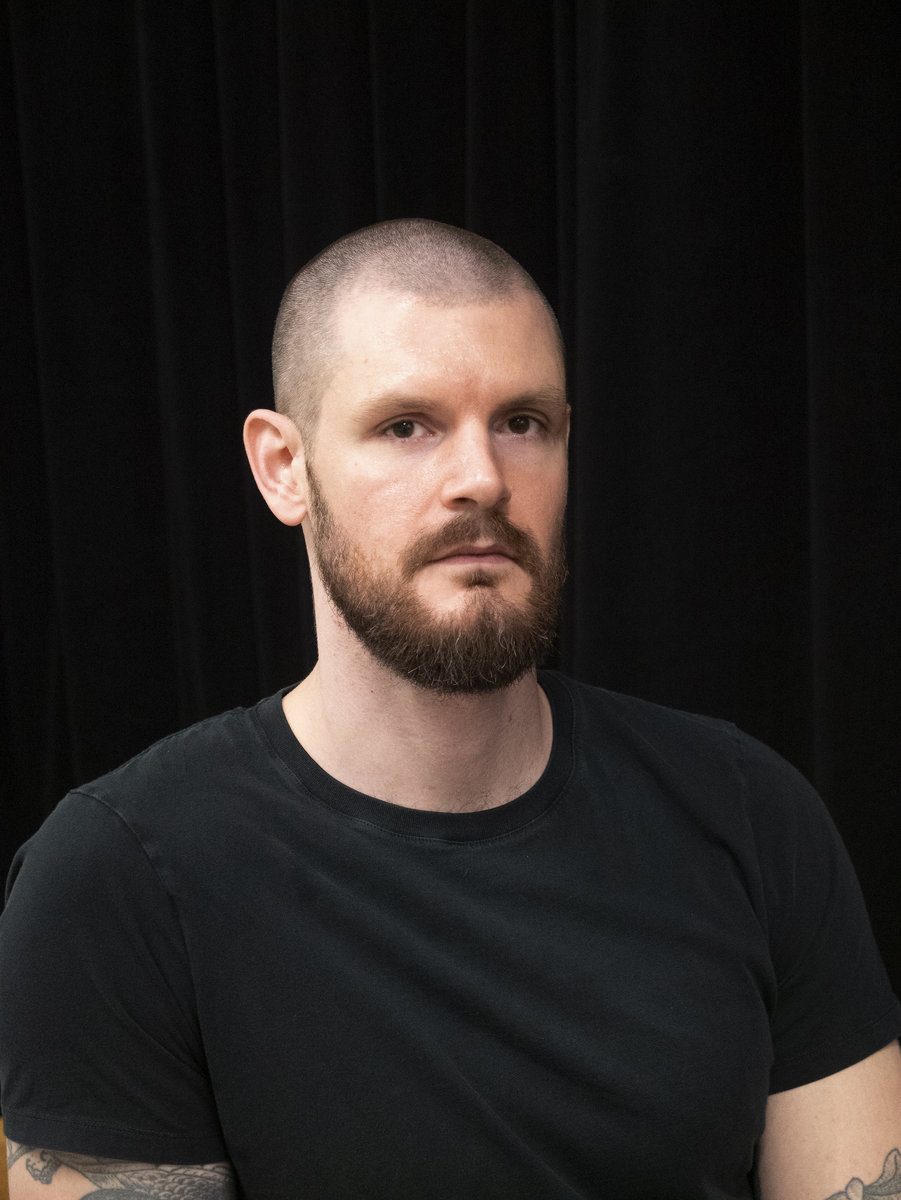
Name: Jack Dettling
Occupation: Composer, keyboard-player, curator
Nationality: American
Current release: Jack Dettling's new album featuring selected keyboard works is out via Populist.
If you enjoyed this Jack Dettling interview and would like to know more about their music, visit their official website. They are also on Soundcloud, and bandcamp.
When did you first start getting interested in the world of alternative tuning systems? Which artists, approaches, albums or performances using alternative tuning systems captured your imagination in the beginning?
I became interested in microtonality though performing works of composers such as Gerard Grisey and Georg Friedrich Haas in graduate school.
From the beginning, I was intrigued and somewhat frustrated by the role of the piano, which tends to be a very fixed instrument, in these works. Haas comes up with a clever solution in his work Ein Schattenspiel, in which he uses a simple tape delay to create a quarter tone shadow of the equal-tempered instrument.
Though the idea of just intonation was also introduced to me around this time, it wasn’t until studying at CalArts with Wolfgang von Schweinitz that microtonality began to really affect my practice as a composer.
Wolfgang’s monumental work for violin and double bass Plainsound Glissando Modulation was and still is a huge source of inspiration.
[Read our Wolfgang von Schweinitz interview]
Microtonal approaches and alternative tuning systems are an integral part of many cultures, and traditions. Which of these do you draw from in your playing – and why?
While I can’t say that I draw from the microtonal traditions of other cultures in any explicit theoretical sense, Indian classical music has been a major source of inspiration.
I often listen to ragas performed by artists such as Ustad Imrat Khan and L. Subramaniam, and in an abstract sense the raga form is something I admire and perhaps seek to emulate, especially in some of the harpsichord works I’ve written which are explorations of a certain scale or ‘system’.
I have also had a long-time obsession with quarter-tones, and so I can’t help but mention their relationship to traditional Persian music, which I also find very beautiful.
For your latest release, what did you start with, including your choice of tuning system? If there were conceptual considerations, what were they?
My recent record is a collection of works from a period of five years or so, and every piece is a bit different with regards to tuning. Unfortunately this makes it very impractical to perform these works together on a concert.
In some cases, I’m using systems which already exist; the piece window, for example, utilizes a plan devised in the 19th century by Herman von Helmholtz for a keyboard tuning which allows for pure 5ths and 3rds across two manuals;
this system is also used by Wolfgang von Schweinitz in his piece HELMHOLTZ-FUNK, which I recorded with Wolfgang and Vicki Ray for Populist Records.
In other cases the tuning system is idiosyncratic and grows out of more conceptual considerations; in mirror_play, for example, I used a just-tuned scale ascending as overtones and descending as undertones to explore more abstract ideas or mirroring, images, and the body.
Tell me a bit about the way the new material developed and gradually took its final form, please.
I like to think of composing as a kind of studio practice, a place that I can go. Most of the works on this album come from sitting at the harpsichord or piano for long periods of time, finding sounds which are interesting to me, and sort of putting one foot in front of the other.
I will often make a draft of a piece within a few sittings and then leave it for weeks or months before revising it. This process continues until I feel like nothing is bothering me.
In as far as it is applicable, were there tuning-specific challenges for your new release or recent performances? In how far has working with alternative tuning systems changed your collaborative practice in general?
There are many challenges presented by attempting to explore non-equal-tempered tuning with keyboard instruments; tuning the piano is a huge labor requiring a very specific skill set, and for the most part once it is done, it is fixed for some time. This creates a very different scenario than one in which a string player, for example, can simply move their finger to change their intonation.
In an attempt to explore ways to change the tuning on the piano in real time, such as in the piece memory drawing 3, I’ve developed collaborative relationships with a number of fantastic piano technicians; they have deepened my relationship with the mechanics of the instrument and really made these works possible.
Chris McKelway and Jesse Reyes assisted me with tuning the instruments for this recording; both of them are wonderful technicians and composers who bring a rare collaborative, artistic approach to piano technology; many thanks to them!
I would love to know a little about the feedback you've received from listeners or critics about your music written for different tuning systems. Were there surprising responses, did you perhaps gain new “insights?”
Recently, I was told that these works, especially the ones for piano, seemed like they were ‘about the way the instrument beats,’ which I found to be insightful and fascinating.
So often when listening to piano pieces written for equal-temperament, I’m struck by the irregular, inharmonious, and even out-of-tune quality of the instrument. I think I’m exploring this quality in my own music by attempting to highlight these irregularities and, in the case of works like comma study (after Debussy), even making them the structural center of the work.
When they become the focus instead of a byproduct, these sounds become very beautiful to me.
How would you describe the shift of moving from one tuning system to another?
Maybe it has to do with the fixed quality of the piano which I already mentioned, but I often perceive tuning systems as structures which exist as mental architectures or even kinds of physical spaces.
The difference between them can feel like being in the mountains or a church or a museum or someone’s studio or someone’s head.
Terms like consonant and dissonant are used in school, but mostly with very limited understanding of what they mean. How has your own idea of these terms changed over time and how do you see them today?
I suppose my idea of consonance has broadened considerably to include many more intervals than would be deemed consonant when talking about ‘common practice’ harmony.
Regarding just intonation, I would say that consonant intervals are those which contain whole number frequency relationships and could even include intervals like commas which we perceive as beats. By using these very small intervals as structural elements of compositions and learning to hear the differences between them, intervals as small as 64/63 or 81/80 can perhaps be perceived as kinds of consonances.
The only relationships which seem like ‘dissonances’ to me are irrational ones like those found in equal temperament. Since I am often using both types of intervals in my music, there is maybe a kind of consonant/dissonant tension present in this sense.
What was your own learning curve / creative development like when it comes to alternative tuning systems - what were challenges and breakthroughs?
When it comes to learning about alternate tuning, most of us are undoing a way of listening which we have known for our entire life up until that point.
Developing a familiarity with theoretical aspects of just intonation and historical tuning is a lifelong practice, but I think many concepts began to make more sense to me when I started to apply them to experiments with my own instruments. Just like the best way to learn a language is by speaking it with someone, I have found the best way to become familiar with these new sounds is to tune them, play them, and listen to them.
A shift towards using the harpsichord more also solved a challenge presented by the difficulty of tuning the piano. The harpsichord needs to be tuned more often but is much easier to put into different tunings, so most of my work which explores tuning ‘systems’ in a formal way is for this instrument.
In how far has working with alternative tuning systems led to creating different music for you personally? Are there creative ideas / pieces which you could not realise in equal temperament?
The music that I write using non-equal-tempered tuning tends to be quite different from other work of mine. More than anything, once microtonality becomes involved conceptually, the work becomes more about the sound itself and about the subjectivity of listening.
For me, microtonality is a vehicle for fantasy and sensuality in way that equal-temperament no longer offers.
What were some of the most interesting tuning systems you tried out and what are their respective qualities?
Over the years I have gone through periods of fascination with many different tuning systems.
Some of the first microtonal music I wrote was for a quarter-tone system, which is basically a 24-tone extension of equal-temperament and carries with it a lot of the same issues. I’ve always been interested in this system’s relationship with the 11th harmonic and how it could be used to create pseudo-just-tuned sounds.
Close approximation of JI intervals is also quite interesting in historical mean tone tunings, and I like to imagine composers of the 16th or 17th century conceptualizing these quasi-septimal sounds which were available to them.
Recently, I’ve been interested in possible applications of 31-edo and have written and commissioned a number of works for this format.
Do you still use equal temperament? What are some of the aspects and goals for which you find it suitable?
If I’m dealing with equal temperament, it is usually as a vessel for seeing pre-existing music in a sort of objective way; I imagine it’s like showing something in a very even, fluorescent light.
The chords which open neither/nor are an extract from Shumann’s Carnaval, and in my piece are presented in equal temperament; however, the rest of the work is a kind of microtonal fantasy about the implications of the somewhat strange, mixed accidentals which precede the notes in the original material. Equal temperament is mostly a kind of ruler or a scientific control which I use in my music to make comparisons.
I’m also interested in using the unaltered equal-tempered piano for microtonal ends—mostly through the use of harmonics. I hope this might disrupt the entire notion of an intrinsic separation between equal-tempered and microtonal sounds.
So far, the focus with regards to alternative tuning systems has mainly been on harmony. But melody is affected, too. How do you personally understand melody and what changes when it becomes part of a new pitch environment?
Something I talk about a lot with piano students is the relationship of melody playing to the voice, to something which is attached to the breath in a way that piano is not. I think because of my history as a keyboard player, the idea of melody has a kind of imaginary or aspirational quality.
I’m also interested in the way in which our ears assimilate very microtonal sounds, in pop music for example, into an equal tempered context.
Microtonal melodies are all around us, and altering the fixed sounds of the keyboard is for me one way of entering into this more expressive, but often somehow familiar, melodic territory.
With electronic tools, playing and composing in just intonation has become a whole lot easier. Do you find this interesting? What are some of the technologies, controllers and instruments you use for your own practice?
Electronic tools have definitely been important for exploring microtonality in my practice.
I often compose with sine tones which are generated using MaxMSP, and, though not present in this record, have often used the software Pianoteq to mock up tuning systems and blend JI sampled piano sounds with the acoustic instrument.
Some artists approach tuning systems from a strongly scientific angle. In case you're interested in this, what do you feel 'research' could potentially uncover and provide in terms of tuning systems? Where do you see the biggest potential for exploration at the moment?
I don’t think I approach tuning from a particularly scientific perspective, but it seems like the most important tuning research we can continue to do as composers and performers is in uncovering and expanding the limits of human capabilities with regards to hearing, understanding, and playing microtonal intervals.
If I think utopically about the piano, I imagine an acoustic instrument which could shift quickly to accommodate many different tuning systems. Perhaps such a thing is already becoming a reality somewhere.