Published
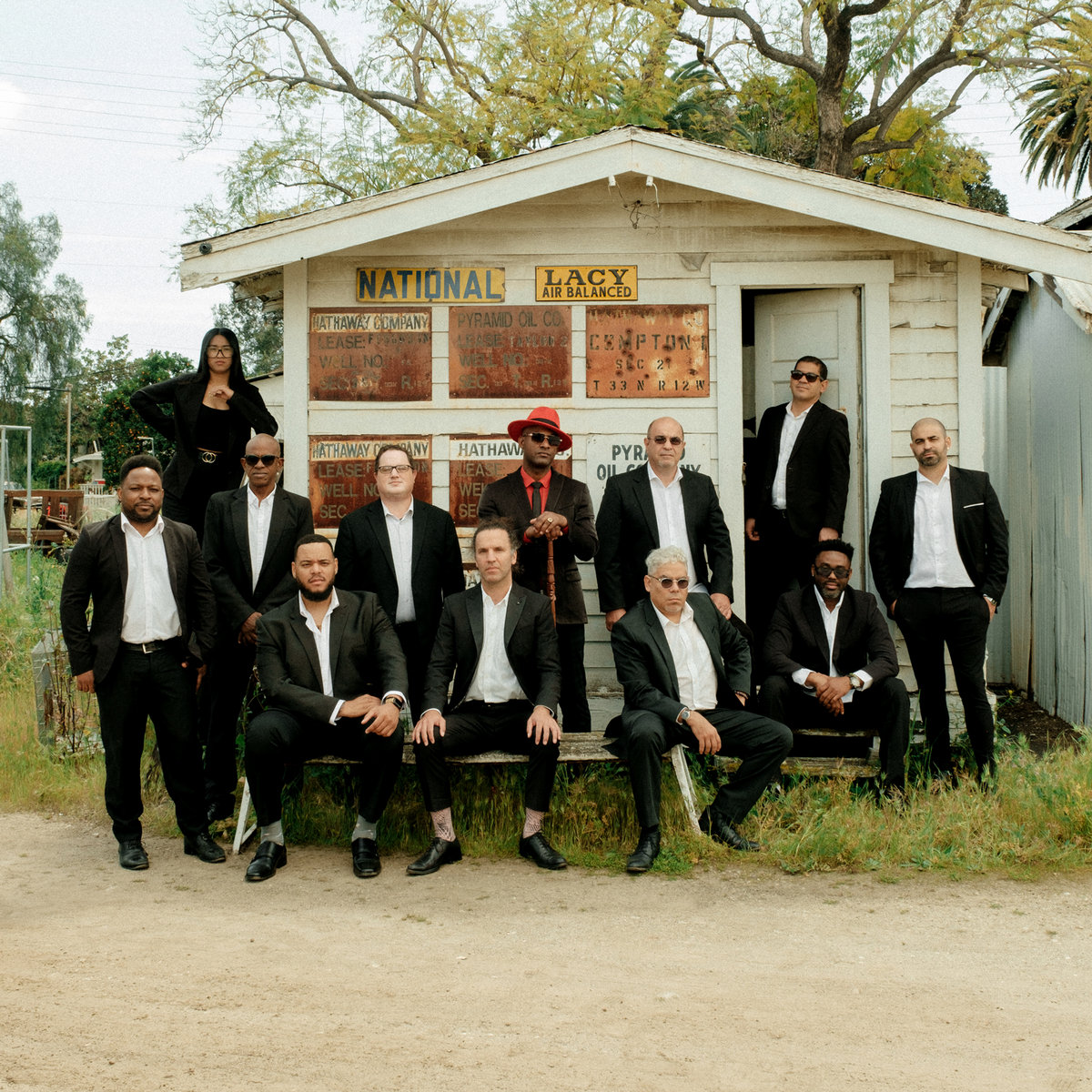
Name: Orquesta Akokán
Interviewee: Jacob Plasse
Occupation: Producer, composer
Current release: Orquesta Akokán's Caracoles is out via Daptone. Stream it here.
Recommendations: "Dolor Karabali" - Beny More saw it as his greatest recording. The layering of the horns, the coros. I have listened to it 1000 times, and every time I discover something new.
"Hay fuego en el 33" - A distillation of the classic conjunto sound. The percussion, the bass, the tres, the trumpets, every part fits together like the gears of a machine.
If you enjoyed this Orquesta Akokán interview and would like to know more, visit the group's official homepage. They're also on Instagram, and Facebook. Jacob Plasse also has his own Instagram profile.
For the thoughts of Orquesta Akokán's arranger, read our Mike Eckroth interview.
Is there a preparation phase for your process? Do you require your tools to be laid out in a particular way, for example, do you need to do 'research' or create 'early versions'?
There is a ton of preparation involved in making an Akokan album so that when we record we can capture a feeling of inspiration. Me, Mike and Kiko spend months writing songs, sending ideas back and forth before we winnow it down to 15 songs or so. Then Mike mocks up arrangements and we hone in on certain ideas and throw out others.
We book a studio in Havana and get all the musicians and rehearse for a day or so, making sure the musicians can get through the material but aren't TOO familiar with it. The day before recording we do one rehearsal in the studio, and while they are rehearsing, me and the engineers are moving mics around the room and placing baffles trying to frame the sound of the band.
And we do all this so that we can capture the songs live. There's an energy to having everyone playing together, the sound of 12 musicians in a room, that can't be accomplished other than by playing live - the way the musicians react together, the sound of all that air being pushed around a room live, and even the mistakes that happen.
Also the tension created by knowing that if you make too big a mistake EVERYONE has to start from the top. All that creates a unique vibe, a feeling to the recording.
Do you have certain rituals to get you into the right mindset for creating? What role do certain foods or stimulants like coffee, lighting, scents, exercise or reading poetry play?
Coffee. Because usually the week before I can't really sleep because of all the things that could go wrong when doing a recording in Havana. What if one of the musicians forgets their passport? What if there is a rolling blackout during the recording and there's no power? What if someone has a crazy night out in Havana and gets arrested? (All of these things have actually happened during the making of one of the records).
In terms of rituals, our lead singer Kiko Ruiz is part of the Palo religion, and his ceremonies involve calling the ancestors to help guide us. You can actually see part of his rituals in the music video to “Con Licencia.“ He told me he was sure that Beny More was over his shoulder, guiding him while he was recording.
What do you start with? And, to quote a question by the great Bruce Duffie: When you come up with a musical idea, have you created the idea or have you discovered the idea?
The sound of the Orquesta is definitely rooted in the sound of 40s and 50s mambo, but the inspiration for a song can come from anywhere. Most of my ideas are inspired by the music I love, even if there isn't any sort of direct correlation.
“Con Licencia” came to me after hearing Sonny Rollins' improvisation on Kenny Dorham's “Asiatic Raes.”
I wrote the melody to "Caracoles" after I had been listening to Rosalia's Motomami almost constantly.
Many writers have claimed that as soon as they enter into the process, certain aspects of the narrative are out of their hands. Do you like to keep strict control or is there a sense of following things where they lead you?
As I mentioned earlier, we try to do a lot of preparation beforehand, but once we are in the studio, the band does its thing. These are the greatest musicians in Cuba, if they have an idea, it's going to be dope.
For instance, we had imagined “Pan Con Tibirí” having a relatively straight ahead mambo groove, something like “Mamboletas” by Beny More - but the percussionists came up with this crazy Mozambique-Pilon thing, and it's what makes the tune.
And there's something like that on every song.
When you're in the studio to record a piece, how important is the actual performance and the moment of performing the song still in an age where so much can be “done and fixed in post?“
This is an interesting question for a band like ours. My favorite records were done in a way where the band is playing live; that is the magic. There's no way to reverse engineer that.
But when you record like that, live, with all the instruments bleeding into each other's mics there is very little that can be fixed in post. If the trumpets clam a note, that is going to be in all the mics, there is no editing that out. There is also no click track, so there are no moving notes around; you can hear the tempo of the songs speed up gradually as the groove gets going and the band gets excited.
These are all things that make the record feel alive rather than just someone futzing with a computer. So for us "post" is not very important to how we approach recording.
Even recording a solo song is usually a collaborative process. Tell me about the importance of trust between the participants, personal relationships between musicians and engineers and the freedom to perform and try things – rather than gear, technique or “chops” - for creating a great song.
This band is a family. We have been around the world touring, we know each other's spouses and kids, we have been through alot together.
I am a born and raised New Yorker. And I will tell you something, I have always had trouble making friends, but this band, playing this music together, has created deep friendships with these Cubans whose lives don't resemble mine at all that I had not expected at all when we started this project.
I am grateful for that as much as anything. And I think you can hear it in the music. At least I hope so.
After finishing a piece or album and releasing something into the world, there can be a sense of emptiness. Can you relate to this – and how do you return to the state of creativity after experiencing it?
Yeah, there's always a sort of disconnected feeling when I get back from spending a week making a record in a beautiful studio in Havana with all these incredible musicians in NYC. And then it's back to doing dishes and normal life.
But I think it's these fallow periods that let you work through what you want to do next, and to know that it's not prescribed and it could be anything, with this giant band as a canvas. And that's exciting.
Music is a language, but like any language, it can lead to misunderstandings. In which way has your own work – or perhaps the work of artists you like or admire - been misunderstood? How do you deal with this?
I think the hardest thing for me is the idea of what is "current". People are often bewildered by the idea of this band playing music whose sound is rooted in the 1950s, and sometimes see it as some sort of novelty act. But this is the music we all love - it's so deep, the rhythms, the harmonies, the musicianship. There's so much there, and so much to be discovered.
And to me so much of what is viewed as "modern" leaves me cold - it's just people playing with loops on their computers. That's fine, but I don't think that should be the bar to which we all aspire.