Published
Part 1
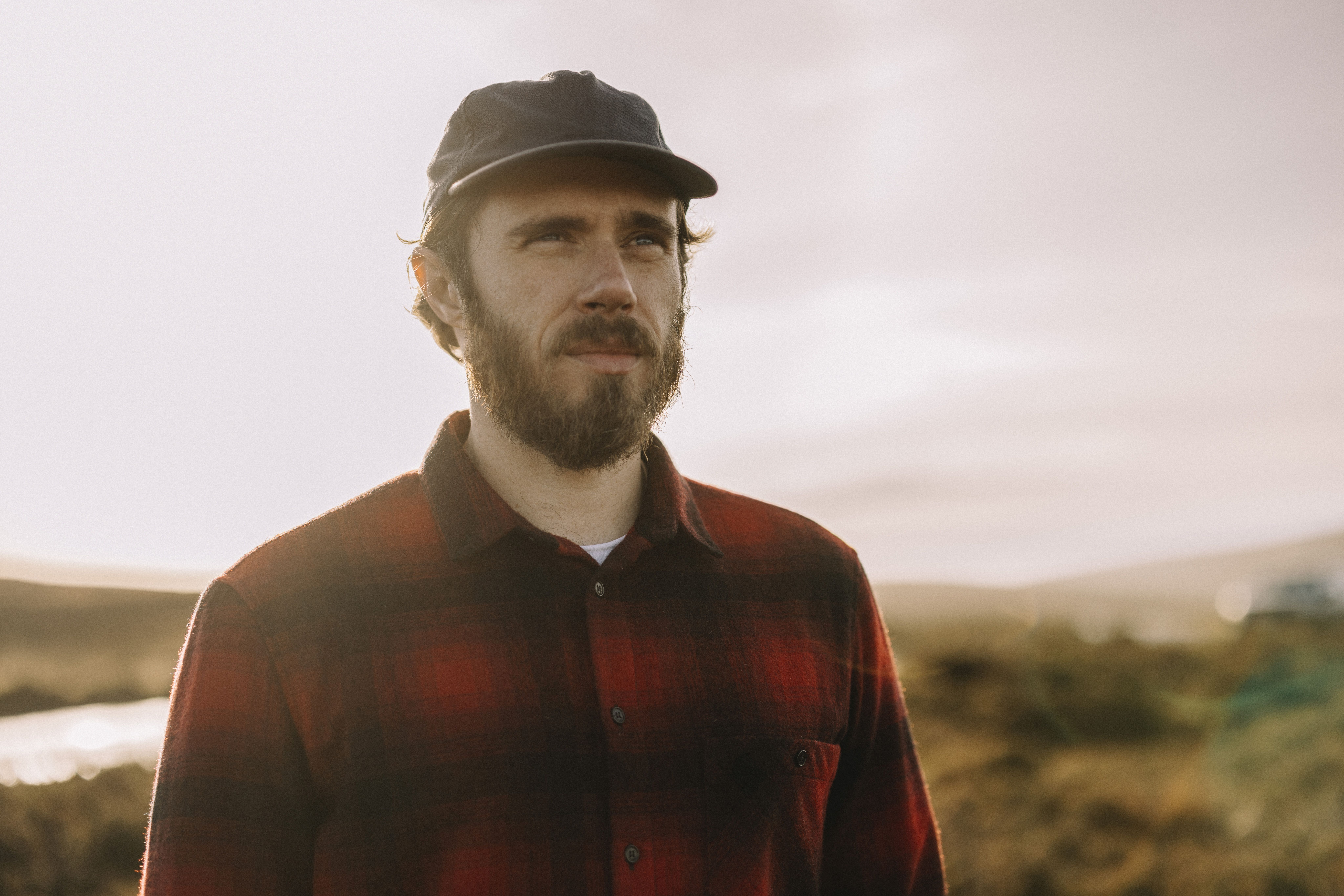
Name: James Vincent McMorrow
Nationality: Irish
Occupation: Singer, songwriter
Recent release: James Vincent McMorrow's Wide, Open Horses is out via Nettwerk.
Pure vocal music recommendations: For me it's all about the air in a performance, not sounding too blocked or closed off. I'd recommend anything by Fiona Apple, but especially the last 2 albums, she's just channeling something so primal and intense. A specific song, I'd say “Hot Knife.”
Donny Hathaway Live from the Bitter End, a flawless vocal performance, a singer who could see 45 steps ahead of the melody. Genius.
There's also something compelling about a singer who's lost some of their vocal and has to interpret in different ways, a heartbreak to it that transcends the melodies. If you listen to Chet Baker live from Ronnie Scotts or recordings of Edith Piaf towards the end of her life - just endless amounts of emotions.
If you enjoyed this James Vincent McMorrow interview and would like to find out more about his music, visit his official homepage. He is also on Instagram, Facebook, tiktok, and Soundcloud.
Do you think that some of your earliest musical experiences planted a seed for your interest in your voice and singing? How and when did you start singing?
Singing is just something you do from a very early age as an Irish person, families throw parties and at the parties everyone sings a party piece, something they've learnt.
I used to sing songs like “Down By the Sally Gardens,” “Green Sleeves,” “Wild Mountain Thyme.” When I look back at those songs they are very lilty, the melodies really go on a journey. And I guess if I was to look at my own songwriting and vocal style, they definitely follow pretty expressive and dynamic melodic patterns.
But there was no direct correlation between those songs I remember singing and the music I make, insofar as those old songs weren't ones I ever thought about or listened to past my super early years, and they were chosen for me by my parents rather than me seeking them out.
But I did love singing them, and I do believe that my exposure to songs like those from that early age had a significant impact.
If you're also playing other instruments, how does the expressive potential of these compare to your own voice?
The greatest thing about my musical career is that I started playing shows around 2008, which was before everyone had a camera in their pocket. Because I'd hate to see some of the early footage of me playing! I put everything I've got into singing, which in the beginning was often to the great detriment of my guitar and piano playing! I would literally forget to play the chords because I'd be so locked into the vocals.
There was a moment in my career as it started growing and I was still making mistakes that I had to sit down and basically re-teach myself how to sing so that I wasn't compromising on the performance, but also was staying aware of what my hands were doing on the guitar or the piano keys. It took a while.
Over the years you just lock into almost a trance-like state where the 2 things work in a certain harmony, but I'd still say I do favor the vocals over the instruments in terms of what I prioritize.
Singing is an integral part of all cultures, and traditions. Which of these do you draw from – and why?
I alluded to it in the first question, but the only culture I know is my own as an Irish person. Our culture is deeply rooted in songs and storytelling.
If you look at any Irish musician through history, regardless of genre etc, I'd argue the thing that ties it all together is how we all build our stories the same way. It all comes from the same place, we're a nation that has dealt with a lot and the songs that were written were intended to carry those stories through the centuries, it's a different time and circumstance now, but that desire the document and give color and dimension to being Irish, that's something I feel like we all hold really dearly.
Beyond my Irish roots, I mean the music I loved growing up and the music that shaped me as a songwriter and a singer, a lot of it was modern American music. I think because there's a similar romance and poetry to Irish music. I especially gravitated towards 60s/70s singer-songwriters from La, Jackson Browne, Neil Young, and Judy Sill.
What were some of the main challenges in your development as a singer/vocalist? Which practices, exercises, or experiences were most helpful in reaching your goals – were there also “harmful” ones?
I've never had proper lessons in anything musical, but I did spend time when I was in college with this singing teacher from Dublin named Frank Merriman.
He was pretty unorthodox, I remember the first time I sang for him I was very nervous and blocked, he asked me to sing the same thing again, but suddenly he produced a lighter from his pocket and held the flame in front of my face. All of a sudden, I could sing the part pretty effortlessly because I'd been distracted and gotten out of my own way.
From that moment on I kind of realized that anxiety and stress was going to be the barrier I had to overcome. He taught me that as long as you're singing naturally, not forcing emotion into your voice etc, then you'll be able to keep singing. He would make references to opera singers who had to sing arias while lying down etc, yes breathing and technique is important, but that natural approach is so key.
I also sat in front of my piano every day for about a year just singing notes in different vowel sounds, singing scales, holding notes to extend my breathing. Then when I got on tour I'd do exercises to warm up and warm down. Also giving up drinking made a massive difference, really it's just about keeping a real balance to it all and not doing anything unnatural or contrived with your voice.
How do you see the relationship between harmony, rhythm and melody? Do you feel that honing your sense of rhythm and groove has an effect on your singing skills?
I was a drummer before I was a singer, music has always been pretty rhythm based to me. You can hear it in my melodies, there's a specific staccato cadence I've always used that comes from my drumming background.
I also spend a lot of time with songs trying different rhythm patterns with chords, not just playing them straight, little rhythms in there can completely change a song.
What are the things you hear in a voice when listening to a vocalist? What moves you in the voices of other singers?
That is a really hard question to answer. For me it's definitely not about vocal prowess. Yes absolutely someone like Donny Hathaway is empirically one of the best singers of all time, but it was the emotion he could capture that made him special.
You can have a singer with a 6 octave range, but if they can't tap into a song and it's lyrics while they're singing, then it doesn't do anything for me at all. Elliot Smith is a prime example of someone who on paper didn't have this powerhouse vocal, but when he sings I believe every word.
Same with Matt Berninger from The National.
It's the combination of singer and song that grabs me. If either one isn't good enough then it usually doesn't move me in any profound way.
How would you describe the physical sensation of singing? [Where do you feel the voice, do you have a visual sensation/representation, is there a sense of release or tension etc …]
Singing for me is an incredibly physical thing. I can feel my throat moving and my chest moving, on the big notes you really have to prepare yourself for the moments because if you're not locked in they can get away from you.
I've never had that thing where people see color or images as they sing, but I can visualize how the melody is going to unfold. I know the shapes my throat is going to have to make before it makes it.
What kind of musical settings and situations do you think are ideal for your own voice?
You need to build two versions of your voice, one for the studio, and one for live. Those are the two places it needs to live and thrive and they're 2 very different animals.
In the studio the monitoring is so detailed that you can really dig into the nuance of your own voice, it can and should often lead you down interesting paths. Live is all about compromise. If you have other musicians then often you're fighting to carve out the space. But the human voice is meant for singing live, so for me the stage is where I do my best work. I have engineers that know exactly how to carve that space to let me sit in the pocket without having to push through other frequencies.
If we're talking just sheer enjoyment, then I mean just put me in a church with a huge reverb. It's the funnest thing in the world just singing out into a giant reverb chamber,
We have a speaking voice and a singing voice. Do these feel like they are natural extensions of each other, ends on a spectrum or different in kind?
What's interesting is that I used to have a thicker Irish accent than I do now. The more I sang the more it softened. So maybe there is something to that, how my speaking voice adapted to match my singing voice.
I think there are certain choices you can make as a singer, some people really overtly sing with their accent to the forefront, some don't. I don't know if those people are making a conscious choice to do it, I'm guessing not because it'd be really hard to keep that going for an entire show. I think it's just how certain peoples' voices evolve over time.
For me I just sing constantly. Walking around my house I'm just constantly singing, so my voice has kind of become this one thing.