Published
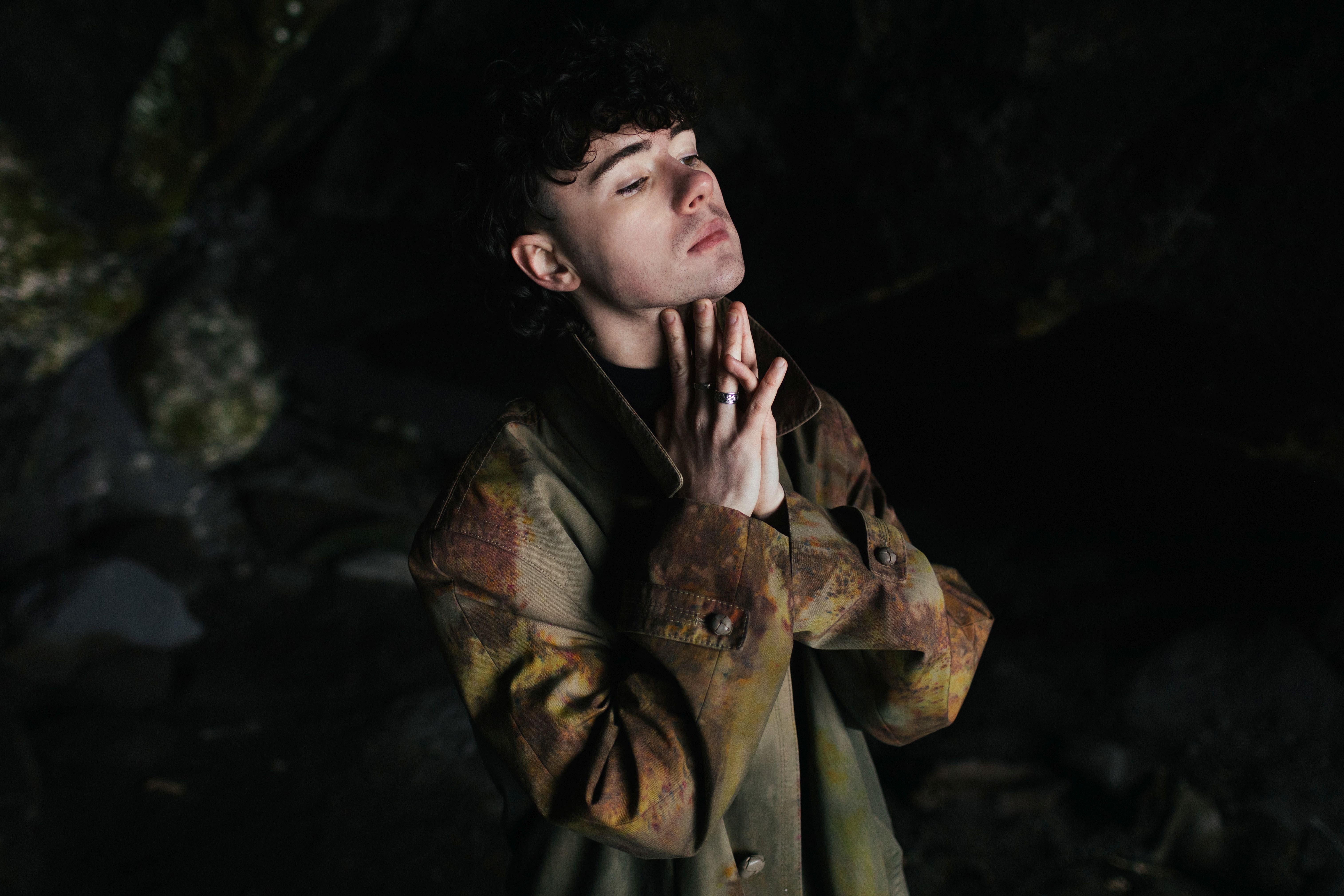
Name: Jamie Duffy
Nationality: Irish
Occupation: Composer
Current Release: Jamie Duffy's new, self-titled album is out via Rubyworks.
Shoutout: There are many artists and composers who I am deeply fond of, and who’s music is helping to soundtrack my own life. It would be remiss of me however not to mention Atli Örvarsson, a great composer and friend who has helped mentor me over the last few years. In particular, seeing his processes during scoring the dystopian Apple TV series ‘Silo’ was quite eye opening for me, I remember Atli describing how he recorded large parts of that score in old and abandoned Silo’s deep in rural Iceland. He wanted to create bleak, isolated and dark sounds for the score and seeing him doing that in such a real and unique manner was fascinating!
Recommendations for Ireland: I would urge anyone reading this to travel to Glaslough in Ireland. It is the little rural village that I grew up in, and I believe it to be one of the most amazing and heavenly places in the world. Go for an evening walk down by the lake, head back up by Castle Leslie for some locally sourced food and then spend the evening at the local pub ‘Wrights’, sitting by the fire chatting to the locals and listening to their own stories. There is no place quite like it, I mean that with all my heart.
If you enjoyed this Jamie Duffy interview and would like to know more about his music, visit his official homepage. He is also on Instagram, Facebook, and tiktok.
The borders between producers, sound artists, and even songwriters are becoming increasingly blurry. What does being a composer mean today, would you say?
I guess that I only know what being a composer means to me, and it is all encompassing.
To me, being a composer means utilising every single tool at my disposal, from writing on the piano, to penning lyrics, playing tin whistle and figuring out how to best produce my ideas. It is about using absolutely everything I can control to best translate emotion into music, and convey a story.
Composers are storytellers, that is the baseline that runs underneath each piece of music I make. It’s also something the Irish know how to do best I think!
Many people perceive classical music and contemporary composition as having high barriers of entrance, both for listeners and musicians. What have your own experiences been in this regard?
I was guilty of having this perspective myself, and there is definitely some truth to the fact that this industry can feel boxed off and exclusive to certain types of people, and in my view there is a huge lack of diversity within it still.
In many ways I am very lucky to have accidentally had the door opened to me after I released Solas, and this is testament to how social media has made this genre more accessible to composers and listeners alike, and is very much taking the classical world down from the high horse it may once have sat on.
Why the hell should this remain an old man’s club? That benefits absolutely nobody and only serves to damage the genre.
As of today, what kind of materials, ideas, and technologies are particularly stimulating for you?
Right now I am just soaking in everything around me, the rollercoaster that is life in your 20s and trying to navigate through the confusion and beauty of it all is what is fuelling my music.
My debut album has been inspired by a plethora of things I have experienced over the last few years, but I think the recurring themes are that of home, Ireland and a commentary on everyday life!
Where do most of your inspirations to create come from – rather from internal impulses or external ones? Which current social / political / ecological or other developments make you feel like you need to respond as an artist?
I am inspired by everything and anything. I studied politics and international relations at Queens University Belfast and I have an affinity for current affairs, how our political systems work (or don’t), and the political situation today in general.
Being from a community that sits right on the Irish border, I was brought up in a region where peace is still young, so how could I not be invested in politics. It inspires alot of my work.
My piece “Into The West” is one I composed having read stories of the Irish Famine’s impact in Ulster, a famine that was fuelled by political decisions across the water really.
I find it fascinating how history so often repeats itself and the grave mistakes of the past are often forgotten by the international community.
We can all look now at yet another manmade famine occurring, this time in Gaza. I can’t help but feel inspired by the plight and strength of those people, who are suffering so greatly from the evil hands of others. I believe that most Irish people feel a deep connection with the Palestinian community.
Tell me a bit about the sounds & creative directions, artists & communities, as well as the colleagues & creative hotspots of your current hometown, please. How do they influence your music?
I’m lucky to live between Glaslough in Monaghan and Harold’s Cross in Dublin, a rural and urban divide. Glaslough is the beautiful and close knit community I was raised in, a very liberal and bohemian little enclave in rural Ireland that has fuelled my inspiration. It is filled with the characters, things and places I’ve grown up loving.
I am fortunate to also spend half of my time in Dublin which I have fallen in love with. It is the antithesis of Glaslough and that is why I love it. Dublin can be tough, but it is the most amazing city. It is where my social life, friendships and relationships grow and thrive, it’s where I’ve developed as a person and become the person I always wanted to be as a kid.
I find inspiration in these places every single day, they are the backdrop to my entire life and the well of inspiration in them both runs very very deep indeed.
Composing has always had an interesting relationship between honouring its roots and exploring the unknown. What does the balance between these two poles look like in your music?
For me, I have had zero blueprint whatsoever on how to be a composer, I have only ever experienced exploring the unknown in my music and that is perhaps why it is working so well.
When composing, I am aware that my traditional and folk roots play a large role, but I am equally aware that I am the person who decides how to use those influences in my music.
I play tin whistle as the main instrument in my piece ‘Rising’ for example, but I am blending that instrument with a pop structure, and with a big and grand classical casing in terms of production.
I am exploring the boundaries of what I can create with that instrument I guess, and taking it away from the way it would traditionally be used, in turn making something new and unique.
How much potential for something “new” is there still in composition? What could this “new” look like?
Everyone is unique, and as long as they are making music true to them and not to please other influences or actors then I would hope there will forever be something ‘new’ happening.
Centuries of tradition and musical innovation will of course inspire large element of our own composition work. But evolution and the ‘new’ occurs when we welcome and accept what it is inside ourselves that makes us want to create, and when we embrace our creativity wholeheartedly, doing what we truly want to as individuals, not what we think we should.
What role do electronic tools and instruments play for your creative process? What does your creative space / studio look like and what tools does it contain?
The electronic world is one that I am slowly introducing more and more into my creative processes. For the past, for example, I have used certain synths and pads to season some of my pieces.
Take “for the moon” or “on a wing” for example. In these tunes I recorded myself singing into pedal trains to create these wonderfully ethereal and angelic sounding layers that wrap around the melody of these pieces.
I wanted to create a dream like sound, and that is what came from those pads.
For many artists, life-changing musical experiences take place live. Few works these days, however, are performed beyond their premiere. What, do you feel, does this mean for composers, and the music they write, and how does this reality influence your own work?
I am very fortunate that touring and performing live is a massive part of my life right now. I have performed right across Ireland and Europe over the past couple of years and it is true to say that this has changed my life.
Performing my work live means I get to tell musical stories to people in many different settings, from concert halls in The Netherlands, to Hyde Park in London, to chapel’s in rural Ireland. I believe that my compositions take a different form in every venue I play in, as each one is usually so different from the one before.
There is real magic in getting to use beautiful and different types of spaces as stages and I always try to adapt my music and performances to fit and feel right in each one.
I think it is a shame that some musicians don’t get to tour their work, there is no feeling that comes close to seeing your music impact your audience in real time, it creates some of the most beautiful moments and magical memories. Alas, each to their own!
How, would you say are live performances of your music and your recording projects connected at the moment? How do they mutually influence and feed off each other?
Perhaps the most beautiful thing about being an artist and composer is getting to perform your own music live to attentive audiences, who are fixated on your every note.
There is a certain level of adrenaline and energy within performing live that can’t be matched in studio settings, yet I find it very stimulating getting to experience both of these worlds separately. You have complete control in the studio and this is taken away the moment you step on stage where you are left naked in a way, that is a very unique thing to experience.
I don’t think I have ever played a piece of music the same twice. To me, my pieces are kind of like living and breathing entities, and the form they take changes and grows with each performance, during each show my pieces usually have their own unique personalities.
To some, the advent of AI and 'intelligent' composing tools offers potential for machines to contribute to the creative process. What are your hopes, fears, expectations and possible concrete plans in this regard?
I find the whole world of AI and in particular its impact on the music and composition world extremely fascinating and intimidating at the same time. However, I will say that I am constantly trying to understand myself and my artistry, as well as what it is I want to say with my music.
And so to be quite honest I am steering clear of any use of AI in my own work as I want how I make music to be as organic and true to myself as it possibly can be. It is much too early in my own career to be spending time worrying, trying to understand or utilising anything that isn’t true to me.
The Montreux Festival intends to preserve its archive of recordings for future generations. Do you personally feels it's important that everything should remain available forever - or is there something to be said for letting beautiful moments pass and linger in the memories of those that experienced them?
I had a discussion during the making of this album on the importance of ‘moments in time’ within music, and how important it can be to recognise and respect those moments.
Sometimes, whether it’s during a live performance, a piece of improvisation or a quiet moment alone on the piano, you will experience a beautiful feeling where a piece of music comes together like it never has done for you before. Sometimes you are recording that, sometimes it’s lost and most times it won’t be perfect, but you will recognise that it has a raw and magical quality to it, and I think it’s important to recognise when that happens.
In a literal sense for example, if it’s during a recording, let that take be ‘the’ take and don’t push for perfection. Some of my demo tracks are the ones I’ve released. “now she’s alone” was one singular take of improvisation that I never intended writing.
I am just lucky that the studio engineer was recording my playing, and interestingly I have no intention to ever perform it live as I know it won’t feel the same.
I do think it would be unrealistic and unnatural for everything to exist infinitely, and for every moment of music you make to be documented and recorded. Not everything needs to live on forever or constantly get brought up. Sometimes having something exist solely as a memory or as one take that is never performed again is perfectly okay.