Published
Name: Jan Blomqvist
Occupation: Composer, producer, vocalist, DJ
Nationality: German
Current release: Jan Blomqvist's new album Mute is out via Armada. It features collaborations and contributions from, among others Natascha Polké, and Rodriguez Jr.
[Read our Natascha Polké interview]
[Read our Rodriguez Jr. interview]
If you enjoyed this Jan Blomqvist interview and would like to find out more about his work, visit his official website. He is also on Soundcloud, Instagram, and Facebook.
Production is a discipline bordering technology, art, and creativity. How do you see the relationship between these and what is their balance for your own music, do you feel?
For me and my partner in crime, Felix, the most difficult moment in our production process has proven to be the transfer from guitar to electronic music.
Most of our tracks start with an idea played on an acoustic guitar. From then on it’s pivotal to find the right balance between the feeling of the original moment and the production of an electronic track that works on a huge festival stage.
We always try to make the music work in a club setting as well as at home, which I would translate to marrying technology with art via creativity.
Which part of the production process do you draw the greatest fulfillment from?
There are two moments that come to my mind immediately.
The first one happens in the beginning of production: Sometimes you catch a wave and 80 % of the whole track is done in one day. This feels amazing and is truly rewarding. Afterwards you have to start working though. 🙂
And then there are tracks where you get stuck somewhere in the middle and you do not seem to get to an end. The moment in which you finally find the right approach to finish it, when frustration suddenly turns into bliss, is the other very fulfilling part of production for me.
For you personally, where does composition end and production start (or vice versa)?
I cannot answer this question in a definite way because it can differ completely from one track to another. Sometimes, you can’t separate the composition phase from the production at all because it happens simultaneously until the final mix.
In electronic music, I generally find it hard to cleary define composition and production timewise. It happens that there is an element missing until the end and the way you fill the gap suddenly turns into an important feature in the track - production then shifts into composition.
Is technology something that you would like to have disappear behind your music – or is it a musical element that you want to bring to the fore and play with?
A great song should function without the technology behind it.
But as already mentioned before, both perspectives are important to us. A good song and technology to make people dance at liveshows. We also have always been fascinated by synths and they have been visibly integrated into our livesetup.
Could you describe how your relationship with your studio/set-up feels like - is it an extension of your self/body, a partner and companion, a creative catalyst, a challenge to be overcome, something else entirely?
Companion hits it pretty accurately for me. Parts of my equipment have been with me for decades. Me and my companions have good and bad times, analogous to my human companions.
Sometimes, I’m desperately trying to get the sound in my head to the outside world and my companion simply does not understand or suddenly a 3 or a 7 found their way into the binary and literally nothing is working.
How and for what reasons has your music set-up evolved over the years and what are currently some of the most important pieces of gear and software for you?
Good question. Essentially not much has changed for us. Here and there, we add a synth or a software but the most important hardware synths like the our Moogs and Prophets have been with us for years. They are the basis of our work.
I have to admit though, that recently, software synths have been getting a lot better and they are very convenient to work with. You only need a Macbook to take your studio with you while traveling or just to the couch at home. We still prefer the old ways, though.
Softwarewise, we changed to Bitwig, not long ago and it was a good decision: their modular concept offers plenty of creative potential.
Tell me about the space of your current studio/workplace and how you've set it up to further your creativity?
As you might know, I left Berlin recently and moved to Switzerland. That’s why I currently don’t have my own studio workspace.
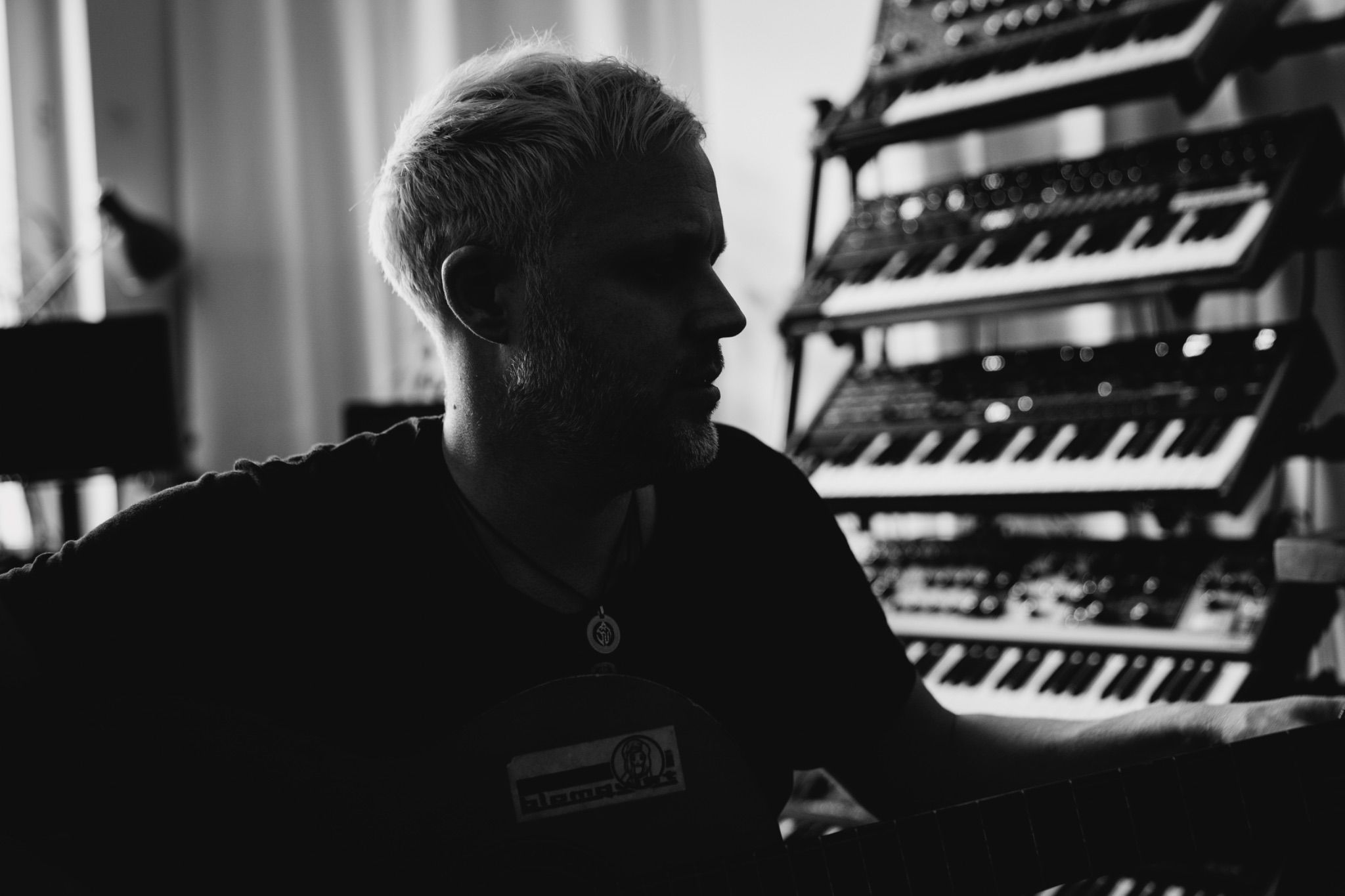
My highest priority for after the Mute Tour is building a studio in my new place. I can’t wait. 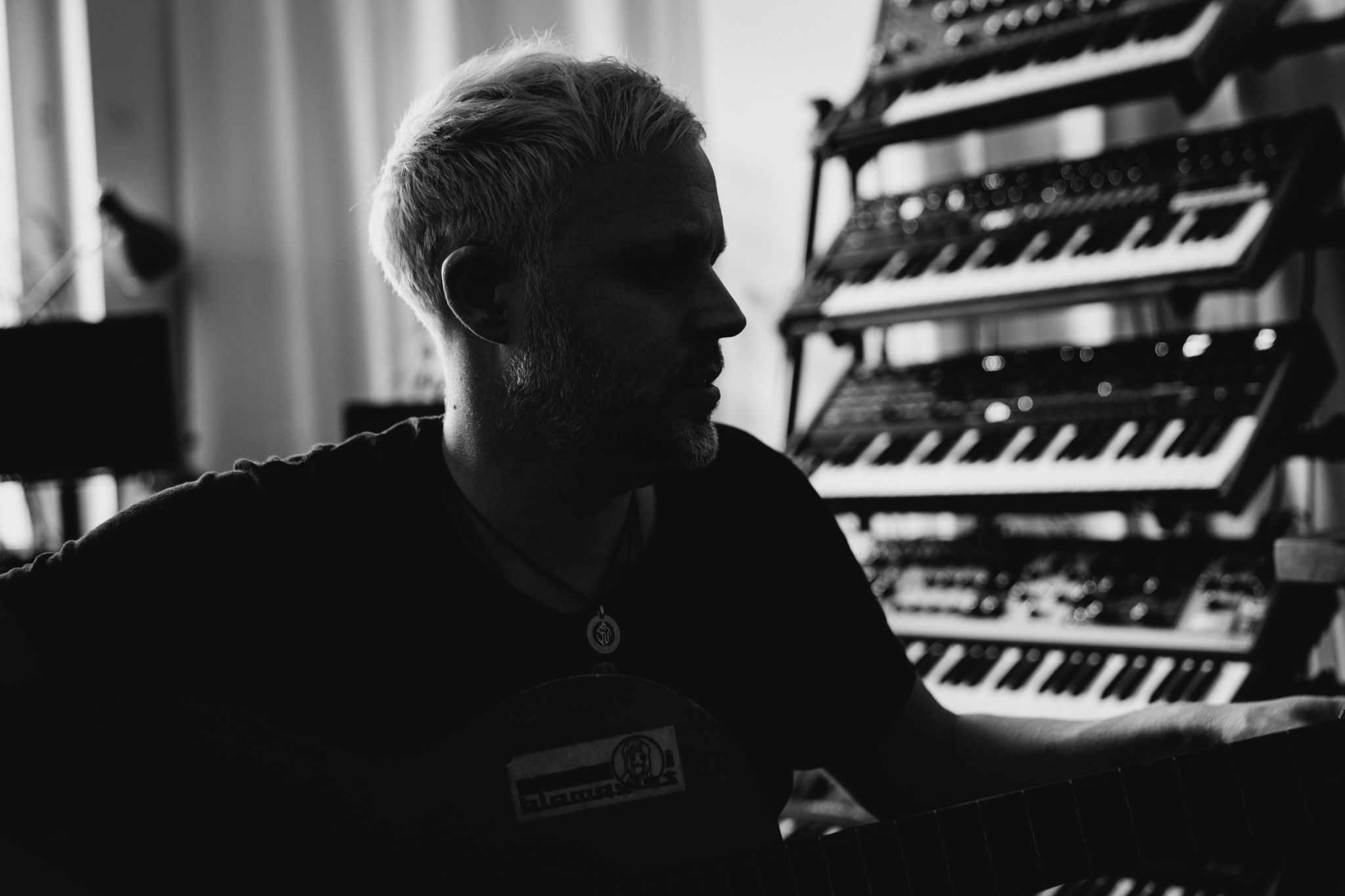
Jan in his Berlin studio.
Late producer SOPHIE said: “You have the possibility with electronic music to generate any texture, and any sound. So why would any musician want to limit themselves?” What's your take on that?
She’s absolutely right. But the freedom to do everything can also be daunting. You can lose yourself in between limitless options. I also think that certain limitations can boost creativity.
Our limitation in the electronic sea of endless possibilities is the Blomqvist signature sound that links all productions. Within this confined space we need to create as much interest and variety as possible and we definitely should not limit ourselves.
Tell me about one or two of your early pieces that you're still proud of (or satisfied with) in terms of production – and why you're content with them.
From the early productions “Something says” and “More” are definitely the ones that I have to name here. "More" is my most played song on Spotify - it’s aging very well.
“Something says” on the other hand, marks the start of the Jan Blomqvist sound that can be found in “More” and in every other production from then on until Mute.
From a technical standpoint the track is far from perfect, but the combination of acoustic elements and the minimal deep house sounds that were on vogue in Berlin in 2012 was something special. I remember us experimenting with shakers, rhodes, piano and even desk drawers. Basically everything within reach was put into production. This seemed to have worked.
It wasn’t clear to us back then but we got told often in the years that followed that we created something new and influenced many musicians. This is definitely something to be proud of.
From the earliest sketches to the finished piece, tell me about the production process for your current release, please.
This time the process was very slow. The first drafts of some of the songs on Mute are pretty old by now. I have been touring a lot after corona and there wasn’t as much time for production as needed for a whole album.
Some instrumentals in these old drafts in fact did not meet our standards anymore and had to be reworked completely in the end. We have been polishing the tracks until the deadline finally decides if the tracks are finished or not.
There are seemingly infinite parameters to change, influence and shape the sonic results. From your experience, what actually makes a piece better and what sets a “finished” version apart from one destined to linger in the archives?
If a song ends up in the vast Blomqvist archives is not so much a question of sound parameters but more of the essence of the song itself or the general production that does not meet our current requirements.
It also can happen that the desire to make use of those infinite parameters to improve the work ends up messing the whole thing up. In German, we even have a word for this: verschlimmbessern. :-) You try to enhance something and in the end it’s worse than where you started.
In these cases, we need to go back 10 versions which never is easy because of all the hours put in. But sometimes a drastic step like this is necessary. Like I said: It’s hard work to keep the vibe of the original idea alive while also pulling a professional production together.
Experience helps to find the moment where it’s time to stop finicking and call it done because it won’t get any better from here on.
How do you see the relative importance of arrangement versus sound design versus composition (including, potentially, lyrics)?
Main focus for us are definitely the latter two: Sound design, composition and great lyrics are all extremely important. If it comes to arrangements, we are often bound to the guidelines of streaming platforms and labels.
But if the track works well, we can always adapt to club and streaming.
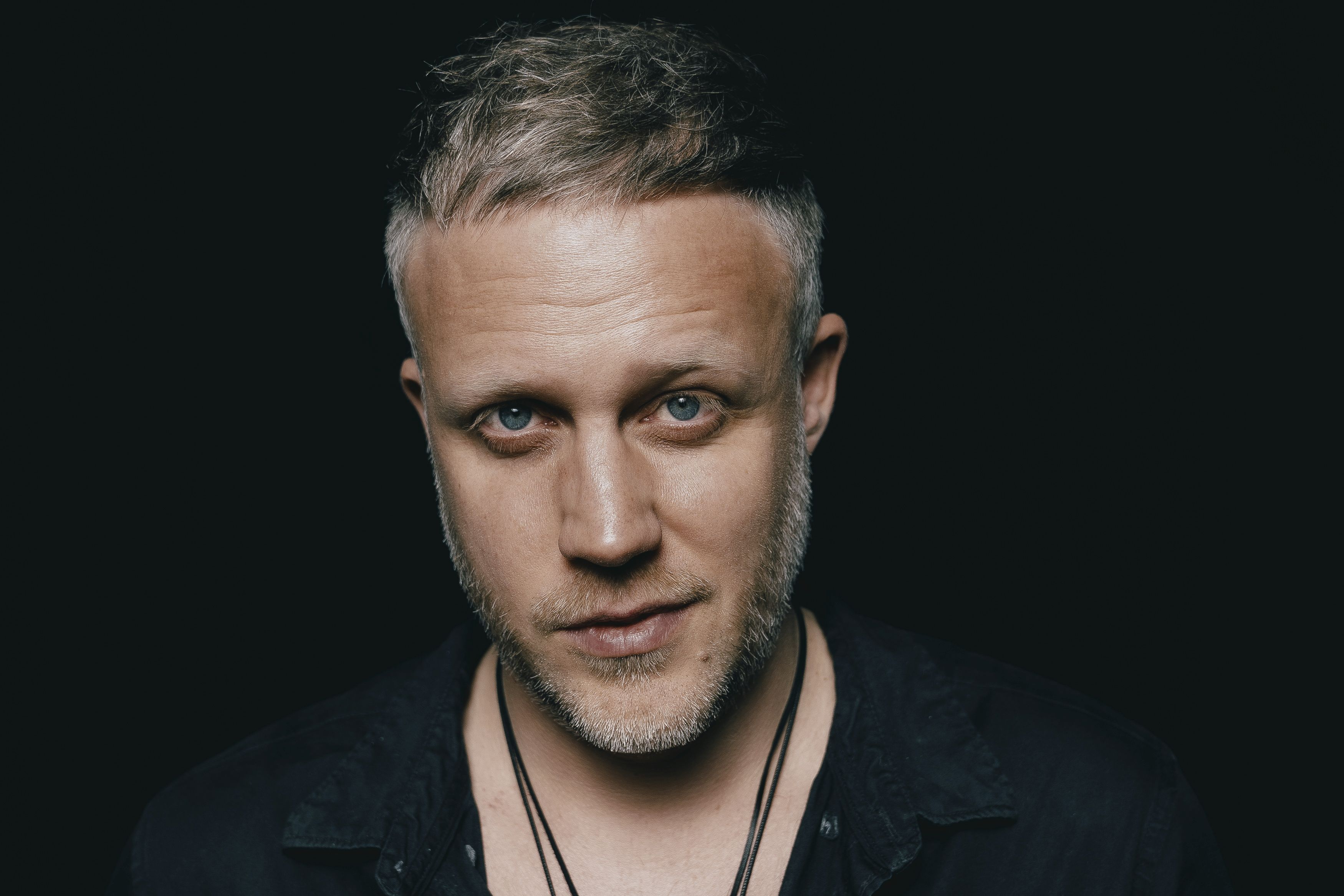
Jan Blomqvist Interview Image by Christian Dammann
How, would you say are your live performances and your recording projects connected at the moment? How do they mutually influence and feed off each other?
There’s a constant and mutual influence of the two sides: I often test unfinished productions on stage to see if they work for the audience.
At the moment we are in the middle of my album tour, so this is a moment in my work where the mutual influence does not exist because we simply are not at the studio to record.
Have you used AI or generative music tools for your own productions? If so, in which way and what did they add?
So far we did not use AI for our productions. I mean, we tried and tested one thing or another. But to be honest: I’m not convinced yet. But this might change soon.
It’ll be interesting to see in what ways AI will change the world and the music business.
One big question resulting from the use of "intelligent" production tools and AI is whether the results are as important (or even more important) than the process (and the joy of creating). How do you see that yourself?
I think this is exactly the point: I mean, in the end, it is important that music gets an audience and people want to see concerts. But isn’t the aura of music lost, if the way it came to life is void of joy and excitement?
I guess in the end it won’t be as black and white as one might think now. I do not see a world in which AI music takes over simply because the music will lack the human touch, at least in the foreseeable future.
But if AI takes over certain aspects along the way and facilitates the process, I won’t say no to it.
How much potential for something “new” is there still in production? What could this “new” look like?
Good question. There is always potential for something new. But it’s not that easy to predict.
The most interesting developments will be the with AI, for sure. But as said above: I don’t really know where this journey will lead us.
Please give a shout out to a person, organisation, website, or anyone else that our readers should know about who are currently changing the world for the better.
I have a feeling that this question wants to lead us into political terrain, and I do have to disappoint here because the first person I had to think of is someone, I’m seeing a lot of these days. It’s my opening act Beobe.
Marv is an amazingly talented musician and he is definitely changing my world for the better. :-)