Published
Name: Javier Rojo
Nationality: Spanish
Occupation: Saxophonist, composer, improviser
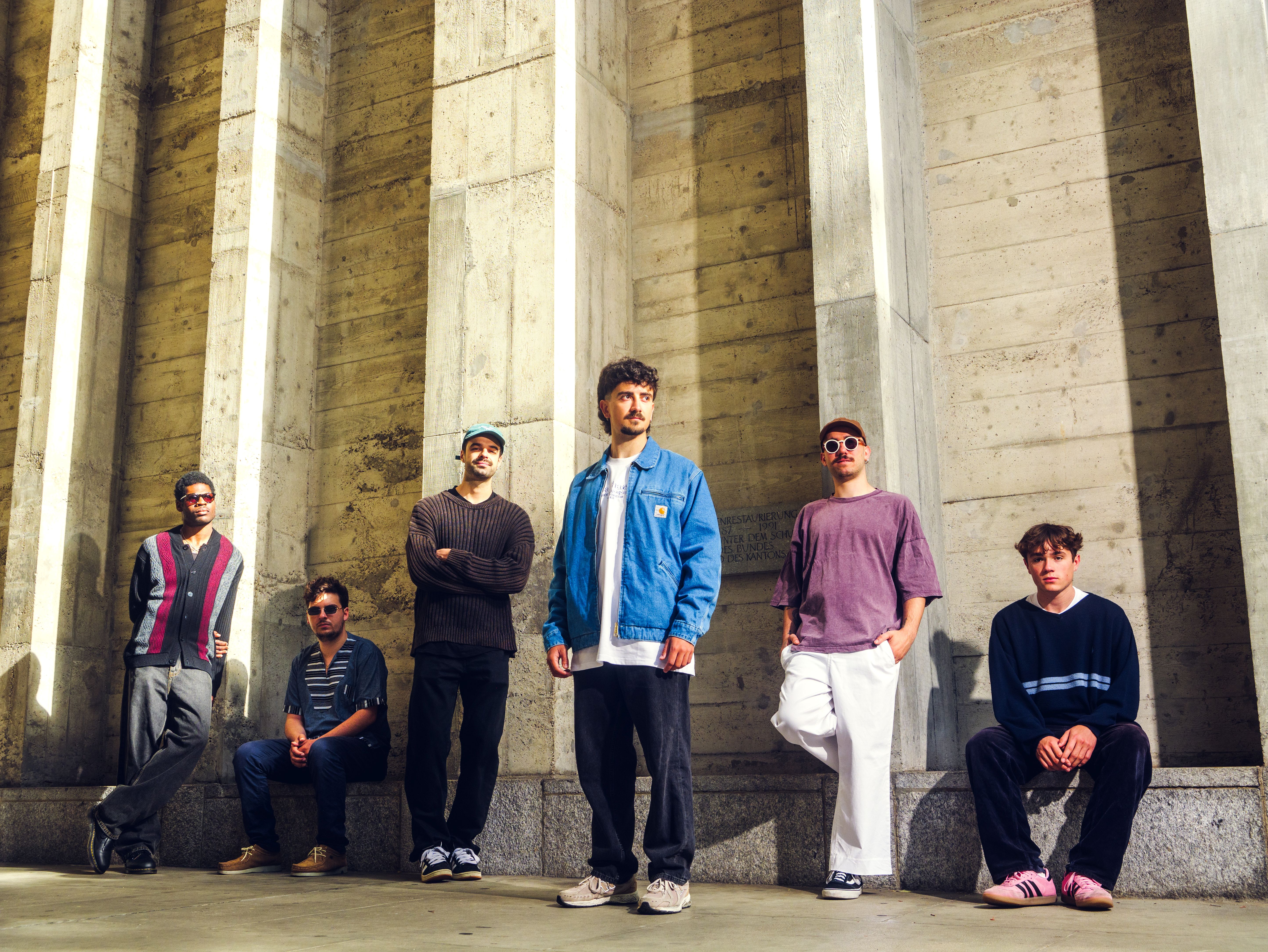
Current Release: Javier Rojo's album Música para amansar fieras is out via Fresh Sound. It features Álvaro Ocón (trumpet), Noé Sécula (piano), Eliott Knuets (guitar), Joan Codina (bass), Genius Wesley (drums), Fernando Brox (flute).
If you enjoyed this Javier Rojo interview and would like to know more about his music, visit him on Instagram. He also has an informative artist page on the website of Fresh Sound.
What were some of the musical experiences which planted a seed for your interest in jazz?
My passion for music has been with me since I was very young. My father is a big music lover and an amateur saxophonist. From an early age, my parents immersed both my sister and me in culture and art. We attended numerous concerts of all kinds, musicals, theaters, museums, and more.
My hometown is very small, and when I started studying, the only option available to me was to attend the local conservatory, which was also quite small. It was there that I began studying classical clarinet until I was 18.
At the age of 16, I had the chance to meet a teacher, Pascual Piqueras, who introduced us to the world of jazz and improvisation. That was when I started to consider dedicating myself to music, particularly jazz, as I felt that this genre allowed me to express myself freely and aligned more closely with my artistic interests.
At 17, I moved to Barcelona to study jazz, and from that point onward, I delved deeper into this music, discovering albums, artists, and styles that gradually captivated me.
How do jazz and jazz culture factor into your artistic processes and the music resulting from them?
Jazz is the biggest musical influence in my life. There are others, like classical music, pop, and various folk traditions such as flamenco, but as of today, jazz is the primary one. Over the past six or seven years, I’ve devoted myself to studying this music, coinciding with my Bachelor’s studies in Barcelona and my Master’s at Jazzcampus in Basel.
I believe the freedom and musical diversity that jazz offers open many doors. There’s a constant source of inspiration that can be found in very different ways. Being surrounded by people who love this music is essential, as is attending live concerts and enjoying the real experience.
Exploring the history of the genre, its subgenres, and its artists is also deeply inspiring. Seeing the artistic and life paths of the key figures in this music—and finding connections with certain aspects of their journeys—can be incredibly helpful in one’s own personal process, at least from my perspective.
What does the term jazz mean today, would you say?
I think this is a question with many debatable answers, haha! Jazz has historically evolved over the years, shaped by different influences since its beginnings. Initially, it was entirely folk music, but at the same time—although that aspect hasn’t been lost—I also consider it to be “art music.”
In some cases, it can become less accessible to certain audiences (ticket prices for some jazz festivals or concerts have also skyrocketed in recent years). Additionally, jazz is becoming increasingly academic, with more schools and more people studying in them. That said, it’s entirely possible to bypass this academic process and still become a great musician in the genre.
I think jazz now encompasses more subgenres than ever. It’s difficult to pinpoint a definition for something so broad, but I’d say jazz is a musical genre characterized by improvisation in one form or another, with roots in African American music from the first half of the 20th century, such as blues, swing, bebop, and more.
Jazz was about a lot more than just music in the 60s and 70s, from politics to fashion. For you personally, is jazz still a way of life – and if so, in which way?
I believe jazz is still very much a way of life, and each scene reflects it in its own way, though there are common threads.
At its core, jazz is a music where sharing with other musicians is key. Being part of a community and dedicating yourself to jazz means there are certain experiences every musician goes through in one way or another: playing with others, seeking influences, developing your own sound to express yourself, experimenting with different musicians, attending concerts, listening to music with friends, and so on.
I also think aspects like fashion, which you mentioned, have been gaining importance recently. I see many artists paying attention to their image and aesthetics as part of their overall artistic identity. This, in turn, attracts audiences. After all, sight is a sense we often engage when attending concerts, and in today’s society, we consume visuals heavily through tools like social media.
Many people perceive jazz as a genre with high barriers of entrance, both for listeners and musicians. What have your own experiences been in this regard?
I think there are certain barriers at times, yes, but it’s similar to anything in life when you’re venturing into something unfamiliar. If you try to run a marathon without having exercised before, you’ll probably have a hard time, haha. I believe there are all kinds of genres and artists within jazz—some more accessible than others at first.
At this point, I hardly listen to the music that initially attracted me when I started exploring the genre. Some artists took me a while to appreciate, while others I still don’t feel drawn to—and perhaps I never will. Certain styles may be less accessible, especially for people who aren’t musicians, as there’s a lot of very intellectual music out there. However, I think engaging the audience ultimately depends on the artist.
If the music is sincere, honest, and played with that intent, I believe the audience will feel drawn to the performance in one way or another.
Derek Bailey defined improvising as the search for material which is endlessly transformable. As of 2024, what kind of materials are particularly stimulating for you?
There are many types of stimuli; in the end, the result is the music, but inspiration can come from many places.
The music you enjoy and that catches your attention, other forms of art like painting, literature, or life experiences and personal relationships— these are the sources from which I draw inspiration.
What, would you say, are the key ideas behind your approach to improvisation?
I consider myself to have different influences, from various artists and teachers who have taught me ways of approaching this music that I really like.
For me, sound is very important; the timbre that each musician creates is the first thing that grabs my attention. Then, there are other aspects, like rhythm, harmony, melodies, motifs, interaction with the band, etc., that I work on and will continue to work on every day.
These elements develop and change over time, but I think the sound each musician has is what draws me the most, and I consider it to be the most important—having a good sound, which is subjective, like almost everything in art, haha.
How would you describe your relationship with your instrument – is it an extension of your self/body, a partner and companion, a creative catalyst, a challenge to be overcome, something else entirely?
I think it’s a great friendship, and like any friendship, it has its different stages, including love and hate.
Sometimes, I feel like the saxophone is the one that helps me, but other times, it frustrates me, haha. Although, of course, it’s not to blame—music is always there; we’re just sometimes more in tune with it than other days. Like any friendship, there are times when we’re closer and others when we’re more distant, which I think is good and necessary in my case.
Over the past Christmas, I didn’t have my main saxophone, and I played another one, an old friend I started with. But I really missed that connection with my main sax, which turned out to be a good thing. When I got it back after the holidays, I wanted to play it more than ever!
Maybe other instruments, like the piano, which I normally use for composing, are more of a creative catalyst for me.
Jazz has always had an interesting relationship between honouring its roots and exploring the unknown. What does the balance between these two poles look like in your music?
I think that’s basically what I try to do, as these are my influences and it’s what my role models have done.
All my great influences took what was already there, treated it with love and respect, and then went further. Coltrane, Mark Turner, Miles, Wayne ... The list is endless.
What are currently direction in jazz or jazz-adjacent communities which you personally find interesting?
I think there are many currents that I like, but I’d say stylistically, the generation of artists who flourished in the '90s, like Mark Turner, Kurt Rosenwinkel, Brad Mehldau, Seamus Blake ...
And later artists like Gerald Clayton, Ambrose Akinmusire, Immanuel Wilkins, Walter Smith III, etc., are the ones that attract me the most.
For many artists, life-changing musical experiences take place live. How do you see that yourself?
I think that playing live is where you learn the most. It’s all a process—of course, if you’ve never studied anything individually, it’s going to be really hard to step on stage and have things just happen magically.
But it’s true that the connection you have with the music live is something unique. I always say that if I finish a gig and I haven’t sweated, something didn’t go right, haha.
How, would you say are your live performances and your recording projects connected at the moment? How do they mutually influence and feed off each other?
I think they are 100% connected, as my music is largely based on the interaction and personal contribution of the musicians.
Before the recording, we did a tour of 10 concerts to prepare the music, which is key for me. Although, sometimes, the first takes of certain music, without any prior preparation, can be incredible if the connection between the musicians and the playing is there!
There are various models to support jazz artists, from financial help to mentorships/masterclasses. Which of these feel like the best way forward to you?
That’s a good question for me, as I’m 25 and figuring out how to approach life to survive, haha.
I think living solely off concerts is very difficult, impossible for me right now. And from what I’ve seen, almost all current role models have ended up teaching at some point in their lives, which I consider necessary to share their experience and knowledge with new generations. It’s hard to find the balance between having time for yourself and pursuing music, while also being financially stable—another big debate!
For me, the ideal would be to be able to do a lot of concerts and also teach people who are genuinely interested in this music. Teaching also teaches you a lot and involves a process of self-analysis and introspection in order to express your knowledge.
Are there approaches, artists, festivals, labels, spaces or anyone/-thing else out there who you feel deserve a shout out for taking jazz into the future?
I think the jazz scene is growing in many ways, but unfortunately, there are also many spaces like clubs that are disappearing.
Economically, jazz is a genre that faces difficulties in all aspects: the cities with a strong scene are usually expensive to live in, travelling is costly, musical equipment is expensive, salaries don’t match the time investment, and getting gigs is becoming more difficult every day.
In my case, I’m very grateful to Jordi Pujol of Fresh Sound Records and to various private foundations for believing in me and releasing my album on such a renowned label. They’ve invested in me, and I think they’ve always supported many emerging artists, which is something I’m very thankful for!
The Montreux Festival intends to preserve its archive of recordings for future generations. Do you personally feels it's important that everything should remain available forever - or is there something to be said for letting beautiful moments pass and linger in the memories of those that experienced them?
I think it’s up to each person whether they want to revisit something or not, so I’m in favour of preservation.
Several of my favourite albums are live recordings; the energy is different from the studio, and it’s beautiful to have that there.