Published
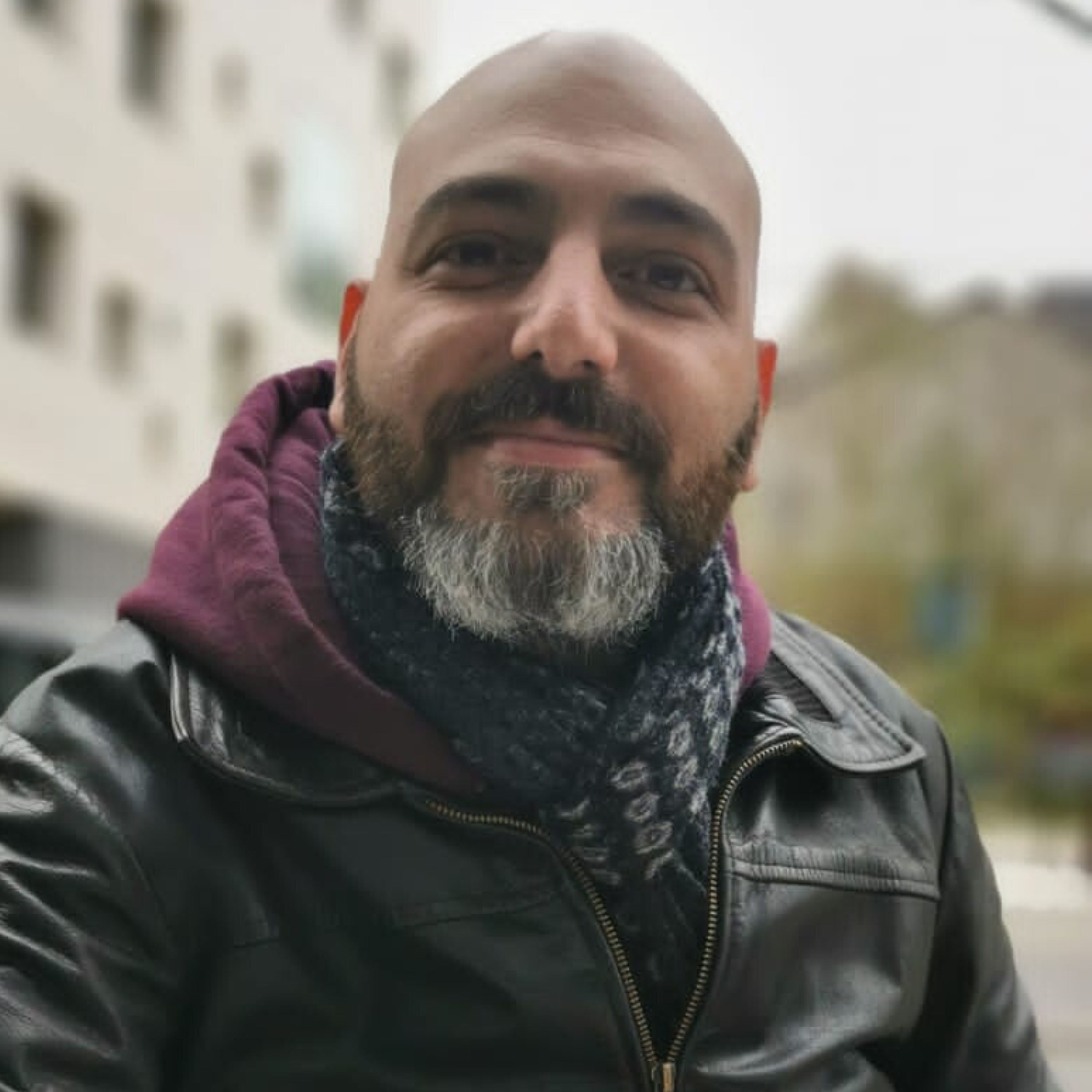
Name: Jeremy Delvila
Nationality: French
Occupation: Producer, DJ
Current Release: Jeremy Delvila's JOLENE 06 EP is out via JOLENE.
Recommendation for Noisy-le-Grand, France: Noisy-le-Grand lies in the Paris suburbs and we have «Les Espaces d'Abraxas,» a set of buildings designed by Ricardo Bofill in the 1980s. With their bold, neoclassical-futurist style, they look like something out of a movie set and never go unnoticed!
If you enjoyed this Jeremy Delvila interview and would like to know more about his music, visit him on Instagram, Facebook, tiktok, and Soundcloud.
Are there examples of minimalism in music – and outside of music - that impressed you early on?
My first encounter with minimalism, as far back as I can remember, was a vinyl record by Philip Glass that belonged to my father.
I also remember an album by the Concert Collectif du Groupe de Recherches Musicales de l'ORTF.
I was just a child, but even then, I was mesmerized by what I was hearing.
Were you ever interested in minimalism as a style – from the Philip-Glass-variety to solo instrumental work to minimal techno? If so, tell me a bit about your interest in this.
Alongside the new house project I'm telling you about today, I've been part of a techno duo for nearly 20 years. We play and produce a lot of Minimal Techno.
I love the hypnotic side of this music - it may sound simple, but it takes a lot of work to avoid sounding repetitive.
On a more personal note, I recently became interested in saxophonist John Surman, especially his solo album Upon Reflection (1979). He uses synthesizer loops and overdubbing to create a sound bed on which he improvises.
I actually discovered him through a French rap group, Lunatic, who sampled him in 2000 in the track 'Le Silence n'est pas un oubli.'
I found the instrumental absolutely incredible. I listened to that album a lot back then.
Do you tend to find that, as many claim, “less is more?” Are the notes you don't play really as important as the ones you do play?
'Less is more' is the best advice I've ever received for moving forward in my compositions!
Silence is Music!
Do you feel as that making music is a process of adding elements until it is done – or one where you chisel away pieces from something that is already there?
To me, it's a bit of both.
I start with raw material that I sculpt and refine, then I add a few elements to try to achieve a balanced recipe.
What were some of the starting points for the JOLENE 06 EP?
It started with finding samples to manipulate and deconstruct.
Do you like to set yourself limitations? If so, which were some of those limitations for the new pieces?
Yes, sometimes I deliberately limit the tools or materials I use before starting a new project. It's a great creative exercise!
Thanks to sampling and digital synthesis, there are endless possibilities for sculpting the sounds and overall sound design of a piece or album. What are your considerations in this regard?
I've always loved sampling. And today, with tools like granular synthesizers, the possibilities are endless for discovering amazing textures!
Would you say that you approach your creative tools with a minimalist mindset? Or do you need a wide choice of instruments and tools to make music?
Once again: 'less is more'. ;)
What were some of the most important pieces of gear or instruments for this release?
A very simple and affordable one: Ableton Live's Simpler.
I also worked a lot with Native Instruments' KOMPLETE suite.
French producer Guillaume Duchastel told me: “Minimalism is about more than owning fewer things. It’s about focusing on what truly matters.“ What are some of your strategies for separating what matters from that which doesn't?
Just like in a good story: Does this element add something essential? Or is it just there as filler? Is it truly useful to my narrative?
If not, I remove it. I'd rather make an existing element more vivid than keep adding more and more.
With so much incredible music instantly available, are you finding that you want to take it all in – or that you need to be more selective? How do you pick the music you really want to invest in?
As an Open Format DJ, I listen to a huge amount of music every day, across all genres.
It's sometimes hard to choose - of course I go for tracks that move me, but I also have to keep my audience in mind.