Published
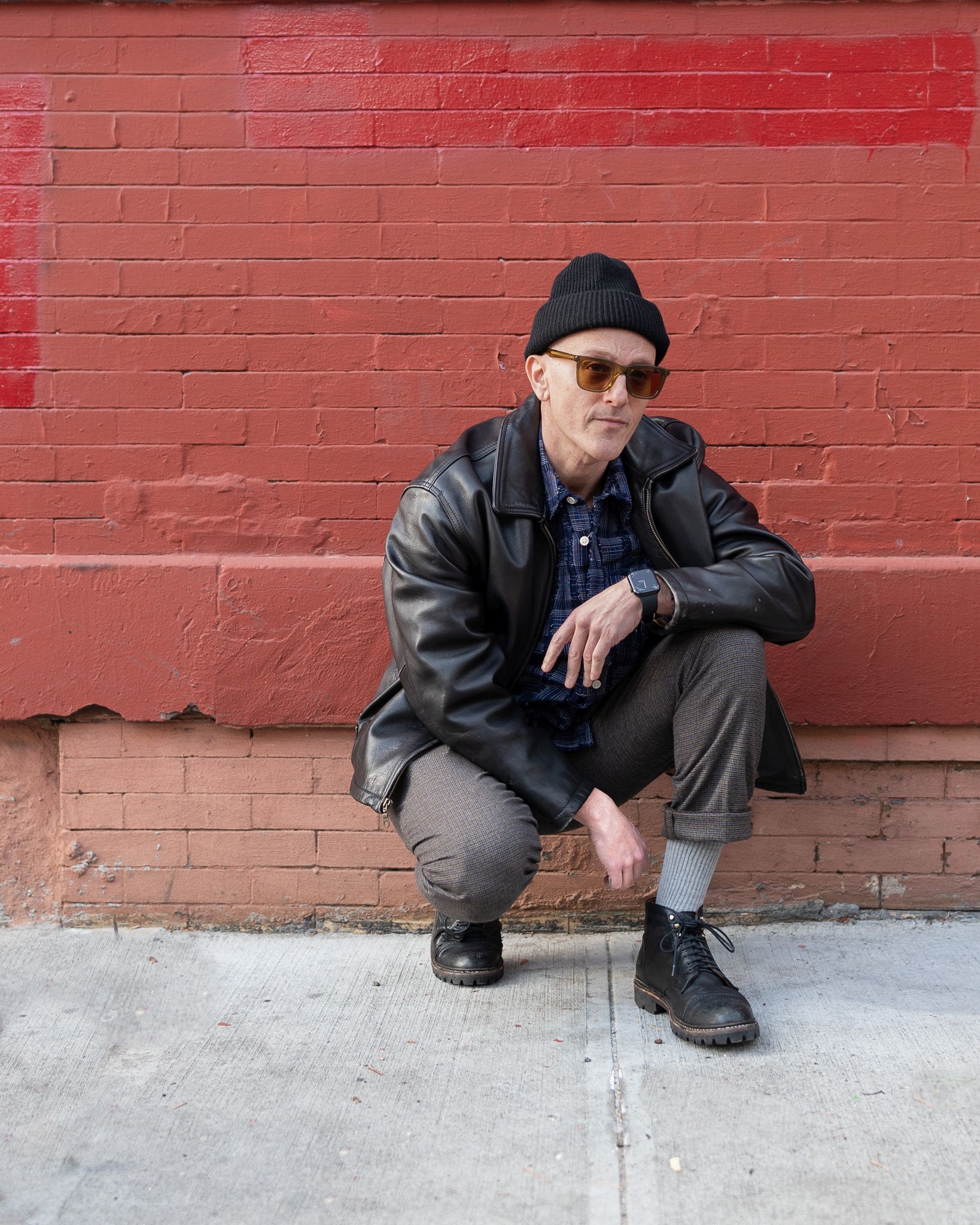
Name: Jason Kriveloff aka JKriv
Occupation: Producer, DJ, songwriter, multi-instrumentalist, label-owner at Razor-N-Tape
Nationality: American
Current release: JKriv's Intuition EP is out via Razor-N-Tape.
Shoutouts: For spaces in NY I really appreciate Public Records and Good Room. For labels Music From Memory, Leaving Records and gotta shout out Razor-N-Tape of course!
If you enjoyed this JKriv interview and would like to know more about his music, visit his official homepage. He is also on Instagram, Soundcloud, bandcamp, and Facebook.
What were some of the musical experiences which planted a seed for your interest in electronic music?
Actually my musical roots were in rock, funk & soul, then jazz and I admittedly had a pretty healthy disdain for electronic music early on.
Frank Zappa, one of my early heroes, talked about being influenced by Edgard Varèse - not exactly electronic music, but visionary in terms of his use of tape recordings and sound manipulation - so I checked it out and found it really interesting. I had also done some clubbing with friends in 90s at classic spots like The Tunnel, Limelight, Twilo, Centro-fly but while I found it fun, it didn’t have a huge impact on me then.
It all kind of clicked when I took an electronic production class in the music technology department at Oberlin, where I went to college, and I saw the potential to realize complete musical ideas entirely on my own.
Most genres of music make use of electronic production means. What does the term “electronic music” mean today, would you say?
I think virtually all music today employs electronic means, whether it’s in the recording or finalization process, and certainly in terms of distribution.
I guess for me electronic music centers the tools of production - whether hardware or computer-based - at the core of the creative process.
I grew up mainly listening to electronic music but have of lately, along with others I've spoken to, been somewhat disappointed by most new releases. I'd be curious about your own view on this, the “creative health” of the scene and potential reasons for the disappointment.
That’s tough for me to answer because I’m not sure I’ve ever considered myself as part of a “scene” for electronic music.
I know that I continually find current music that inspires me.
What were some of the recent releases, or performances of electronic music that left a deep impact on you?
Nala Sinephro’s Endlessness is a masterpiece of fusing organic and electronic elements in my opinion.
Everything Maurice Fulton does always gets me and his recent Night Blooming Cereus LP as his BOOF alias is really forward thinking, genre-bending stuff.
I also love the Prince of Queens' Merida EP which we released on Razor-N-Tape for the way it expresses his Latin influences in an electronic context.
What kind of musical/sonic materials, and ideas are particularly stimulating for your work right now?
I’ve been very into the proto-house sound of NY club music in the mid to late 80s. It had a very raw and sort of primitive approach to sequencing with drum machines and synths, but done with so much soul.
I did a mix of this stuff for My Analog Journal and it’s influence has worked its way into my music in songs like “Paula’s Dance” and “Zone 1” from my new Intuition EP.
Where do most of your inspirations to create come from – rather from internal impulses or external ones? Which current social / political / ecological or other developments make you feel like you need to respond as an artist?
At times I think I’ve made music in response to certain environmental or political issues, but most often it’s a bit more personal, and kind of an indescribable mix of my influences, history and sounds I’m excited about at the time.
My most recent Intuition EP was completed at the end of last year while I was in treatment for lymphoma, and for that reason feels even more personal.
The concept of intuition, trusting in a process, and really listening to your inner voice in challenging times became woven into the music I was making.
Music has become a lot more global, and incorporating elements from other parts of the world or the musical spectrum is commonplace. Do you still think there are city scenes with a distinct, unique sound? How does your local scene influence your work?
For me, I don’t think my environment necessarily inspires the style of music I make, but it definitely can impact my creative flow.
Sometimes just a change of environment can produce new feelings and inspiration. And when it comes to electronic music, different equipment and sounds always lead me in new creative directions.
Today, electronic music has an interesting relationship between honouring its roots and exploring the unknown. What does the balance between these two poles look like in your music?
I think my time in jazz really taught me about the importance of tradition and roots and really doing your homework, in whatever art or space you’re working in. But it’s more about developing a foundational jumping-off point for whatever you want to do, than about reverence.
I think it’s totally natural to enter a style of music or art at a point that inspires you and then kind of work both backward and forward at the same time, if that makes sense.
How much potential for something “new” is there still in electronic music? What could this “new” look like?
I think there’s endless potential really, although it’s not something I consciously strive for. I actually think “new” is overrated. I’d personally rather just do something “well” haha.
I also think that most people who have done something new didn’t really have that as an end goal, but got there by working through a process of various experiences, trial and error, and instinct.
What were some of the recent tools you bought, used, or saw/read about which changed your perspective about production, performing, and making music?
I’ve actually haven’t bought any new gear in a while, but I would say that out of all the hardware in my studio the most essential and inspiring things are the effects processing units.
Do you think that there is a limit to what can be done in sound design – and what defines these limits?
There’s definitely an ever-evolving understanding of the way the brain processes sound in space.
But in the club and listening bar world these days there is a lot of fetishizing of certain types of sound recreations from past eras that feels a bit overdone to me. The same way a camera from a 5 year old smart phone will look low-res even though it was mind-blowing at the time, our ears are not the same as people’s ears in the 1970s.
Of course there are tried and true principles that applied then and in some ways are timeless, but I’m more excited by how those methods can be brought into the modern era and expanded on, rather than recreated.
In as far as it is applicable to your work, how would you describe the interaction between your music and DJing/DJ culture and clubs?
I’ve always been driven toward music that makes people move and I make a majority of my music with that in mind.
But my tastes and influences are very wide and there’s space for lots of other stuff, such as the more introspective and my dub record that I released last year.
How, would you say are your live performances and your recording projects connected at the moment? How do they mutually influence and feed off each other?
Currently my main live outlet is my A Joyful Noise project which we have presented at Public Records in Brooklyn for the past 3 years. It’s a concept that I’ve worked through various iterations of live-performed music in a club setting.
In some ways this best encapsulates my roots in jazz, improvisational live music, and electronic music. I’m hoping to release an LP of live recordings from the events soon.
Even if AI will not entirely replace human composition, it looks set to have a significant impact on it. What does the terms composing/ producing mean in the era of AI, do you feel?
I appreciate and use some AI tools but I am completely against using it to replace any aspect of creativity in music or art.
I also think it portends incredibly dangerous consequences for culture and humanity as a whole and needs to be regulated, which sadly doesn’t seem to be happening.