Published
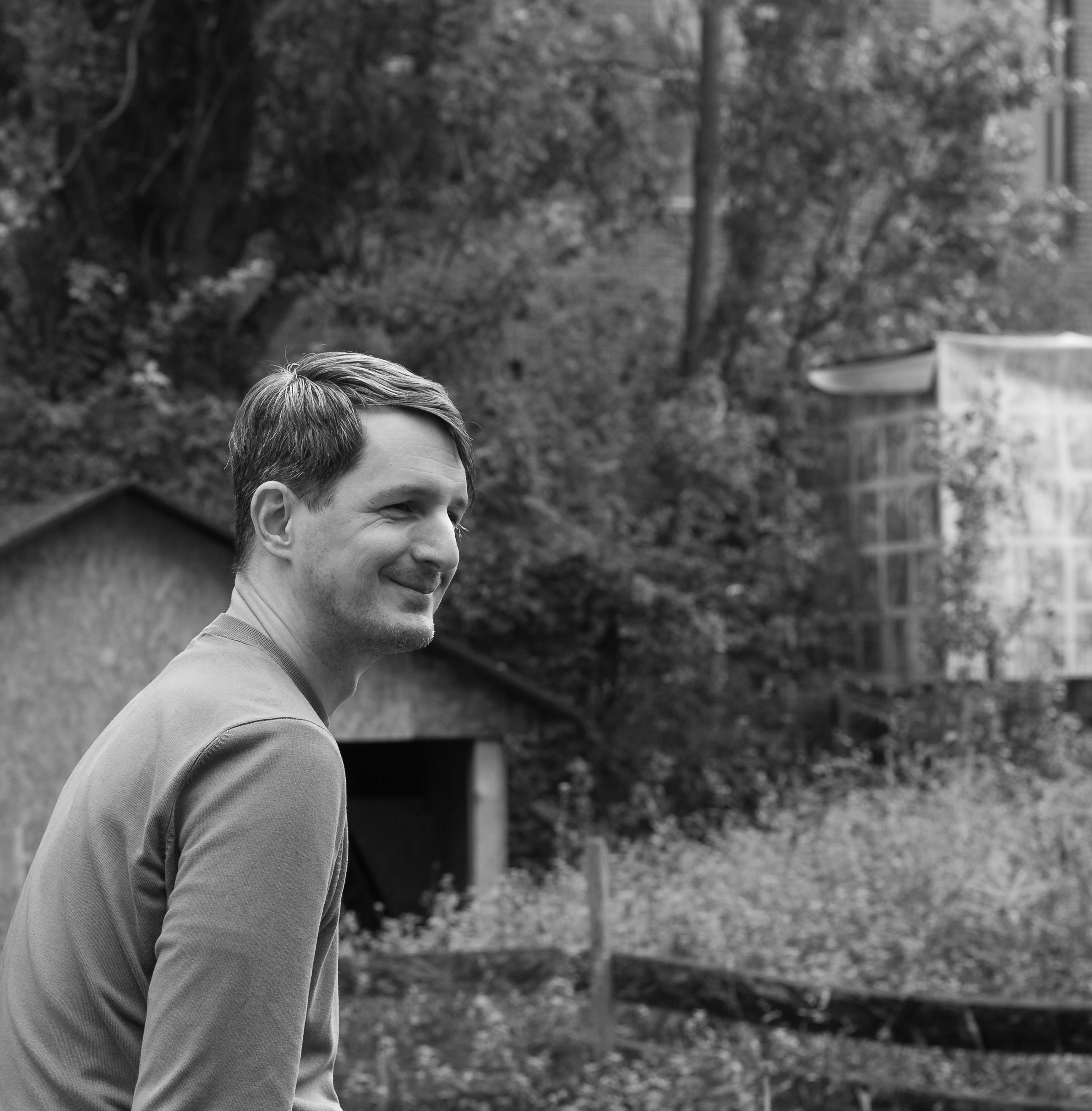
Name: Joachim Spieth
Occupation: Producer, sound designer, label founder at Affin
Nationality: German
Recent release: Joachim Spieth has two new releases out on Affin: His latest solo album Retrace. And Fragments, a collaboration with Agustin Mena aka Warmth.
If you enjoyed these thoughts by Joachim Spieth and would like to find out more about his work, visit his official website. He is also on Instagram, and Facebook.
For a deeper dive, read our earlier Joachim Spieth interview.
Are there examples of minimalism in music – and outside of music - that impressed you early on?
Musically, these were clearly productions by Wolfgang Voigt (Gas, Studio 1, Profan), Basic Channel / Chain Reaction, Mika Vainio or Richie Hawtin ... and a lot of others who had taken on this topic at the same time.
[Read our Mika Vainio interview]
[Read our Richie Hawtin interview]
I think at the time (mid-90s) I wasn't really aware of what it all meant, but I liked that it was more stripped down. It left a lot of room for interpretation, sounded independent and different, and that was enough for me to enjoy it at the time.
Were you ever interested in minimalism as a style – from the Philip-Glass-variety to solo instrumental work to minimal techno? If so, tell me a bit about your interest in this.
I came across instrumental hip hop and ‘Mo Wax’ (London) when I was a teenager, and there were tracks by Autechre for example, which I found very mysterious ...
Through this kind of music, which was sold under the term trip hop back then, I got to Warp Records for example ... and then the path to minimal techno wasn't too far away ...
Funnily enough, it all happened relatively quickly back then, almost like a primal musical instinct hahaha ...
Do you tend to find that, as many claim, “less is more?” Are the notes you don't play really as important as the ones you do play?
I think there is something to it. Music needs space to unfold, to be able to breathe ...
For me it is very interesting to move musically between silence and maximum fullness. Especially strong contrasts on a temporal level allow the listener to recognise and feel them. If you try to compose music between these poles, there are always places where you can emphasise small details ...
However, there are obviously also works that know how to shine precisely with their fullness ... Therefore, I would not generally agree with ‘either minimal or maximum’. It depends on what you want to achieve with your work.
Do you feel as that making music is a process of adding elements until it is done – or one where you chisel away pieces from something that is already there?
I also tend to be someone who chisels away. It's often about finding the essence of a sound, i.e. what really makes it special for me. Other frequencies sometimes interfere with that, obscuring what is exciting.
I also often prepare music in advance, but then only use part of the material that was previously put together when composing. Getting a feeling for when something is enough to stand on its own is a gift that I think is worth striving for.
Many artists are becoming more minimalist in their music as the years go on, focusing on the “essence.” How is that for yourself and how would you describe your development in this regard?
As I've been releasing music for more than 20 years, I've tried out a lot musically over the years. Some things went, others came back later in a different form, but it was always important for me not to stand still in the long term and to keep repeating myself. I think I've managed to do that quite well over the years.
I'm actually trying more and more to immerse myself in different ‘roles’ for different musical projects, i.e. to set priorities for each project. This keeps things interesting for you, because you don't just sit around layering sounds for 10 years, but also learn to play other formats.
I see the ‘essence’ of what my premise is for a planned project and then follow this premise ... and then hope to gradually get closer to what I had in mind at the beginning. So I consciously try to bring different things forward in order to be able to surprise at best.
What were some of the starting points for your most recent release Fragments?
My most recent release is a collaboration with Warmth (an ambient producer and label owner living in Spain). There was a constant exchange of sounds and stems, which were then worked on without much communication.
As we have known and recognised each other musically for a long time, the path was clear practically without words. Sometimes there are combinations that harmonise intuitively.
The origins of my last ‘solo’ album Retrace (which was released last October) lay in an old arrangement. I simply reduced the playback speed by 50%, only to realise that very interesting effects had emerged, especially in the percussion section. I then recorded these and edited them massively ... so, seemingly by chance, a strange kind of beat emerged that I followed.
It's important for me to choose unconventional approaches when working, where it's not obvious whether it can work or whether you're going in the wrong direction ... that's exciting.
Did a minimalist mindset possibly inform the creative process?
I am convinced of that. I believe that the two are strongly interrelated.
If you want to present something with fewer elements, you logically have to deal with the presentation of these (fewer) elements. How do you bring a sound into focus, what should remain in the background, in short, which element has which function?
I think it depends a lot on your own sensors to recognise things ... I would assume a certain sensitivity. And that tends to be amplified ...
Do you like to set yourself limitations? If so, which were some of those limitations for the new pieces?
I don't really like to set myself limits musically ... There are rather limits to what I'm mentally capable of hahah ... to widen them as much as possible, to shift them, that's a goal ...
However, there is often an idea (in relation to the format) of how long a particular track should be ... in the sense of ‘what is the essence, at what point is everything said’.
There is often music where you can tell after 3 minutes that not much more is going to happen, yet they have a playing time of 20 minutes ... I think such pieces should be able to justify why they are so long ...
Thanks to sampling and digital synthesis, there are endless possibilities for sculpting the sounds and overall sound design of a piece or album. What are your considerations in this regard?
I work exclusively with self-created samples as it gives me a better approach to sound and experimentation compared to synths (or the experiences I've had with synths).
I like the unpredictable twists and turns that sounds can take in the sampler. That's why I created a series of sounds (textures) as a sound library 3 years ago.
I also like being able to save results that have already been ‘achieved’ and use them as an output for further modulations. Resampling also plays a decisive role in my work. You can cross sounds several times, combine different parts from the same sound using fades, etc ...
The possibilities for creating interesting sound material are almost endless. I also find the preparation of pieces more accessible this way.
Would you say that you approach your creative tools with a minimalist mindset? Or do you need a wide choice of instruments and tools to make music?
Over the last few years, and especially with the decision to produce my music in Ableton Live, I've been looking for tools that run within the DAW. Within Ableton, I have created a few racks that can be easily archived so that they can be called up again when needed. This makes work easier, saves time and ensures an overview that can sometimes get lost in the sea of plugins.
I believe that I have been able to find some good tools at this point in time that are also used on a regular basis. This also helps to give my own signature sound an outline ... to emphasise things that have developed ...
In short, I think that the process of selection and reduction has paid off for me so far.
What were some of the most important pieces of gear or instruments for this release?
The most important tools for me are now various filter modules and EQs, as well as additional plug-ins for processing dynamics.
A very nice module is definitely Slink (from Hypnus), although it's not the only one I use ... the plugin line from OEK Sounds has also enabled me to express myself a lot.
But even with these tools, less is often more ...
Reducing one's options and techniques often implies a different way of working with the materials. Tell me about yours, please.
That could well be true. I take a relatively close look at whether I need something new, have ‘cleaned out’ plugins or certain other tools from time to time, organise Ableton largely in such a way that I fall back on a handful of plugins ... As a result, I use certain tools more often and over a longer period of time ...
A long time ago I tried out a lot of instruments and sometimes lost a lot of time as a result. (see also other answers ...)
With so much incredible music instantly available, are you finding that you want to take it all in – or that you need to be more selective? How do you pick the music you really want to invest in?
The amount of music on offer seems immeasurable, but there is a lot that can be dispensed with. If you spend a long time with it, you increasingly realise that (apart from really interesting products) you have already heard a lot of it and don't really need it.
Selection is helpful here and I have been very successful at this for years. For me, there is really only one rule: does the music have an effect on me or not? Anything that doesn't fulfil this rule can go.
Would you say that minimalism extends into other parts of your life as well?
Yes, I've been limiting my possessions for a few years now, giving away or throwing away things that no longer have a function for me.
I think it's beneficial to realise which things you really need or use. Whether it's music tools or furniture, making sure you know what you really need creates clarity and an overview. And you no longer have to worry about things that have gone ...