Published
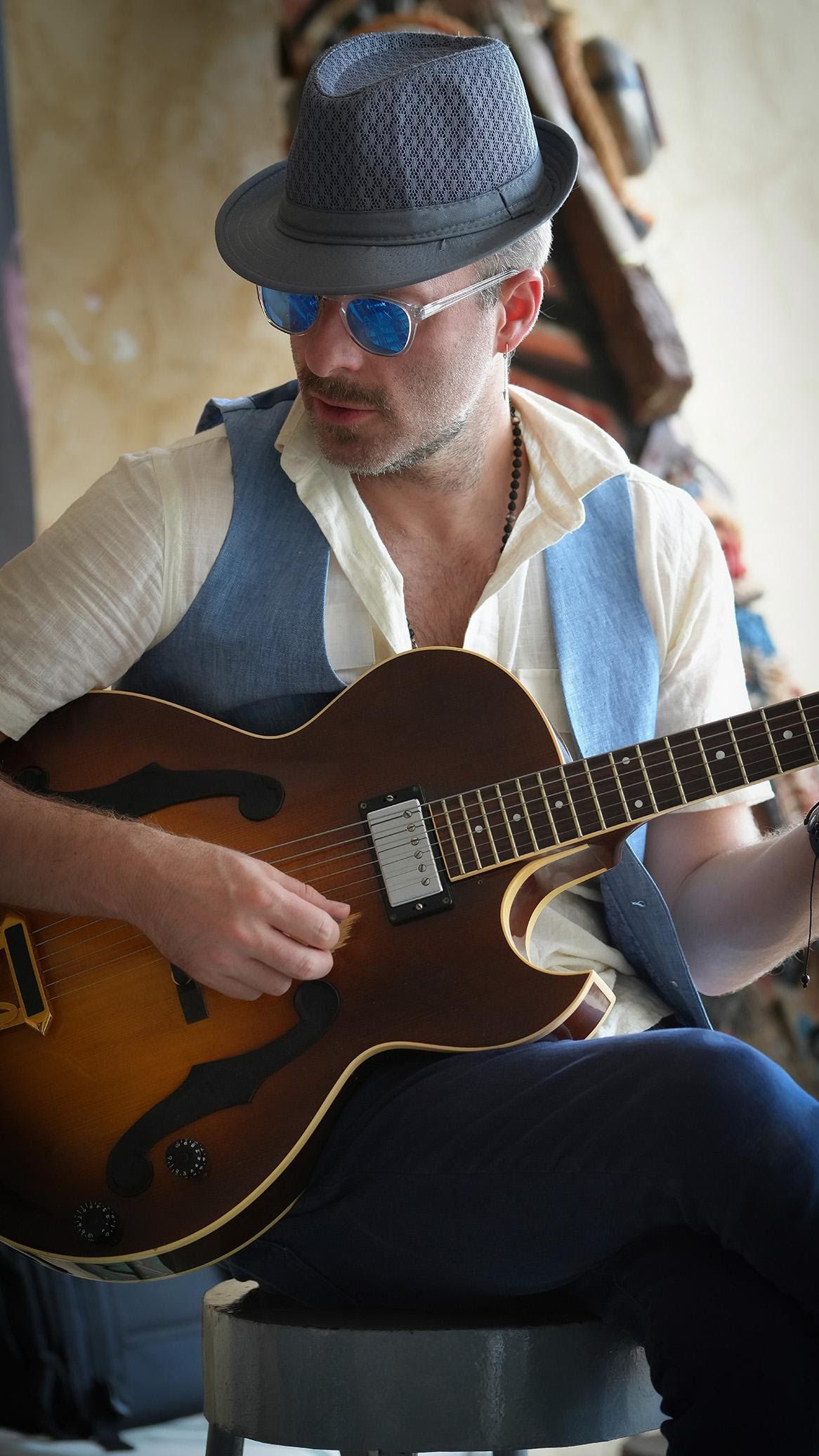
Name: John Shannon
Nationality: American
Occupation: Guitarist, composer, improviser
Current Release: John Shannon's new album A Day in Tarifa is out October 3rd 2025.
Recommendations for Pittsburgh, USA: Definitely visit the jazz club I co-own, Con Alma! We honor the deep Pittsburgh Jazz Legacy and the very strong scene happening right now. Plus we have a serious vinyl jazz record collection!
Topics that I am passionate about but rarely get to talk about: I am passionate about wilderness earth skills and Native American cultures. When I was 18 years old I started studying wilderness skills to live closer to the earth. This no doubt influenced my music and brought me into finding ways to merge earth-consciousness and music.
If you enjoyed this John Shannon interview and would like to know more about his music and upcoming live dates, visit his official homepage. He is also on Instagram, and Facebook.
When it comes to experiencing strong emotions as as a listener, which albums, performances, and artists come to mind?
For me it’s about emotional release more than experiencing emotions, so really a self healing through music. That can depend on the day, time, season etc for me.
In jazz music artists like Keith Jarrett, John Coltrane, Paul Winter and Pat Metheny bring that to me. In non-jazz music artist like Peter Gabriel, Radiohead and Bon Iver all bring that to me.
There can be many different kinds of emotions in art – soft, harsh, healing, aggressive, uplifting and many more. Which do you tend to feel drawn to most?
The healing and uplifting aspects of music which often involve emotional release is what draws me. It’s what I strive to deliver in my music and what I look for in music as a listener.
I also find that the energy of nature can be brought into a composition as an uplifting or healing element, such as in my song “Sunrise.” I reflect on that uplifting energy of a morning sunrise and infuse that vibe and energy into the song.
In as far as it plays a role for the music you like listening to or making, what role do words and the voice of a vocalist play for the transmission of emotions?
I often prefer music without words so that the spirit can be more directed towards a healing musical experience.
Of course words can be healing and directive towards emotional release but there is a fine line of boxing in the mind with words as well.
When it comes to composing / songwriting, are you finding that spontaneity and just a few takes tend to capture emotions best? Or does honing a piece bring you closer to that goal?
In terms of takes in the studio, absolutely the first 2 are going to be the freshest to the music and group.
For songwriting I find the initial transmission has to be in the moment and led by the ears and intuition. Then, if needed, I'll later go back to revisit and complete the directive or narrative of the composition/song.
How much of the emotions of your own music, would you say, are already part of the composition, how much is the result of the recording process?
The initial emotions which are connected to the initial transmission and hearing of the song are key to the song’s identity. You are encapsulating a moment of inspiration and connection.
The recording process is always trickier because you need to not only connect to that original moment which can fade but also bring a fresh relationship to the song in order for the recording to be its own moment of clarity.
My song “A Day in Tarifa” presented that challenge for me and I would say it was a successful connection to the original moment of writing it as well as finding clarity within the moment of tracking it with the band as well.
For the album, what kind of emotions were you looking to get across?
I’m more looking to get across a connection to transcendence through music on my new recording than emotions.
That being said, there is a song called “Liberty Bridge” that is a kind of lament of sadness for the division in the world between people… but also an offering of hope by the end of the song towards an awareness of oneness between us all.
How do you capture the emotions you want to get across in the studio?
It’s more about transcendence than anything and a connection to a deeper source.
So it’s about strong preparation of the material and meditation before entering the studio. That allows me to connect to the original intention of the song as well as connect to a source of higher inspiration to transmit what needs to be transmitted for the listeners that will hear the music.
What role do factors like volume, effects like distortion, amplification, and production in general for in terms of creating the emotions, energies or impressions you want?
Not much.
It’s more about the touch on your instrument. Your hands. If you have that dialed in you can get across the energy with any sound.
In terms of emotions, what changes when you're performing live on stage, with an audience present, compared to the recording stage?
Everything changes! Stakes are higher because it’s about connecting the music to the listener. The intention on stage is a oneness between the people present and the music you are presenting.
For me, to do this effectively, I have to purely connect to the sound and song and get into a space of no thoughts, just intuition in the moment guided by the song, sound and band members of course.
How does the presence of the audience and your interaction with it change the emotional impact of the music and how would you describe the creative interaction with listeners during a gig?
It’s difficult to put into words, but you are in a living experience between yourself and the listener.
This is the beauty of improvised music. You can pivot moment to moment in your approach to connect with the listener.
I don’t mean this in a straight show business attention grabbing kind of way - but on a subtle energetic level.
What kind of feedback have you received from listeners or concert audiences in terms of the experience that your music and/or performances have had on them?
The highest forms of feedback for me have been listeners receiving a sense of transcendence and of being uplifted by the performance and music. Physically, mentally and spiritually.
Would you say that you prefer to stay in control to be able to shape the emotions or do you surrender to them and allow the music to take over? Who, ultimately has control during a live performance?
For me music is a spiritual thing. But you have to meet it halfway through proper preparation.
You don’t want to have hardly any thoughts in your mind when you are performing. Just a surrender to the moment that is shared by you, the audience and the true spirit of the moment.
If you can access the spirit of the moment which involves surrender and intention, you are on track.
The emotions that music is able to generate can be extremely powerful. How, do you think, can artists make use of this power to bring about change in the world?
To me, unless emotions are directed towards self awareness or a release that results in healing they can’t be used to change the world. Otherwise emotions can get in the way.
To me there is no higher state than Peace. This is why I believe transcendence of the self through music is what can lead to change in the world.
Perhaps a good example of this is in the recording of the Ahmad Jamal song “Marseilles” on my record. There is an emotional density in the beginning of the song that eventually gives way to release.