Published
Name: Joakim Haukaas aka Joki
Nationality: Norwegian
Occupation: Producer, composer
Current release: Joki's new singles “tequila,” and “buy a castle” are out now. He also has two collaborations: “like that” with Ken and Bassweed as well as “at me” with Amero, both via Actuation.
Is there a difference between the tracks you're producing for yourself and those for other artists? Would you say the former are more personal in a way?
Not in the way I’m thinking when I make the music. But when I’m producing for someone else, I have to think about what I think would fit that artist the best.
When I do joki tracks I don’t really think, I just do whatever I think is cool to do for myself.
Tell me about one or two of your early pieces that you're still proud of (or satisfied with) in terms of production – and why you're content with them.
«5 fine frøkner» by Gabrielle. It’s been a hit in my home country of Norway for quite a while. And now 10 years after it was released it still sounds cool to me. The drum production is super weird and uk garage inspired as well as 90s house. Also, I brought vocoder back on Norwegian radio with that song, years before that became standard.
Fun fact: I tried both plugins and hardware vocoders and ended up with the stock ableton vocoder.
«Blackout» by Julie Bergan. That production is very me in so many ways, and I’m actually still happy with the sound design.
It’s one of those type of tracks that has aged well (I don’t think the bigger hit song ‘Arigato’ aged as well production wise). We really tried to push it on this song, and Mike (the A&R at the time, now my manager) and I went back and forth on it with snippets to keep pushing every little detail.
How and for what reasons has your music set-up evolved over the years and what are currently some of the most important pieces of gear and software for you?
I’m a massive gear slut, so there’s quite a few pieces of gear and software that I couldn’t live without. Also, this is the best question somebody can ask me, so sorry in advance, but this is gonna be a long answer.
My set up started simple with a Mac and GarageBand. My friend Istago (who’s maybe the best unknown hardstyle producer out there) introduced me to ableton, nexus and vengeance sample packs, and that was a total game changer.
I was a preset browser for a while, but it was annoying when I heard a sound in my head and I couldnt find it in nexus. Decided to learn how to use synths, and learned how to properly use massive, predator and sylenth1. From there I started getting synths, and my first notable hardware synths was Nord Lead 3 and Roland Juno-106. And I just never stopped getting gear.
[Read our feature on the Roland Juno-106]
Ok, so history out of the way. Let’s start with the digital and more available stuff (cause I remember SHM’s only studio tip was to get a 5000 EUR SSL compressor, and that wasn’t really helpful for a young high school producer - a classic YouTube clip nevertheless)
Let’s start with plugins. First of all I gotta mention ableton’s OTT. Not the xfer one, but the crazy punchy yet clean and amazing original OTT. I sometimes even put an extra OTT or 5 on some tracks for the meme. ShortCutBuddy and GainStage are two Max4Live devices that was a game changer workflow wise for me, and probably gives me a few weeks of production time extra every year.
FabFilter ProQ3 is an absolute beast of an EQ, and I tend to use the dynamic function on basically everything. These are all super standard, so let’s not gate keep..
I’m a big fan of Kush Audio’s Omega series, and I use all of them to bring life to tracks and groups. (I tend to use N for warmer synth sounds, A for more punchy sounds, TWK to make a group bigger and 458 is the curveball one I just throw on if I want extra vibe. Also, their BLYSS plugin is always on my drum bus, even if it’s just on default 0 settings, I gain stage into it and get a subtile saturation and warmth even with saturation on 0%. The EQ probably also got the lushest high end I’ve heard in a plugin ever.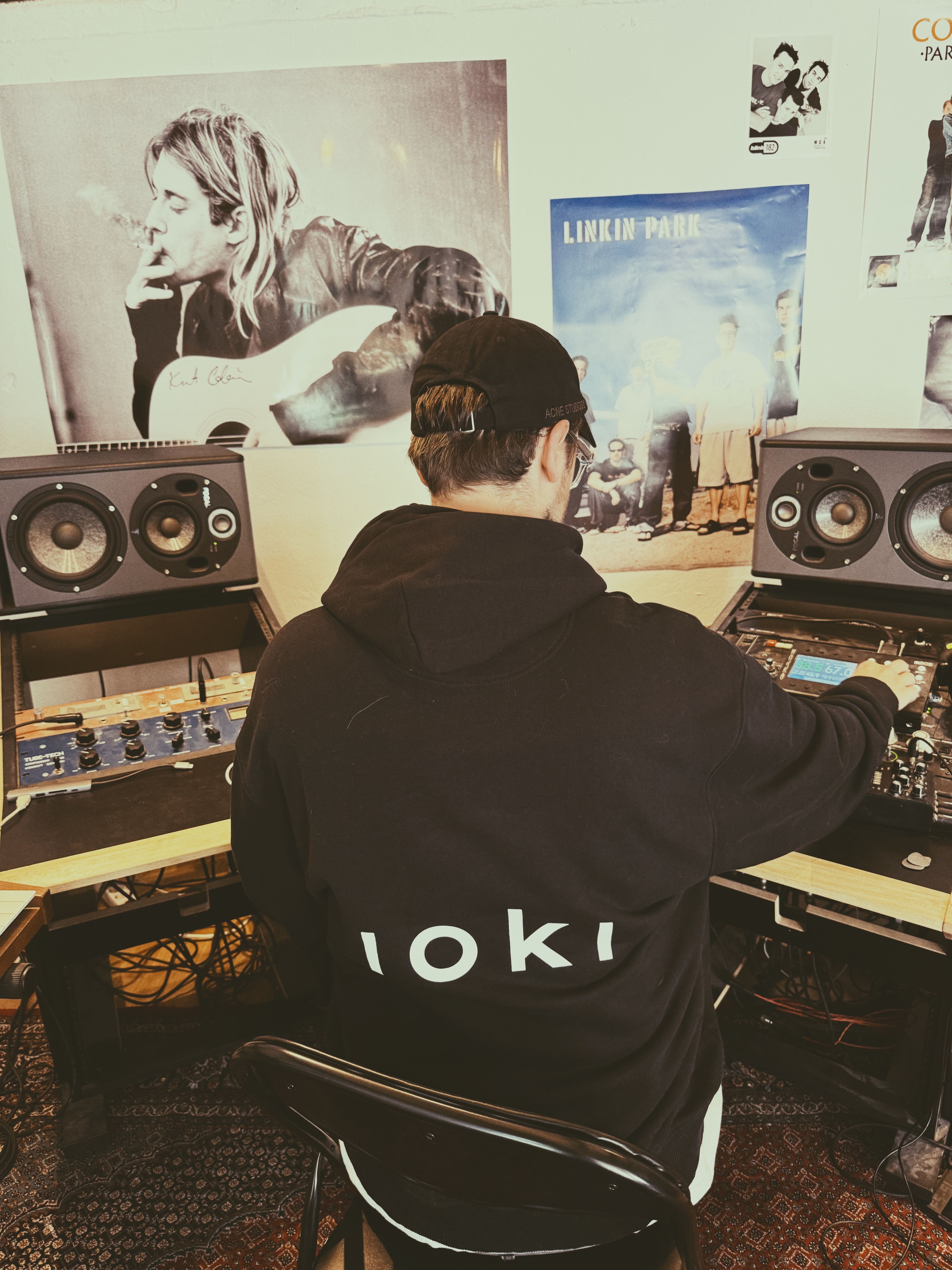
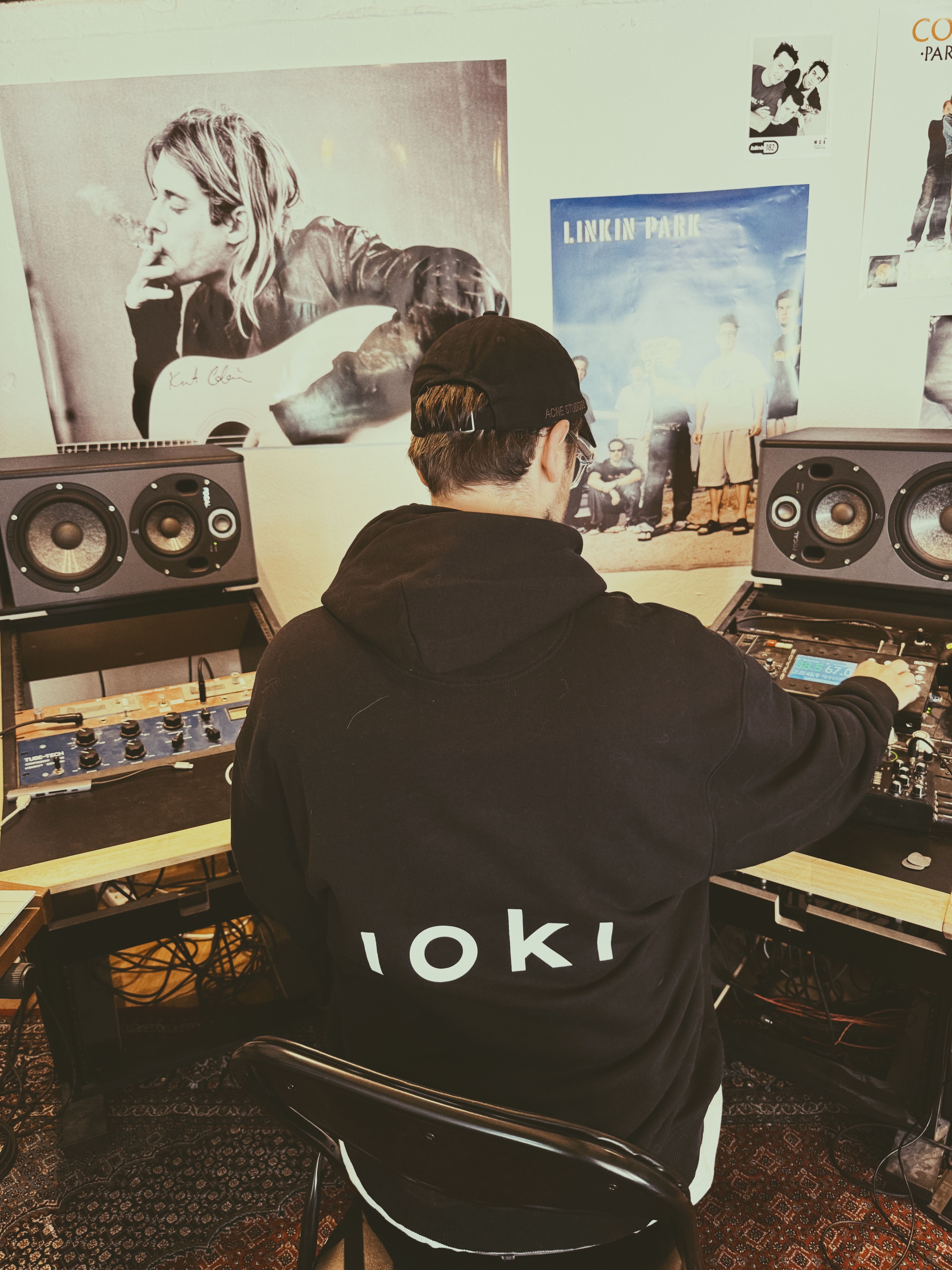
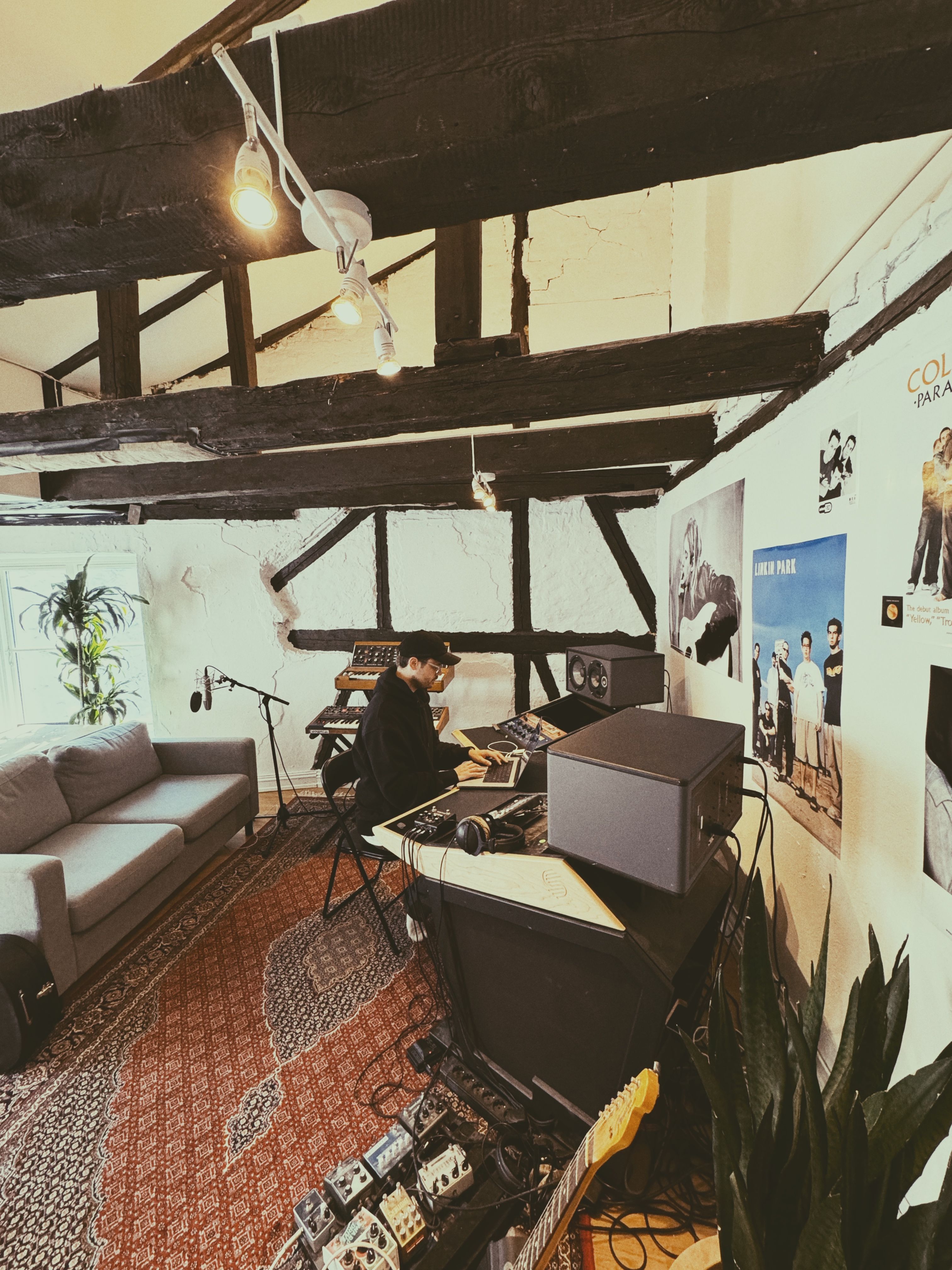
Joki Studio Image (c) the artist
For synths, Sequential Prophet-6 has been by ride or die since it was released, and I can basically make any sound on it with the volume off, cause I know it so well.
[Read our feature on the Sequential Prophet 6]
Serum is also something I use all the time, and is my absolute favorite software synth. In fact, it’s the only soft synth I use for synth sounds. Endless possibilities, and it can sound just like my juno-106 or dx7, but also do crazy sounds that’s not possible to do with the classics. I’ve also made a lot of personal wavetables by sampling my synth park.
And finally my «SSL Compressor» answer: I can absolutely not live without my CL1B for tracking vocals. It’s the goat for vocals.
Rhythm seems a particularly important part of your pieces. Can you talk a bit about what you are looking for in a good beat? How did you shape the rhythm track for “TG4M” with its really cool finger snaps?
It’s funny you say that, cause it absolutely is. BUT - I basically never start with drums or percussion. Metronome with click sound in ableton is my pulse, then I try to compose, program or play the instruments in a way that brings rhythm. If the music feels good without drums, then you know you’re at a good spot. There’s obviously some exceptions to this, cause certain songs might be triggered from a bassline or a drum beat.
Take your “TG4M” example - what gives that song bounce is the pluck pattern and delays. Then when the synths felt good, I made that snap, and tried to combine it with rhythms you wouldnt find in tropical songs.
The drum groove is actually very Stargate - and that was my inspiration as well, to have a new and tropical take on their classic drum patterns.
Some of your pieces have been used on major pop productions. Since your style sits right at the cusp between dance and pop - what makes great pop music, what makes great dance music from your point of view and what's the relationship between the two?
Isn’t dance and pop basically the same? There’s thousands of sub genres of both pop and dance, but in the end, a good pop (or dance - if we’re using broad terms) song is something that makes you feel something.
It doesn’t need to be deeper than «man I really wanna sit in the sun with the lads and have a few pints now».
How did the Britney team get in touch with your material?
Via via via via and then suddenly I found myself working on tons of potential Britney songs back and forth over the internet with the will.i.am (and also darkchild) camp.
What did your contribution for “Tik Tik Boom” concretely consist of and how much did it get changed as part of the process?
I basically played and programmed all the instruments (not drums). The acoustic guitars, monster bass fills, and all synths on the record except the bass in the pre and the plucky synth stuff that plays in the hook on top of the 808s (and that weird pitchy sound which was actually one of the first sounds in the project).
The biggest switch up for that song was then it went from having Lil Wayne to T.I.
What did the experience with “Tik Tik Boom” tell you about the relative importance of songwriting versus producing a beat, or even a fully fleshed-out instrumental?
First of all, to me, there’s no such thing as a fully fleshed-out instrumental you can make before you’ve got vocals. This is because it’s impossible to finish a production without knowing how the main ingredient of the song’s gonna be. Unless it’s certain styles of rap.
That song in particular didn’t really teach me anything about that. But my experience with everything else I’ve been doing says It doesn’t really matter if it’s songwriting on a piano or a music loop or a fully fleshed out beat. It’s all about being in with the right people/teams etc for that in my opinion.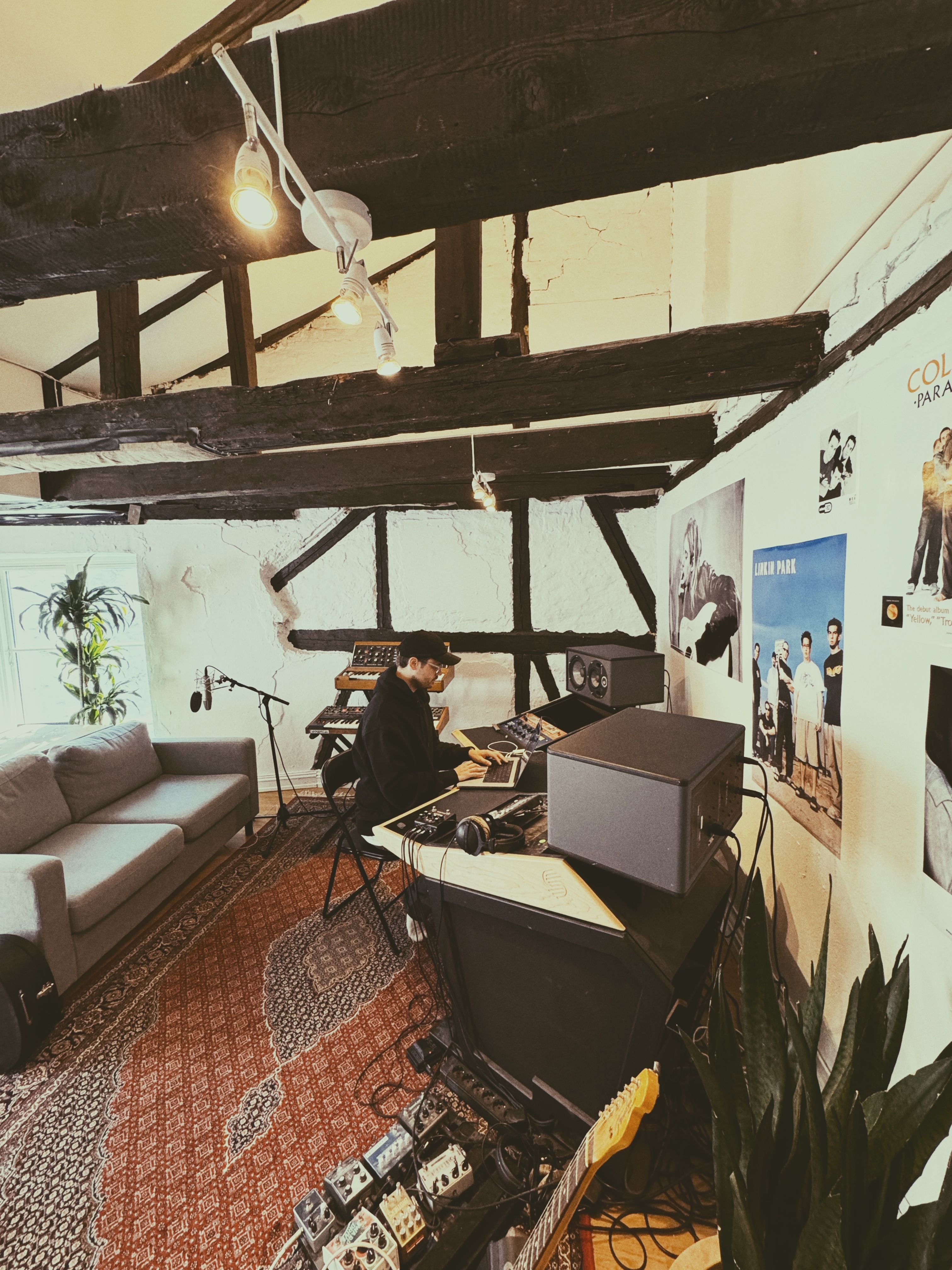
Joki Studio Image (c) the artist
How do you see the relationship between the lyrics, which may be written by someone else but you, and the music? Are you sometimes surprised what people are hearing in your music?
The lyrics should match the music, but in all honesty, I think more phonetically than lyrically. So if someone comes up with a line that’s amazing lyrically but doesn’t sing well, the filler lyric that sounds amazing wins in my opinion.
From your experience with Britney and also the songs you did with Zara Larsson, what decides if a production makes it to the final stages? Are there particular qualities that can be regarded as “success factors”?
I only properly finish the productions when the idea or song is worth it. If the song’s not really good, I’ll trash it, delete everything and start on a new song/production.
If there’s a certain part that got something to it, I’ll save that synth, chord progression or vocal phrase, and bring it back when the time is right for something else.
What’s your take, in the light of your collaborations, on writing by committee? How do the results differ from smaller teams or solo work would you say?
2 heads are smarter and better than 1. Teamwork makes the dream work and all that. When you find someone you work well with, do more stuff together!
Unless you’re Chris Martin and can write a masterpiece like “The Scientist” by yourself, all your best songs will come from bouncing ideas back and forth with your co-writers.
What was the creative process for your two latest singles “buy a castle,” and “tequila libre” like?
They both - especially “tequila libra” - got quite the 90s/00s eurodance influences in them combined with urban music influences, techno / hypertechno and drill. I started with that euro synth lead sound and messed around with stuff I thought would sound cool with it.
“buy a castle” started with the intro guitar (but in a parallel key, yet vocals being the same key as now) and a trap beat that 44phantom had fun with, and ran a few freestyles. I later comped between takes and totally flipped it into buy a castle.
It is often said that there is never anything genuinely “new” in music and these two tracks also very effectively hark back to the sounds of the 90s and 00s. What does originality mean to you?
If original is something that’s never been done before, I don’t think anyone would enjoy it.
I like to experiment with combining different genres and eras to see what feels good and fresh, but I never think about how original or not it is. And personally, I like the nostalgia certain sounds or melodies gives you. You don’t get that feeling if nobody’s heard anything like it before.
What does your own way of working with sound look like? Do you find using presets lazy?
I have quite the arsenal of hardware gear, so some days I’ll connect a synth or mellotron via a ton of different effect pedals (mostly guitar pedals) and just see where it takes me. Other times I just start turning some knobs on a synth and go from there. Or I go into serum and start to twist and turn knobs there.
[Read our feature on the mellotron]
I don’t use a lot of presets, but sometimes I for sure do. I went years without using a single preset (or soft synth), but why limit yourself, especially now when the soft synths are amazing sounding when used right. Presets can be great for get the creative juices going, suddenly there’s a sound that inspires you, and boom just work off that. Maybe you wanna replace it later? Maybe not? Who cares?
I’ve also got hundreds of personal presets where maybe I made a sound I really liked, but then it didnt fit what I was doing, so I saved it as a patch. I also take days where I just make new sounds and save as presets, and also make new drum samples etc. Both in the box and outside the box.
Presets are also great for learning new techniques. I love to see how other people uses a certain plugin or synth, cause regardless of how well you know that plugin or synth, they will probably have slightly different ways of using it than you.
Late producer SOPHIE said: “You have the possibility with electronic music to generate any texture, and any sound. So why would any musician want to limit themselves?” What's your take on that?
SOPHIE was an amazing producer that always pushed the limits with her amazing sound design - and dare I say also maybe the founder of hyper pop as we know it? 2024 wouldn’t have been a brat summer without her, that’s for sure.
I totally agree with that statement. Electronic music is amazing the way it allows you to combine modern digital synths and techniques with old analog classics together in a perfect symphony together with acoustic instruments (if you want that). There’s literally no limit.
Personally I love throwing acoustic instruments like acoustic guitar, upright piano and ethnic instruments into granulator and combine that with a soundscape of analogue synths. All that together with some modern digital (most often serum) sounds