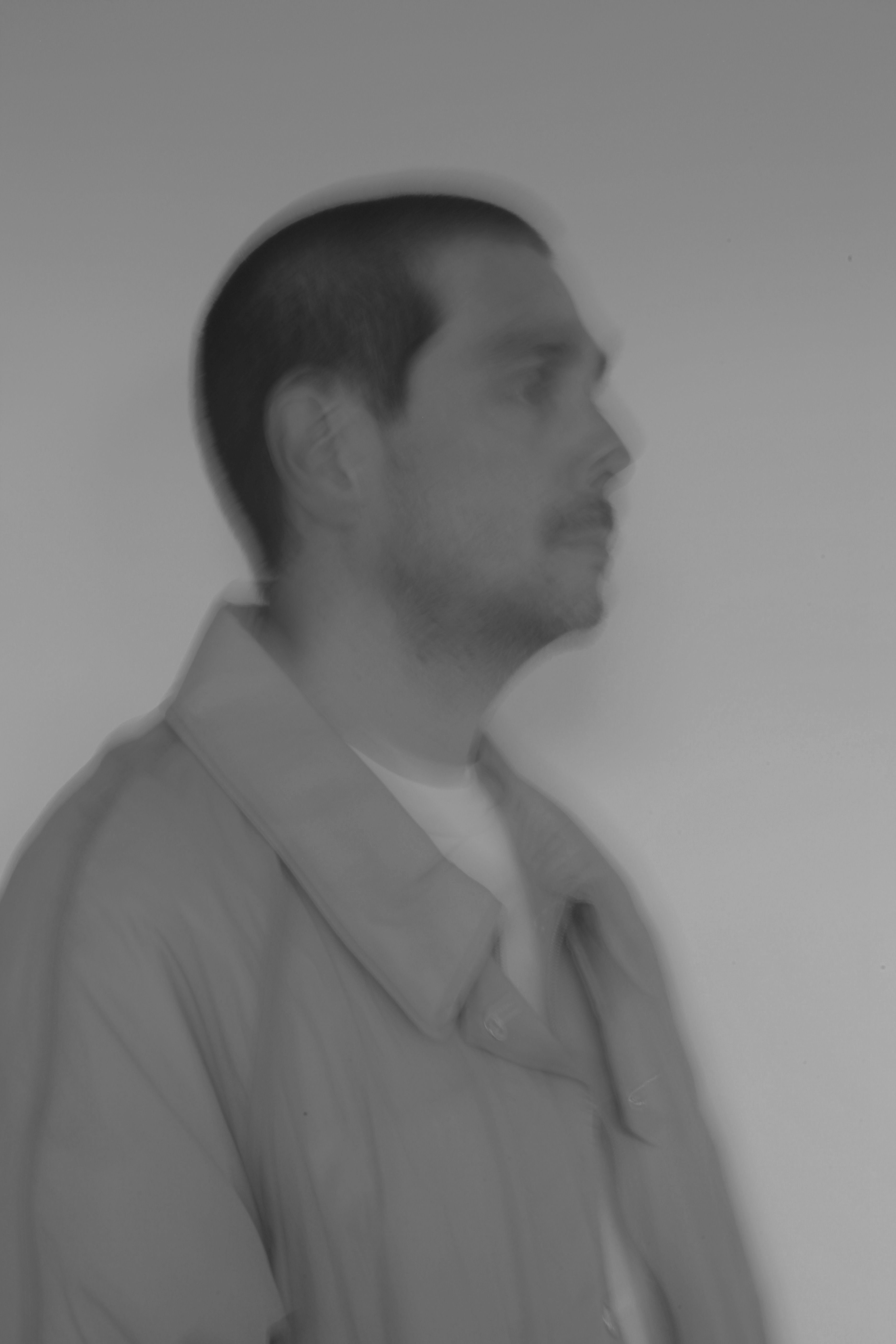
Published
Name: Jon Porras
Nationality: American
Occupation: Sound artist, composer
Current release: John Porras's new album Achlys is out via Shelter Press.
If you enjoyed this John Porras interview and would like to stay up to date with his music, visit his official homepage. He is also on Instagram, and bandcamp.
When I listen to music, I see shapes, objects and colours. What happens in your body when you're listening? Do you listen with your eyes open or closed?
It really depends.
When I’m composing, I try to pay attention to my own physiology. Any sound or movement that triggers a strong physical response (a head-bob, a chill, tapping foot) usually remains in the piece.
How do listening with headphones and listening through a stereo system change your experience of sound and music?
I think headphones can offer a more cerebral, detail-oriented experience.
But a stereo system can engage both the body and mind.
Do you experience strong emotional responses towards certain sounds? If so, what kind of sounds are these and do you have an explanation about the reasons for these responses?
Sasu Ripatti comes to mind right away. I love his work as Vladislav Delay.
I think I’m drawn to work that generates a hybrid of emotions. I recently saw Autechre live and was awestruck; the emotional complexity of that experience was just stunning.
[Read our Sasu Ripatti/Vladislav Delay interview]
There can be sounds which feel highly irritating to us and then there are others we could gladly listen to for hours. Do you have examples for either one or both of these?
Harvest Time by Pharoah Sanders has been on repeat in our home for a few weeks.
Are there everyday places, spaces, or devices which intrigue you by the way they sound? Which are these?
There is a coastal trail nearby that overlooks the Pacific, marked by a few distant buoys. For most of the hike, they are silent.
But at one particular descent, their bells suddenly come into focus, ringing clear; audible only from that exact stretch of the path.
Have you ever been in spaces with extreme sonic characteristics, such as anechoic chambers or caves? What was the experience like?
Not really but I’d be open to it.
What are among your favourite spaces to record and play your music?
An ideal listening experience for my music might be: on a night drive or walk at dusk.
Do music and sound feel “material” to you? Does working with sound feel like you're sculpting or shaping something?
Absolutely, I view my practice as coming back to the canvas every day, chipping away and sculpting bit by bit.
How important is sound for our overall well-being and in how far do you feel the "acoustic health" of a society or environment is reflective of its overall health?
There is a direct link between listening and our nervous system.
Our brains evolved to process sound as both an early-warning system and a foundation for social connection. Embedded in the acoustics of a society are expressions of economic systems, infrastructure decisions and social well-being.
Sound, song, and rhythm are all around us, from animal noises to the waves of the ocean. What, if any, are some of the most moving experiences you've had with these non-human-made sounds?
Most of Achlys was recorded during the winter.
We live near Mt. Tamalpais, and the coastal winds can be really strong during storms. I’d step into the nearby forest at night, feeling the storm’s sub-bass emanating from the ground below.
Many animals communicate through sound. Based either on experience or intuition, do you feel as though interspecies communication is possible and important? Is there a creative element to it, would you say?
Not sure but it’s interesting to think about.
Tinnitus and developing hyperacusis are very real risks for anyone working with sound. Do you take precautions in this regard and if you're suffering from these or similar issues – how do you cope with them?
I really try my best to look after my ears these days.
We can surround us with sound every second of the day. The great pianist Glenn Gould even considered this the ultimate delight. How do you see that yourself and what importance does silence hold?
As delightful as that sounds, lately I feel more open and creative when I protect my attention a bit.
Seth S. Horowitz called hearing the “universal sense” and emphasised that it was more precise and faster than any of our other senses, including vision. How would our world be different if we paid less attention to looks and listened more instead?
Great question. I would probably agree that, compared to seeing, listening may lead to a more holistic understanding.
Our visual world is overflowing with images that are just impressions. Perhaps there are social conflicts that persist because we collectively react to signals when we should be listening to stories.