Published
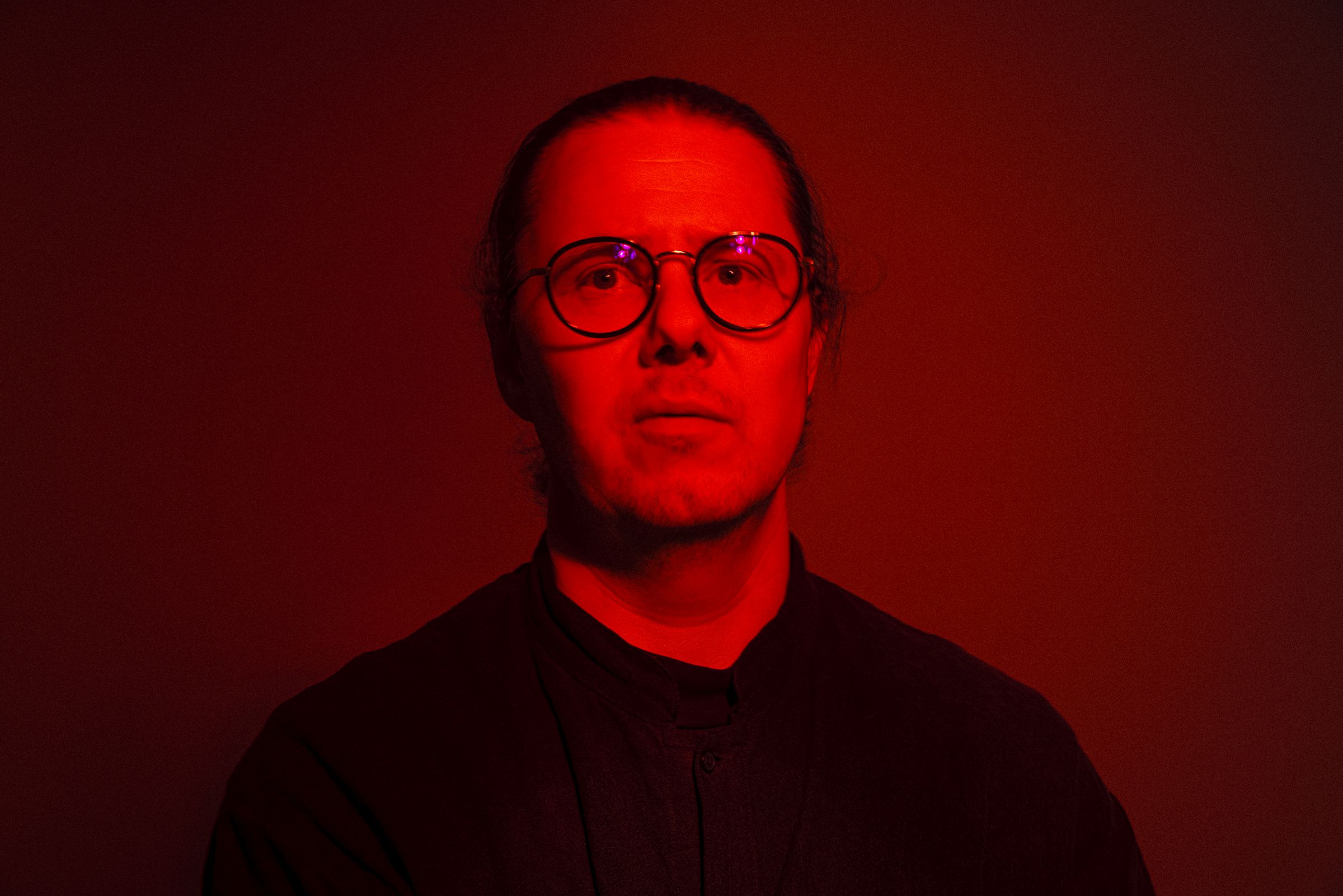
Name: Jonas Howden Sjøvaag
Nationality: Norwegian
Occupation: Drummer, composer, improviser
Current release: Jonas Howden Sjøvaag's new album Spirit of Rain is out via Sphiwreckords.
Recommendations on the topic of sound:
This Is Your Brain on Music by Daniel J. Levitin
Sonic Boom: How Sound Transforms the Way We Think, Feel, and Buy by Joel Beckerman
The Sonic Boom: A Guide to Sound Art by Christoph Cox
Acoustic Territories: Sound Culture and Everyday Life by Brandon LaBelle
Websites: Sound on Sound; ECM Records
Articles: "The Search for Roy DuNann"; "The Future of Music: A New Philosophy of Sound" by David Kusek and Gerd Leonhard
If you enjoyed this Jonas Howden Sjøvaag interview and would like to know more about his music, visit his official homepage. He is also on Instagram, and Facebook.
For a deeper dive, read our earlier conversation with Jonas about Listening to Headphones vs Speakers and Great Sounding Albums.
When I listen to music, I see shapes, objects and colours. What happens in your body when you're listening? Do you listen with your eyes open or closed?
It depends a lot on what I’m listening to.
Sometimes I can get a feeling of certain brush strokes, or textures related to painting and visual arts, but as a musician my strongest connection is the instruments being used. More often than not I see, and focus on, the musicality of it, how the playing is done, what the compositions are like, etc etc. I’m in work-mode, in short, and there are only a few albums that I listen to for the sake of musical pleasure alone.
So ... boring answer right off the bat I’m afraid. I mostly hear the music, and that is an experience that, to me, holds it’s own.
There can be sounds which feel highly irritating to us and then there are others we could gladly listen to for hours. Do you have examples for either one or both of these?
Not really, I think it’s mostly about context, not about the sound itself.
Are there everyday places, spaces, or devices which intrigue you by the way they sound? Which are these?
I like the seemingly silent quality of nature, where, when sound stops, it opens up for another kind of listening in which the body and the brain seems to slow down to be able to pay attention to the sounds that are actually there. No surroundings are ever completely silent, it just takes a bit of effort to acknowledge what’s available.
So, my answer is undisturbed nature. Forests, islands, mountains. Why people choose to occupy these areas with noise-canceling earpieces and a playlist going is beyond me, but ... each to his own.
Have you ever been in spaces with extreme sonic characteristics, such as anechoic chambers or caves? What was the experience like?
I haven’t, actually, but I’d like to. No experience to share, unfortunately.
What are among your favourite spaces to record and play your music?
Depends on what I’m playing. For electronic music that lives inside the computer, I don’t need more than a working area where I can place my gear, put on my headset, and start.
For acoustical recordings, however, it’s a bit different. After having recorded a few albums in several different locations, one very practical ability to have, in my opinion, is to be able to adapt to wherever you are, and make your instrument sound good in that room. It saves a ton of work for everybody, but it’s also quite difficult.
Thinking like that, any room that doesn’t have especially crap acoustics would be fine, but I mean ... I like to play in my own studio, because I know the sound of it well. I also like rooms similar to it, places that have a little sound of its own, where the response is well balanced, and where a good engineer is present and capable of working the sound in a good way.
Do music and sound feel “material” to you? Does working with sound feel like you’re sculpting or shaping something?
Funny, you should ask. I’m currently displaying an installation at the Dutch Design Week, it’s a piece where microtonally tuned steel rods are being hit by solenoids. I made it from scratch, and although I’m hesitant to say it produces “music”, it certainly plings and plongs quite happily. It is also very sculpted and shaped, both musically and physically.
Also, when I mix or master, or produce, for that matter, all you do is sculpting or shaping. You take away something, to allow something else to shine through, or you emphasize something, to elaborate on a specific area, topic or emotion. I do woodworking a lot too, and I paint, and as the production process is relatable between these fields, the same words and descriptions can be used.
Further, physically speaking, music and sound are undoubtedly material. They are physical events starting on quantum level, and the magic of it is that the question sort of points towards the fact that it is our interpretation that makes it music, not the physical event itself.
In that aspect, it does have a meta-quality to it. But as mentioned, for me, it is very much material, actual, and both shapable and sculptable.
Sound, song, and rhythm are all around us, from animal noises to the waves of the ocean. What, if any, are some of the most moving experiences you’ve had with these non-human-made sounds?
I grew up on an island, and I’ve always had a boat nearby. I guess the only story I have in this respect is when I was in my thirties, I was on a trip overnight, anchoring on a small island pretty far out, where I was the only person. I like doing this still, but at that particular time I had planned to sit in the semi-dark (this was late August, I think, during high summer it really doesn’t get dark in Norway) listening to a piece of music imagining this would be a great way to experience it.
But it wasn’t. Everything that came out of my little speaker was in the way and unnecessary, disturbing the sound of my surroundings, the waves, the air, the feeling you get lying on your back staring into a black sky and the universe behind it.
Since then I’ve never tried to listen to music like that. When I’m out in nature, walking, riding, boating or whatever, I turn everything off and just experience my surroundings through audible and visible input.
Many animals communicate through sound. Based either on experience or intuition, do you feel as though interspecies communication is possible and important? Is there a creative element to it, would you say?
In short: possible, yes, important … depends on the application (again).
If I want to create a fence keeping something out, I could probably do it by firing off a siren with a certain frequency that I know my target dislikes. It has been done in shops, for instance, keeping teenagers away by playing high pitched tones that only those under 20 can hear. Probably works against birds too, or cows, or whatever animal you want to get rid of.
Apart from that, as my field is music, I can’t say I see any importance to this. My music, and a lot of other people’s music too, requires a want to understand and listen to it and an ability to take part emotionally. If that is not present, then ... in my view it’s not a musical experience, and thus, to me, just a function of sound.
My view is that this is generally always the case with animals, they will not get an emotional reward from listening to my music. But again, many humans do not get an emotional reward from it either, so who knows … all I can say is that animals are not my target audience.
Tinnitus and developing hyperacusis are very real risks for anyone working with sound. Do you take precautions in this regard and if you're suffering from these or similar issues – how do you cope with them?
I have always been concerned, and have never really done anything except moving away if things get too loud. I’m a drummer, after all, so I’m used to a bit of this and that.
No problems as of now, halfway through my life, and I hope to stay in the clear for years to come.
We can surround us with sound every second of the day. The great pianist Glenn Gould even considered this the ultimate delight. How do you see that yourself and what importance does silence hold?
We are surrounded like that every second of the day. Nowadays, it’s very much a conscious choice to turn the music off, or to keep sound out. An interesting notion is how people buy noise-cancelling cans, and then fill their ears and heads with another kind of sound.
As mentioned before, I prefer solitary nature, and I need it from time to time. I think everybody does. It’s not completely silent there either, but to me it feels like it allows you to think, to take a step back, which better enables you to reflect a little. This is important practice.
Continuous sound is a shield, sort of, something to keep the self-reflective brain at bay. Silence is the opposite, it allows for sorting through it all, which isn’t always pleasant.
Seth S. Horowitz called hearing the “universal sense” and emphasised that it was more precise and faster than any of our other senses, including vision. How would our world be different if we paid less attention to looks and listened more instead?
I do not think it’s a good idea to separate like this, sound is tied to visuals, and visuals are tied to sound. I don’t know Horowitz's work, but it seems strange to argue that it is more precise and faster than other senses. Sound is slower than light, for instance. And explaining something with sound, is more imprecise than using words.
Like everything else, it comes down to what needs to be done. It is indeed universal in the sense that you can go anywhere in the world and identify fear, joy or sorrow by sound only.
Being more aware of this might make us communicate faster and better with our surroundings, for instance, and also, being aware of listening as a state of being, certainly would improve many people’s lives and everyday wellbeing.