Published
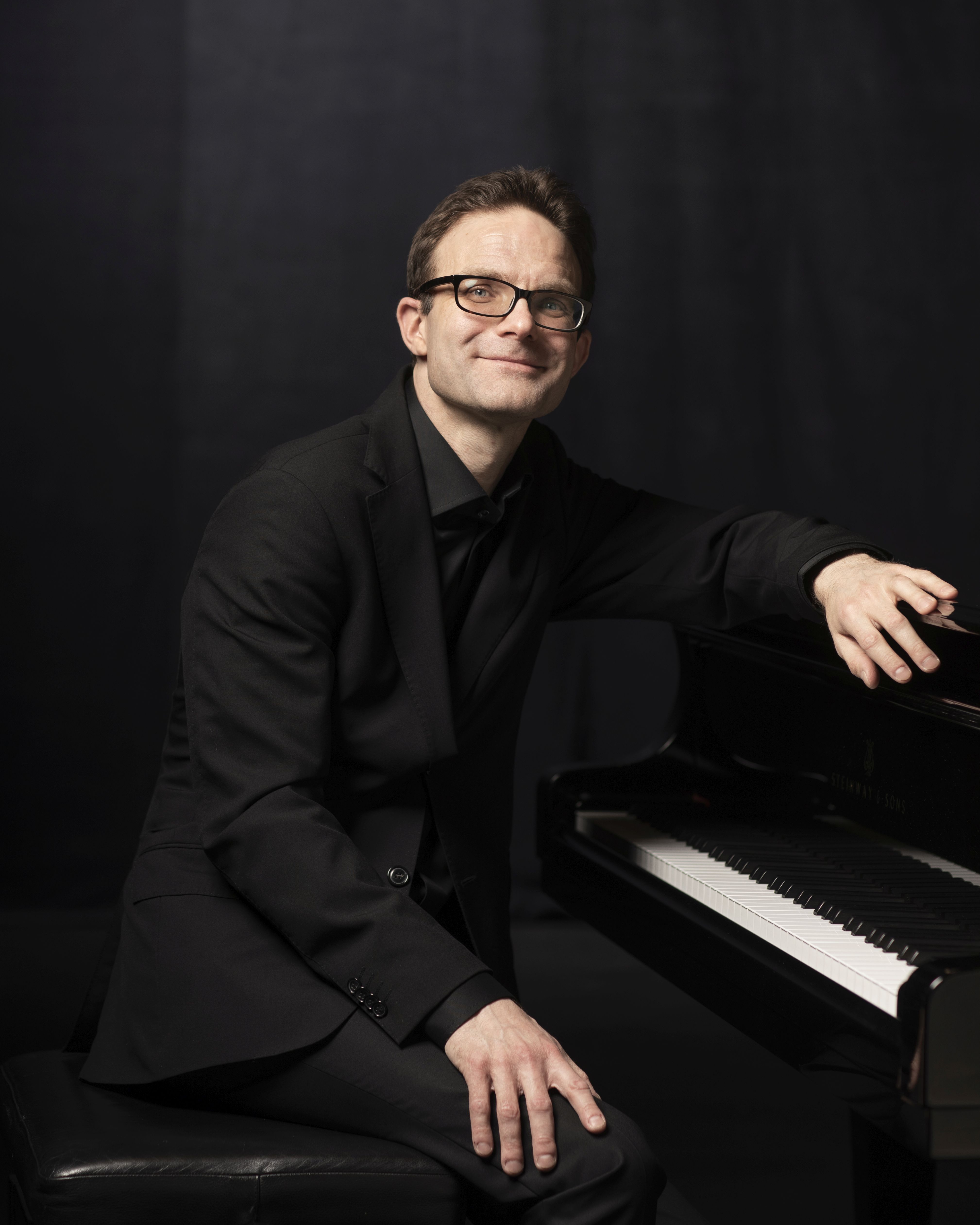
Name: Jonas Olsson
Nationality: Swedish
Occupation: Pianist
Current release: Jonas Olsson's new album of Helmut Lachenmann's Complete Piano Works is out via thanatosis.
If you enjoyed this Jonas Olsson interview and would like to stay up to date with his music, and upcoming live dates visit him on Facebook.
When did you first start getting interested in musical interpretation?
I see interpretation as unavoidable - one cannot not interpret - and deeply embedded in the whole process. It’s most often a starting point - how do I understand this music, how can I make this clear to my listeners?
Because this is what an interpreter is, literally: a mediator and translator, between potentially hostile tribes without a common language. And I definitely don’t agree with the common view of interpretation as some kind of magic sauce to be added to a literal reading of the score to make it more “interesting”.
Interpretation is to me a mostly intuitive process - at least the thousands of small decisions concerning phrasing, voicing etc - that cannot be separated from execution or realisation. However, intuition needs a very high level of expertise to be useful, and it needs the resistance of deep reading - if I just routinely add some of my own habits, based on what I’m already familiar with, nothing new or interesting can come out of it.
Every artist needs to continuously question their own habits and prejudices. Which parts of whatever artistic tradition are actually valuable, and which are just accumulations of bad habits?
Which artists, approaches, albums or performances captured your imagination in the beginning when it comes to the art of interpretation?
This is the place for lists? Okay, I’ll go ahead … among pianists, Sergei Rachmaninoff, Dinu Lipatti, Alfred Brendel. And I have to include my own teacher Pierre-Laurent Aimard, for deep interpretations of (especially, but not limited to) contemporary works other pianists would be happy to just stumble through.
Conductors: Carlos Kleiber, Claudio Abbado and Pierre Boulez (and I’m slowly rediscovering Karajan).
Generally speaking, the interpretations that move me the most are the ones that let me experience the music in all its depth and detail without interference. "Interpretations" that loudly say "listen to me" can be interesting to hear once, but not twice.
The horizontal dimension matters a lot to me, the ability of the interpreter to carry the music from one paragraph to the next, without getting lost chasing butterflies. Of course also attention to detail, and a refined sense of sonority.
Are there examples for interpretations that were entirely surprising to you personally and yet completely convincing? What do you personally enjoy about the act of interpretation? Are you finding that this sense of enjoyment is changing over time?
I very much enjoy surprises and learning/discovering something new. As long as an interpretation is based on deep reading and understanding, I can accept very divergent approaches.
This is something that has changed over time - when I was younger I had much narrower ideas of what a certain piece should sound like. As I’m expanding my horizons, I’m enjoying a greater range of interpretative approaches.
How much creativity is there in the act of interpretation? How much of your own personality enters the process?
Everything, it’s my touch, my voicings, my phrasings, my textures, my characterisations, my understanding of structures and the content and meaning of the piece.
When you have the score in front of you, what's your take on taking things literally, correcting possible mistakes, taking into account historical aspects etc?
Any understanding of a piece should ideally be based on a deep reading that goes far beyond literal reading.
It should encompass all aspects, including placing the work in its context, historical and otherwise. Obviously, paying attention to details and “correctness”, not as an end in itself, but to make the music as vivid as possible.
All living composers I know treat dynamics and articulation as an integral part of the musical structure - I see no reason why those should be regarded as optional when playing music by dead composers.
One of the key phrases often used with regards to interpretation are the “composer's intentions”. What is your own perspective on this topic and its relevance for your own interpretations?
I work with composers all the time - they invite me to their house, cook for me, I play for them, we discuss things - it would be horrible of me not to respect their work.
I try to have this process in mind with dead composers as well. I don't put myself first, and I certainly don't think that I know better than the composer how to compose - although I sometimes know more about playing the piano than the composer.
I am infinitely fascinated by radically different or even “wrong” interpretations – the tempi of Toscanini, Kempff's Goldberg Variations. Are there extreme interpretations that you enjoy as well? Do you personally draw a line – and if so, what happens when we cross it?
Sorry, I have to draw the line at Kempff’s Goldbergs, to me that's just a complete misunderstanding of the whole anatomy of Bach’s music, of line, harmony, polyphony, ornament, texture etc. Toscanini’s tempi are fine, by the way.
To me, many “unconventional”, "genius" interpretations look like simple misunderstandings, plus some plain old stubbornness - even brilliant people are wrong sometimes, and they will often be confident enough to insist on being wrong.
As for bringing in interpretative approaches from a different tradition, it can occasionally be illuminating, but it is just as often a sign of laziness and lack of curiosity on the part of the interpreter. As interpreters, we have to step out of our comfort zones every time.
With regards to the live situation, what role do the audience and the performance space play for your interpretation?
The role of the audience, or specifically the communication can be overestimated - it is mostly a one-way process.
However, the fact that everything has to be as clear and convincing as possible at the first attempt creates a special kind of focus. It can be helpful or not, but it’s certainly different.
But historically, the practice of playing in large, dark spaces is an anomaly.
Some works seem to attract more artists to add their interpretation to it than others; some seem to even encourage wildly different interpretations. From your experience, what is it about these works that gives them this magnetic pull?
With over-familiar pieces, a certain level of shock might be required to wake concertgoers up. On the other hand, rarely played pieces, whether old or new, that do not have an established performance tradition can have even more divergent interpretations.
The music I’m most attracted to, the music which is worth playing repeatedly, is that which, to borrow an old phrase, is always better than it can be played.
For me, that also means not putting my own whims first - but one could of course also argue that these works are indestructible and can withstand any number of different approaches.
Part of the intrigue of interpretations is that the process is usually endless. Are there, vice versa, interpretations that feel definitive to you?
Interpretations can achieve a limited permanence in the age of technological reproducibility, but definitiveness, no. It is a process of constant exploration and incremental improvement. And sometimes a perfectly respectable way of making music simply goes out of fashion.
The goals of interpretative excellence are lofty and almost unachievable - as soon as I put something into the world, I expose myself to judgement, and measuring up to my own pronouncements.
Anyway, my new alnum is my humble offering, dedicated to one of the greatest living composers on his 90th birthday.