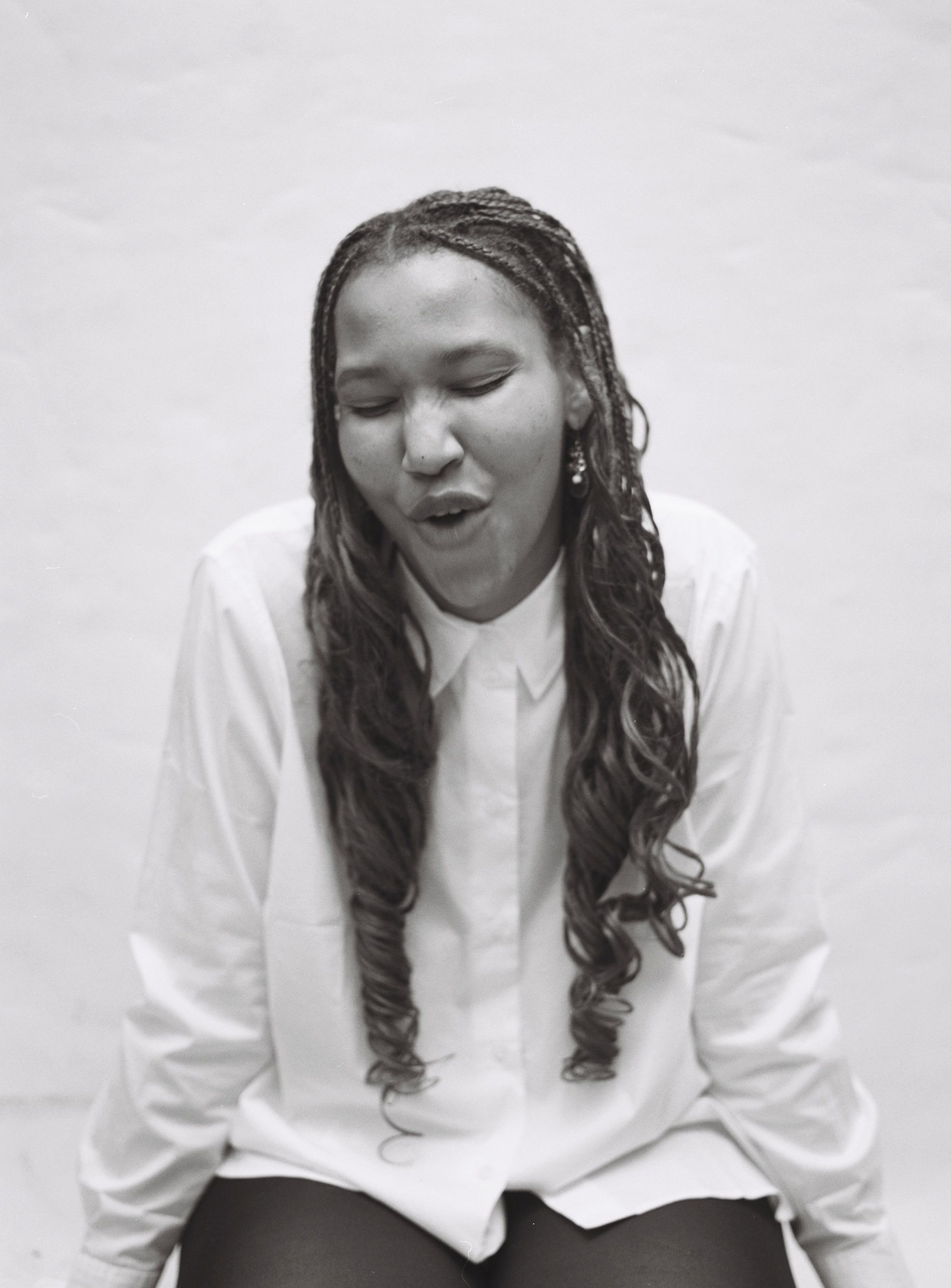
Published
Name: Jordan Patterson
Occupation: Singer, songwriter, producer
Nationality: American
Current release: Jordan Patterson's new album The Hermit is out via Many Hats.
Recommendations for Los Angeles, USA: Nat’s Early Bite in Van Nuys. The pancakes and chilaquiles are phenomenal. Angels Tacos in Glassell Park. Get the Al Pastor.
If you enjoyed this Jordan Patterson interview and would like to know more about her music and upcoming live dates, visit her on Instagram, and bandcamp.
Where does the impulse to create something come from for you? What role do often-quoted sources of inspiration like dreams, other forms of art, personal relationships, politics etc play?
Initially, making music was a way to heal. Now, the impulse is always changing.
My relationships fuel a lot of my music. I also have really vivid dreams that feel like alternate universes. They are usually filled with the cast of my life, doing far stranger things than in real life.
They usually possess powers and a will to survive the apocalypse.
For you to get started, do there need to be concrete ideas – or what some have called a 'visualisation' of the finished work? What does the balance between planning and chance look like for you?
Not at all when working on a single song. When I’m working on a body of work, I listen to each song with an understanding that it's functioning as a part of a unit.
I’m heavy on tracklist order but besides that, chance is my best friend.
Is there a preparation phase for your process? Do you require your tools to be laid out in a particular way, for example, do you need to do 'research' or create 'early versions'?
I love Ticonderoga pencils. I usually write at home or jot down notes in my notebook throughout the day or on my phone. I let the force take me.
I also actively do research. I’ve been researching Mayan civilization and Nick Cave soundsuits. I dropped out of school so I like to create my own curriculum for the school of life.
Do you have certain rituals to get you into the right mindset for creating? What role do certain foods or stimulants like coffee, lighting, scents, exercise or reading poetry play?
I like my home to be pretty peaceful. Not too many clothes hanging around.
I’m pretty active. It clears my mind.
For The Hermit, what did you start with? If there were conceptual considerations, what were they?
I started with some songs that I had written prior to getting into the studio.
They were all just very emotional songs that needed some more structure.
Tell me a bit about the way the new material developed and gradually took its final form, please.
It developed quite naturally. Every song came about like magic really. “Hey Mama” was the earliest song written that ended up on the record.
Songs like “Right Person, Wrong Time,” “The Sky,” and “I Can See the Mountains from Here” were written during the process of recording.
They seemed like little orbs that landed in my pocket that expressed exactly how I was feeling or what I was trying to say.
I took every song to Eric and Jacob and we fleshed it out from there, theorizing the arrangement, the players we needed, and what the song was really asking for.
What makes lyrics good in your opinion? What are your own ambitions and challenges in this regard?
A good lyric is one that makes you feel like you’ve been punched in the chest a million times.
Sometimes if it’s embarrassing, that means it's true and you’ve done that rare thing where you say exactly what you mean rather than the idea based off of what you mean. I hope that makes sense.
That’s the challenge: getting to that point consistently.
Many writers have claimed that as soon as they enter into the process, certain aspects of the narrative are out of their hands. Do you like to keep strict control or is there a sense of following things where they lead you?
When it comes to writing, whatever ends up on my paper is supposed to be there. I might change the order of some things if I see where I’m going.
As for an album or EP, in the past I found the narrative of the entire piece after the fact. I think now I’m using songs as blocks to build a castle.
There are many descriptions of the creative state. How would you describe it for you personally? Is there an element of spirituality to what you do?
I pray a lot. I pray for protection and clarity.
Music and spirit are equally ephemeral as they are tangible. You have it in your hands in one moment and then it's gone just as quickly.
But it's the knowing that your hands are worthy that you keep foraging.
Once a piece is finished, how important is it for you to let it lie and evaluate it later on? How much improvement and refinement do you personally allow until you're satisfied with a piece?
I write a verse on a Monday and then a chorus on a Friday and then complete the song a month later. Sometimes I write a full song in 25 minutes.
I’ll always go back, but very rarely if it comes together in one sitting, that song is meant to be that way and I don't touch it. If it takes time, I know I’m working with heavy metal and I need time to become stronger or find new parts.
Something is done when you say so. I try not to dwell. There are more songs in the sea. It can be really hard, though. Satisfaction and complacency live really close to each other for me. Knowing when to let go is a practice, but so is digging deeper.
I’m trying to become more disciplined. “God” started as a journal entry. The entire first verse is a letter I was writing to myself. It’s in that order too.
I kept on writing, understanding that maybe these words could be sung and I finished it in a few hours.
How do you think the meaning, or effect of an individual piece is enhanced, clarified or possibly contrasted by the EPs, or albums it is part of? Does each piece, for example, need to be consistent with the larger whole?
I believe that everything I make is consistent with the larger whole because that larger whole is me. Everytime I write something new, it’s just adding to the world I’m creating.
It doesn't have to make sense to everyone else, but it makes sense to me.
In terms of what they contribute to a song, what is the balance between the composition and the arrangement (including production, mixing and mastering)?
I always want the original composition to shine through. Arrangement is so important.
Timing is everything to me, especially how the sonic landscape plays into the narrative.
Music and the accompanying artwork are often closely related. Can you talk about this a little bit for your current project and the relationship that images and sounds have for you in general?
Well, I’m a visual learner so I need visual references for most things in life. Artwork is typically a thought that happens soon after the musical work is “finished.”
The cover for The Hermit is a portrait of myself taken by my dear friend Lia Elms. When we met in college, I told her, “You’re going to take the cover of my first legit album.” And now we are here.
Most of the images are photos that Lia or my friend Bennett Copeland have taken. They are the two people that I feel so comfortable in front of a camera with and this record feels like that same expansion happening in front of that lens.
After finishing a piece or album and releasing something into the world, there can be a sense of emptiness. Can you relate to this – and how do you return to the state of creativity after experiencing it?
Typically yes, but this record has been done for two and a half years.
I’ve made two records in the time since so I’m over the moon this is out in the world.
Creativity can reach many different corners of our lives. Do you personally feel as though writing a piece of music is inherently different from something like making a great cup of coffee? What do you express through music that you couldn't or wouldn't in more 'mundane' tasks?
All life is music. It will end and someone else will then be given time to sing their tune.
I choose to see everything I do in my life as a sculpture and as a dance. Nothing is mundane to me. I take pride in washing my hair, painting my toes, or doing my laundry. That shit is important.
Taking care of yourself is as much of a practice as music is. Not self care, but life force energy care. I hope this makes sense.