Published
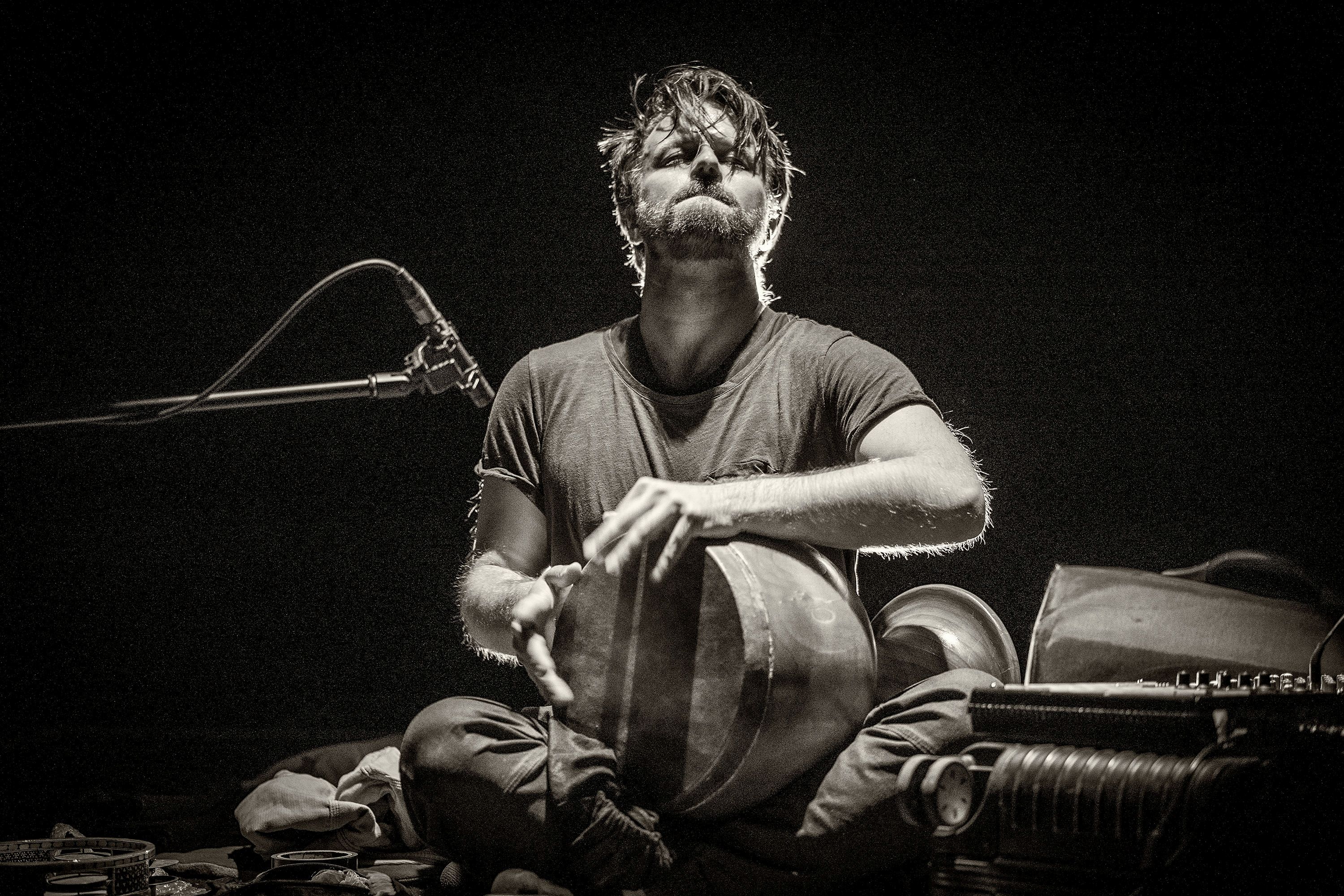
Name: Joss Turnbull
Nationality: German
Occupation: Percussionist, composer, improviser, sound artist
Current Release: Joss Turnbull's new album Turmoil is out via Boomslang.
Current events: Catch Joss perform live at one of these gigs:
02.08.2025 Chemnitz, Capital of Culture, Begehungen, SOLO
09.08.2025 Bezau, Austria, bezau beats festival, SOLO
Recommendation for Berlin, Germany: Check out the small venues. There's a calendar at echtzeitmusik.de with interesting shows.
If you enjoyed this Joss Turnbull interview and would like to know more about his music, visit his official homepage. He is also on Instagram, Soundcloud, and bandcamp.
When it comes to experiencing the sensation of “energy” as as a listener, which albums, performances, and artists come to mind?
Well, I think the sensation of energy can be experienced through any kind of medium, but live performance is certainly a very direct and real way of sharing it. It comes down to how you're involved as a listener in the artistic expression of the performer.
One artist who certainly draws me in completely is Stian Westerhus — both solo and in duo with Sidsel Endresen.
There can be many different kinds of energy in art – soft, harsh, healing, aggressive, uplifting and many more. Which do you tend to feel drawn to most?
Yes, there can be many different kinds of energy, but I think at the core it's about revealing yourself. It's about being true to yourself and to the music you want to express.
There's a kind of honesty that transforms the genre or style into a pure force and simple presence. This can be perceived as soft, harsh, healing, aggressive, and uplifting all at once — because it contains it all.
To me the path to that kind of presence often leads through the physicality of the performer. That's why I became interested in working with a boxer (WE IN A BOX) and recorded an album in duet called Gloves and Hands. It connects to the idea that energy, presence, and honesty are deeply linked to physicality.
I have had a hard time explaining that listening to death metal calms me down. When you listen to a song with a particular energy, does it tend to fill you with the same energy – or are there “paradoxical” effects?
Yes, I can relate to that. Maybe when you find authenticity in music — no matter the genre — you can allow yourself to feel whatever feelings the music evokes. That can be calming even if the music is provoking.
These days, handling aggression can be tough, as there aren't many safe spaces in society where you can express it fully. So it can be a relief to find a place for that anger in a cultivated, accepted art form.
In as far as it plays a role for the music you like listening to or making, what role do words and the voice of a vocalist play for the transmission of energy?
Well, I'm not so much into words. This applies to any art form — for example, if movies are filled with nonstop talking, I easily get lost.
But I do like the voice as an instrument; it's a very direct form of expression. That's why I mumble, whisper, and talk gibberish on some of the tracks on my new record Turmoil, especially in the piece "things I cant talk about" or "bottled."
When it comes to experiencing the sensation of “energy” as as a creator, how would you describe the physical sensation of experiencing this energy? [Where do you feel it, do you have a visual sensation/representation, is there a sense of release or a build-up of tension etc …]
Yes, there's definitely a build-up — the joy and anticipation of it. The best thing is if I don't think of it, eventually I don't even notice how my body naturally takes over, and I simply become whatever comes out musically and physically.
It's hard to describe that state, because in a way you're fully immersed in what you're doing, but at the same time also distant and detached. There's a sweet spot where presence and energy take over and guide the performance.
When it comes to composing / songwriting, are you finding that spontaneity and just a few takes tend to capture energy best? Or does honing a piece bring you closer to that goal?
For Turmoil, I took an idea and played with it. I might try it 10–20 times, and one of the takes just feels right. Quite often it's one of the first takes.
A good example for that would be “chasing the quite” or “lets dance somewhere else” — both are first-take recordings, just edited for length.
How much of the energy of your own music, would you say, is already part of the composition, how much of it is the result of the recording process?
Most of it comes from the recording process, since much of it is improvised.
But there are also tracks like “I like to disintegrate” or “stay,” where the build-up and energy are already part of the composition.
For your current release, what kind of energy were you looking for?
It's about uncertainty, pressure, and tension. There's a lot of bottled-up anger that feels unsafe of being expressed, articulated, or shown. My tracks hold the struggle of these emotions and express them through percussion, electronics, and vocal experiments.
As a counterpart, there's also the feeling of giving up or becoming lethargic — finding a strange, lonely peace in it — which is the foundation of the track “all I ever heard.”
How do you capture the energy you want in the studio?
I approach it the same way as on stage.
I try, I improvise, I jump, I listen, it's challenging, it's direct, I struggle — and I try some more.
What role do factors like volume, effects like distortion, amplification, and production in general for in terms of creating the energy you want?
Since I record on my own, I have time to find the energy and build a space that feels good.
I play with amps so I'm in an immersive sonic and physical space — and yes, that has a lot to do with volume.
In terms of energy, what changes when you're performing live on stage, with an audience present, compared to the recording stage?
Since the music on Turmoil is quite personal and revealing, I often feel more relaxed when I'm alone.
The challenge is to find that same trust and comfort when people are watching.
How does the presence of the audience and your interaction with it change the energy of the music and how would you describe the creative interaction with listeners during a gig?
Sometimes an audience can make me feel stiff, which makes the music less natural.
The greatest thing is when you allow yourself to let go of mental control, and the audience is simply there, witnessing.
What kind of feedback have you received from listeners or concert audiences in terms of the experience that your music and/or performances have had on them?
When that state of fearlessness and openness is achieved, it seems to become an experience for everyone in the room. It feels like we're sitting in the same boat.
People reflect on this and share how it felt from their seat on the ship.
Would you say that you prefer to stay in control to be able to shape the energy or do you surrender to it and allow the music to take over? Who, ultimately has control during a live performance?
Who ultimately has control — that's a good question. I think it's a mixture.
There's the controlling mind that observes, comments, and judges, and then there's the one who simply plays. Something more arises when those two are in balance.
In a live performance, I'm in a constant process with these parts of myself. When equilibrium is found, a kind of trance can happen — that sweet spot where you forget yourself, and presence, the body, simplicity, and energy take over. You're then following.
The best way to practice this is by putting yourself out there in that vulnerable space in front of an audience.
The energy that music is able to generate can sometimes be overwhelming. How, do you think, can artists make use of this energy to bring about change in the world?
Wow … Music, and especially improvised music, suggests a way of working and living that's anti-reproduction, anti-branding, anti-product, and anti-profit — so in a way, anti-capitalist.
It's quite a challenge to survive as an improv musician in the system we live in. In that sense, it's deeply political, standing in a very different place from the system itself.
Art is that one thing no one needs, yet everyone needs most — the thing that makes no sense, and therefore makes the most sense of all. This paradox touches listeners.