

Name: Judith Berkson
Nationality: American
Occupation: Composer, vocalist, songwriter
Current release: Judith Berkson teams up with Trevor Dunn, and Gerald Cleaver for Thee They Thy, out via ECM.
Recommendations for LA, USA: 2220 Arts and Archive is an amazing venue in LA which has music, poetry, and film. Great shows with bands and musicians on the more experimental side. It’s amazing it exists in LA or for that matter any city.
[Read our Trevor Dunn interview]
[Read our Trevor Dunn interview about improvisation]
If you enjoyed this Judith Berkson interview and would like to know more about her music and upcoming live dates, visit her official homepage. She is also on Instagram, and Facebook.
When did you first consciously start getting interested in singing? What was your first performance as a singer on stage or in the studio and what was the experience like?
My father was my first teacher. He is a cantor in the temple and taught me to sing the chants and blessings starting from when I was 3 or 4 years old.
I also performed with him and my family as a group, so from when I was 4-10 there was a lot rehearsing and singing and several performances a year. He was a task master.
If you're also playing other instruments, how does the expressive potential of these compare to your own voice?
Voice, I believe, is the hardest instrument because it is so exposed there is no hiding. There is nothing in between you and the sound. It is also the most direct and anyone can utilize it and feels nice – especially alone or in the shower!
I sing because I’ve done it the longest and it has become useful to translate my aesthetics and ideas. I prefer not to think of it as expressing my emotions but to use it as a conduit for ideas or the spirit or a memory, or a character, or the past, something other than myself. That way I can let go.
Singing is an integral part of all cultures, and traditions. Which of these do you draw from – and why?
I am inspired by many traditions in voice.
Like I mentioned initially the cantorial chanting which was sort of forced on me but which I came to appreciate as special and feels part of my core DNA. Also, classical singing and opera. Just the sheer technical power of the voice is astonishing and quite addictive physically once you start pursuing it.
But at the same time, I love North Indian singing, Greek and Turkish, Balkan, African, Taiwanese Bunun, I mean I don’t think you could name a music culture from around the world that I wouldn’t be into.
What were some of the main challenges in your development as a singer/vocalist? Which practices, exercises, or teachers were most helpful in reaching your goals – were there also “harmful” ones?
Singing as you can imagine is like any instrument or any art, a lifelong practice. No matter the career level, the artist is always trying to improve and refine and create ways for longevity, flexibility and tone.
It is good to study with teachers – if you find a good one – voice studies are notoriously all over the place because the mechanism is inside the body, a lot that is hidden and there is a lot that can go wrong.
But ultimately it is most important to listen to yourself and ask the hard questions: how do I sound? Am I straining? Where am I feeling what? One has to answer these questions for themselves – along with guidance from elders and teachers.
Sometimes the answers lead to a completely different technique than the singing teachers say and that is okay.
What are the things you hear in a voice when listening to a vocalist? What moves you in the voices of other singers?
I like to hear someone’s individuality, their humanity, their sound, aesthetic, and above all a sense of risk.
I mean are they putting something on the line, not necessarily playing it safe in their aesthetics. Doing something a bit new. Not doing something because its trendy or vetted – even in experimental music.
It’s hard sometimes to explain but you know it when you hear it.
How would you describe the physical sensation of singing? [Where do you feel the voice, do you have a visual sensation/representation, is there a sense of release or tension etc …]
When I sing cantorial music I feel no fear, no nerves. It’s the one music that I can easily pretty much feel that way. Without getting too out there I think it has something to do with the past channelling through me, almost as if I am not the one singing at all.
And it may have something to do with such an early exposure and being surrounded by the music from birth. I think that exposure allows me to be chosen by whatever past ancestors who are trying to sing through me!
I take those principles of channelling or “it’s not really me singing” and apply them to my other music when I am performing but instead of ancestors it’s more like channelling a greater purpose or the spirit or the need to create a transcendent or liminal space for myself and the audience that gives me security and centers my voice to do what it needs to do.
When you’re in that moment, it’s hard to say where you feel the sound or how it’s happening. It’s more like you’ve transformed your entire reality.
We have a speaking voice and a singing voice. Do these feel like they are natural extensions of each other, ends on a spectrum or different in kind?
I mean physically they are very interconnected and work through the very same physical principles of larynx, breath, tongue, mouth and resonance in the face.
When you speak you don’t worry about running out of breath, but this can be a problem for many singers when singing. When speaking we don’t worry about how our voice gets from one pitch to the next but in singing it can suddenly become an issue.
They are very connected, but the act of singing must be in a different part of the brain or neural pathway that can’t quite remember the rules of speaking and gets nervous suddenly! Maybe that is a good exercise for those issues – to think one is talking while singing.
But yes, it is harder to sing. It’s sort of like sports. Someone may be able to run, or jump, or kick, or throw a ball, but to do all of those things together with precision in one swoop – everything has to align just right and naturally. That’s the work- to bring your body into an alignment that feels natural to you.
How do you see the relationship between harmony, rhythm and melody? Do you feel that honing your sense of rhythm and groove has an effect on your singing skills?
Yes. Everything that one works on with rhythm, melody, harmony effects singing. So many cultures have singers along with instruments, and those skills and awareness are absorbed through playing.
A lot of times singers are siloed from playing in bands and groups. Every singer should try it no matter what style. Be part of a band, make music with musicians. It’s changed my life.
What are the potentials and limits of your voice? How much of your vocal performance can and do you want to control?
Much of music these days has to do with tuning and singing very small pitch differences which requires a lot of control. Many of the songs on this ECM album also require a lot of control – either songs that sustain one pitch for a long time or singing a 12 tone row, or even singing in tune while playing contrapuntally on piano.
I like control and trying to do very specific things with the voice. But the goal is not just to control, but I’m creating specificity and limitations in order to get at something new or different – a new sound or a new music.
When you're writing song lyrics, do you sense or see a connection between your voice and the text? Does it need to feel and sound “good” or “right” to sing certain words? What's your perspective in this regard of singing someone else's songs versus your own?
Yes, I think that the words need to feel as good as the music for me. Also when I pick other sings let’s say a jazz standard, the words need to mean something to me or make me feel a certain way.
I also have been performing Schubert lieder and translating them into English but using my own translations which also gives that same feeling of connection over the words.
Strain is a particularly serious issue for many vocalists. How do you take care of your voice? Are the recipes or techniques to get a damaged voice back in shape?
I practice every day. That’s kind of it.
I practice a lot of bel canto technique which for me strengthens the different music genres I do. Not that I can definitively say that I use that technique in my music. I don’t think I do, but the principles help inform my other technique and maintains my range and helps keep me vocally healthy.
How has technology, such as autotune or effect processing, impacted singing? Has it been a concrete influence on your own approach?
They can be beneficial tools for sure.
I’m more drawn to effects rather than autotune. I like how autotune is used in trap and pop music as an effect and style, that’s fun. But when you hear it on almost every type of recording it’s unfortunately pretty awful.
As a singer I totally notice it. Singers don’t sing that way - they obviously bend notes etc. When it’s totally autotuned, highly compressed and EQ’d it’s not enjoyable somehow.

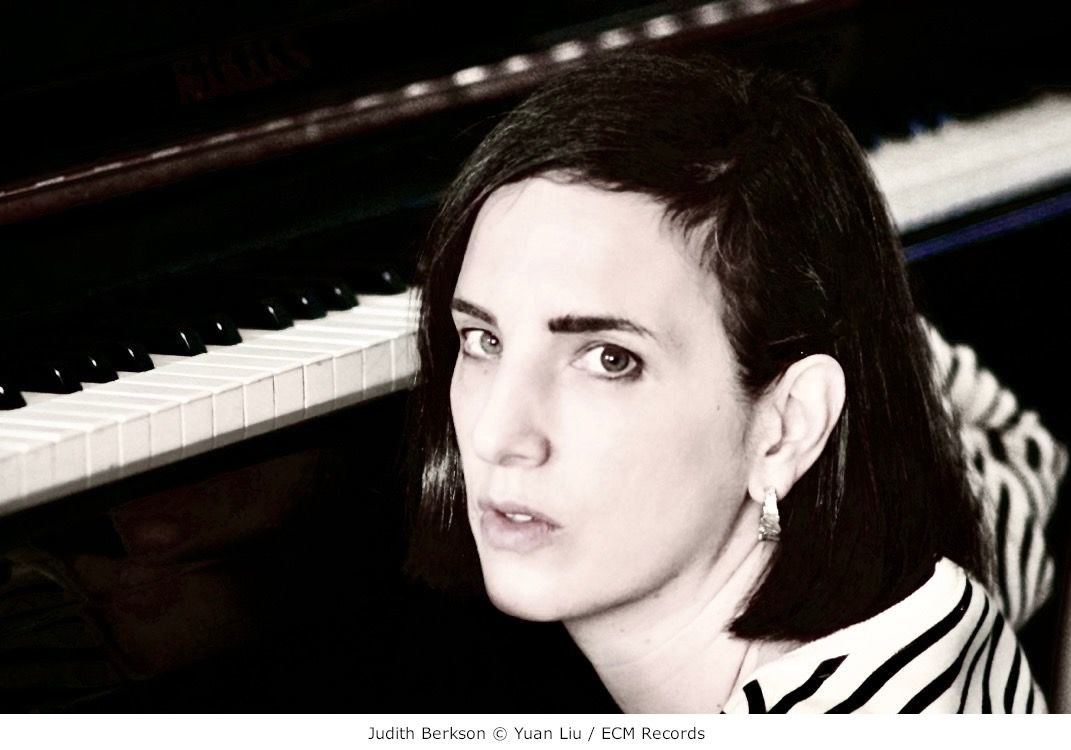 Judith Berkson Interview Image by Yuan Liu / ECM
“I don’t think you could name a music culture from around the world that I wouldn’t be into.“
Video
