Published
Name: Jules Reidy
Occupation: Guitarist, composer, sound artist, producer, improviser
Nationality: Australian
Recent release: Jules Reidy's new album Ghost/Spirit is out February 21st via Thrill Jockey. Mixed by James Ginzburg and mastered by Rashad Becker, it features sampled contributions from Andreas Dzialocha, Judith Hamann, Morten Joh, Sara Neidorf, and Weston Olencki.
Current event: Jules will perform live in Berlin on March 5th 2025 at Silent Green, March 6th at Cafe Oto, and March 7th at Cobalt Studios.
[Read our Judith Hamann interview]
If you enjoyed this Jules Reidy interview and would like to know more about their music, visit their official homepage. They are also on Instagram, and bandcamp.
When I listen to music, I see shapes, objects and colours. What happens in your body when you're listening? Do you listen with your eyes open or closed?
Depends on my role in the music.
Physical or emotional sensations can provide orientation for me when I write music. If I’m performing I can sometimes/ideally access a kind of focused awareness of what’s happening and where to direct it, depending on the set-up and musical situation. Often when there’s a very clear objective or set of parameters it’s mostly about control.
If it’s more about improvisation and dialogue then it can feel much more like a sort of flow-state, whether it’s between myself and others, or the present and the next thing.
How do listening with headphones and listening through a stereo system change your experience of sound and music?
I enjoy listening to music on everything, I’m not geared towards optimal states.
I find it helpful to think of speakers, headphones, sound systems, rooms as being instruments in themselves, rather than just a vessel for carrying sound.
Tell me about some of the albums or artists that you love specifically for their sound, please.
Far too many to name, but these are on my recently played list - Jerry Hunt - Ground: Five Mechanic Convention Streams, CC Hennix - Selected Early Keyboard Works …
James Rushford - Lake from Louvers, Dewa Alit & Gamelan Salukat - Siklus, Ellen Fullman & Theresa Wong – Harbors, ...
... Madonna - Confessions (last one disproportionately more than the others)
[Read our Dewa Alit & Gamelan Salukat interview]
[Read Ellen Fullman interview]
[Read our Theresa Wong interview]
Do you experience strong emotional responses towards certain sounds? If so, what kind of sounds are these and do you have an explanation about the reasons for these responses?
I’m drawn to very close intervals like commas, and the beatings and blurry dissonances they give.
There can be sounds which feel highly irritating to us and then there are others we could gladly listen to for hours. Do you have examples for either one or both of these?
I live right by the S-Bahn and listen to that for hours, not sure if I could say ‘gladly’, it’s kind of irritating and comforting at the same time.
Are there everyday places, spaces, or devices which intrigue you by the way they sound? Which are these?
Whenever I am in Australia, where I grew up, I appreciate how extreme the natural sonic landscape is pretty much anywhere you go.
The omnipresence of the ocean, bird calls, cicadas, crazy subtropical thunderstorms - it’s so rich and probably has a lot to do with why I’m drawn to maximalism and density.
Have you ever been in spaces with extreme sonic characteristics, such as anechoic chambers or caves? What was the experience like?
I did a really fun residency and show recently at ZiMMT in Leipzig, a beautiful multichannel space, 32 channels of 3D audio, and a bunch of incredibly proficient technicians.
The sonic experience of working there was singular and incredible and I loved the performance too. But the best part by far was the people and the vibe. That’s pretty much always going to be more important for me than any acoustic experience.
What are among your favourite spaces to record and play your music?
I’m happiest recording in my bedroom, and I try to appreciate every performance as its own unique space, community and situation.
Do music and sound feel “material” to you? Does working with sound feel like you're sculpting or shaping something?
Yes, absolutely.
How important is sound for our overall well-being and in how far do you feel the "acoustic health" of a society or environment is reflective of its overall health?
I know that music/sound is important to my health, but wouldn’t make any assumptions about the role it plays in any person or society’s wellbeing.
Sound, song, and rhythm are all around us, from animal noises to the waves of the ocean. What, if any, are some of the most moving experiences you've had with these non-human-made sounds?
Bell birds, they make the most magical little sound.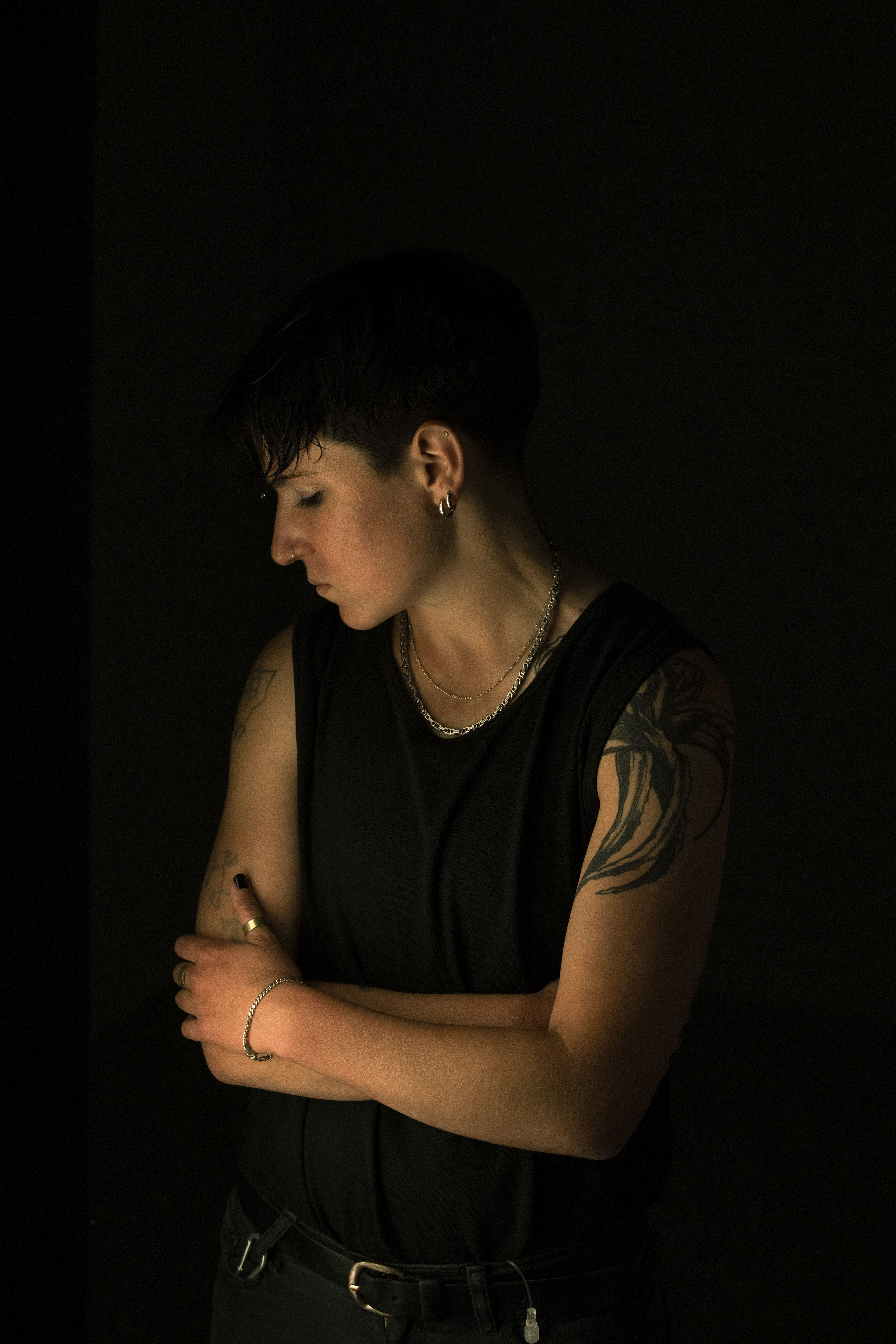
Jules Reidy Photo by Camille Blake
Many animals communicate through sound. Based either on experience or intuition, do you feel as though interspecies communication is possible and important? Is there a creative element to it, would you say?
I’m sure there are creatures and lifeforms that communicate in ways beyond my imagination - I’m concerned with the human practice of making music and am happy with that limitation.
Although if given the opportunity I would totally be up for being yelled at by a dolphin or a possum or whatever, for destroying their planet.
Tinnitus and developing hyperacusis are very real risks for anyone working with sound. Do you take precautions in this regard and if you're suffering from these or similar issues – how do you cope with them?
I wear earplugs at loud shows and when I rehearse with Sara Neidorf.
We can surround us with sound every second of the day. The great pianist Glenn Gould even considered this the ultimate delight. How do you see that yourself and what importance does silence hold?
I find it important to be deliberate on how I engage with sound.
It’s very delightful to surround yourself with sound - if I’m doing it in a way that feels intentional. If I’m bingeing on Linkin Park or listening to podcasts just to have a voice in my ear there’s usually something wrong.
Seth S. Horowitz called hearing the “universal sense” and emphasised that it was more precise and faster than any of our other senses, including vision. How would our world be different if we paid less attention to looks and listened more instead?
Rather than the hierarchy question, I think it’s probably more about using all the sensory faculties we have to be more open and curious about what’s here, what we can learn and how we can connect and show up for each other.