

Name: Julia Basso
Nationality: American
Occupation: Educator, researcher, choreographer
Current event: Julia Basso is part of the cast on the documentary We Become One, which explores the multifaceted ways that music affects our bodies, and minds and its pivotal role in welding together communities.
If you enjoyed this Julia Basso interview and would like to stay up to date with his work, visit the website of the Embodied Brain Lab.
How did the Embodied Brain Lab get started and what were the initial spark and goals?
I began the Embodied Brain Lab in August 2021.
I’ve been dancing my entire life and at Middlebury College, I double majored in neuroscience and dance. From there, I went on to get my PhD in Behavioral and Neural Science at Rutgers University and then pursue a Post-Doc at New York University. Since then, I’ve been building a career that focuses on the integration of these two fields.
Once I started the Embodied Brain Lab, I had 2 major goals. First, to examine the impact of mind-body-movement practices like dance and yoga on brain function and physiology. Second, to examine ways to increase the motivation to engage in such behaviors.
We utilize electroencephalography and a technique called hyperscanning to record the brain activity of multiple people while they move through time and space (i.e., dance). The recording of the human brain in motion is a relatively new technique, and one that we are very excited to explore.
The powerful connections between the mind and the body have been “known” to humans for centuries. Why do you think has there been comparatively little scientific research into this field – and what do you think can be gained through studies, analyses and factual evidence?
Since the time of Renée Descartes (1600s) and the integration of Mind-Body Dualism into scientific thinking, the mind and body have been considered separately.
It wasn’t until the 1960s with work by Dr. Marian Diamond and colleagues at University of California, Berkeley, that the idea of neuroplasticity was brought into the picture. They discovered by exposing rodents to an enriched environment with a large cage, toys, social cohorts, and the opportunity to exercise, that the brain could actually change. The body could in fact significantly impact the brain.
Today, we know that physical activity is one of the best ways to improve the way we think and feel and promote brain growth. We are continuing to study the ways that the body impacts the mind/brain, with research now examining how joint physical activities can impact social health and wellness at the level of behavior and the brain.
The website of the lab mentions dance, yoga, and meditation as concrete techniques for embodiment. Would you say these are just different forms for the same underlying phenomenon or do they each offer distinct benefits (and possibly limitations)?
Dance, yoga, and meditation are all examples of mind-body practices. Each has unique effects on the body and brain.
For example, meditation helps to promote emotional self-regulation - causing changes to the default mode network, a series of midline brain regions that regulate self-referential thinking. Yoga provides both meditative and movement components, additionally affecting areas including the prefrontal cortex and hippocampus - key attention, learning, and memory centers of the brain.
Dance is particularly beneficial because it combines sensorimotor, cognitive, emotional and social benefits. Of all the mind-body practices, it has been shown to be especially beneficial for social communication and connection, helping to increase what is known as inter-brain synchrony or the synchronization of brain activity between people.
Why is moving our bodies to sound and rhythm so powerful from a neurological perspective? And: what changes if we only have music without physical movement or movement without music?
Music helps to entrain the brain, creating neural rhythms or oscillations that then cause our bodies to move. Musical rhythms can actually cause the auditory cortex to oscillate in a particular way. Even just listening to music has been shown to boost mood and attention. These oscillations then transfer to motor areas of our brain, causing us to want to move to the beat.
Research has demonstrated that moving to music (compared to without music) can actually decrease our perceived exertion and cause us to experience more joy with movement.
We Become One stresses the value of music and dance for society as a whole. How would you describe that value from your own perspective?
Music and dance are of great value to society as a whole. They bring joy and social connection.
Music creates a soundtrack for our lives. We can remember the songs that were playing during our first kiss, a graduation event, or holiday celebrations. Music often evokes emotion, and when the emotional system of our brain is activated, we are better able to remember information from our past (known as episodic memories).
Similarly, dance often marks important life events such as at prom or a couples’ first dance after marriage. These events are joyful and create connection at a socioemotional level.
We are now studying how dance promotes connection at the level of the brain - how dance can induce inter-brain synchrony.
Your work on autism seems to be a particular priority for you. Can you talk about the results you've gathered so far and possible practical applications?
Yes, we are very excited about our work in the space of dance for individuals with autism spectrum disorder (ASD). We have a wonderful partnership with a program called STEP (Sensory+Theater = Endless Possibilities) VA, which provides musical theater opportunities for individuals with disabilities.
We have found that dance, specifically in the context of musical theater, decreases anxiety including social phobia and separation anxiety. These results also extended to parents' perceptions of their child's well-being. We have also found that dance increases intra-brain synchrony or functional connectivity, meaning the flow of information between regions of the brain increases.
Essentially, this means that dance can be a helpful tool to promote mental and social health for individuals with ASD. Community programs that offer dance to neurodiverse individuals represent a valuable opportunity to support both these individuals and their families. This work is currently being written up for publication.
You mentioned the research might possibly be expanded beyond autism and to other areas. What are areas of research for the future from your point of view?
We are working with a range of clinical populations. For example, we have a program for mother-child dance for mothers with depression, which was just funded by the National Endowment of the Arts. We also work in the space of dance for individuals with attention deficit hyperactivity disorder (ADHD).
We have a new study funded by the Renée Fleming Neuroarts Investigator Award to study the impact of learning to DJ for individuals with ADHD, examining how this type of intervention can improve symptoms including attention and focus, hyperactivity, mood, and executive functioning.
We are also interested in the basic science of dance on the brain and examine the impact of dance in both novice and professional dancers.
If there is a body-mind connection, how does it concretely express itself through dancing? How would depression or manic episodes, for example, become visible in the brain and in the body?
Based on some of the work out of the dance-movement therapy space and Laban Movement Analysis, different movement patterns are associated with different types of behaviors or psychological states.
For example, bound flow movement is contained or controlled and is often associated with high levels of anxiety or self-awareness. In individuals with depression, there is often a slowness of movement or even stillness or catatonia. On the other hand, mania is associated with fast-paced, jittery movements.
What, from your point of view, are the potentials and the limits of music as medicine?
Music serves as a wonderful alternative or adjunctive therapy for a range of issues including neurodevelopmental, mental health, and neurodegenerative issues.
Our studies have shown that dance (i.e., movement to music) improves depression with a large effect size; this is in contrast to antidepressants that have small to moderate effect sizes.
However, pharmacological treatment is an important and first line of treatment for many disorders. Therefore, music and dance can serve as adjunctive therapy. They offer a complementary approach, with no risk of interfering with medication and the potential to amplify its positive effects.
Additionally, in some instances, medications will be unavailable due to shortages. Music and dance will always be available and again can be utilized to support issues of anxiety, depression, dissociation, mania, and more.

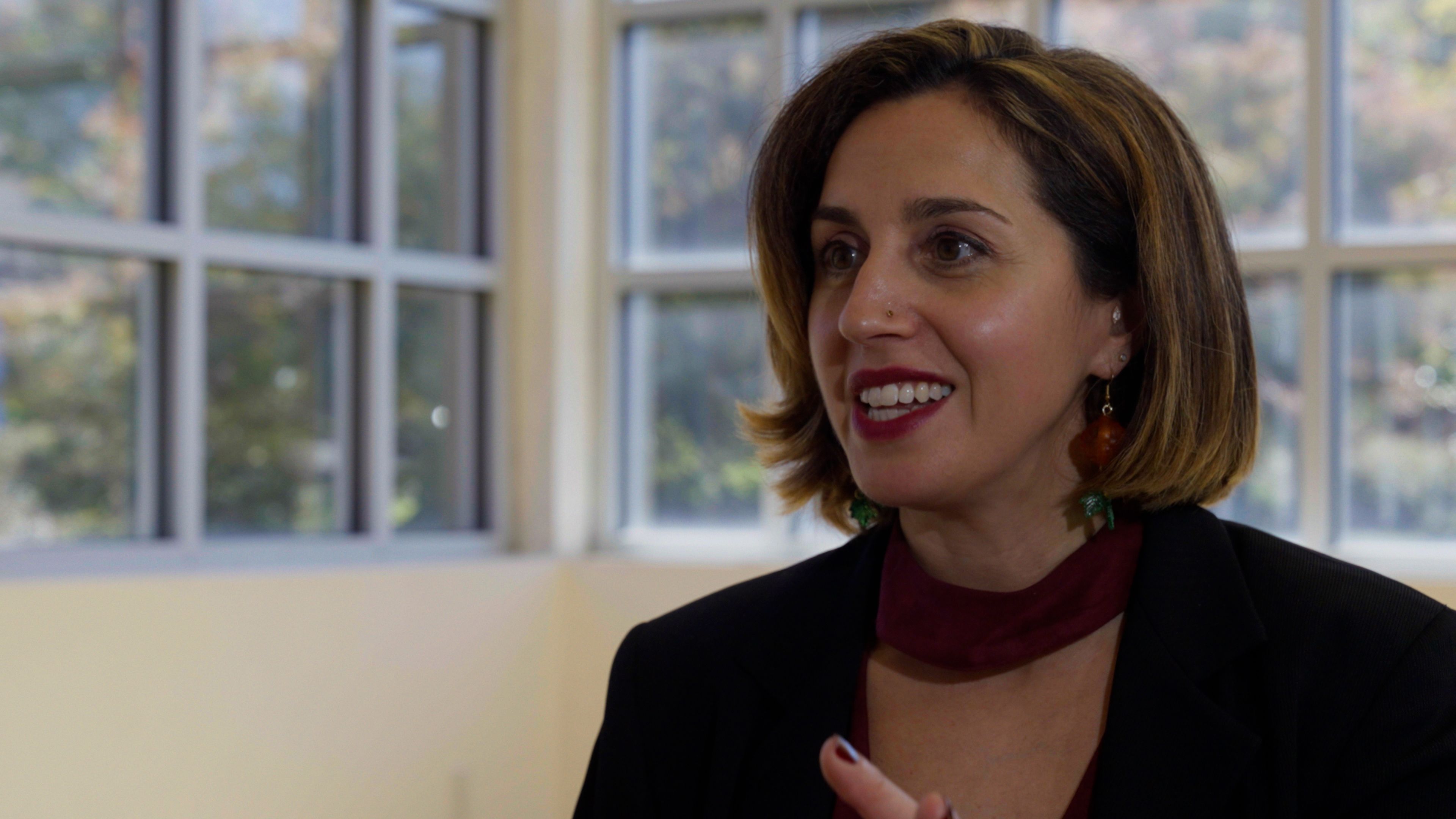 Julia Basso Interview Image taken from the We Become One documentary
“Physical activity is one of the best ways to improve the way we think and feel and promote brain growth.”
Video
