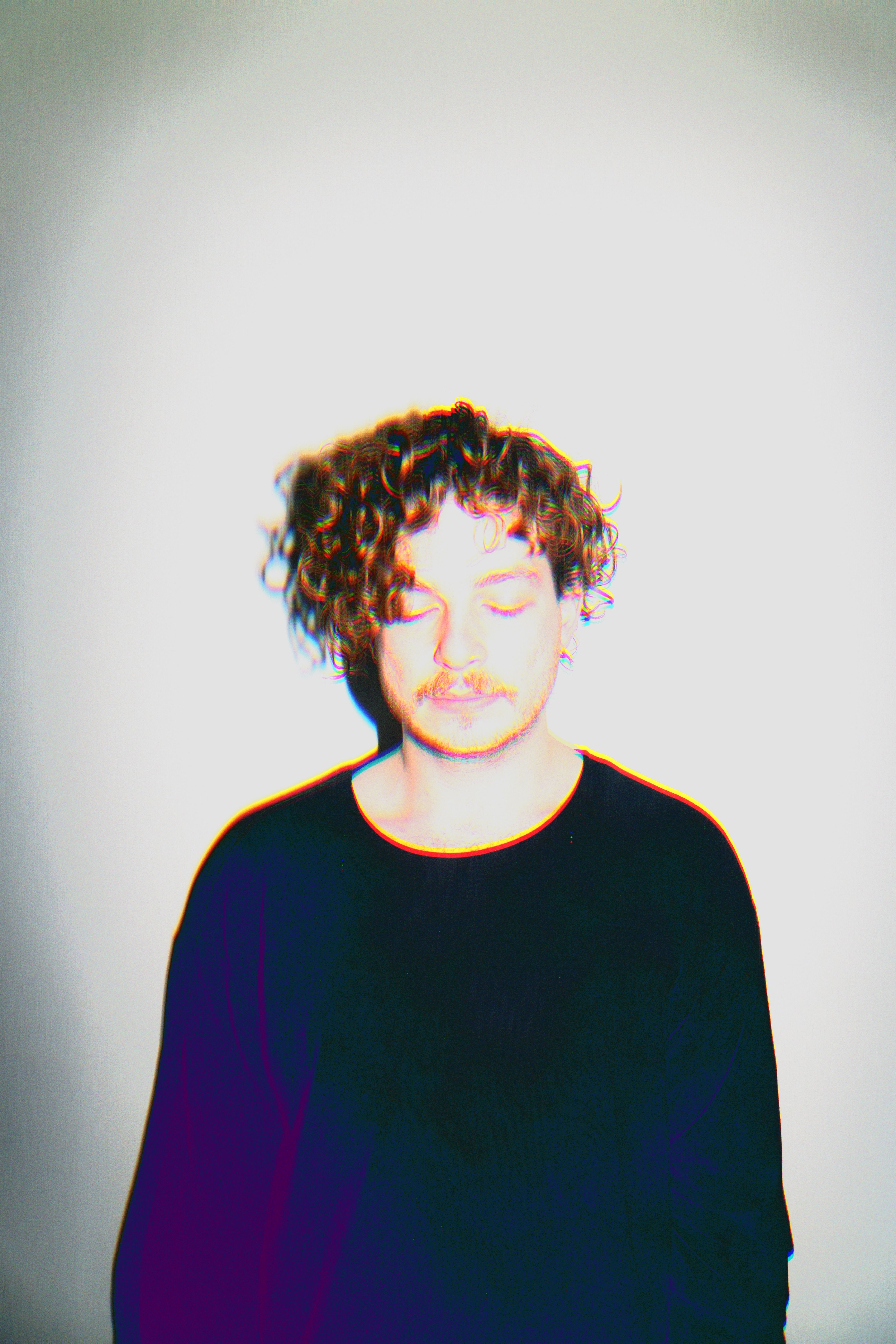
Published
Name: Rupert Galea aka Jung Latch
Nationality: British
Occupation: Producer, performer, label founder at Fragment On Machines
Current Release: Jung Latch's Len Sen EP is out February 21st 2025 via Fragment On Machines.
Recommendation for his hometown of London: Get to Heathrow airport and escape while you can.
Topic I am passionate about but rarely get to talk about: I’m obsessed with bad architecture and urban planning. Like the fucking NEOM project in Saudi man that is just delicious garbage. Half of my hard drive is just Cities Skylines maps where I design versions of real cities that aren’t car-dependent monstrocities. I fixed Dallas dude, I fixed Dallas and nobody knows.
Shoutouts: I’m a diehard advocate for collective ownership in the arts. The Subvert label are an exciting new venture that could eventually replace the Bandcamp model as a way of achieving equitable outcomes for artists. Nina Protocol are also quickly becoming a viable alternative to Spotify. Sister Midnight present a great model for a collectively owned venue as well. I like to think the electronic music scene is a relatively conscientious community and so works as an ideal incubator for creator-oriented projects like these.
Fuck it I’ll plug my own label as well. Fragment on machines, go check us out.
If you enjoyed this Jung Latch interview and would like to know more about his music, visit his official homepage. He is also on Instagram, Soundcloud, and bandcamp.
What were some of the musical experiences which planted a seed for your interest in electronic music?
In my teenage years I was a guitarist in a metal band (simpler times) and our drummer would handle all of the production and engineering for our stuff. Watching him work in the home studio definitely piqued my interest in digital audio. I got that free version of Ableton to fuck around with and pretty much went down the rabbit hole from there.
My dad’s always been a big //SYNTHESISER MUSIC// guy as well so shit like Orbital, Tangerine Dream, Gary Numan etc so that played a big role in shaping my tastes.
It was all one long gradient progression of you hear something cool and fringe, figure out how it was made, find other cool shit made the same way, rinse repeat.
[Read our Orbital interview]
[Read our Tangerine Dream interview]
Most genres of music make use of electronic production means. What does the term “electronic music” mean today, would you say?
Fuck knows man.
I grew up mainly listening to electronic music but have of lately, along with others I've spoken to, been somewhat disappointed by most new releases. I'd be curious about your own view on this, the “creative health” of the scene and potential reasons for the disappointment.
Same story as politics, consumer tech, gaming, cars, name it. The insane flow of capital into electronic music and nightlife in the past 20 years creates this gravitational pull to the middle ground where it’s comfortable, safe, inoffensive etc. Lack of public funding for the arts in general forces the artist to choose between pushing the boat out and making a living.
There’s still amazing sounds to listen and dance to in the scene but I’d happily bet most of the artists it comes from still need a day job. Not to get all Mark Fisher but the neoliberal framework was inevitably going to fail to provide tangible incentives for musicians and artists to experiment and innovate.
Not to say you constantly have to be reinventing the wheel to make good art, but eventually the diminishing returns are going to reach a point of stagnation. I’m definitely guilty of this too, we all moderate ourselves for acceptance in one way or another.
What were some of the recent releases, or performances of electronic music that left a deep impact on you?
Gábor Lázár recently put out a 7 track that is sonically gorgeous to listen to, his work as a whole really got me into the super off-kilter end of club-adjacent rhythms.
There are some artists in my life like Martyn Riley and Ilya Gurin-Babayeu who blend their installation work with their recordings and live stuff and treat it as one long continuously evolving story, which I find really engaging and I think it’s a good representation of where electronic music has the potential to blend with contemporary art in new and exciting ways.
What kind of musical/sonic materials, and ideas are particularly stimulating for your work right now?
I am a shameless additive synthesis apologist. Kiss that baby to death. I love how these kinda spectral textures can end up sounding dangerously close to Minecraft tutorial music if you’re not careful.
Testing the limits of computer audio really tickles my pickle too. Messing around in Max, I love doing shit like seeing how many kicks you can fit into one second before it crashes.
Where do most of your inspirations to create come from – rather from internal impulses or external ones? Which current social / political / ecological or other developments make you feel like you need to respond as an artist?
If it’s a binary choice then, yeah, internal.
When making original material I try to work in a vacuum and listen to as little music as possible. I’m a bit susceptible and find it way to easy to fall into the emulation trap, especially from growing up on YouTube tutorials on “how to make drums like [insert artist]”. Object Blue calls it selfish production and I definitely see the merit there.
As for political developments I’m pretty active in domestic politics outside of music so I like to keep those bits separate. In a way, being an artist is almost a political response in itself. You’re marking out an experiential value from your labour that the market hasn’t yet found a way to extract and exploit.
Music has become a lot more global, and incorporating elements from other parts of the world or the musical spectrum is commonplace. Do you still think there are city scenes with a distinct, unique sound? How does your local scene influence your work?
You could probably spend a lifetime mapping the exchange of musical influences across regions and cultures and you’d come out the other end looking like the Unabomber.
In the internet era of influence sharing I’d say city scenes are largely shaped by the creative infrastructure. London has its own take on Berlin techno for example but the drastically tighter venue licenses make it very difficult to pull of the slow-burn nature of the original. Taipei has a booming audiovisual electronics scene that goes hand-in-hand with its status as Asia’s new tech capital.
Sorry to say I’m pretty underconnected to my local scene, chronically online zoomer over here. I will say though you can see the big money influence on the London scene more so than our European counterparts.
Today, electronic music has an interesting relationship between honouring its roots and exploring the unknown. What does the balance between these two poles look like in your music?
The roots in electronic music are heavily tied to the tools and tech involves, and that hasn’t really changed so the roots are always going to be there. Developments in electronic music largely boil down to how many transistors we can fit on a CPU.
I like to throw in a cheeky nod here and there to some of the lesser-known pioneers, Delia Derbyshire, Bernie Kraus, Morton Subotnick, but I think balancing that relationship largely comes automatically.
How much potential for something “new” is there still in electronic music? What could this “new” look like?
I think the “new” is more the format and mode of presentation rather than just the musical structure itself.
There’s been a big wave of producers-turned-audiovisual-artists, myself included, and that seems to be leading to a blurring of the lines between music and contemporary art. Big immersive installations often come with very ‘synthy’ sound design and the technology has reached a point where musicians can create their own pro-grade visuals for the music and present a unified experience to the audience.
IMO the process of DAW to Bandcamp to CDJ is starting to run out of mileage and exploring new ways to present your work is going to be the fun part.
What were some of the recent tools you bought, used, or saw/read about which changed your perspective about production, performing, and making music?
Well first off I don’t buy, I crack. Piracy and opensourcing have always been a stable of electronic sound and I like to honour that.
Getting out of the DAW and moving to non-linear ways of producing like node-based and script-based programmes was a huge help for my workflow, especially in connecting sonic and visual elements of my work symbiotically.
That said, I do love my Octatrack.
Do you think that there is a limit to what can be done in sound design – and what defines these limits?
Nope. I have the same opinion on animation compared to live action. The beauty is that you’re pretty much only limited by budget, sometimes even by willpower, and there are always going to be new schools in sound design, maybe divisive synthesis or something idk.
There’s a quantum computing-based synthesis platform being developed out of Kyounggi University that looks like a fascinating project as well.
In as far as it is applicable to your work, how would you describe the interaction between your music and DJing/DJ culture and clubs?
I’m pretty realistic about the fact that there’s only so far I can veer off into abstract territory before it doesn’t work in a dancefloor context, especially as a relatively unknown artist. I’m saving most of my weirder shit to see how this EP does. Call it foreplay.
It is a very nice feeling when you see a DJ on the other side of the world playing out your stuff though, like when your mum puts a drawing you made on the fridge.☺
How, would you say are your live performances and your recording projects connected at the moment? How do they mutually influence and feed off each other?
At the moment it’s basically a 1:1 connection. I develop both audio and visuals in the same Max patch side-by-side so my studio and live workflows are one and the same.
The outlier is in DJing, which lets me kick back from having to think about format and continuity. It’s a little sweet treat for when I’ve finished my vegetables.
Even if AI will not entirely replace human composition, it looks set to have a significant impact on it. What does the terms composing/producing mean in the era of AI, do you feel?
We’re close to reaching the theoretical limit of generative AI, which is good because I would like for the future of electronic music to not be based on an iceberg-melting plagiarism machine.
There’s probably always going to be a consumer market for AI-based music, slop for the hogs as my mum would say. But in the areas of electronic music that aren’t dominated by the shareholder mindset of “make the line go up,” I can already see the novelty wearing off - especially since it just isn’t compatible with the new generation’s ideals of ethical consumption.
If they make a decent AI-based ad blocker I might change my mind.