Published
Part 1
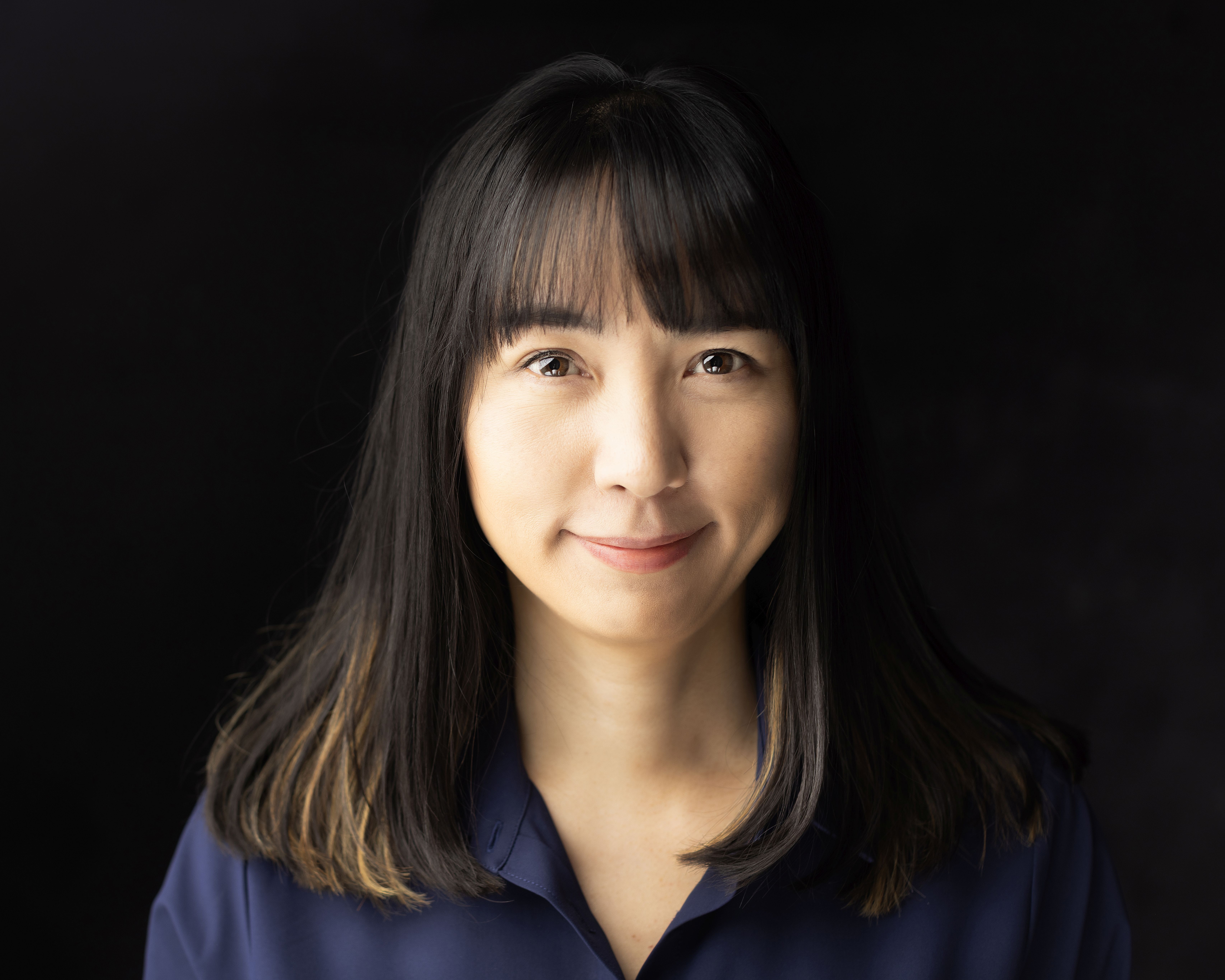
Name: Juri Seo
Nationality: Korean-born, American
Occupation: Composer, pianist
Current Release: Juri Seo's new album Obsolete Music is out via New Amsterdam.
Recommendation for Princeton, New Jersey, USA: Well, definitely the Princeton campus. Just looking at the centuries-old buildings inspires awe. Walking through the many arches on campus is also a beautiful experience.
Things I am passionate about but rarely get to talk about: Counterpoint! I wouldn’t go so far as to say no one is interested in it, but it’s certainly not fashionable. Many contemporary composers are focused on texture, timbre, grooves, and harmony, but counterpoint is so deeply embedded in traditional Western ideas of consonance, dissonance, and harmonic syntax that it’s difficult to incorporate within contemporary styles. I feel that not many people care about it anymore. But there’s nothing quite like a dense musical passage where nothing sounds out of place! Contrapuntal Forms is essentially my manifesto on this lost art of counterpoint.
If you enjoyed this Juri Seo interview and would like to know more about her music, visit her official homepage. She is also on Instagram, and Soundcloud.
The borders between producers, sound artists, and even songwriters are becoming increasingly blurry. What does being a composer mean today, would you say?
In some genres and stylistic domains, this statement holds true. In my area—classical concert music—the division remains quite clear.
My commissioners still look for through-composed works, focusing their attention on the execution of the music as written on the page. That said, there is still a great deal of individual creativity they bring to the performance. I see this as a form of collaboration, one that occurs at a slower pace.
One may argue that the blurring of boundaries—particularly the mitigation of perceived “hierarchies”—is a more liberal and healthy direction, one that aligns more closely with the origins of music-making. But I don’t find the kind of framing especially helpful. I think of these different approaches of creating music as a divergence, a reflection of our time.
There is, and hopefully will continue to be, a place for single-creator works transmitted via notation—ideally existing alongside other vibrant modes of music-making like improvisation and songwriting/production—because certain kinds of music can only truly be created that way, relying on a very high level of craft from the performers as well.
Many people perceive classical music and contemporary composition as having high barriers of entrance, both for listeners and musicians. What have your own experiences been in this regard?
I believe the issue lies not with the music itself, but with the cultural circumstances surrounding classical music. It’s often perceived as highbrow, accompanied by a range of internal conventions—such as not clapping between movements, having to sit silently in the hall. In reality, these conventions matter little when experiencing classical music in recorded form. Thanks to the internet, classical music is now available to any interested listener.
As with any genre, learning deepens appreciation. Rather than viewing the process of learning as a set of barriers, it’s more helpful to see it as developing a shared cultural knowledge. I’ve personally gone through this process with music that was once unfamiliar to me, particularly jazz and Korean traditional music.
As of today, what kind of materials, ideas, and technologies are particularly stimulating for you?
Coming from Western classical music, I have been preoccupied with continuing the aspects of classical music that I love most—namely, counterpoint and harmony.
I have studied acoustics (the science of sound) to expand my harmonic resources, building on developments that began in the early 20th century and were crystalized by the spectralist movement in the 1970s. This has led me to explore the continuum between timbre, harmony, and noise.
I have become fascinated with microtonality, seeking finer gradations of consonance to further develop contrapuntal language. My collaboration with the JACK Quartet resulted in two pieces so far—Three Imaginary Chansons and Just Intonation Etudes—in which I utilized the just intonation notation system HEJI to accurately represent these new consonances.
Merging the old with the new has long been a central interest of mine. Three Imaginary Chansons for example, combines Medieval harmonic syntax and sensibility with expanded harmonic resources.
All the works in my recent album Obsolete Music, reimagine historical (obsolete?) forms like fugue and cantus firmus through stylistic fusion that span many centuries. This kind of conversation across time and genres is perhaps what excites me most at this point: it allows me to build on a foundation that stretches back centuries, to reinvent or rediscover older materials in the process, and to imagine new directions.
Most importantly, I try to approach my work playfully and exuberantly—not out of some existential crisis, but out of genuine curiosity and joy.
Where do most of your inspirations to create come from – rather from internal impulses or external ones? Which current social / political / ecological or other developments make you feel like you need to respond as an artist?
Everything you listed here!
Lately, I have been relying on concrete projects to keep me going. In most cases, the content of the work are not dictated by the commissioners. So, the projects give me a structure (external), and I fit my various inspirations (internal) within them.
As I mentioned before, musical elements like harmony and counterpoint bring me so much joy that I feel completely content creating music that unfolds an abstract narrative. However, I’m increasingly finding it fruitful to let extramusical ideas guide both the listeners and myself, anchoring our associations and allowing us to connect with the world in a more tangible way. I don’t think one approach is inherently better than the other; in the end, we are always seeking a transcendent, wordless realm.
My favorite topics these days have arisen from ecology. I have always loved animals, and in a world where many people in power are completely apathetic to connections—between humans, between humans and the earth, and between humans and all the beings we share this world with—in favor of ruthless pursuits of individual power and possession, the message of ecology feels particularly urgent and relevant.
My recent work, Birds, Bees, Electric Fish, is the first ecology-themed piece I have created. Commissioned by a consortium of 32 flutists and percussionists, it was inspired by Ed Yong’s book An Immense World.
I loved reading about the perceptual worlds experienced by different organisms, shaped by their unique physiological and psychological capacities. I selected three organisms discussed in the book and imagined sonic worlds for each: birds listening to their own songs, bees forming hexagons and dancing together in their hives, and electric fish mapping their surroundings through electrical currents on their skin.
To counterbalance humans’ relentless reliance on visual perception and to encourage a heightened state of auditory awareness, I had the audience blindfolded for the entire half-hour duration of the piece. I have since started another work with a surround setup for a blindfolded audience—a new quartet for So Percussion that explores the world of fungi.
A piece I am currently working on for the 21st Century Consort in D.C. connects ecology with my aforementioned interest in the old: the Medieval bestiary and modern biology. I draw inspiration from Casper Henderson’s Barely Imagined Beings, whose central idea is that the way humans relate to nature reflects who we are—so the bestiary becomes a question of ecology.
The movement about whales, for instance, begins with a medieval perspective—portraying them as a terrifying presence and a symbol of deception. As the movement progresses, it evolves into a more modern, idealized, post-Melville view, depicting whales as beings that embody intelligence, community, and love.
For a long time, I doubted the practical impact of works that convey concrete messaging. However, I now believe that doing your work with good intentions, rigor, and dedication can lead to slow but steady progress over time. It is the collective effort of many musicians (as well as writers and artists) that gradually shapes the narrative.
They influence one another—just as I have been influenced by many writers—and, over time, the exposure of these messages to the general public grows.
Tell me a bit about the sounds & creative directions, artists & communities, as well as the colleagues & creative hotspots of your current hometown, please. How do they influence your music?
Since I work full-time at Princeton, the work of local composers—my colleagues and students—makes up a large part of my exposure to new music. Beyond its academic function, the university can also be seen as a long-term creative residency, where you get to witness your colleagues experiment and grow over time. As a composer in such an environment, a healthy approach is to observe and support others’ creative endeavors while also trying to contribute in your own way.
Recently, many of our graduate composers have been exploring multimedia and electronic works, which led me to return to electronics for the first time since graduate school.
This resulted in a large-scale piece for violin and electronics, Toy Store. Indirectly, this prevalence of multimedia also inspired me to go in the opposite direction—away from sensory overload—and compose works for a blindfolded audience.
Often, these creative exchanges generate positive feedback loops. For example, my colleague Dan Trueman’s work with just intonation rekindled my own interest in the subject—originally sparked during graduate school through exposure to Ben Johnston. I’ve since developed that interest into a graduate seminar and a series of projects with the JACK Quartet.
Whatever environment you're in, the point is less about reacting to or against your fellow composers, and more about critically examining your own creative impulses, engaging with others’ work, and collectively broadening the ways we make art.
Composing has always had an interesting relationship between honouring its roots and exploring the unknown. What does the balance between these two poles look like in your music?
I would go as far as to say that the tension between tradition and experimentation is the central tenet of my music.
This tension stems from my background: the first half of my life was spent in Korea, and the second half in the US. My Korean education emphasized developing craft rooted in existing traditions, and my initial love for music came from that. I loved the feeling of absorbing a longstanding tradition—a complex system built upon the work of many composers from the past.
My time in the US, on the other hand, has been more about innovation, which required me to take a critical distance from that tradition. I feel that my original voice, if I have one, was born in the tension between the past and the unknown. It took me a while to embrace this tension as an exciting creative impulse.
The "balance" can be found in all of my music, particularly in pieces like Piano Sonata No. 1 - “La Hammerklavier"—which reimagines Beethoven’s Op. 106 sonata in a mosaic—and the aforementioned Three Imaginary Chansons, which combine Medieval harmony with extended just intonation.
The kind of innovation that’s most compelling to me is one built on top of tradition, not one that attempts to forget or break it.
How much potential for something “new” is there still in composition? What could this “new” look like?
There is infinite potential. Music is like nature—infinitely malleable. It splits and recombines in endless ways.
More concretely, it’s not so much about what one does (e.g., write a song, write a fugue), but how one does it that opens up new possibilities. It doesn’t have to be a quintet for four contrabass flutes performed in a helicopter to be new; it can be a simple piano piece that reveals a new direction, a new feeling—just something we haven’t heard before.
I think once we shift our focus to the details, taking a more microscopic view of music, many new possibilities open up. The challenge of composing isn’t that there’s nothing left to do—it’s that there’s still so much that’s possible.