Published
Name: Kai Craig
Nationality: British
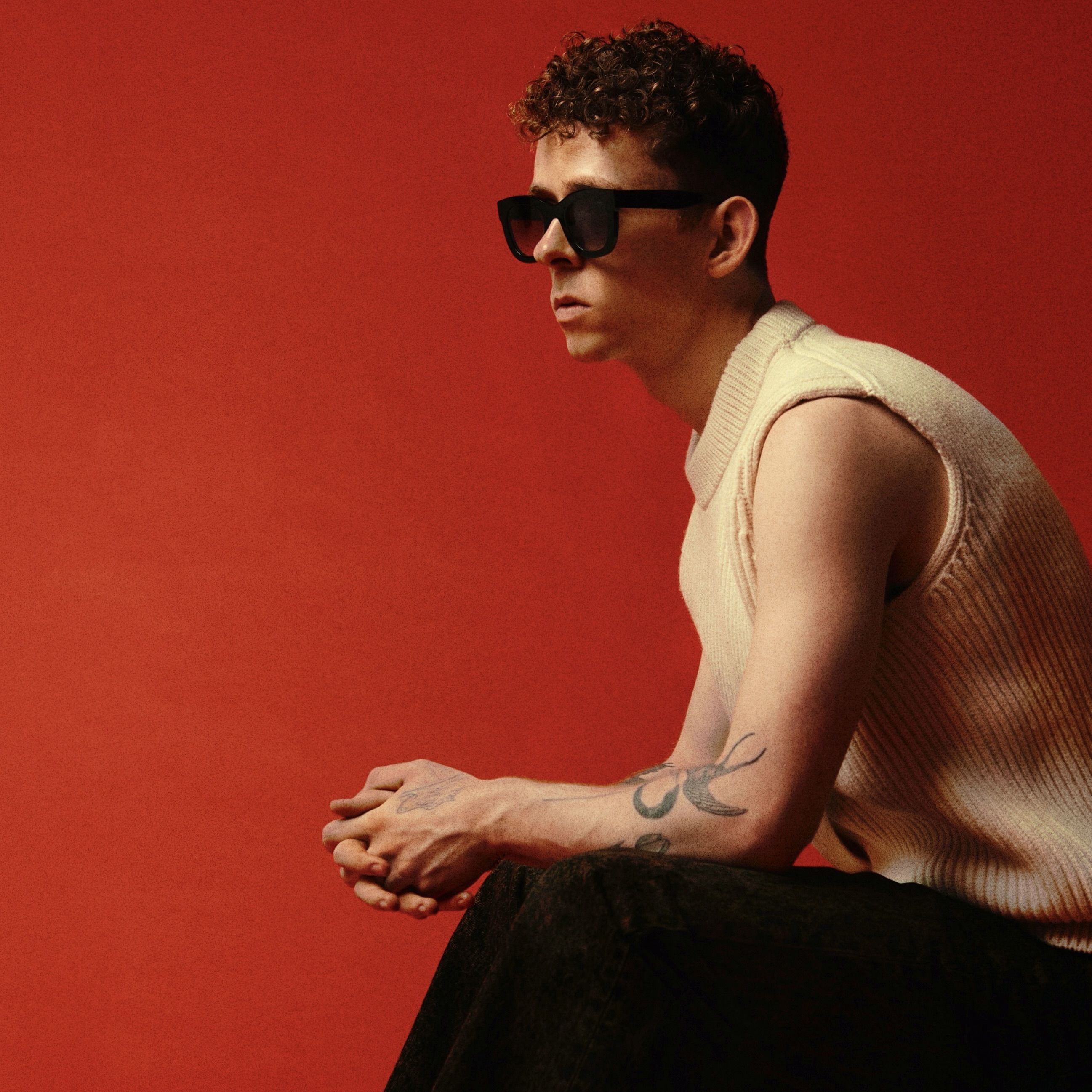
Occupation: Drummer, composer, improviser
Current Release: Kai Craig's new album A Time Once Forgotten is out now via Whirlwind. It features Kai on drums, Sean Payne (saxophone), James Copus (trumpet), Rainer Böhm (piano), and Géraud Portal (bass)
Recommendation for New York City, USA: The Village Vanguard.
If you enjoyed this Kai Craig interview and would like to know more about his music and upcoming live dates, visit his official homepage. He is also on Instagram, and tiktok.
What were some of the musical experiences which planted a seed for your interest in jazz?
I grew up with music playing around the house and in car journeys. My father is a drummer and my mother was a bass player when she was younger, the whole family is musical in one way or another so music was always a key part in my life since before I can remember.
Three albums that were favourites when I was a young child were: Cannonball Adderley Live At The Lighthouse; Art Blakey’s Moanin’ and The Big Beat - all of which sparked key periods of growth for my playing later on.
Between Miles Davis, Wayne Shorter, Thelonious Monk, John Coltrane, Buddy Rich, Herbie Hancock, Elvin Jones, Weather Report, Tony Williams and others, I had a distinctive and varied soundtrack to my childhood.
Looking back, it would only be a matter of time before I discovered a passion for playing an instrument. That’s exactly what happened, I sat at my father’s drums before I had learned to walk. And the rest is history as they say.
What does the term jazz mean today, would you say?
In the sense of what it means to the listener, I think they see it nowadays for the aesthetic or the instruments used rather than the content of what’s being played. A lot of people see a trumpet in popular music and call it Jazz. A lot of people hear a solo on a pop song and push it into the same box. Not a single Jazz Festival these days features Jazz music exclusively.
I feel that a lot of the music that people are quick to define as ‘Jazz’ is becoming increasingly disconnected from the roots and it makes it harder to determine what Jazz actually is now. It’s a word that a lot of people hold opinions over, and it’s hard to know who holds authority over it. Some say it’s not okay to use the word, arguing that it wasn’t approved of by the musicians of the time or that the term has negative connotations.
I’m not sure I can answer what I think it means today, but I connect the music to improvisation, spirituality, communication and searching. I connect the relationship of instruments largely to what I believe it means, how the bass and drums work together, how the horn and piano communicate with one another, how the horn and drums communicate.
I believe there is a well documented lineage of the development of those particular relationships between instruments within the music and that is a key factor in defining what Jazz means to me today.
As of today, what kind of materials, ideas, and technologies are particularly stimulating for you?
The drums themselves. The drums are extremely tactile and everything you play can be felt. They are visual and they deal with melody through rhythm and orchestration.
I can sit in silence at the airport or the laundromat and feel inspiration from the drums, just by imagining what I want to play. I have always found the drums to be inspiring and stimulating. They are inspiring in an overwhelming way at times, if you think how many centuries the drum has lived.
The history of the instrument is inspiring enough to last a lifetime.
Jazz has always had an interesting relationship between honouring its roots and exploring the unknown. What does the balance between these two poles look like in your music?
It’s hard to know how to answer because the two things are mutually exclusive - honouring the roots and tradition should be the primary objective in learning in order to form your own personal foundation.
However, when you are playing live you aren’t thinking about that - at least not very much of the time. Maybe an image might come into your imagination or a sound sparks a recollection of someone you learnt from, but most of the time is exploring the unknown.
With the right preparation for performance, you shouldn’t be thinking about anything, just on being in the moment and listening to the others on the bandstand.
How much potential for something “new” is there still in jazz? What could this “new” look like?
Every moment has the capacity to be new.
Whether it’s someone constructing a series notes in an order that hasn’t been done yet, or playing a tune in a way that hasn’t yet been tired, there are infinite possibilities within the music and how we approach it. I believe every moment can be something new and exciting.
Ímprovisation is obviously an essential element of jazz, but I would assume that just like composition, it is transforming. How do you feel has the role of improvisation changed in jazz?
I’m not sure if I’m an authority to comment on its role within the music, but I would say it still remains a platform for expression and a platform for telling your story. With time and more recordings, we naturally hear new ideas and sounds that will influence us whether we like it or not.
To answer concisely, I believe we are the speaker for our surroundings. We play our life experiences and our backgrounds, so naturally with different times and social circumstances we will come up with new concepts and ideas within our improvisations.
For many artists, life-changing musical experiences take place live. How do you see that yourself?
For me, one of the most life-changing things I have felt live is gratitude. I feel lucky to be able to travel and play music to make a living.
It’s a luxury that is the reward for a lot of hard work, and I hope I never take it for granted. Just to be able to travel and do what I love on different stages around the world is life-changing in itself.
How, would you say are your live performances and your recording projects connected at the moment? How do they mutually influence and feed off each other?
For me personally, I recorded the album with the band and we now tour with the group to promote the album. I chose music for the album that would be a challenge but that, with time and preparation, would sound the way I wanted it to.
The question then, is how to get complex and detailed music to open up on a live stage. Some of the tunes won’t work as well live as they would on a studio take, so it’s then about choosing other music that fits well with the current repertoire.
I try my best to treat live shows with the same care I would if I were curating an album. I think about the set list for a long time, solo order possibilities and possible moments where I can say something. Recording and performing both have things I like and dislike, but they both ultimately offer a different experience and I feel they both bring different sides out of me.
What, would you say, are the key ideas behind your approach to improvisation?
The musicians I have spent many years studying and imitating. Max Roach, Philly Joe Jones, Roy Haynes, Art Blakey, Louis Hayes, Joe Chambers, Elvin Jones, Tony Williams, Jack DeJohnette, Milford Graves, Jeff ‘Tain’ Watts, Lewis Nash, Ralph Peterson, Kenny Washington, Gregory Hutchinson, Brian Blade, Rodney Green, Tyshawn Sorey, Marcus Gilmore.
Most of the concepts that have sparked turning points in my development came from light bulb moments whilst listening to, or studying those drummers.
I developed concepts by myself from combinations of concepts among those musicians, but again the foundation is the same.
Where do most of your inspirations to create come from – rather from internal impulses or external ones?
I get a lot of inspiration from just listening to music and just the notion that my drums exist. That’s usually enough inspiration to get me up and moving.
I also take a lot of inspiration from great people with inspirational mindsets. I spent a lot of time reading about great sportspeople like Mike Tyson, Michael Jordan, Kobe Bryant, Rafael Nadal, Roger Federer. Within a number of moments of reading an interview by any of them, you see the connector between them - their mindset and work ethic.
Often times, when the music alone may not provoke me to act on inspiration, if I’m jet lagged or run down, I might watch an interview or some footage of them training and it will inspire me to get to work.
What role do electronic tools and instruments play for your creative process?
None, in terms of the instruments themselves. I don’t use triggers or sample pads, just acoustic drums and cymbals.
I use speakers to play music out loud so I can play along with it, and I use my phone to record what I’m working on. I might then put it into a piece of software on my laptop, like Logic or something. Then I can scroll back over bits I want to isolate, and I also often mix it so I can hear everything clearly without hums from the AC etc.
I don’t use any technology in the actual process of developing my instrument, but I do use technology to reference and record what I’m working on. It’s non-essential but it’s a pretty integral part of how I work now that it would take some adjustment if I were to get used to working without it …
Thanks to technological advances, collaboration has become a lot easier. What have been some of the most fruitful collaborations for you recently and what approaches to and modes of collaboration currently seem best to you?
Nowadays it’s very straightforward to record and work on a recording remotely.
I would say any recent recording projects, where after the fact, you get sent high resolution bounces of the tracks almost instantly. Then you can write notes and edits in a collaborative note on your phone that updates among all of the group members in real time.
That kind of stuff is pretty crazy to me and makes a lot of sense with collaborating. While it’s taken away the human and in-person factor, it’s certainly opened a new way for music to be worked on with your colleagues without needing to be in the same place to talk about it.
The Montreux Festival intends to preserve its archive of recordings for future generations. Do you personally feels it's important that everything should remain available forever - or is there something to be said for letting beautiful moments pass and linger in the memories of those that experienced them?
I don’t know if I feel it’s important that everything remains available forever. To me, I’ve rarely felt that a recording that I’ve made of a concert I’ve attended, or a studio/live recording I’m on, appropriately captures the feeling of the actual moment.
It’s a great document that has allowed people of my generation to get a glimpse of what the music was once like. It’s certainly invaluable for being able to get a clearer picture than audio recordings allow for, but I don’t feel it’s necessary for everything to remain available forever.
There is a lot more to be said for experiencing something live and ‘if you were there, you were there’ sort of thing.