Published
Part 1
Name: KALI Trio
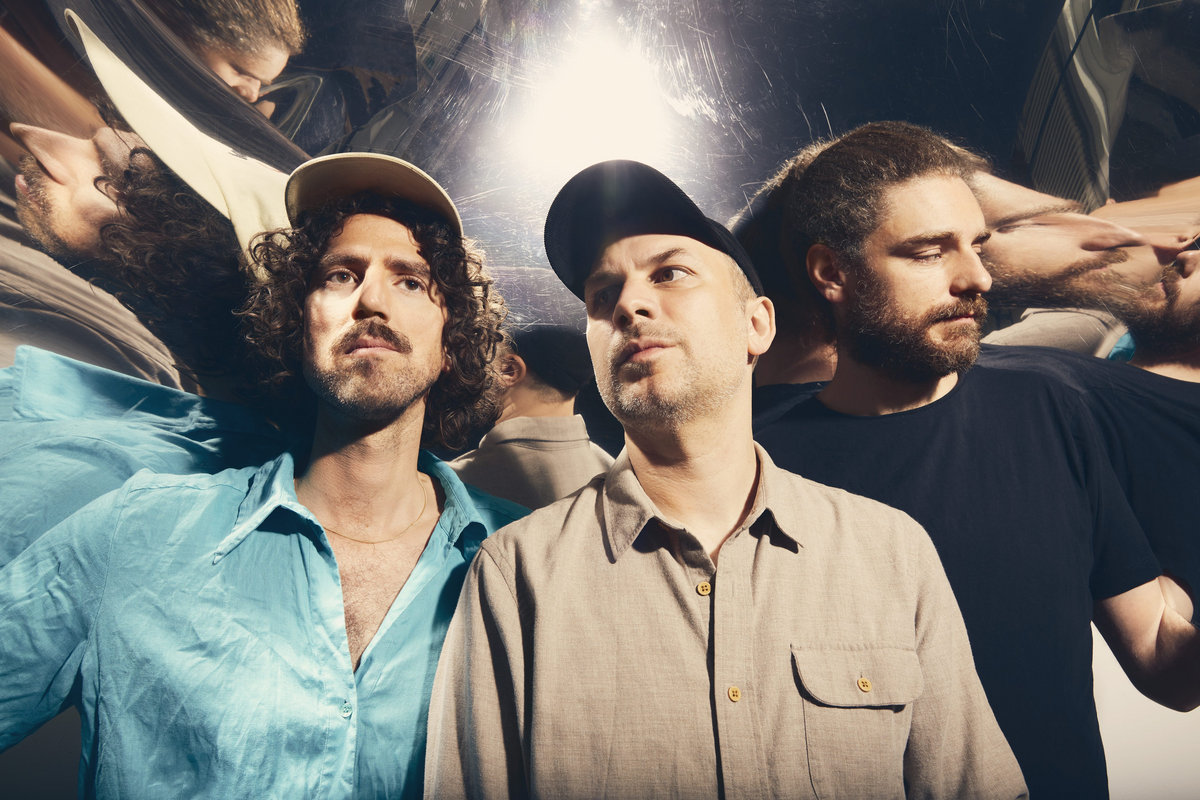
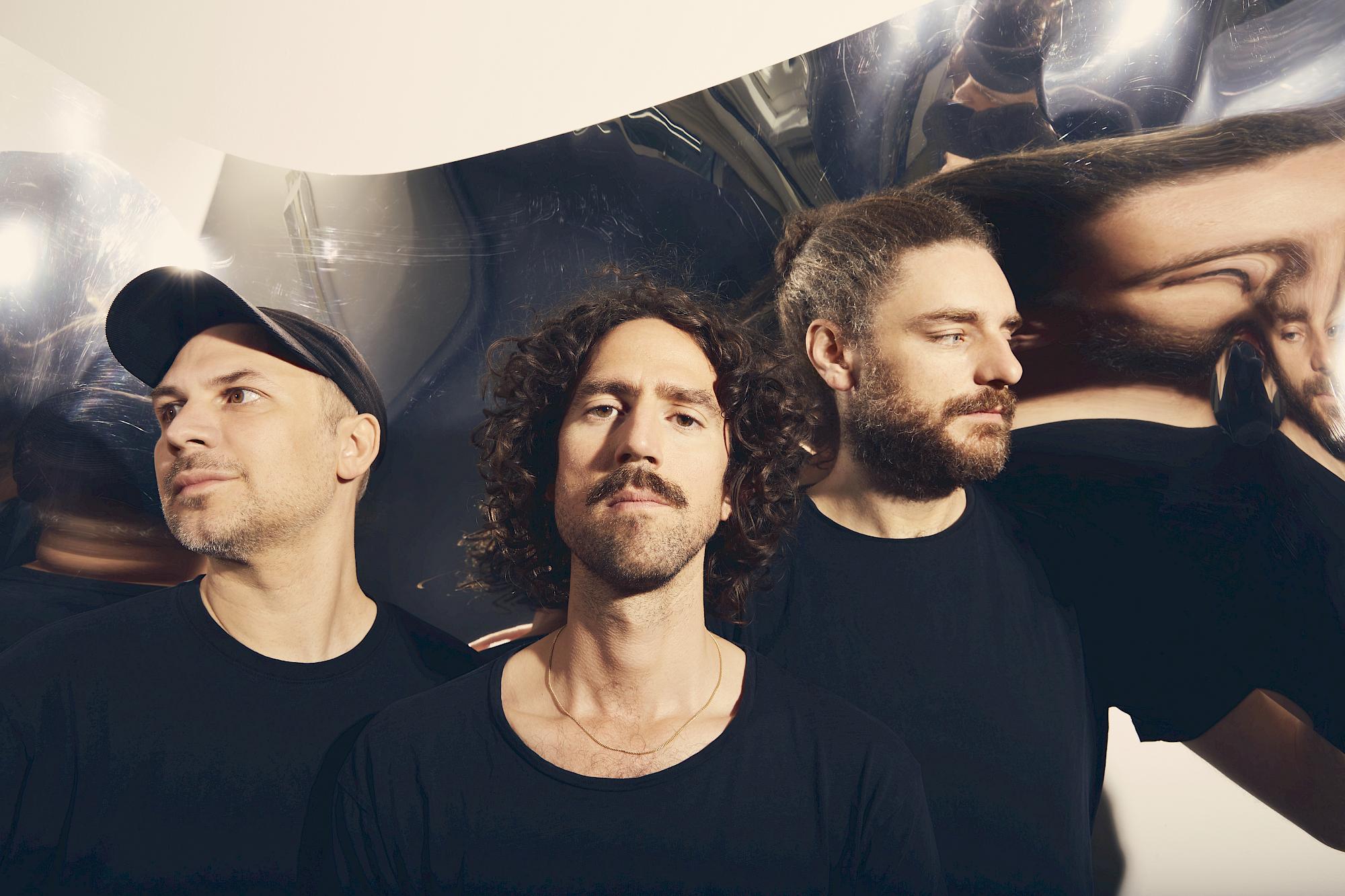
Members: Nicolas Stocker (drums, electronics), Urs Müller (guitar), Raphael Loher (piano, electronics)
Interviewee: Nicolas Stocker
Nationality: Swiss
Current release: KALI Trio's new album The Playful Abstract is out February 14th 2025 via Ronin Rhythm.
Recommendations for their current hometown of Lucerne, Switzerland: Lucerne is where Raphael and Urs live, and where we meet to rehearse.
Raphael recommends Mittaggüpfi for hikes: «It’s a beautiful mountain very close to Lucerne and far away from the tourist crowds.»
Urs recommends Neubad: «An old indoor swimming pool that’s used as a temporary venue for all kinds of music and art events. The concerts take place in the empty pool—a unique place in the area where a wide variety of people can meet and come together.»
If you enjoyed this KALI Trio interview and would like to know more about the band and their music, visit their official homepage. They are also on Instagram, Facebook, and bandcamp.
What were some of the musical experiences which planted a seed for your interest in jazz?
Hearing Miles Davis’s album Four & More as a teenager was both a shocking and beautiful experience that I still remember vividly. I felt like I didn’t understand at all what was going on, but at the same time, the energy and freedom in the music were so captivating.
I couldn’t wrap my head around how someone could play drums like that at only 19 years old, as Tony Williams was on that recording.
Growing up in a musician’s household with two classically trained singers as parents, I experienced live music - especially in the contemporary classical music field - from a very early age.
An important bridge between the classical music world and the American jazz records I discovered as a teenager was attending concerts by Swiss improvising musicians like Lucas Niggli, Pierre Favre, and Philipp Schaufelberger. Somehow, this helped me connect better to the American jazz records I was exploring because the improvised music scene in Switzerland was sonically closer to the experimental classical music I was already more familiar with.
My love for drums started long before I discovered any jazz records. As a child, we would go every year to the Basler Fasnacht, a Swiss carnival. A special event at Fasnacht is called Morgenstreich, where, at 4 in the morning, all the lights in the city go out, and the only sounds are drummers and fife players. The drumming style is very distinctive, featuring intricate rolls that create a kind of drunken marching band vibe - yet played at a remarkably high level.
Guitarist Urs Müller has a slightly different background: «A friend took me to a Christy Doran's New Bag concert when I was about 14 years old. At the time, I was listening to a lot of 60’s guitar music, like Jimi Hendrix and Eric Clapton. It was an incredible experience, and I was positively shocked by what was possible on the guitar and in music in general.
After that, I started attending many concerts by bands featuring local jazz students, like Lionel Friedli, Julian Sartorius or Christoph Erb. In the late '90s, they incorporated a lot of electronic influences into jazz.
[Read our Julian Sartorius interview]
Around that time, key figures from the Scandinavian jazz scene were also very popular. I was particularly fascinated by the sounds of Eivind Aarset, Nils Petter Molvær, and Bugge Wesseltoft - their music was my entry point into the modern jazz scene.»
[Read our Eivind Aarset interview]
[Read our Nils Petter Molvær interview]
[Read our Nils Petter Molvær interview about Certainty of Tides]
[Read our Bugge Wesseltoft interview]
[Read our Bugge Wesseltoft interview about improvisation]
As of today, what kind of materials, ideas, and technologies are particularly stimulating for you?
Technology and being online can feel quite overwhelming at times. For me, my favourite way to listen to and discover music is still by going to concerts. There’s something special about the atmosphere and the social experience that you just can’t get online.
If time allows, I love traveling to music festivals just as a listener. It feels almost luxurious because I’m usually playing and working myself, so I really enjoy experiencing it from the other side.
Some of my favourite festivals I’ve attended as a listener include Punkt Festival and Monument Festival in Norway, as well as Atonal Festival in Berlin.
Where do most of your inspirations to create come from – rather from internal impulses or external ones? Which current social / political / ecological or other developments make you feel like you need to respond as an artist?
A lot of the material on The Playful Abstract was created in the moment while we were experimenting in the studio. We had to abandon many preconceived ideas and let go.
A major inspiration for this record was our collaboration with sound engineer Manuel Egger. Together with Manuel, we tried to find sounds that speak for themselves, and much of the material was directly inspired by those sounds.
In a time when social developments tend to draw people apart, the act of coming together and creating something as a democratic collective is, in itself, a political act.
Music has become a lot more global, and incorporating elements from other parts of the world or the musical spectrum is commonplace. Do you still think there are city scenes with a distinct, unique sound? How does your local scene influence your work?
In my experience, there is a distinct sound connected to different places. Even though we have access to more music than ever, a country’s topography, its venues and audiences, and the political climate still play a huge role in shaping the sound of a scene.
All three members of KALI Trio play with other Swiss-based groups as well, and we bring those experiences back into our own group. I think something special about the Swiss scene is that many groups work in a highly collective way, focusing more on the overall band sound than on individual soloists—something we also strive for with KALI Trio.
[Read our Nik Bärtsch’s RONIN interview which discusses these topics]
For many years, I’ve had a close connection to Oslo and the Norwegian music scene, and I am currently in Oslo at the moment. Musicians from my generation in Norway—born in the late 80s and 90s—have a different starting point than Swiss musicians because of their own tradition with figures like Jan Garbarek, Jon Christensen, Nils Petter Molvear and others.
I think it was very interesting to learn that many of my Norwegian peers lean against their own tradition(s), which often results in them being more influenced by the Black-American jazz tradition than a lot of my peers from the Swiss scene.
What role do electronic tools and instruments play for your creative process?
For our current record, The Playful Abstract, all three members of KALI Trio used electronics extensively to shape sounds. For us, a sound can become a central element of a tune or composition, making these tools a vital part of our creative process - and, by extension, our music.
A good example is the track “Organelle,” the first single from the album, which is named after the synthesizer Raphael Loher plays on the track.
Additionally, Raphael uses a variety of mechanical preparations inside the piano, such as magnets, kneaded erasers, or meditation balls. He then carefully places contact microphones and applies various electronic effects to further alter these sounds. Because the source is still an acoustic grand piano, the sounds feel three-dimensional - almost as if you could touch them.
To me, Urs’ guitar playing often takes on a role typically associated with synthesizers. He has a large pedalboard that he uses to alter his guitar sound, and at times, he is almost playing more with the effects than with the guitar itself. A great example of the interplay between his playing and his effects is the track “Cascading,” where he is improvising with what the effects feed back to him.
For this record, I specifically developed a setup featuring rototoms, tuned percussion, contact microphones, e-kalimba, sub e-kalimba, and electronics, which I use exclusively with KALI Trio. On certain tracks, I don’t even play drums - on “Flux” and “Cascading,” I use the e-kalimbas together with my electronics to create soundscapes and work texturally. So, for me, electronics also play an essential role in shaping this record.