Published
Part 1
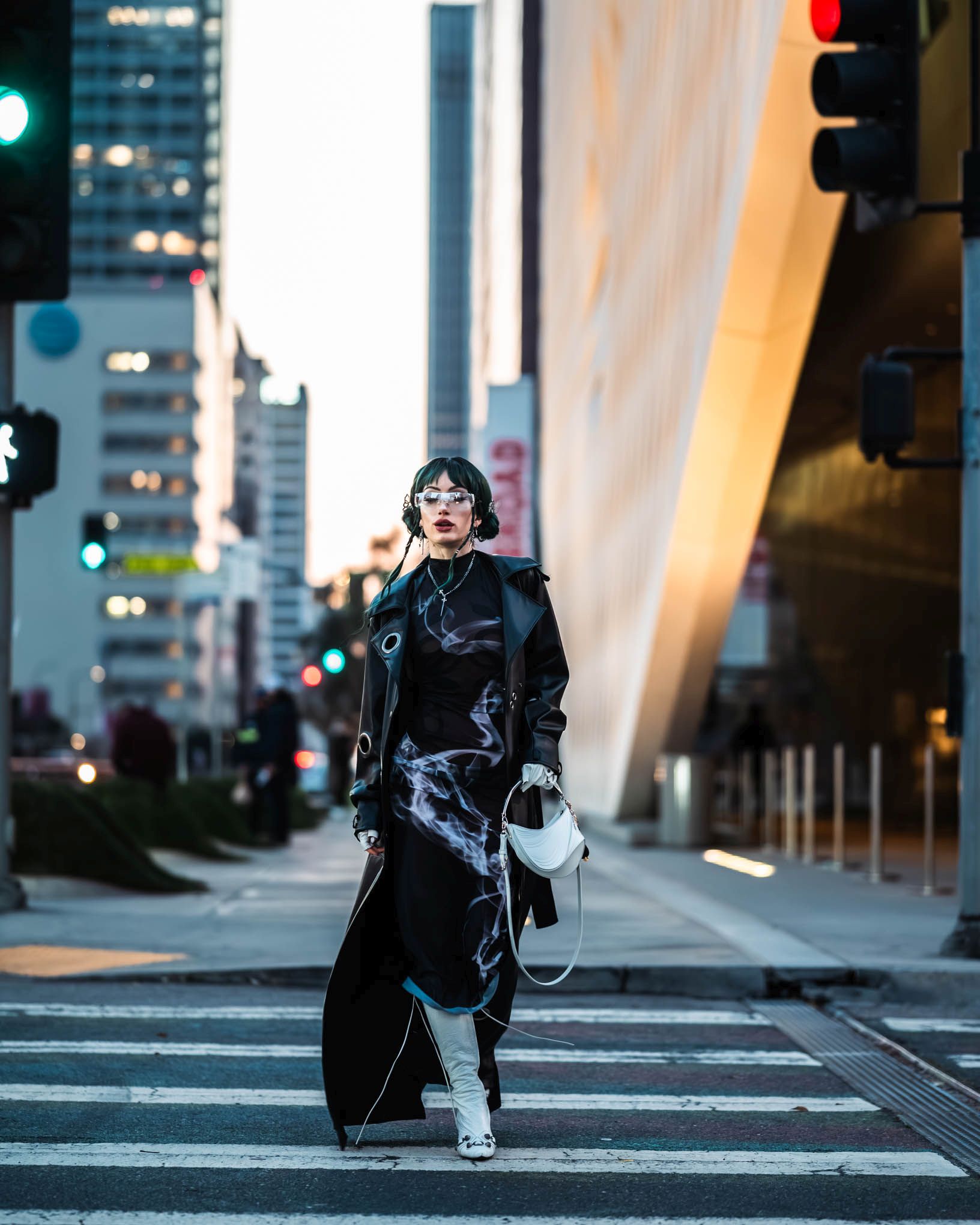
Name: Clarissa May aka KARMÅ
Nationality: American
Occupation: Producer, composer, songwriter, vocalist
Current release: KARMÅ's most recent single is "Right Back," out via her own Karma Kalypso.
Recommendation for her hometown of Laguna Beach: I’d recommend visiting Thousand Steps Beach ... it’s a bit of a hidden gem (despite the name) with dramatic cliffs, caves, and tide pools. The descent down the stairs feels like entering another world, and if you time it right with sunset, the whole place glows in this surreal golden light. Perfect for getting lost in thought, drawing, reading, writing, or just soaking in the raw beauty of the ocean.
For Los Angeles, where I currently live, I’d say The Bradbury Building ... it’s this incredible mix of old-world architecture and almost sci-fi aesthetics. The light filters through the atrium in such a cinematic way, and the whole place has this eerie, timeless energy. If you’re into anything remotely dystopian or dreamlike (or just love “Blade Runner” vibes), it’s worth stepping inside. It’s one of those places that makes you feel like you’re in a different era entirely.
If you enjoyed this KARMÅ interview and would like to know more about her activities and music, visit her on Instagram, and Soundcloud. For all her current links, go here.
Where does the impulse to create something come from for you? What role do often-quoted sources of inspiration like dreams, other forms of art, personal relationships, politics etc play?
The impulse to create comes from a place beyond words ...
Many things can spark me into flow state. It often feels like I’m channeling something rather than consciously constructing it. There’s a deep pull toward certain textures, rhythms, or melodies, and I follow that instinct step by step as I sculpt and refine each musical concept. When I am creating, that is the only thing that exists, the only thing in my mind ... a beautiful escape into another world that I build for myself, piece by piece.
Dreams play a big role, not just the ones I have at night but the waking ones too ... the flashes of imagery and half-remembered feelings that slip through my mind. Other art forms, paintings, experiences, and poetry can often be sparks of inspiration for me.
Personal experiences definitely shape the emotional core of what I write. Love, loss, nostalgia, memories ... these things leave imprints, and music is how I process them. A diary of sorts, if you will. A way to alchemize emotion into art.
At the end of the day, it’s all just energy. Some people sculpt it, some paint it. I turn it into frequencies, lyrics, and stories.
For you to get started, do there need to be concrete ideas – or what some have called a 'visualisation' of the finished work? What does the balance between planning and chance look like for you?
It’s almost never a concrete idea at the start. It’s more like a feeling, a texture, or a fragment of something, maybe a melody that comes to me while I’m going about my day, a groove that inspires me, or a certain sound that sparks a concept. I don’t usually have a clear visualization of the finished work, I just trust that the process will reveal what it’s meant to be.
For me, the balance between planning and chance is fluid. I start with intuition, letting sounds and ideas emerge without forcing them into structure too soon. That’s where the magic happens. The most interesting moments usually come from happy accidents ... distorted vocals glitching in just the right way, a synth misbehaving and creating something unexpected.
Once the raw essence is there, that’s when I step back and shape it. That’s where the craft comes in. Deciding what to refine, what to leave raw, how to build contrast and tension. It’s a dance between letting the art breathe and guiding it where it wants to go.
Is there a preparation phase for your process? Do you require your tools to be laid out in a particular way, for example, do you need to do 'research' or create 'early versions'?
It depends on the track. Some songs demand a long preparation phase, while others arrive almost fully formed.
"The Alchemist" went through three distinct versions before reaching its final form, but each one felt like a different interpretation of the same energy. I had to strip it down, rebuild it, and experiment with different sonic textures before it was just right. Then there are tracks like "Space 4 U," which came together in its first version. That one was immediate, there was no second-guessing, no need to reshape it.
Preparation is fluid. I just sit down, open a session, and start sculpting sounds. My tools don’t have to be laid out in a strict way, but I do need an environment that is free of distraction and allows me to slip into that headspace where sound leads. It’s more about tuning into the right frequency, wherever that comes from.
Do you have certain rituals to get you into the right mindset for creating? What role do certain foods or stimulants like coffee, lighting, scents, exercise or reading poetry play?
Absolutely! I have little rituals that help me drop into the right headspace. Some are intentional, some just naturally became part of my process.
Coffee is a big one. I love coffee, and it’s almost like a signal to my brain that it’s time to create. I have an espresso machine at home that gets a LOT of use while I am creating!
Lighting is another thing, I tend to work best in low and moody lighting ... at night my studio is lit with candles, dimly colorful LEDs, and the soft light from my screen. Too much brightness feels distracting, I like my creative space to feel a little detached from reality.
Scents can help, too. I burn palo santo or incense at the start of my sessions, especially when I’m working on something that feels very spiritually or energetically important.
For your latest release, what did you start with? If there were conceptual considerations, what were they?
For my latest release, "Right Back," it actually started with a concept that was sent to me by my good friend Kingdom Six.
The original idea was just a minute long, but there was something in it that instantly pulled me in. It had this energy that was so easily imagined into something bigger. So in a way, it was both an expansion and a conversation, a track that started as one thing but found its full form through collaboration and instinct.
This track is my favorite collaboration so far, I’m so happy with the finished product and the high level of energy and groove that it contains!
What makes lyrics good in your opinion? What are your own ambitions and challenges in this regard?
For me, great lyrics create a world without giving away the entire map. I love when lyrics feel conceptual and mysterious rather than being too direct. I love when they hint at something, evoking a feeling but leaving space for the listener to interpret it in their own way. That’s the best kind of lyricism ... ”open to interpretation."
I think the most powerful lyrics aren’t necessarily the most complex or poetic, but the ones that feel like something. Whether it’s a single haunting phrase, an abstract image, or a fragmented thought that lingers in your mind. Sometimes it’s about what’s left unsaid, the space between the words, the way they sit against the music.
My ambition with lyrics is to create the kind of space where the meaning isn’t fixed, and is fluid instead. The challenge is always in finding that balance between being evocative and being too obscure. I want my words to resonate, to connect, without spelling things out too obviously.
What are areas/themes/topics that you keep returning to in your lyrics?
I keep coming back to themes of transformation, desire, love, loss, the unseen, and the space between worlds.
There’s a tension in my lyrics between control and surrender, between chasing something and letting it slip away. I’m drawn to the alchemy of emotion, how love, loss, obsession, and power shift and evolve over time.
“The Alchemist” was written about the loss of my best friend when he passed over to the other side, “Space 4 U” was written about creating space for my inner child to thrive, and “Right Back” was written about the infectious energy that is shared between souls when together on the dance floor.
Many writers have claimed that as soon as they enter into the process, certain aspects of the narrative are out of their hands. Do you like to keep strict control or is there a sense of following things where they lead you?
I definitely lean toward following where things lead rather than keeping strict control. Once I step into the process, it feels less like creating and more like uncovering something that already exists ... I am just the conduit for a concept that must be expressed.
I might start with a concept, a feeling, or a sound, but as the track evolves, it starts making its own demands. A melody might take an unexpected turn, a lyric might shift the meaning of the whole song, or a sound might spark a completely different emotional tone than I originally intended.
That’s where the real magic happens.
There are many descriptions of the creative state. How would you describe it for you personally? Is there an element of spirituality to what you do?
The creative state, for me, feels like stepping into a different dimension, one where time bends, the outside world fades, and everything is just energy. It’s almost trance-like, a space where thoughts don’t fully form in words but in sounds, textures, and emotions. It’s not something I can force; it’s something I have to tune into.
There’s definitely an element of spirituality to it, though not in a traditional sense. It feels like channeling rather than constructing. Sometimes, a song arrives almost fully formed, like it was already there, waiting to be translated. Other times, it’s a slow alchemical process, refining and reshaping until it becomes what it’s meant to be.
Either way, there’s this sense of connection to something beyond myself, whether it’s the subconscious, the collective unconscious, or something even less tangible.