Published
Name: Kate Clover
Nationality: American
Occupation: Singer, songwriter
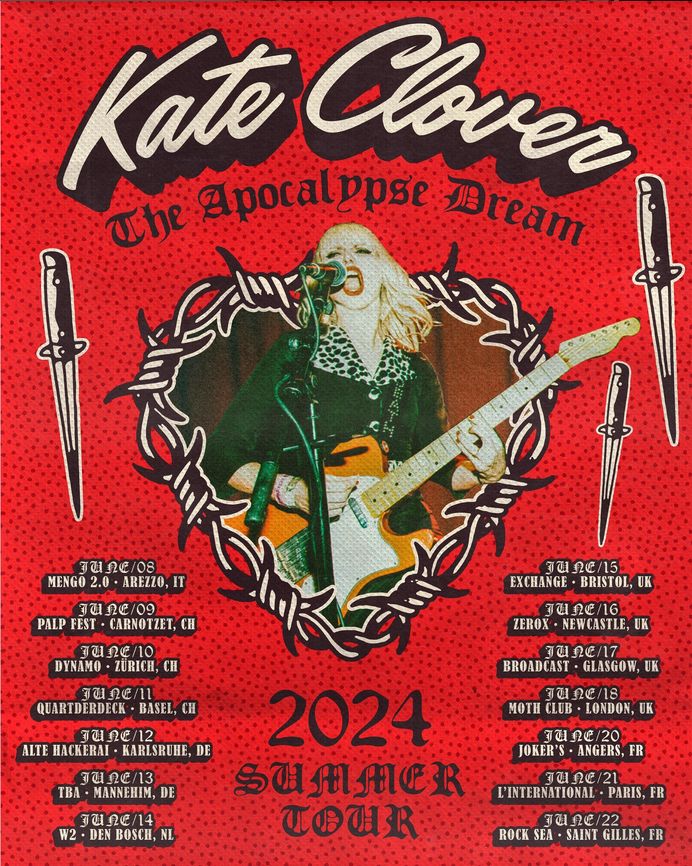
Current Release: Kate Clover's The Apocalypse Dream is out via SongVest. She is also currently on an expansive European tour. Catch her live in June here (full tour dates, also for May 2024 on her website):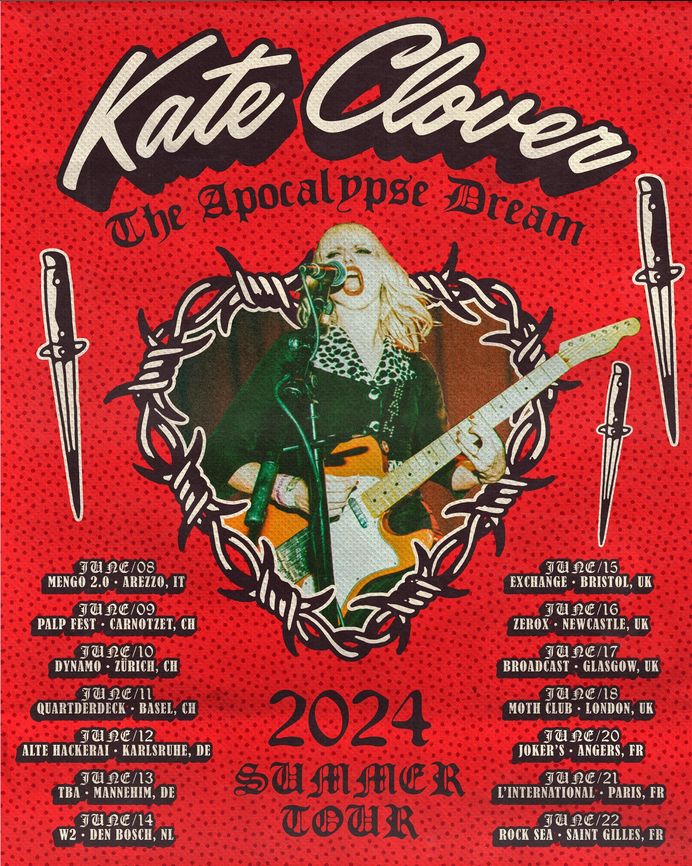
Recommendations: Any poetry by Charles Plymell and the Miami LP by The Glun Club.
If you enjoyed this Kate Clover interview and would like to stay up to date with her music, visit her official homepage. She is also on Instagram, Soundcloud, and Facebook.
Where does the impulse to create something come from for you? What role do often-quoted sources of inspiration like dreams, other forms of art, personal relationships, politics etc play?
Creativity is how I’ve always expressed myself.
From a young age I gravitated towards self expression. Wether it was painting, writing or playing an instrument I felt it was part of my makeup to create.
For you to get started, do there need to be concrete ideas – or what some have called a 'visualisation' of the finished work? What does the balance between planning and chance look like for you?
It begins with a phrase or a concept for me. The concept is always based on an emotional response to something. I don’t write about nothing. Each song has me singing.
I like to be as poetic as possible and so having a realized topic often helps me write better.
Is there a preparation phase for your process? Do you require your tools to be laid out in a particular way, for example, do you need to do 'research' or create 'early versions'?
I am an avid music listener and you could consider that research. When I’m not playing music, I DJ a lot and go to record stores. It all becomes part of your DNA and it strengthens what you enjoy most about listening to music.
I’m always listening, reading and looking for inspiration. My whole life is the preparation phase really. Otherwise I’d have nothing to express or say.
Do you have certain rituals to get you into the right mindset for creating? What role do certain foods or stimulants like coffee, lighting, scents, exercise or reading poetry play?
Coffee is very important. I run a lot and I listen to music as I do. I like listening to music in different environments.
I find it interesting what music you’ll gravitate towards while driving, walking, hanging out at home or partying. I think music creates so many atmospheres and moods and I’m always keeping tabs.
What do you start with? And, to quote a question by the great Bruce Duffie: When you come up with a musical idea, have you created the idea or have you discovered the idea?
The ideas are out there. Wether you look at that concept metaphysically or more logically.
I believe that you tap into something in moments. Part of that is removing your ego and allowing yourself to freely express what you are feeling.
When do the lyrics enter the picture? Where do they come from? Do lyrics need to grow together with the music or can they emerge from a place of their own?
Lyrics are typically last for me. They grow from a melody and the mood of music. Sometimes they come first but that’s rare.
They often take a little bit of time to figure out.
Often, while writing, new ideas and alternative roads will open themselves up, pulling and pushing the creator in a different direction. Does this happen to you, too, and how do you deal with it? What do you do with these ideas?
It’s good to go into tangents and sometimes those lead to new ideas for different songs.
I allow it of course, but I like to be concise while writing. It helps convey what I’m trying to say.
There are many descriptions of the creative state. How would you describe it for you personally? Is there an element of spirituality to what you do?
I do believe there’s a source in a sense that you can tap into. I feel too much. I am very sensitive and I’ve always observed the world.
I do feel spiritual but I am hesitant to use that word because I think that it’s connecting to something beyond that.
When you're in the studio to record a piece, how important is the actual performance and the moment of performing the song still in an age where so much can be “done and fixed in post?“
Performance is the most important part of recording. You can’t edit something to make it sound real or feel authentic. That’s the difference between good and bad music.
Being honest and part of that is being honest by your performances.
Once a piece is finished, how important is it for you to let it lie and evaluate it later on? How much improvement and refinement do you personally allow until you're satisfied with a piece? What does this process look like in practise?
I instinctively know when something is done but sometimes there are things that taunt me. It will keep me up at night and that’s when I know it’s not complete yet.
Of course after you make something you have perspective and it’s easy to say you would do something differently but you have to go through the experience of making it to begin with to gain that understanding.
Even recording a solo song is usually a collaborative process. Tell me about the importance of trust between the participants, personal relationships between musicians and engineers and the freedom to perform and try things – rather than gear, technique or “chops” - for creating a great song.
It comes down to taste for me. I need to know where the collaborative party is coming from. That’s what sparks creativity for me.
They can be opposite influences but it’s helpful to know what they are.
What's your take on the role and importance of production, including mixing and mastering for you personally? In terms of what they contribute to a song, what is the balance between the composition and the arrangement (performance)?
Nowadays I feel there is too much value focused on the mixing process. It’s important, of course, but I prefer to sound how we sound while recording. It’s more fun too.
I know there are plugins and what not for all of that but nothing beats an analog recording to me.
After finishing a piece or album and releasing something into the world, there can be a sense of emptiness. Can you relate to this – and how do you return to the state of creativity after experiencing it?
I don’t feel emptiness at all. By the time a record is done it has become something else. An object ready to be released.
I mostly get excited to begin working on new ideas. It’s freeing.
Music is a language, but like any language, it can lead to misunderstandings. In which way has your own work – or perhaps the work of artists you like or admire - been misunderstood? How do you deal with this?
I don’t like being told what I am. I know what my influences are and my point of view. I think it’s important to know who you are and stand by that. Even if you’re unresolved in ways and are working on furthering some aspects of yourself.
It’s being an artist. To be vulnerable and allowing others to relate to you.
Creativity can reach many different corners of our lives. Do you personally feel as though writing a piece of music is inherently different from something like making a great cup of coffee? What do you express through music that you couldn't or wouldn't in more 'mundane' tasks?
There are many forms of self expression but a song can become timeless. I like thinking about that.
Emotions are relatable in any day and age. It would be amazing to write something that transcends time.